Mon - Sat : 9:00 AM - 6:00 PM
- +91-8448877746
- sumitneuro@gmail.com
Best Spine Doctor in Gurgaon
Practical, specialist care for lower back pain and sciatica in Gurugram - from lumbar disc problems and stenosis to fractures in elderly parents - with Dr. (Prof.) Sumiet Snha, ex-AIIMS Professor.
- Vice Chairman, Robotics, Neurosurgery & Spine Services, Max Hospital
- Ex-Professor, JPNA Trauma Center & AIIMS, New Delhi
- MS, DNB, MCh, FACS
- Hon'y President NTSI · President ISPNS
- Keyhole & endoscopic brain and spine surgery
- Honest advice — surgery only when needed

Lower back pain is the single most common reason people in Gurugram look for a spine doctor. It may begin with a twinge while lifting a suitcase at the airport, a stiff back after a long drive on the Golf Course Extension Road, or a slow ache that builds through weeks of working from a dining chair. For most people it settles with sensible care. For some, the pain starts travelling down one leg, the foot tingles, walking distance shrinks, or an elderly parent suddenly cannot get out of bed after a minor stumble. That is when an experienced opinion makes a real difference to what happens next.
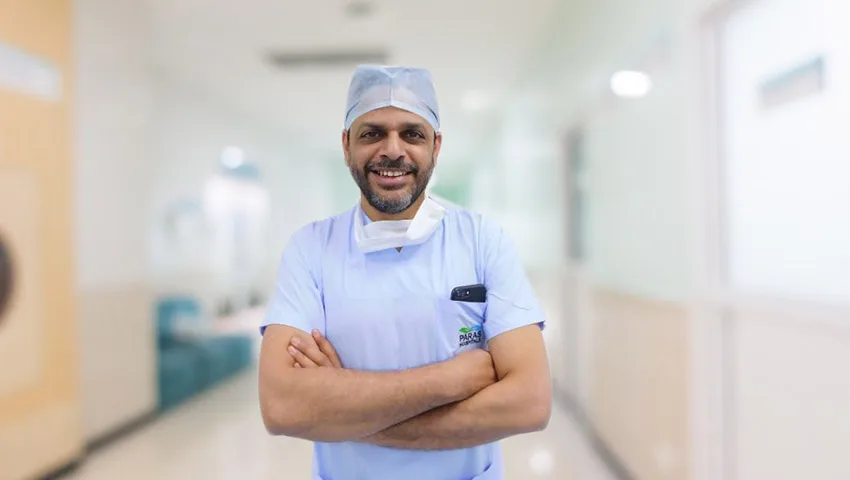
Dr. (Prof.) Sumiet Snha (also known as Dr. Sumit Sinha) is Principal Director - Neurosurgery & Spine Surgery at Max Super Speciality Hospital, Dwarka, New Delhi, and the former Director of Neurosurgery at Paras Health, Gurugram. Trained at AIIMS, New Delhi (MS, DNB, MCh Neurosurgery) and a former Professor of Neurosurgery there, he is a Fellow of the American College of Surgeons (FACS) and teaching faculty for AO Spine International. Over more than 25 years he has performed thousands of brain, spine and nerve operations, with a particular focus on minimally invasive, endoscopic and keyhole spine surgery.
This page is written specifically for Gurugram families dealing with lower back pain and sciatica. It explains the common lumbar conditions, how they are told apart, the exercises and physiotherapy that genuinely help, the warning signs that need same-day attention, and what a day-care endoscopic discectomy involves when surgery becomes the right choice. If your main problem is neck pain or arm symptoms, the approach is different and is best discussed at a consultation.
"Back pain" is a symptom, not a diagnosis. The same complaint can come from a strained muscle, a worn facet joint, a bulging disc pressing on a nerve, a narrowed spinal canal, an inflamed sacroiliac joint or a collapsed vertebra. Each has a different natural course and a different best treatment. Dr. Snha's first task at a consultation is therefore to work out exactly which structure is responsible, using a careful history, a hands-on neurological examination and only those scans that will change the plan. Many patients arrive with an MRI already done; the skill lies in matching what the images show with what the patient actually feels.
Diagnosis before treatment
Pain pattern, walking tolerance, reflexes and muscle strength are checked before any decision is made about injections or surgery.
Conservative care first
Most lumbar disc and back pain problems improve with time, medication, activity advice and a guided physiotherapy programme.
Keyhole options when needed
When surgery is justified, endoscopic and minimally invasive techniques aim to relieve nerve pressure with minimal disturbance to muscle.
Care for older spines
Osteoporosis, stenosis and other illnesses in elderly parents are taken into account when planning anaesthesia, surgery and rehabilitation.
The lumbar spine has five vertebrae separated by discs, each with a tough outer ring and a softer, gel-like centre. With age, repeated bending, prolonged sitting or a sudden awkward lift, a crack can develop in the outer ring and some of the inner material can bulge or break through. If that fragment presses on or inflames a nearby nerve root, the result is the familiar burning, shooting pain down the leg called sciatica. The back pain may actually be milder than the leg pain, which surprises many patients who expected a disc problem to hurt mainly in the back.
Which nerve is involved - and why it matters
Most lumbar herniations occur at the two lowest levels, L4-L5 and L5-S1. Each nerve root supplies a particular strip of skin and group of muscles, so the pattern of symptoms often points to the level involved even before the MRI is seen. Matching symptoms with the scan is important, because disc bulges are very common on MRI in people who have no pain at all. An operation should target the disc that is truly responsible.
| Nerve root | Typical area of pain or numbness | Possible weakness |
|---|---|---|
| L4 | Front of the thigh and inner side of the shin | Straightening the knee; reduced knee reflex |
| L5 | Outer shin and top of the foot, towards the big toe | Lifting the foot or big toe (foot drop in severe cases) |
| S1 | Back of the calf, heel and outer edge of the foot | Pushing the foot down, standing on tiptoe; reduced ankle reflex |
How sciatica usually behaves over time
The encouraging news is that most episodes of disc-related sciatica improve considerably within six to twelve weeks. The body's inflammatory response gradually shrinks the herniated fragment, and nerve irritation settles. During this period the aim is to control pain well enough that you can keep moving, sleep and continue with lighter work. Complete bed rest is no longer recommended, because it tends to slow recovery and weaken the supporting muscles.
A smaller group of patients do not follow this pattern. Their leg pain stays severe beyond a couple of months, repeatedly flares with minimal activity, or is accompanied by numbness and weakness that is spreading rather than receding. For them, continuing to wait may mean lost income, poor sleep, reliance on strong painkillers and, occasionally, permanent nerve damage. This is the point at which a structured review with a spine surgeon helps weigh the options honestly.
Non-surgical treatment options
- Medicines: anti-inflammatory tablets, short courses of nerve-pain medication and muscle relaxants where appropriate, taking into account kidney function, stomach sensitivity and other illnesses.
- Activity modification: avoiding long unbroken sitting and heavy lifting for a few weeks, while keeping up gentle walking.
- Physiotherapy: a phased programme described further down this page, starting with pain-relieving positions and progressing to core strength.
- Targeted injections: an image-guided epidural or nerve-root injection can reduce inflammation around the nerve and create a window for rehabilitation, although it does not remove the disc.
If these measures fail, or if weakness is significant, surgery to free the nerve becomes a reasonable choice. Dr. Snha frequently uses endoscopic spine surgery for suitable lumbar disc herniations, as described in the day-care section below.
Lumbar spinal stenosis is a gradual narrowing of the channel through which the nerves travel in the lower back. Discs lose height and bulge, the facet joints enlarge with arthritis, and the ligament at the back of the canal thickens. Together these changes squeeze the nerves, particularly when a person stands upright or leans backwards. It is most common after the age of fifty and is one of the main reasons elderly parents in Gurugram households gradually stop taking their evening walk in the society park.
The typical pattern: neurogenic claudication
People with stenosis often describe heaviness, aching, tingling or weakness in the buttocks and legs that comes on after walking a certain distance and eases when they sit down or bend forward. Many notice that leaning on a shopping trolley in a supermarket lets them walk further. This pattern, called neurogenic claudication, differs from the calf pain of poor circulation, which settles on simply standing still. Because both conditions are common in older adults and can coexist, checking the foot pulses and sometimes arranging a vascular test is part of a thorough assessment.
Treatment choices for stenosis
Mild to moderate stenosis is often managed well with flexion-based exercises, stationary cycling, weight control, pain relief and occasionally epidural injections. When walking distance keeps shrinking despite these steps, or when there is progressive weakness or balance problems, decompression surgery may be considered. The aim is to remove the thickened ligament and bony overgrowth pressing on the nerves while preserving as much normal structure as possible. Dr. Snha performs endoscopic spinal stenosis surgery for selected patients, which can be particularly helpful in older people because it generally involves less blood loss and allows early walking. Where the spine is also unstable, for example with a slipped vertebra (spondylolisthesis), a stabilisation procedure may be discussed.
Get an expert opinion before you decide
Share your MRI / CT reports on WhatsApp for a preliminary opinion, or book an in-person / video consultation.
The sacroiliac (SI) joints connect the base of the spine to the pelvis on each side. They move only slightly, but they transmit the full weight of the upper body to the legs. When one becomes inflamed or strained, the pain is usually felt low in the buttock, often on one side, sometimes spreading into the groin or the back of the thigh. It is commonly worse when climbing stairs, turning in bed, getting out of a car or standing on one leg while dressing.
Who tends to develop it
- Women during pregnancy and in the months after childbirth, when ligaments are more lax.
- People with a difference in leg length or an altered walking pattern after a hip or knee problem.
- Runners, cricketers and gym-goers who load one side repeatedly.
- Those with inflammatory arthritis, which can involve the SI joints early in the disease.
- Patients who have had a lumbar fusion, where extra stress may pass to the joints below.
Diagnosis and management
No single scan reliably confirms SI joint pain, so diagnosis rests on a cluster of examination tests that stress the joint, the absence of clear nerve-root signs, and sometimes an image-guided diagnostic injection that temporarily numbs the joint. If the usual pain largely disappears for a few hours after the injection, the joint is likely to be the source. Treatment focuses on physiotherapy to strengthen the gluteal and deep core muscles, correction of movement habits, a pelvic belt in some cases and anti-inflammatory measures. Blood tests may be advised when inflammatory arthritis is suspected, with referral to a rheumatologist where appropriate. Surgery for the SI joint is reserved for a small number of carefully selected patients.
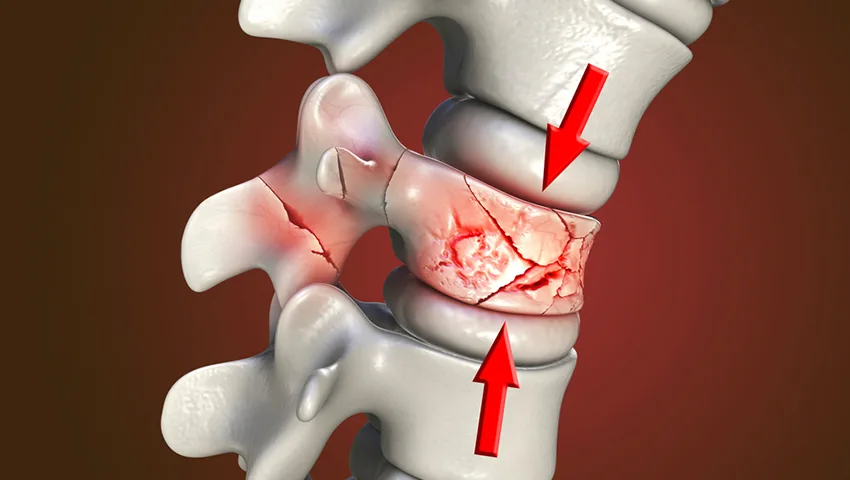
Osteoporosis thins bone silently for years, and the first sign is often a fracture of a vertebra. In an older person, particularly a woman after menopause or anyone who has taken steroids for a long time, a vertebral body can collapse after a slip in the bathroom, a jolt in a car over a speed breaker, or even a bout of coughing. The pain usually begins suddenly in the mid or lower back and is sharply worse when sitting up, turning in bed or standing. Some fractures cause surprisingly little pain and are discovered only when the family notices a loss of height or a stooping posture.
Why these fractures should not be ignored
An untreated compression fracture can leave a parent bed-bound for weeks, and immobility in older people brings its own dangers: chest infections, clots in the legs, pressure sores, muscle wasting and low mood. A collapsed vertebra also increases the likelihood of further fractures at neighbouring levels. Occasionally, a fragment of bone or a progressively collapsing segment can press on the nerves, causing leg weakness. Prompt assessment makes it possible to control pain, get the person moving safely and begin treatment for the underlying osteoporosis.
How they are assessed
Standing X-rays show the shape of the spine and the degree of collapse. An MRI helps tell a fresh fracture from an old healed one, which matters when deciding on treatment, and also helps exclude other causes of a weakened vertebra, such as infection or a tumour deposit. A bone density (DEXA) scan and blood tests for vitamin D, calcium and other factors guide long-term bone-strengthening treatment, often in partnership with the family physician or an endocrinologist.
Treatment options
| Approach | When it is usually considered |
|---|---|
| Pain relief, a supportive brace and supervised mobilisation | Most stable fractures without nerve involvement, particularly in the first few weeks |
| Bone-strengthening medication, vitamin D and calcium | Almost all patients with an osteoporotic fracture, to reduce the risk of the next one |
| Cement augmentation (vertebroplasty or kyphoplasty) | Selected patients with persistent severe pain from a recent fracture that is not settling with conservative care |
| Decompression and stabilisation surgery | Fractures causing nerve compression, significant instability or progressive deformity |
More detail on the range of injuries and treatments is available on the spinal fractures page. Surgery in older adults requires careful planning around heart and lung health, diabetes, blood thinners and bone quality, and Dr. Snha works closely with anaesthetists and physicians so that every step is proportionate to the patient's overall condition.
Making the home safer after a fracture
- Fit grab bars in the bathroom and use a non-slip mat in the shower area.
- Keep night lights on the route from bed to toilet.
- Remove loose rugs and trailing wires, especially on marble or tiled floors.
- Choose a firm chair with arms and a bed at a height that allows the feet to rest flat on the floor.
- Review medicines that cause drowsiness or dizziness with the family doctor.
- Encourage safe daylight walks and balance exercises once pain allows.
For adult children living away
If a parent lives in Gurugram while you work in another city or abroad, you can share the X-ray and MRI on WhatsApp for a preliminary opinion and join the clinic discussion by video, so that the whole family understands the plan.
Most back pain is mechanical and harmless in the long term, however unpleasant it feels. A small number of patients, though, have a condition that needs urgent investigation. Knowing these warning signs helps families act quickly instead of waiting for the next available appointment.
Cauda equina syndrome - seek emergency care the same day
The cauda equina is the bundle of nerve roots at the lower end of the spinal canal that controls the bladder, bowel and sexual function as well as the legs. A large central disc herniation, or occasionally a haematoma, tumour or infection, can compress it. Warning signs include numbness in the "saddle" area (between the legs, around the back passage or genitals), new difficulty passing urine or a reduced sensation of a full bladder, loss of bladder or bowel control, and pain, numbness or weakness in both legs. Outcomes are closely linked to how quickly the pressure is relieved, so go directly to a hospital emergency department and mention these symptoms clearly.
Other warning signs that need prompt review
- Rapidly increasing weakness in a leg or foot, such as tripping over the toes or a slapping gait.
- Back pain with fever, chills or night sweats, particularly after a recent infection, injection or surgery, or in people with diabetes or reduced immunity.
- Unexplained weight loss, a past history of cancer, or pain that is constant and worse at night regardless of position.
- Significant back pain after a road accident or a fall from height.
- New back pain in someone with known osteoporosis or on long-term steroids.
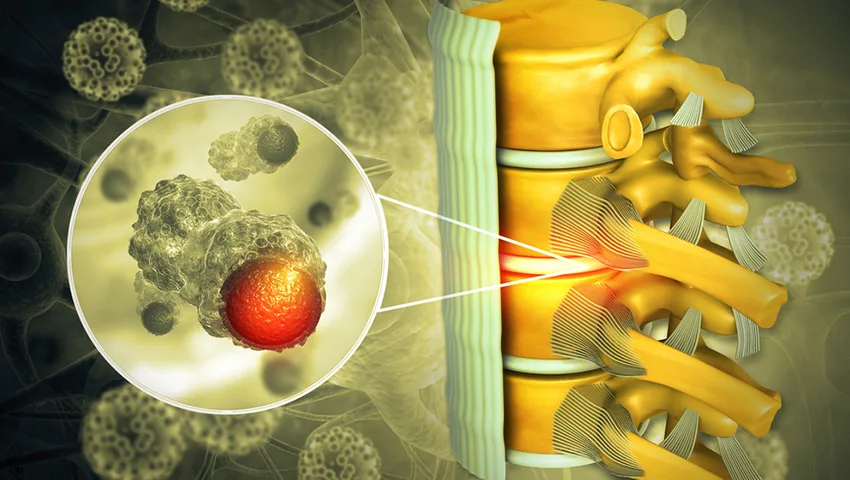
In India, persistent back pain with fever and weight loss should also raise the possibility of spinal tuberculosis, which is very treatable when identified early. More information is available on the spinal tuberculosis treatment page.
Conditions & Treatments

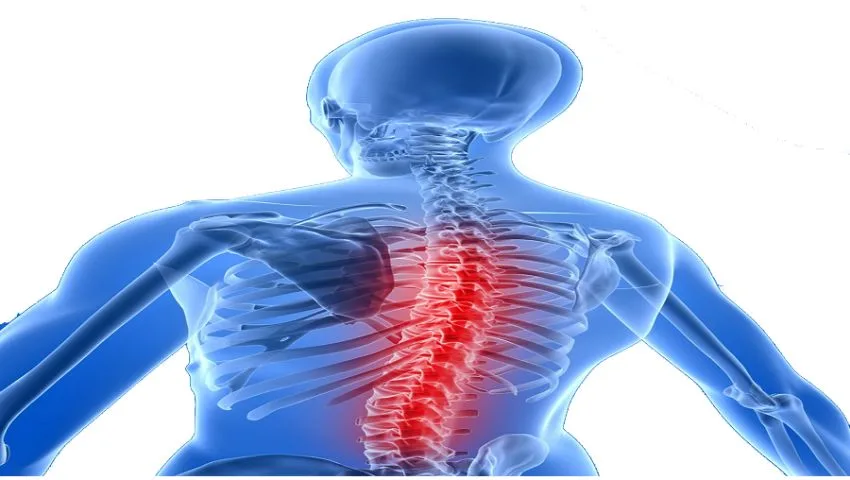
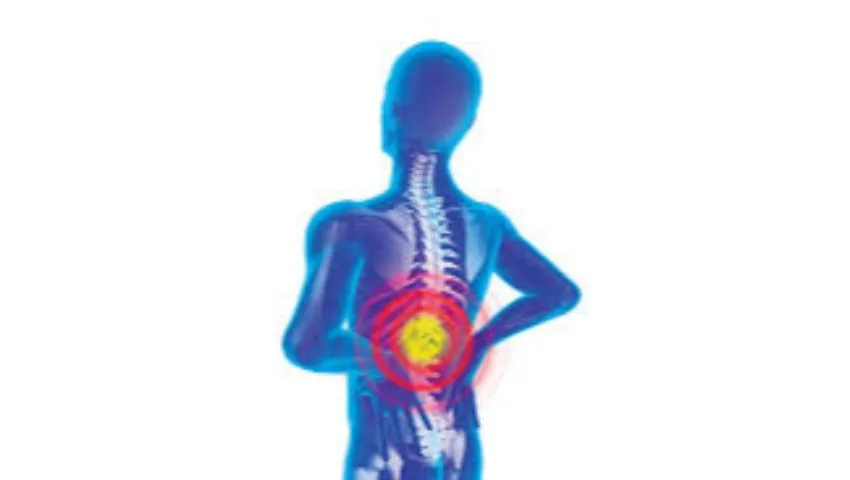
Physiotherapy works best when it follows a clear sequence and is matched to the diagnosis. The phases below are a general framework. Your own programme will depend on whether the problem is a disc, stenosis, SI joint dysfunction or a healing fracture, and whether you have had surgery. Always progress under the guidance of your spine surgeon and physiotherapist.
| Phase | Main goals | Typical activities |
|---|---|---|
| 1. Calm the pain (first days to two weeks) | Reduce irritation of the nerve and stay mobile | Short, frequent walks; finding pain-relieving positions; gentle pelvic tilts; heat or cold as preferred |
| 2. Restore movement (roughly weeks two to six) | Improve flexibility and nerve mobility | Nerve-gliding exercises, hip and hamstring stretches, graded walking, supported bridging |
| 3. Build strength (roughly weeks six to twelve) | Develop core and gluteal endurance | Bird-dog, side-plank progressions, bridges, controlled squats, stationary cycling or swimming |
| 4. Return to full activity (three months onwards) | Prepare for work, sport and daily lifting | Lifting technique practice, sport-specific drills, gym programme with sensible loads |
Signs your programme needs adjusting
Mild muscle soreness after exercise is expected. However, leg pain that spreads further down the limb, new numbness, or pain that remains markedly worse the following morning suggests the load has been increased too quickly. Rather than stopping altogether, step back to the previous level for a few days and let your physiotherapist know. Passive treatments such as massage, traction or electrical machines may give short-term comfort, but active exercise is what produces lasting improvement.
Not sure whether you need surgery?
Many patients improve without an operation. Get a clear, honest plan from Dr. (Prof.) Sumiet Snha.
Small daily habits often decide whether a back problem settles or keeps returning. Posture is less about holding one "perfect" position and more about changing position regularly and loading the spine sensibly. The suggestions below suit most people recovering from lower back pain or sciatica, but check with your doctor if you have had recent surgery or a fracture.
At the desk and at home
- Sit with your hips slightly higher than your knees and your lower back supported by the chair or a small cushion.
- Keep the screen at eye level so you are not slumping forward; a laptop stand and separate keyboard help greatly when working from home.
- Stand up and walk for a minute or two at least every thirty to forty-five minutes.
- Avoid working from the bed or sofa for long periods, which rounds the lower back.
In the car
Long commutes on congested roads place sustained load on the lumbar discs. Adjust the seat so you sit close enough to reach the pedals without stretching, with the backrest only slightly reclined and the lower back supported. Remove a thick wallet from your back pocket, as it tilts the pelvis. On longer journeys, plan a short break to stand and walk. When getting out, turn your whole body towards the door and swing both legs out together rather than twisting.
Lifting, sleeping and staying active
Lift with the load held close to your body, bend at the hips and knees, and avoid twisting while carrying anything heavy - particularly water cans, suitcases and young children. Many people with back pain sleep more comfortably on their side with a pillow between the knees, or on their back with a pillow under the knees. Regular walking is one of the best things you can do for your spine, and keeping body weight in a healthy range reduces the load on the lumbar discs and joints.
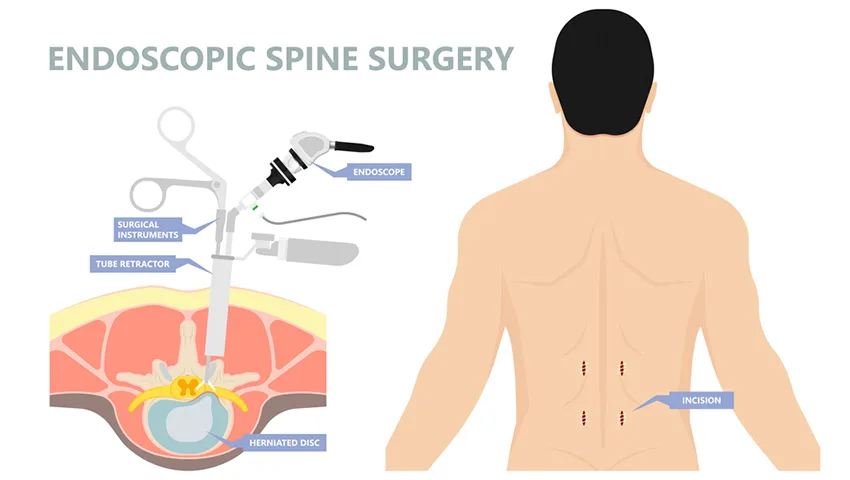
For carefully selected patients with a lumbar disc herniation that has not improved with conservative care, endoscopic discectomy offers a way to free the nerve through an incision often under a centimetre in length. A slim endoscope with a high-definition camera and fine instruments is guided to the herniation under X-ray control, and the fragment compressing the nerve is removed while muscles and ligaments are largely preserved. Depending on the case, it may be performed under regional or general anaesthesia.
- Before the day: blood tests, a review of medicines (especially blood thinners and diabetes medication) and an anaesthetic check, often arranged together at one visit.
- Morning of surgery: admission after fasting; the procedure itself commonly takes around one to two hours, depending on complexity.
- A few hours later: most suitable patients are helped to walk once the anaesthetic effect has worn off, and many notice that the leg pain has eased.
- Going home: discharge the same evening or the following morning, with a simple dressing and a written plan.
- The following weeks: gradual return to desk work, often within one to two weeks, with heavier lifting and sport reintroduced over the next few weeks as advised.
Not every herniation is suitable for an endoscopic approach, and like any surgery it carries risks, including the possibility of a recurrent disc herniation. Dr. Snha discusses the realistic benefits and limitations for your particular scan before recommending it. Read more on the endoscopic spine surgery page, or explore patient experiences on the videos and testimonials page.
Credentials & Leadership Roles
Dr. (Prof.) Sumiet Snha — Minimally Invasive & Endoscopic Neurosurgeon, Spine Surgeon and Peripheral Nerve Surgeon
Awards & Recognition

Felicitated by the Union Health Minister
Swasthya Hindustan Conclave, Zee Hindustan
Honoured by Dr. J.P. Nadda, Union Minister of Health & Family Welfare, for exceptional contribution to neurosurgery and spine surgery. Awards were adjudged by a specialised panel on contributions, success rates and patient outcomes.
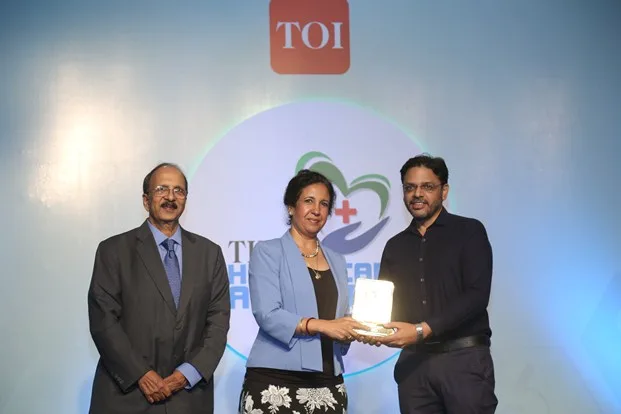
Young Neurosurgeon Award
Times of India Achievers Award
Awarded the Young Neurosurgeon Award by a jury of nationally and internationally reputed doctors.

Young Neurosurgeon Award
9th International Conference on Cerebrovascular Surgery, Nagoya, Japan
Selected for the Young Neurosurgeon Award to attend the international conference on cerebrovascular surgery in Nagoya, Japan.
Fellow of the American College of Surgeons (FACS)
American College of Surgeons
Conferred the FACS fellowship - a globally recognised mark of surgical excellence, ethics and quality patient care.
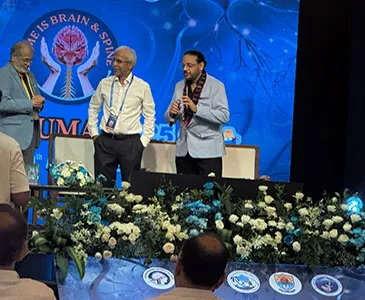
President, Neurotrauma Society of India
33rd Annual Meeting of the Neurotrauma Society of India, Goa
Took over as President of the Neurotrauma Society of India; earlier served as its Secretary.
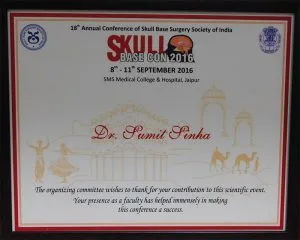
Faculty - Skull Base Surgery Conference
18th Annual Conference of Skull Base Surgery Society of India (Skull Base Con 2016)
Invited faculty for the national skull base surgery conference held at SMS Medical College, Jaipur.
What Patients Say
Congratulations is a small word to wish for Dr. Sumiet Snha for all the hard work you have put into coming so far in life. Your commitment towards become the best neurosurgeon in Delhi & your patients has been always of highest levels. Wish that no height be…
Dr Sumiet Snha for me has been a blessing in-disguise. He explained to me the medical condition in detail along with the treatment options I had. He gave me the right advice and it is because of him today that my slip disc has recovered. He is one of the Top…
My experience with Dr Sumiet Snha has been very pleasant. I have known him for many years and trust him completely. I would highly recommend him for any brain or back problem you may be facing. He always gives the best advice and the right treatment plan for…
Frequently Asked Questions
Simple back strain usually improves noticeably within two to six weeks with gentle activity and pain relief. See a spine specialist if pain keeps you awake at night, travels below the knee, is accompanied by numbness or weakness in the leg, has not improved after about six weeks, follows a fall in someone with thin bones, or comes with fever or unexplained weight loss. Bladder or bowel changes and numbness around the saddle area need emergency assessment the same day.
No. The large majority of lumbar disc herniations improve without an operation, and the disc material itself often shrinks over weeks to months. Surgery is generally considered when leg pain remains disabling despite a good trial of non-surgical care, when there is significant or worsening weakness such as foot drop, or when cauda equina syndrome is suspected. Dr. Snha explains the likely course with and without surgery so that the decision is genuinely shared.
It is a keyhole operation in which a slim endoscope with a camera is passed through a small incision to remove the piece of disc pressing on a nerve. Because muscles are gently moved aside rather than cut, many suitable patients walk within hours and go home the same day or the next morning. Whether it suits you depends on the size, level and position of the herniation and on your general health.
Yes, quite often. SI joint pain is usually felt low in the buttock, just beside the tailbone, and may spread into the thigh, which can mimic sciatica. Specific examination tests, the absence of true nerve signs and sometimes a diagnostic injection help tell the two apart. Getting this right avoids treating the wrong structure.
An elderly person with thin bones can fracture a vertebra after a trivial fall, a cough or even lifting a bucket. Sudden, sharp mid or lower back pain that worsens on sitting up or standing deserves an X-ray and often an MRI. Many such fractures heal with pain relief, a brace and bone-strengthening treatment, while some benefit from cement procedures or stabilisation. Early assessment also helps prevent the next fracture.
Gentle walking, nerve-gliding movements, pelvic tilts and graded core-stabilisation exercises are usually safe once acute pain has eased, but the right programme depends on your diagnosis. Movements that clearly increase leg pain should be avoided. A physiotherapist working with your spine surgeon can tailor and progress the exercises safely.
Max Super Speciality Hospital is in Sector 10, Dwarka, which is well connected to Gurugram by the Dwarka Expressway and NH-48. Travel time depends on your sector and traffic, but for many residents it is a relatively short drive. Video consultations are also available for an initial discussion of your reports.
Yes. You can share your MRI report and images, along with a brief note about your symptoms, on WhatsApp at +91-8448877746 or by email to sumitneuro@gmail.com for a preliminary opinion. A full examination at the clinic is still important before any treatment decision.
Book a Consultation for Back Pain or Sciatica
If lower back pain, leg pain or walking difficulty is affecting your work, sleep or family life, an early specialist assessment can clarify the cause and prevent months of uncertainty. Dr. (Prof.) Sumiet Snha consults at Max Super Speciality Hospital, Plot No. 1, Sector-10, Dwarka, New Delhi-110075, Monday to Saturday. Call +91-8448877746, send your reports on WhatsApp, or book an appointment online. You can also visit the contact page for directions or read more about Dr. Snha.
- Max Super Speciality Hospital, Plot No. 1, Sector-10, Dwarka, New Delhi - 110075
- +91-8448877746
- sumitneuro@gmail.com