Mon - Sat : 9:00 AM - 6:00 PM
- +91-8448877746
- sumitneuro@gmail.com
Top 10 Neurosurgeon in India: 10 Criteria to Choose the Right Surgeon
Rather than a list of names, this guide sets out ten criteria families can use to judge any neurosurgeon in India, and explains how Dr. (Prof.) Sumiet Snha measures against each.
- Vice Chairman, Robotics, Neurosurgery & Spine Services, Max Hospital
- Ex-Professor, JPNA Trauma Center & AIIMS, New Delhi
- MS, DNB, MCh, FACS
- Hon'y President NTSI · President ISPNS
- Keyhole & endoscopic brain and spine surgery
- Honest advice — surgery only when needed
Every month, thousands of families in India type "top 10 neurosurgeon in India" into a search engine. The lists that appear are usually compiled by directories, advertising platforms or websites with no clinical basis for their order. A ranking cannot tell you whether a particular surgeon is right for your tumour, your slipped disc or your child's hydrocephalus. What families really need is a reliable way to judge a surgeon for themselves, using questions that can be checked and answered honestly.
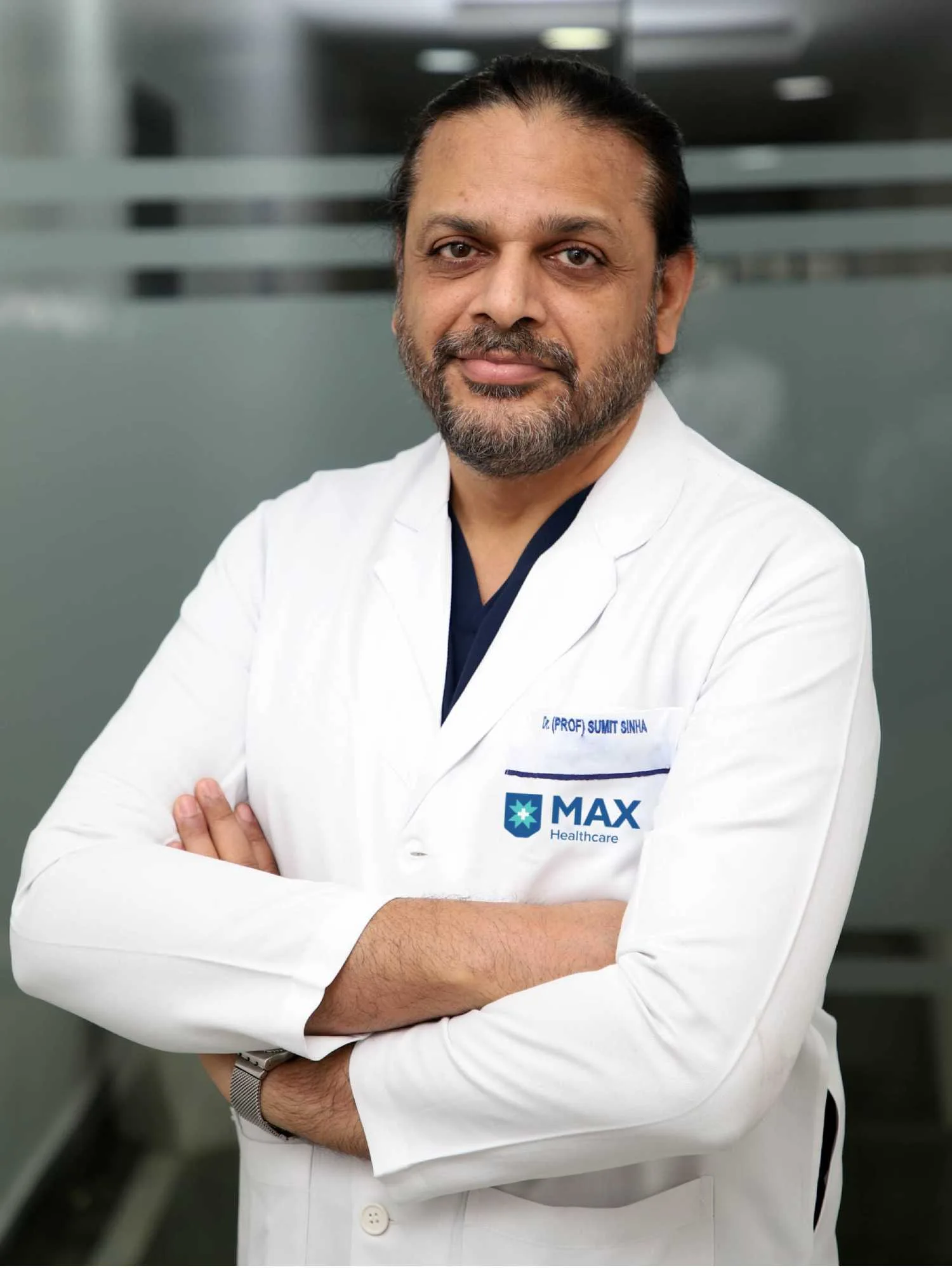
This page takes that approach. Instead of ranking doctors, it sets out ten criteria that experienced clinicians would use when choosing a neurosurgeon for their own relatives. For each criterion we explain why it matters, what to look for, and how Dr. (Prof.) Sumiet Snha (also known as Dr. Sumit Sinha), Principal Director – Neurosurgery & Spine Surgery at Max Super Speciality Hospital, Dwarka, New Delhi, measures up. You can apply the same checklist to any surgeon you are considering, and we encourage you to do so.
Why we do not publish a "top 10" list
Ranking fellow surgeons is neither fair nor clinically meaningful. Excellent neurosurgeons work across India, and each has particular strengths. A checklist puts the decision back where it belongs: with an informed patient who understands what good neurosurgical care looks like.
| # | Criterion | What to check |
|---|---|---|
| 1 | Formal training and certification | MCh or DNB in Neurosurgery from a recognised institution |
| 2 | Depth of experience | Years in independent practice and volume of similar operations |
| 3 | Condition-specific expertise | Regular work with your exact diagnosis, not just the broad field |
| 4 | Range of surgical techniques | Endoscopic, keyhole, microsurgical and open options available |
| 5 | Hospital and team | Neuro-ICU, navigation, neuromonitoring, anaesthesia and imaging |
| 6 | Clinical judgement | Willingness to advise against surgery when it will not help |
| 7 | Communication and consent | Clear explanation of options, risks and realistic recovery |
| 8 | Academic and peer standing | Teaching roles, society leadership and guideline work |
| 9 | Aftercare and follow-up | Rehabilitation, clear follow-up plan, reachable team |
| 10 | Accessibility | Location, remote opinions, emergency pathway |
Neurosurgery is a super-speciality. In India, a fully trained neurosurgeon completes MBBS, then usually a postgraduate surgical degree, and then three to six further years of dedicated neurosurgical residency leading to an MCh in Neurosurgery or a DNB in Neurosurgery. These programmes involve supervised operating, examinations and years of night duty in emergency and intensive care. Titles such as "brain specialist" or "neuro consultant" on a signboard do not by themselves tell you whether the doctor holds this surgical qualification, so it is always worth asking.
What to look for
- An MCh or DNB in Neurosurgery from a recognised medical college or institute.
- Registration with the National Medical Commission or a State Medical Council, which you can verify online.
- Additional fellowships or international memberships that require peer assessment, rather than paid "awards".
- Where the surgeon trained: high-volume teaching hospitals expose residents to a wider variety of cases.
How Dr. Snha meets this criterion
Dr. Snha holds MBBS, MS and DNB qualifications and completed his MCh in Neurosurgery at the All India Institute of Medical Sciences (AIIMS), New Delhi, the country's apex medical institution. He has also been admitted as a Fellow of the American College of Surgeons (FACS), a fellowship granted after scrutiny of a surgeon's training, practice and professional conduct. Holding both the DNB and the MCh means his training has been assessed through two separate national systems. His subsequent years on the AIIMS faculty, rising to Professor of Neurosurgery, meant continuous exposure to peer review and to the institute's demanding clinical standards.
Research across surgical specialities consistently links higher case volume with better results for complex operations. In neurosurgery, experience shapes the small decisions that matter: how to position a patient so the brain relaxes naturally, when to stop removing a tumour that is adherent to a vital vessel, or how to recognise early signs of trouble after surgery. These instincts are built over many years and many operations, and they are hard to replicate through reading or short courses alone.
Questions worth asking
- How many years have you practised as an independent consultant neurosurgeon?
- Roughly how many operations like mine do you perform in a year?
- Who will actually perform the key steps of the operation?
- How do you handle complications if they occur, and what is your team's plan?
A confident surgeon will answer these questions openly. Vague replies, or reluctance to discuss complications, deserve a second look. It is also fair to ask whether the surgeon has handled revision or "redo" operations, since these often test experience more than first-time surgery does.
How Dr. Snha meets this criterion
Dr. Snha has more than 25 years of experience in neurosurgery and has performed thousands of brain, spine and nerve operations. Much of his career was spent at AIIMS, New Delhi, including its trauma services, where the volume and complexity of cases are among the highest in the country. That setting brought daily exposure to emergencies, rare tumours, complex spinal injuries and referrals that other centres had found difficult. He later served as Director of Neurosurgery at Paras Health, Gurugram, before taking up his present role as Principal Director – Neurosurgery & Spine Surgery at Max Super Speciality Hospital, Dwarka. This breadth means he has seen both common problems in large numbers and uncommon problems often enough to recognise them.
Neurosurgery covers an enormous range of problems, from a pinched nerve in the lower back to a deep-seated brain tumour or a bleeding aneurysm. Many neurosurgeons naturally focus on certain areas. When you are choosing a surgeon, general reputation matters less than whether they regularly treat the exact condition you have. A surgeon who performs endoscopic disc surgery every week may rarely operate on the skull base, and the reverse is equally true. Asking directly about your diagnosis is the simplest way to find out.
Matching the surgeon to the problem
| If your condition is… | Relevant experience to ask about |
|---|---|
| Brain or pituitary tumour | Microsurgical and endoscopic tumour removal, skull base approaches |
| Aneurysm or AVM | Cerebrovascular microsurgery, bypass techniques, team with interventional radiology |
| Slip disc or spinal stenosis | Endoscopic and minimally invasive spine surgery |
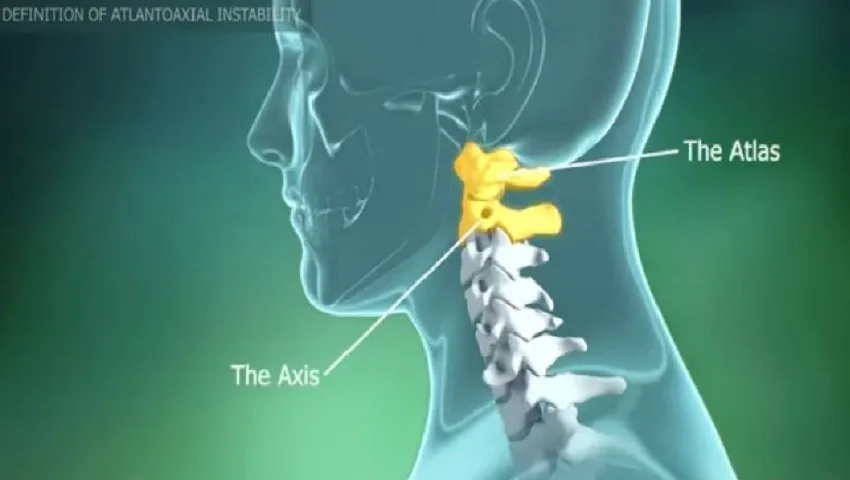
| Spinal injury or instability | Trauma fixation, craniovertebral junction surgery |
| Nerve injury or brachial plexus palsy | Peripheral nerve microsurgery and nerve transfers |
| Child with a neurological problem | Paediatric neurosurgery and paediatric anaesthesia support |
How Dr. Snha meets this criterion
Dr. Snha is unusual in working in depth across all three branches of the speciality – brain, spine and peripheral nerve. On the brain side his work includes endoscopic brain tumour surgery, acoustic neuroma removal, vascular neurosurgery and cerebral bypass. In the spine he performs endoscopic spine surgery, craniovertebral junction surgery and fixation of spinal fractures. As Founder Secretary of the Indian Society of Peripheral Nerve Surgery, he also has a particular interest in brachial plexus and peripheral nerve injuries, an area in which relatively few centres in India offer dedicated microsurgical care.
Get an expert opinion before you decide
Share your MRI / CT reports on WhatsApp for a preliminary opinion, or book an in-person / video consultation.
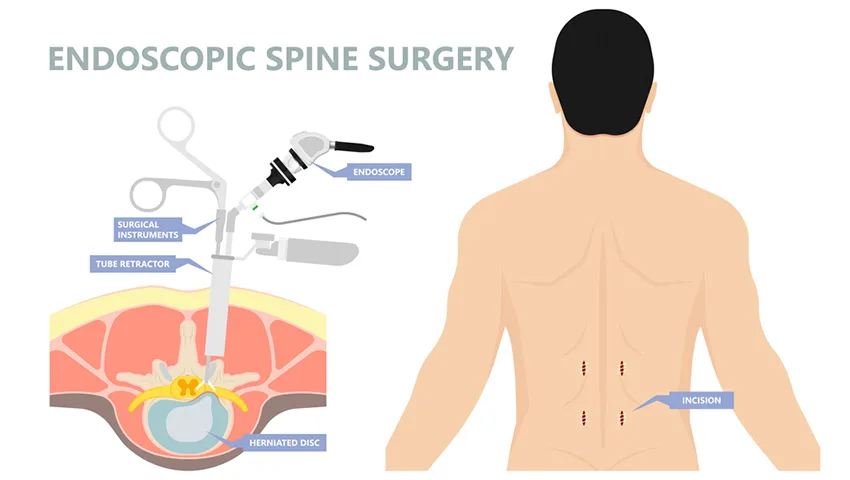
A surgeon who offers only one technique tends to fit every patient to that technique. The better arrangement is a surgeon who is comfortable with several approaches and chooses the one that suits your anatomy and diagnosis. For some patients a keyhole or endoscopic procedure means a smaller wound, less blood loss and a shorter hospital stay. For others, such as those with very large tumours or significant spinal instability, a conventional open operation remains the safer choice. Honest advice depends on the surgeon being skilled in both.
Signs of a versatile surgical practice
- Experience with endoscopes, operating microscopes and tubular retractors.
- Use of neuronavigation to plan and guide the approach.
- Access to intra-operative neuromonitoring for surgery near critical nerves or the spinal cord.
- A clear explanation of why one technique is preferred over another in your case.
How Dr. Snha meets this criterion
Dr. Snha is regarded as one of India's experienced minimally invasive, endoscopic and keyhole neuro and spine surgeons. He uses endoscopic approaches through the nose for selected pituitary and skull base tumours, endoscopic third ventriculostomy for suitable cases of hydrocephalus, and endoscopic techniques for disc and stenosis surgery. At the same time, his years in a major trauma and tertiary referral setting have kept him fully practised in open cranial, spinal and reconstructive surgery. His role as teaching faculty for AO Spine International, and as founder faculty in-charge of the cadaver training and research facility at AIIMS, involved teaching these techniques to other surgeons, which demands a thorough command of each method.
No neurosurgeon operates alone. The outcome of a brain or spine operation depends heavily on the neuro-anaesthetist, the intensive care team, nursing staff, radiologists and physiotherapists. A highly skilled surgeon working in a hospital without a proper neuro-intensive care unit or round-the-clock imaging is at a real disadvantage when something unexpected happens at two o'clock in the morning. When comparing options, look at the whole system of care, not only the name on the consultation slip.
Infrastructure checklist
Operating theatre
Operating microscope, neuro-endoscopes, neuronavigation, high-speed drills and intra-operative neuromonitoring.
Imaging
MRI, CT and angiography available at all hours, with radiologists experienced in neuro-imaging.
Critical care
A dedicated neuro-ICU with staff trained in monitoring brain and spinal cord patients.
Allied specialists
Neuro-anaesthesia, neurology, interventional radiology, endocrinology, ENT and rehabilitation on site.
How Dr. Snha meets this criterion
Dr. Snha operates at Max Super Speciality Hospital, Dwarka, a tertiary care hospital where he leads the Neurosurgery and Spine Surgery department as Principal Director. His patients have access to the hospital's neuro-critical care, advanced imaging and multidisciplinary specialists, so that complex cases can be discussed and managed jointly. His long experience in trauma care, including certified ATLS (Advanced Trauma Life Support) faculty status, also shapes how his team prepares for and responds to emergencies before, during and after surgery.
Perhaps the most underrated quality in a neurosurgeon is the willingness to say "you do not need an operation". A large proportion of people referred with back pain, neck pain or incidental findings on an MRI scan improve with time, medicines, physiotherapy or simple observation. Similarly, some small brain tumours, cysts and aneurysms are best watched with periodic scans rather than treated immediately. A surgeon whose advice is guided by evidence rather than by the number of procedures performed is one you can trust with harder decisions later.
What good judgement looks like in practice
- Correlating the scan with your actual symptoms and examination, not treating the image alone.
- Explaining the natural history of the condition if nothing is done.
- Offering a trial of conservative treatment where it is safe to do so.
- Recommending urgent surgery promptly when delay would cause harm.
- Welcoming a second opinion rather than discouraging it.
How Dr. Snha meets this criterion
Dr. Snha's consultations are built around the principle that surgery should be offered only when it is clearly likely to help. Many patients who come to him expecting an operation leave with a plan for medicines, physiotherapy or monitoring, and a clear idea of which warning signs would change that plan. Equally, when a condition such as a compressive spinal lesion or a bleeding vascular malformation needs prompt treatment, he explains the reasons plainly so that families can act without delay. His membership of the core committee that formulated national guidelines for traumatic brain injury reflects a practice rooted in evidence rather than habit.
A caution for families
Be wary of any recommendation for major spine or brain surgery that is made in a few minutes, without an examination, or with pressure to decide immediately in a non-emergency situation. Genuine emergencies do exist, but most planned neurosurgery allows time to understand your options.
Neurosurgical decisions often involve trade-offs. Removing every last cell of a tumour may risk weakness or speech difficulty; leaving a small amount behind may mean further treatment later. Patients and families can only make these choices if the surgeon explains them in plain language. Informed consent is not a signature on a form the night before surgery. It is a conversation, sometimes several, in which the diagnosis, alternatives, likely benefits, possible complications and expected recovery are all laid out honestly.
Signs of good communication
- The surgeon shows you your own scans and explains what they mean.
- Risks are discussed specifically for your case, not as a generic list.
- You are told what recovery will realistically involve and how long it may take.
- Family members are welcome to join the discussion and ask questions.
- You leave with written information or a clear summary of the plan.
How Dr. Snha meets this criterion
Many years of teaching medical students and neurosurgical residents at AIIMS have made clear explanation second nature for Dr. Snha. He routinely walks patients through their MRI or CT images, outlines each available option including non-surgical ones, and gives an honest account of what can and cannot be achieved. Patients who have shared their experiences on the patient testimonials page frequently mention the time taken to answer their questions. Families travelling from afar can also join discussions by video, so that decisions are made together rather than by one relative alone.
Conditions & Treatments
Online reviews and advertisements tell you little about how a neurosurgeon is regarded by other neurosurgeons. Academic roles, election to professional societies and invitations to teach are better indicators, because they depend on the judgement of colleagues who understand the speciality. Surgeons who teach are also more likely to keep up with new evidence and techniques, since they must explain and defend their methods in front of critical audiences.
How Dr. Snha meets this criterion
- Former Professor, Department of Neurosurgery, AIIMS New Delhi.
- President, Neurotrauma Society of India.
- Founder Secretary, Indian Society of Peripheral Nerve Surgery.
- Teaching faculty for AO Spine International and certified ATLS faculty.
- Founder faculty in-charge of the cadaver training and research facility at AIIMS.
- Member of the core committee that formulated national guidelines for traumatic brain injury.
He has also been felicitated by Dr. J.P. Nadda, Union Health Minister, at the Swasthya Hindustan Conclave organised by Zee Hindustan, received the Young Neurosurgeon Award at the Times of India Achievers Award 2017, and was awarded a Young Neurosurgeon Award to attend the 9th International Conference on Cerebrovascular Surgery in Nagoya, Japan. Taken together, these roles show that his standing has been judged by fellow specialists, not only by marketing.
The operation is one day in a recovery that may last weeks or months. Good neurosurgical care includes careful monitoring in the first days, early mobilisation, physiotherapy, wound care, attention to medicines such as anti-seizure drugs or steroids, and a follow-up schedule that catches problems early. For conditions such as brain tumours, hydrocephalus or nerve injuries, follow-up may continue for years with periodic scans or nerve studies. Before choosing a surgeon, ask who you will contact after discharge and how quickly you can be seen if symptoms return.
Questions about aftercare
- How long will I stay in hospital, and when can I walk, travel and return to work?
- Will I need physiotherapy, speech therapy or occupational therapy?
- Whom do I call if I develop fever, wound discharge, headache or new weakness?
- How often will I need follow-up visits or scans, and can some be done remotely?
How Dr. Snha meets this criterion
Dr. Snha's team gives each patient a written discharge plan covering medicines, wound care, activity and warning signs, together with a follow-up schedule. Rehabilitation begins early and is coordinated with physiotherapists and, where needed, other specialists. For patients who have returned home to another city, follow-up scans can often be reviewed on WhatsApp or by video consultation, reducing the need for repeated travel. For long-term conditions such as nerve injuries or spasticity, progress is reviewed at planned intervals so that further treatment can be offered at the right time.
The best surgeon on paper is of little use if you cannot reach them. Accessibility has several parts: a location you can travel to, clear appointment arrangements, a way to share reports before travelling, and a reliable pathway in an emergency. For families coming from smaller towns or from abroad, the ability to obtain a preliminary opinion before booking tickets can save considerable time and expense, and helps decide whether travel is needed at all.
How Dr. Snha meets this criterion
Location
Max Super Speciality Hospital, Plot No. 1, Sector-10, Dwarka, New Delhi-110075, close to IGI Airport, connected to Gurugram by the Dwarka Expressway and reachable on the Blue Line metro.
OPD timings
Consultations Monday to Saturday, by appointment through the online booking page or by phone.
Remote opinion
Reports and scans can be shared on WhatsApp (+91-8448877746) or by e-mail to sumitneuro@gmail.com for a preliminary opinion.
Video consultation
Available for patients in other states and countries, and for follow-up after surgery.
Not sure whether you need surgery?
Many patients improve without an operation. Get a clear, honest plan from Dr. (Prof.) Sumiet Snha.
Once you have met or spoken with one or more neurosurgeons, it can help to score each against the ten criteria. Give each criterion a mark from 0 to 2: 0 if it is not met or you could not find out, 1 if it is partly met, and 2 if it is clearly met. The total is not a scientific measure, but writing it down forces a structured comparison and often reveals gaps you had not noticed, such as an excellent surgeon at a hospital without a neuro-ICU, or a convenient location with little experience of your particular condition.
Weight the criteria according to your situation. For an emergency such as a head injury or brain haemorrhage, the hospital's emergency and critical care capacity (criterion 5) and accessibility (criterion 10) matter most, because time is critical. For a planned operation on a skull base tumour, condition-specific expertise (criterion 3) and range of techniques (criterion 4) deserve extra weight. For a slipped disc, judgement about when not to operate (criterion 6) is often the most important of all.
A well-prepared consultation gives the surgeon the full picture and gives you better answers. Gather every scan you have had, including the original images on CD or through a digital link, not just the typed report, because the surgeon will want to look at the pictures directly. Keep a short timeline of your symptoms: when they started, how they have changed, and what makes them better or worse. Bring a family member if you can, since a second pair of ears is invaluable when complex information is being discussed.
- Collect MRI, CT and X-ray images with reports, in date order.
- List all current medicines, including blood thinners, diabetes and blood pressure tablets.
- Note previous operations, allergies and major illnesses.
- Write down your top three questions so they are not forgotten.
- Ask for a written summary of the plan before you leave.
If you would like Dr. Snha to review your case before deciding whether to travel, send your reports on WhatsApp to +91-8448877746 with a brief note of your symptoms. You can also read more articles on neurosurgical conditions on our blog.
Credentials & Leadership Roles
Dr. (Prof.) Sumiet Snha — Minimally Invasive & Endoscopic Neurosurgeon, Spine Surgeon and Peripheral Nerve Surgeon
Awards & Recognition
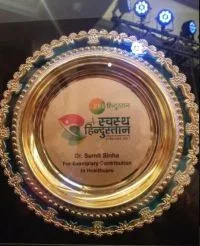
Felicitated by the Union Health Minister
Swasthya Hindustan Conclave, Zee Hindustan
Honoured by Dr. J.P. Nadda, Union Minister of Health & Family Welfare, for exceptional contribution to neurosurgery and spine surgery. Awards were adjudged by a specialised panel on contributions, success rates and patient outcomes.
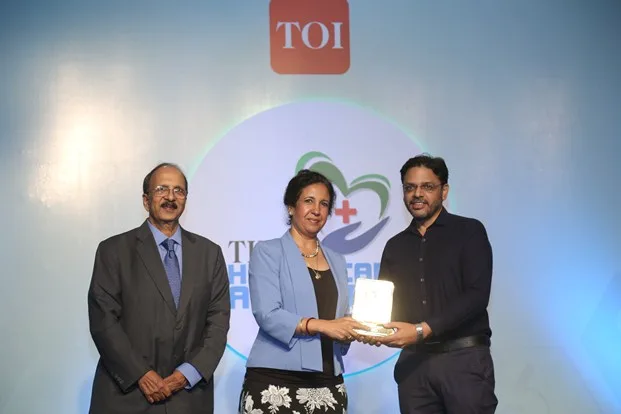
Young Neurosurgeon Award
Times of India Achievers Award
Awarded the Young Neurosurgeon Award by a jury of nationally and internationally reputed doctors.
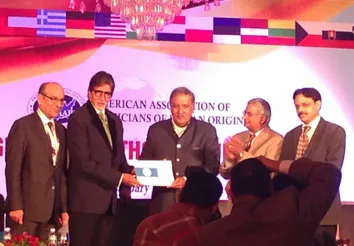
Young Neurosurgeon Award
9th International Conference on Cerebrovascular Surgery, Nagoya, Japan
Selected for the Young Neurosurgeon Award to attend the international conference on cerebrovascular surgery in Nagoya, Japan.
Fellow of the American College of Surgeons (FACS)
American College of Surgeons
Conferred the FACS fellowship - a globally recognised mark of surgical excellence, ethics and quality patient care.
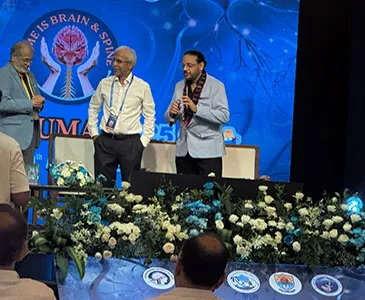
President, Neurotrauma Society of India
33rd Annual Meeting of the Neurotrauma Society of India, Goa
Took over as President of the Neurotrauma Society of India; earlier served as its Secretary.
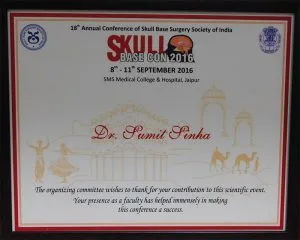
Faculty - Skull Base Surgery Conference
18th Annual Conference of Skull Base Surgery Society of India (Skull Base Con 2016)
Invited faculty for the national skull base surgery conference held at SMS Medical College, Jaipur.
What Patients Say
Congratulations is a small word to wish for Dr. Sumiet Snha for all the hard work you have put into coming so far in life. Your commitment towards become the best neurosurgeon in Delhi & your patients has been always of highest levels. Wish that no height be…
Dr Sumiet Snha for me has been a blessing in-disguise. He explained to me the medical condition in detail along with the treatment options I had. He gave me the right advice and it is because of him today that my slip disc has recovered. He is one of the Top…
My experience with Dr Sumiet Snha has been very pleasant. I have known him for many years and trust him completely. I would highly recommend him for any brain or back problem you may be facing. He always gives the best advice and the right treatment plan for…
Frequently Asked Questions
No. There is no government or medical council ranking of individual neurosurgeons. Lists found online are compiled by private websites and directories, often on commercial terms. They can be a starting point for names, but the criteria on this page are a far better guide to whether a surgeon suits your condition.
A recognised neurosurgeon will hold a super-speciality degree, usually an MCh (Magister Chirurgiae) in Neurosurgery or a DNB in Neurosurgery, after completing MBBS and a postgraduate surgical degree. Dr. Snha holds MBBS, MS, DNB and an MCh in Neurosurgery from AIIMS, New Delhi, and is a Fellow of the American College of Surgeons (FACS).
Experience is important but not everything. What matters most is experience with operations like yours, combined with sound judgement, a capable team and honest communication. That is why this checklist has ten criteria rather than one.
For any planned, non-emergency operation, a second opinion is sensible and widely accepted. Dr. Snha regularly provides second opinions and reviews MRI and CT reports sent by WhatsApp or e-mail for a preliminary view.
It describes operations performed through smaller openings using endoscopes, tubular retractors, microscopes and navigation, aiming to reduce disturbance to normal tissue. It is suitable for many, but not all, conditions. A surgeon trained in both minimally invasive and conventional surgery can choose honestly between them.
Yes. Patients from other states and from abroad can begin with a video consultation or by sharing reports on WhatsApp. If an in-person visit is needed, the OPD at Max Hospital, Dwarka, runs Monday to Saturday and is close to IGI Airport.
Bring all MRI and CT films or CDs along with their written reports, previous discharge summaries, a list of current medicines (especially blood thinners), and any nerve conduction or EEG studies. Writing down your symptoms and questions in advance helps you make the most of the appointment.
Yes. His practice covers brain, spine and peripheral nerve surgery in adults and children, including brain tumours, vascular lesions, hydrocephalus, epilepsy, slip disc, spinal stenosis, spinal injuries and brachial plexus injuries.
Book a Consultation With Dr. (Prof.) Sumiet Snha
If you are weighing up neurosurgeons for yourself or a family member, the most useful next step is a detailed conversation with a specialist who will review your scans and explain every option. You can book an appointment online, call +91-8448877746, or send your MRI and CT reports on WhatsApp for a preliminary opinion. Video consultations are available for patients outside Delhi. Dr. Snha consults at Max Super Speciality Hospital, Plot No. 1, Sector-10, Dwarka, New Delhi-110075, Monday to Saturday. To learn more about his background, visit the about page or contact the clinic.
- Max Super Speciality Hospital, Plot No. 1, Sector-10, Dwarka, New Delhi - 110075
- +91-8448877746
- sumitneuro@gmail.com