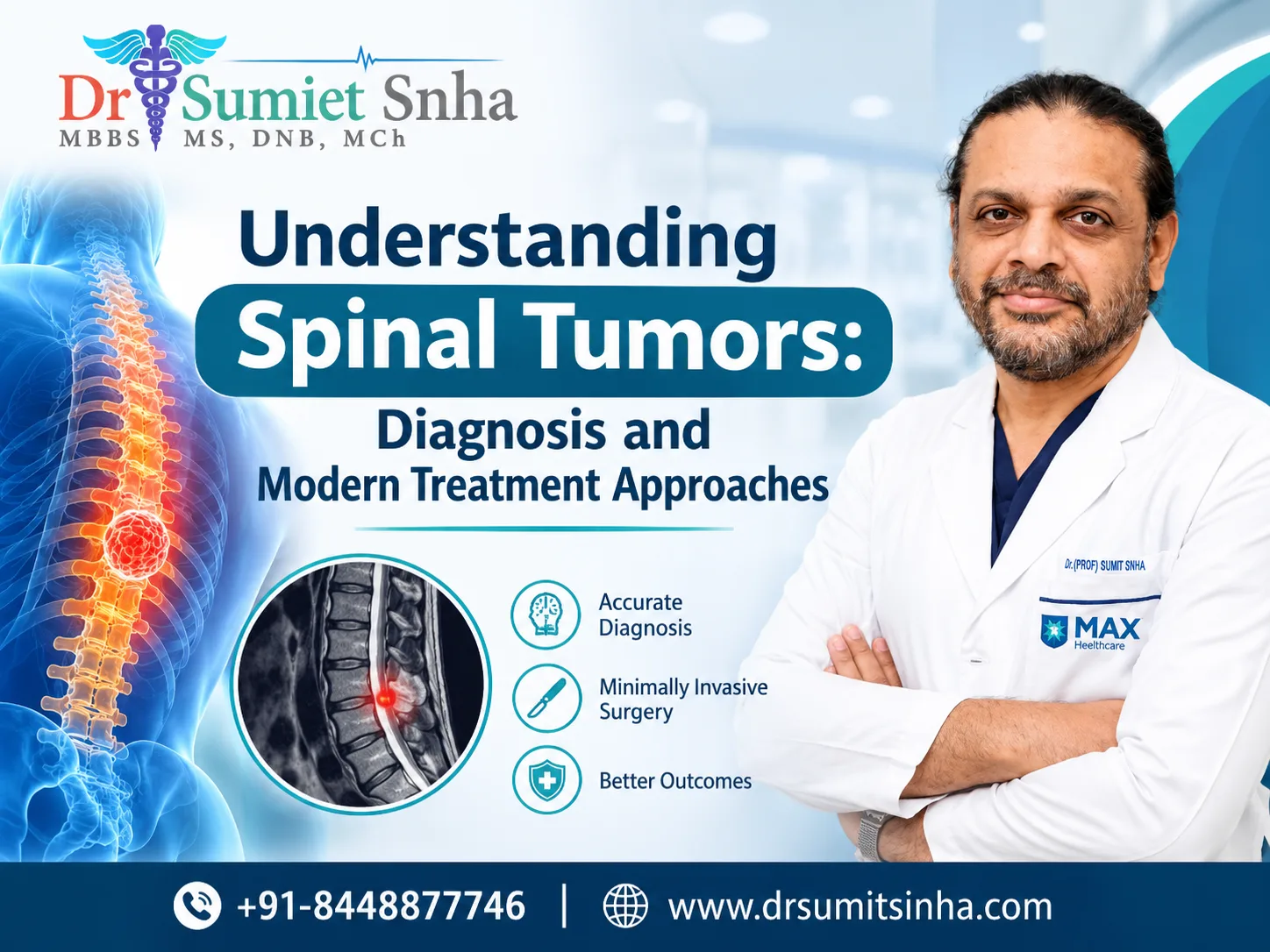
Spinal Tumor Surgery in Delhi is an important treatment option for patients experiencing persistent back pain, nerve compression, spinal cord pressure, or neurological problems caused by abnormal growths in or around the spine. Spinal tumors can be benign (non-cancerous) or malignant (cancerous), and both types may affect normal spinal functions depending on their size, location and growth pattern.
The spine plays a crucial role in supporting the body and protecting the spinal cord, which carries important signals between the brain and different parts of the body. When a tumor develops in the spinal column or spinal canal, it may compress nearby nerves, interfere with movement and sensation, and affect everyday activities.
Modern neurosurgery has introduced advanced treatment approaches, including microsurgical and minimally invasive endoscopic techniques. These approaches allow surgeons to access selected spinal tumors through smaller incisions while aiming to preserve surrounding muscles, bones and neurological structures.
Patients considering Spinal Tumor Surgery in Delhi should understand that treatment depends on an accurate diagnosis, tumor characteristics and individual medical requirements. Consultation with an experienced neurosurgeon helps determine the most appropriate treatment strategy.
What Is a Spinal Tumor?
A spinal tumor is an abnormal growth of cells that develops in or around the spinal column, spinal cord or surrounding tissues. These tumors can originate in the spine itself or spread from cancers affecting other organs.
Spinal tumors are generally classified into two major categories:
1. Benign Spinal Tumors
Benign tumors are non-cancerous growths that generally do not spread to distant organs. However, they can still cause serious problems when they press against the spinal cord or nerve roots.
Examples include:
Schwannomas
Meningiomas
Certain hemangiomas
Some nerve sheath tumors
2. Malignant Spinal Tumors
Malignant tumors are cancerous growths that can invade surrounding tissues and, in some cases, spread to other parts of the body.
They may originate in the spinal bones or develop when cancer spreads from organs such as the lungs, breasts, kidneys or prostate.
Early evaluation for Spinal Tumor Surgery in Delhi can help identify the nature of the tumor and determine whether surgery, radiation therapy, medication or a combination of treatments is appropriate.
Types of Spinal Tumors Based on Their Location
Understanding the tumor's location is essential when planning Spinal Tumor Surgery in Delhi. Spinal tumors are classified according to their relationship with the spinal cord and its protective coverings.
1. Extradural Tumors
These tumors develop outside the dura mater, the protective membrane surrounding the spinal cord. Many extradural tumors involve the vertebral bones and may be associated with cancer spreading from other organs.
2. Intradural-Extramedullary Tumors
These tumors develop inside the dura mater but outside the spinal cord itself. Schwannomas and meningiomas are common examples.
Selected tumors in this category may be suitable for minimally invasive or endoscopic-assisted surgical removal.
3. Intramedullary Tumors
Intramedullary tumors develop within the spinal cord. Examples include ependymomas and astrocytomas.
Their treatment requires highly precise microsurgical techniques because the tumor is located within delicate neurological tissue.
The type, location and relationship of a tumor with surrounding structures help determine whether Spinal Tumor Surgery in Delhi should involve an endoscopic, microsurgical or conventional surgical approach.
Common Symptoms of Spinal Tumors
Spinal tumor symptoms can vary significantly depending on the tumor's location, size and growth rate. Some patients initially experience mild discomfort, while others develop neurological symptoms as the tumor compresses the spinal cord or nerve roots.
Common warning signs include:
Persistent Back Pain: Pain that continues for several weeks and does not improve with routine treatment.
Neck Pain: Tumors in the cervical spine may cause persistent neck discomfort.
Numbness and Tingling: Compression of nerves may produce unusual sensations in the arms, legs or other body areas.
Muscle Weakness: Patients may experience difficulty lifting objects, standing or walking.
Balance Problems: Spinal cord compression can affect coordination and stability.
Radiating Pain: Discomfort may travel from the spine into the arms, chest or legs.
Bladder or Bowel Problems: Certain tumors can interfere with the nerves responsible for bladder and bowel control.
Progressive weakness, difficulty walking or new bladder and bowel dysfunction requires urgent medical assessment. Sudden or rapidly worsening neurological symptoms should not be ignored.
Early consultation for Spinal Tumor Treatment in Delhi may help identify the cause of these symptoms before neurological complications become more severe.
Causes and Risk Factors of Spinal Tumors
The exact cause of many primary spinal tumors is not fully understood. However, certain factors may increase the likelihood of developing particular types of tumors.
Some important factors include:
1. Genetic Conditions: Certain inherited conditions, including neurofibromatosis and von Hippel-Lindau disease, are associated with specific spinal and nervous system tumors.
2. Metastatic Cancer: Cancer originating in other organs may spread to the vertebral bones or surrounding spinal structures.
3. Abnormal Cell Growth: Changes in cellular development can contribute to the formation of primary spinal tumors.
4. Previous Cancer History: Individuals with a history of cancer may require evaluation if they develop unexplained or persistent back pain.
Not every patient with back pain has a spinal tumor. However, persistent symptoms, particularly in people with a previous cancer diagnosis, should be investigated appropriately.
Diagnosis Before Spinal Tumor Surgery in Delhi
Accurate diagnosis is one of the most important steps in planning successful spinal tumor treatment. A neurosurgeon evaluates the patient's symptoms, medical history, neurological condition and imaging reports before recommending treatment.
The following investigations may be recommended.
1. Magnetic Resonance Imaging (MRI)
MRI is one of the most important investigations for evaluating spinal tumors. It provides detailed images of the spinal cord, nerve roots, vertebral structures and surrounding soft tissues.
MRI with contrast may help identify tumor boundaries, involvement of nearby structures and possible tumor characteristics.
2. Computed Tomography (CT Scan)
A CT scan provides detailed information about the bones of the spine. It helps identify bone destruction, structural changes and the extent of certain vertebral tumors.
3. CT-Guided Biopsy
In selected cases, a biopsy may be required to determine the exact tumor type. A small tissue sample is collected and examined by a pathologist.
4. Neurological Examination
A detailed neurological assessment evaluates muscle strength, reflexes, sensation, coordination and walking ability.
5. Additional Investigations
Depending on the suspected tumor, doctors may recommend blood tests, whole-body imaging or other investigations to identify the primary source of metastatic disease.
The findings help determine whether Spinal Tumor Surgery in Delhi is necessary and which surgical approach may offer the most appropriate balance between tumor control and preservation of neurological function.
Advanced Treatment Options for Spinal Tumors
Treatment is not the same for every spinal tumor. The decision depends on whether the tumor is benign or malignant, its location, neurological involvement and the patient's general health.
Available treatment options include:
1. Observation and Regular Monitoring
Some small, asymptomatic and slow-growing benign tumors may not require immediate surgery. In these situations, the neurosurgeon may recommend regular clinical examinations and follow-up MRI scans.
2. Minimally Invasive Spinal Tumor Surgery
Minimally invasive surgery uses smaller incisions and specialized instruments to reach selected spinal tumors.
Depending on the tumor's position, surgeons may use tubular retractors, an operating microscope or endoscopic visualization.
Potential advantages in appropriately selected patients include:
Smaller surgical incisions.
Reduced disruption of surrounding muscles.
Less postoperative discomfort in some cases.
Reduced blood loss in selected procedures.
Earlier mobilization.
Potentially shorter hospital stays.
However, these benefits depend on the tumor and surgical technique. Not every spinal tumor is suitable for a minimally invasive approach.
3. Endoscopic Removal of Spinal Tumors
Endoscopic techniques use a small camera and specialized instruments to provide magnified visualization of the surgical area.
For selected tumors, this approach can help surgeons access the affected region while minimizing unnecessary tissue disruption.
The procedure may be considered for certain accessible spinal tumors, including selected nerve sheath tumors. The surgical plan depends on the tumor's size, location, relationship with the spinal cord and surrounding anatomical structures.
Patients looking for Spinal Tumor Surgery in Delhi should understand that endoscopic surgery is not suitable for every case. Some tumors require conventional microsurgery, extensive reconstruction or a combination of surgical approaches.
4. Microsurgical Tumor Removal
Microsurgery involves using an operating microscope and specialized instruments to carefully separate the tumor from surrounding nerves and spinal cord structures.
It is particularly important for tumors located within or close to delicate neurological tissues.
5. Radiation Therapy and Other Cancer Treatments
Radiation therapy, including stereotactic body radiotherapy in selected cases, may be recommended for certain malignant spinal tumors.
Chemotherapy, targeted therapy, immunotherapy or other systemic treatments may also be considered depending on the tumor's pathology and primary cancer.
A multidisciplinary team may help coordinate the overall treatment plan.
How Is Endoscopic Spinal Tumor Surgery Performed?
The process of Endoscopic Spinal Tumor Surgery involves several carefully planned steps.
Step 1: Preoperative Evaluation
The neurosurgeon reviews MRI and CT scans, evaluates neurological function and determines whether an endoscopic approach is appropriate.
Step 2: Anaesthesia
The procedure is generally performed under general anaesthesia, depending on the surgical plan and patient's medical condition.
Step 3: Surgical Access
A carefully planned small incision is made to access the affected spinal region. Specialized instruments and an endoscope may be used to visualize the tumor.
Step 4: Tumor Removal
The surgeon carefully separates the tumor from surrounding structures. The objective may be complete removal when safely possible or adequate decompression when complete removal could cause neurological damage.
Step 5: Closure and Monitoring
After the procedure, the surgical area is closed appropriately. The patient is monitored for neurological changes and other postoperative concerns.
The duration and complexity of Spinal Tumor Surgery in Delhi vary according to the tumor type, location and surgical requirements. There is no single procedure time or recovery schedule that applies to every patient.
Benefits of Minimally Invasive Spinal Tumor Surgery
When a patient is suitable for a minimally invasive approach, the technique may offer several advantages over more extensive open surgery.
Some potential benefits include:
Smaller Incisions: Smaller surgical openings may reduce visible scarring.
Less Muscle Disruption: Specialized access techniques may help preserve surrounding muscle tissue.
Reduced Blood Loss: Selected minimally invasive procedures may involve less blood loss.
Postoperative Comfort: Some patients experience less postoperative pain.
Early Mobilization: Patients may be encouraged to begin moving earlier after surgery.
Recovery Support: A less invasive approach may help facilitate rehabilitation.
It is important to remember that minimally invasive surgery does not automatically mean risk-free surgery. The primary objective is safe and effective tumor management while protecting neurological function.
Recovery After Spinal Tumor Surgery
Recovery following Spinal Tumor Surgery in Delhi depends on the type of tumor, surgical technique, extent of removal and the patient's neurological condition before treatment.
Some patients may begin walking with assistance soon after surgery, while others require a longer period of observation and rehabilitation.
Important aspects of postoperative care include:
1. Hospital Monitoring: Doctors monitor neurological function, pain, wound healing and other postoperative parameters.
2. Physiotherapy: A rehabilitation programme may help improve muscle strength, balance and mobility.
3. Follow-Up Imaging: MRI or other investigations may be recommended to evaluate the surgical outcome and monitor for recurrence.
4. Medication: Prescribed medications help manage pain and address other medical requirements.
5. Lifestyle Adjustments: Patients should follow medical advice regarding lifting, exercise, sitting, walking and returning to normal activities.
For malignant tumors, additional treatment such as radiation or systemic therapy may be necessary after surgery.
Regular follow-up is important even after successful tumor removal.
Possible Risks and Complications
Like other major surgical procedures, Spinal Tumor Surgery in Delhi involves potential risks. The likelihood of complications depends on the tumor's characteristics, surgical complexity and the patient's overall health.
Possible complications include:
Infection at the surgical site.
Bleeding or blood vessel injury.
Cerebrospinal fluid leakage.
Injury to spinal nerves or the spinal cord.
Temporary or permanent neurological weakness.
Changes in sensation.
Spinal instability.
Persistent pain.
Tumor recurrence or progression.
A detailed consultation helps patients understand the potential benefits, limitations and risks associated with their specific procedure.
Why Choose Dr. (Prof.) Sumiet Snha for Spinal Tumor Treatment?
Choosing the right neurosurgeon is an important decision when considering complex spinal tumor treatment. Surgical experience, knowledge of spinal anatomy, familiarity with minimally invasive techniques and careful treatment planning all contribute to patient care.
Dr. (Prof.) Sumiet Snha is an experienced neurosurgeon and spine surgeon with extensive training in minimally invasive and endoscopic neurosurgery.
He completed his neurosurgical training at the prestigious All India Institute of Medical Sciences (AIIMS), New Delhi, and has served as a Professor of Neurosurgery at AIIMS.
His professional qualifications and experience include:
MBBS, MS, DNB and MCh Neurosurgery from AIIMS, New Delhi.
Fellowship of the American College of Surgeons (FACS).
Former Professor of Neurosurgery at AIIMS, New Delhi.
Experience in complex brain, spine and peripheral nerve surgeries.
International exposure and training with renowned specialists in Japan, Brazil and Germany.
Professional involvement in national neurosurgical and spine-related organizations.
Experience in complex spinal tumor procedures, including en-bloc tumor resections.
Currently associated with Max Hospital, Dwarka, New Delhi, Dr. Sumiet Snha focuses on advanced neurosurgical and spine treatment approaches.
His approach emphasizes detailed diagnosis, individualized surgical planning and preservation of important neurological structures wherever possible.
Patients interested in understanding his qualifications, professional journey and surgical expertise can visit the About Dr. (Prof.) Sumiet Snha page.
For individuals exploring Spinal Tumor Surgery in Delhi, consulting an experienced specialist can help clarify the available treatment options and determine an appropriate management strategy.
Conclusion
Spinal tumors require timely evaluation, accurate diagnosis and an individualized treatment approach. Although some tumors can be monitored, others may require surgery to relieve spinal cord compression, preserve neurological function or manage cancer-related complications.
Advancements in endoscopic and minimally invasive neurosurgery have expanded treatment possibilities for selected patients. However, the most appropriate technique depends on the tumor's type, size, location and relationship with surrounding neurological structures.
Spinal Tumor Surgery in Delhi should always be planned after a detailed clinical assessment and discussion of the potential benefits and risks.
With his AIIMS training, academic background and experience in complex neurosurgery, Dr. (Prof.) Sumiet Snha provides consultation for patients seeking advanced brain and spine care.



0 Comments