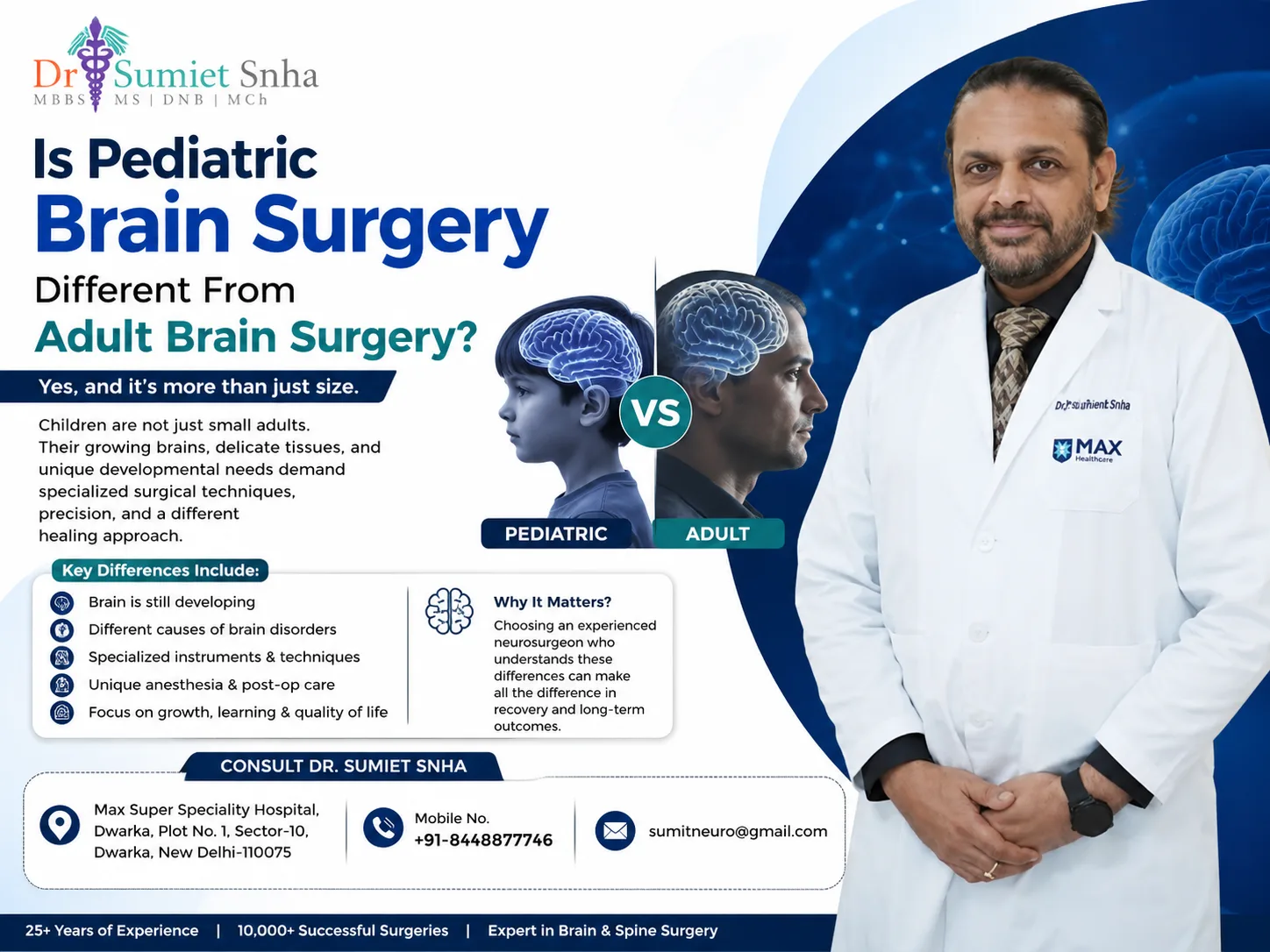
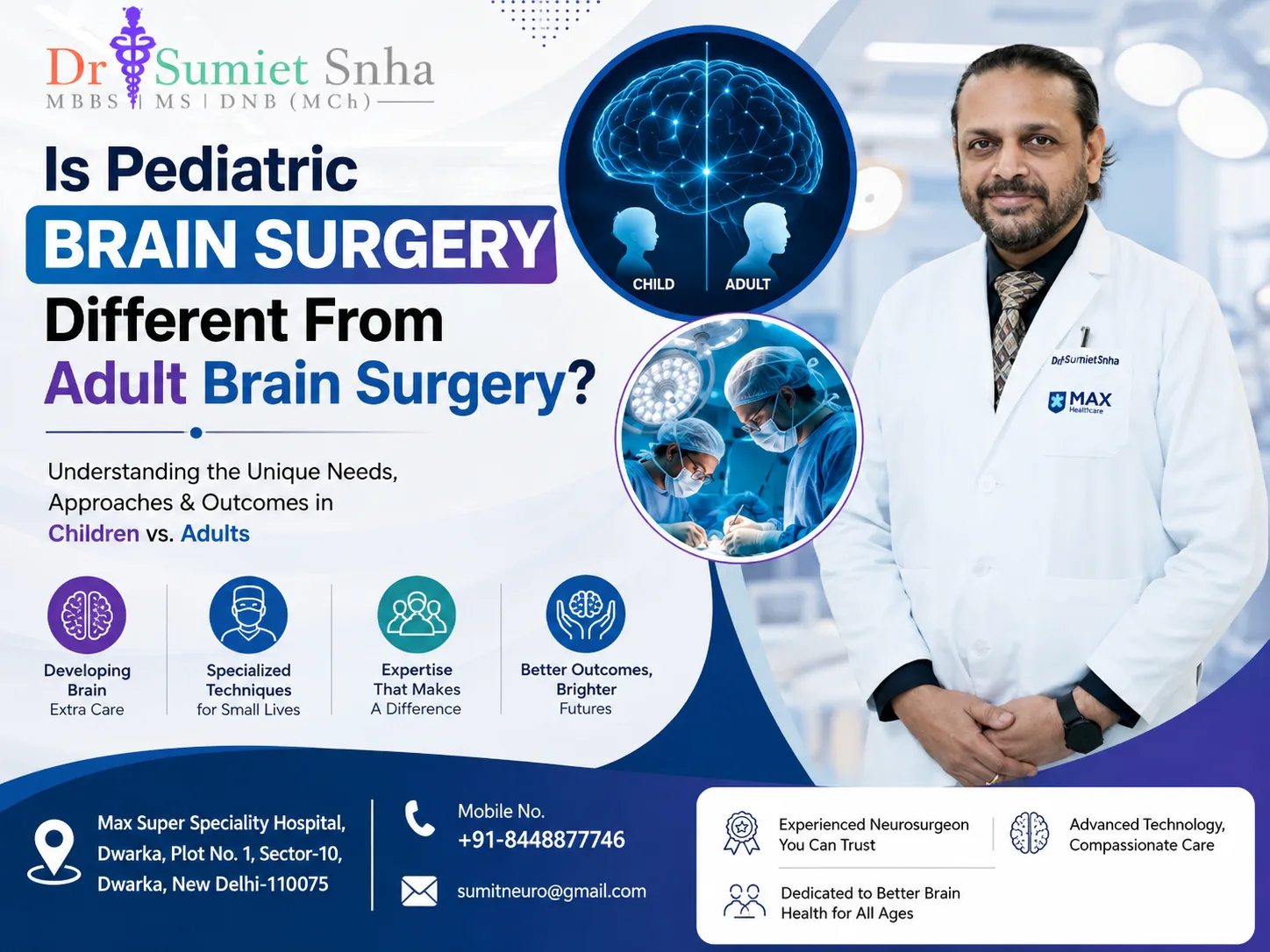
Children are not simply small adults. Their brains and spines are still growing and developing, their bodies respond differently to illness and surgery, and their conditions are often unique to childhood. Pediatric neurosurgery is the branch of neurosurgery devoted to diagnosing and treating disorders of the brain, spinal cord and nerves in infants, children and adolescents. It covers a wide range of conditions - some present at birth, some that develop during childhood, and some caused by injury or infection - and it requires not only technical skill but also an understanding of child development and deep sensitivity to the worries of parents.
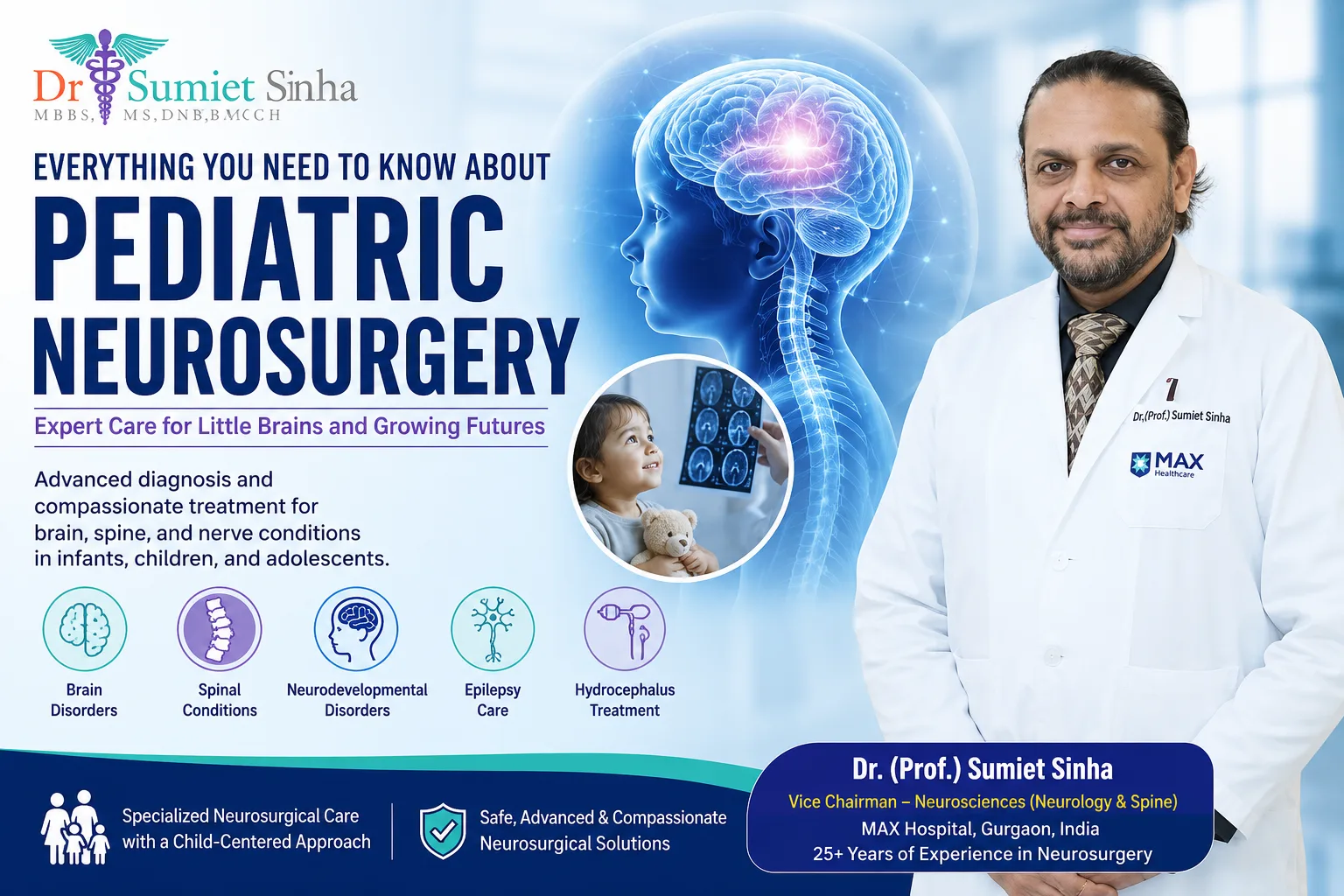
When a child needs brain or spine surgery, families naturally feel anxious and overwhelmed. Clear information, compassionate communication and a team experienced in children's care make an enormous difference. Dr. (Prof.) Sumiet Snha, former Professor of Neurosurgery at AIIMS, New Delhi, and Principal Director - Neurosurgery & Spine Surgery at Max Hospital, Dwarka, treats children with a full spectrum of neurosurgical conditions, working closely with paediatricians, neonatologists, paediatric intensivists, neurologists and rehabilitation specialists to provide complete, family-centred care. This page describes the common conditions treated in paediatric neurosurgery and what families can expect.
Why Children Need Specialised Neurosurgical Care
A child's nervous system is remarkable. In the early years, the brain grows rapidly, forms billions of new connections and has an extraordinary capacity to adapt and recover - a property called neuroplasticity. At the same time, the developing brain is vulnerable: raised pressure inside the head, uncontrolled seizures or compression of the spinal cord can interfere with development in ways that may be difficult to reverse later. Timely diagnosis and treatment therefore matter even more in children than in adults.
Surgery in children also involves special considerations. Blood volume is small, so even modest blood loss matters. Body temperature must be carefully maintained, particularly in newborns. Skulls are thinner and still growing, which influences how surgery and fixation are performed. Anaesthesia is adapted for each age group. Implants and shunts must allow for growth. And recovery involves not only healing but also supporting the child's continuing development, education and emotional wellbeing. For all these reasons, children benefit from being treated in centres with paediatric intensive care, paediatric anaesthesia and multidisciplinary support.
Common Conditions in Pediatric Neurosurgery
Hydrocephalus
Excess fluid in the brain's ventricles, causing a rapidly enlarging head in infants or headaches and vomiting in older children.
Spina bifida and neural tube defects
Incomplete closure of the spine or skull during early pregnancy, including myelomeningocele and encephalocele.
Tethered spinal cord
The spinal cord is abnormally attached at its lower end, stretching as the child grows and affecting legs, bladder and bowel.
Pediatric brain and spinal tumors
The most common solid tumors of childhood, including medulloblastoma, astrocytoma and craniopharyngioma.
Craniosynostosis
Premature fusion of skull sutures, causing an abnormal head shape and sometimes raised pressure.
Chiari malformation and syringomyelia
Descent of the lower brain into the spinal canal, sometimes with a fluid cavity in the spinal cord.
Head and spinal injuries
From falls, road accidents and sports; also non-accidental injuries in infants.
Epilepsy
Drug-resistant seizures from cortical dysplasia, tumors or hemispheric disease.
Vascular conditions
Moyamoya disease, AVMs, cavernomas and vein of Galen malformations.
Spasticity
Muscle stiffness in cerebral palsy and other conditions, treated with therapy, medicines and selected surgical procedures.
Brachial plexus birth injury
Weakness of the arm after a difficult delivery, sometimes requiring nerve reconstruction.
Brain infections and abscesses
Including tubercular infections and complications of ear or sinus infections.
Hydrocephalus in Children
Hydrocephalus is one of the most frequent reasons children see a neurosurgeon. The brain continuously produces cerebrospinal fluid (CSF), which flows through a system of chambers called ventricles and is absorbed into the bloodstream. When the flow is blocked or absorption is impaired, fluid builds up and the ventricles enlarge, increasing pressure on the brain. In babies, whose skull bones have not yet fused, the head grows abnormally fast, the soft spot (fontanelle) bulges, the scalp veins become prominent and the eyes may be pushed downwards ("sunsetting"). Babies may feed poorly, vomit and be irritable or sleepy. Older children, whose skulls cannot expand, typically have headaches (especially in the morning), vomiting, blurred vision, drowsiness and a decline in school performance.
Causes include congenital narrowing of the aqueduct (the channel between two ventricles), bleeding in the brain of premature babies, infections such as meningitis, tumors, and associations with spina bifida. Treatment options include a ventriculoperitoneal (VP) shunt, which drains fluid to the abdomen, and endoscopic third ventriculostomy (ETV), which creates a new pathway for fluid to bypass the blockage without leaving a device inside the body. The best option depends on the cause and the child's age. Detailed information is available on our hydrocephalus treatment page.
Spina Bifida and Neural Tube Defects
The neural tube - the structure that becomes the brain and spinal cord - forms and closes within the first four weeks of pregnancy, often before a woman knows she is pregnant. When it does not close completely, the result is a neural tube defect. The most serious form of spina bifida, myelomeningocele, leaves the spinal cord and its coverings exposed through an opening in the back at birth. Babies with myelomeningocele need surgery within the first days of life to close the defect, protect the spinal cord and prevent infection. Many also develop hydrocephalus requiring treatment, and some have associated Chiari II malformation. Depending on the level of the defect, children may have leg weakness, bladder and bowel dysfunction and orthopaedic problems, and they benefit from lifelong multidisciplinary care including urology, orthopaedics and rehabilitation.
Milder forms, such as spina bifida occulta and lipomyelomeningocele, may be hidden under the skin. Warning signs on a baby's lower back include a tuft of hair, a dimple above the buttock crease, a fatty lump, a birthmark or a skin tag. These may indicate an underlying tethered cord or other spinal abnormality and should be evaluated, often with ultrasound in young infants or MRI.
Prevention with folic acid
Taking folic acid supplements before conception and during the first three months of pregnancy significantly reduces the risk of neural tube defects. Women planning a pregnancy should start folic acid at least a month before conceiving. Women who have had a previous affected pregnancy, or who take certain anti-seizure medicines, may need a higher dose - consult your doctor.
Tethered Spinal Cord
Normally, the lower end of the spinal cord moves freely within the spinal canal as a child grows and bends. In tethered cord syndrome, the cord is abnormally anchored - by a thickened filum terminale, a fatty tumor (lipoma), scar tissue after spina bifida repair or other abnormalities. As the spine grows faster than the cord, or during bending movements, the cord is stretched, reducing its blood supply and causing progressive symptoms: back or leg pain, weakness, numbness, foot deformities, changes in walking, scoliosis, and bladder or bowel problems such as new-onset wetting or constipation. Surgical untethering, performed under the microscope with neuromonitoring, releases the cord to prevent further deterioration and often improves symptoms, particularly pain.
Brain Tumors in Children
Brain tumors are the most common solid tumors in children and the leading cause of cancer-related deaths in childhood, yet many are curable with modern treatment. Unlike adults, in whom most brain tumors occur above the tentorium (in the cerebral hemispheres), a large proportion of childhood tumors arise in the posterior fossa - the cerebellum and brainstem at the back of the head. Common types include pilocytic astrocytoma (often benign and curable with complete removal), medulloblastoma (a malignant tumor that responds well to combined treatment), ependymoma, brainstem gliomas and craniopharyngioma near the pituitary gland.
Symptoms can be subtle and easily attributed to common childhood illnesses. Warning signs include persistent morning headaches with vomiting, unsteadiness or clumsiness, a new squint or double vision, head tilt, changes in behaviour or school performance, delayed puberty or unusual growth patterns, and in infants, an enlarging head, irritability or loss of developmental milestones. Treatment typically begins with surgery to remove as much tumor as safely possible and relieve any associated hydrocephalus, followed, depending on the tumor type, by chemotherapy and radiation delivered by a paediatric oncology team. Modern techniques, including neuro-navigation, neuromonitoring and endoscopic approaches, help maximise removal while protecting the developing brain. Long-term follow-up addresses growth, hormones, learning and emotional wellbeing.
Craniosynostosis - Abnormal Head Shape
A baby's skull is made up of several plates of bone separated by flexible joints called sutures, which allow the skull to expand as the brain grows. In craniosynostosis, one or more sutures fuse prematurely, restricting growth in some directions and causing compensatory growth in others. This produces characteristic head shapes: a long, narrow head (sagittal synostosis), a flattened forehead on one side (coronal synostosis), a triangular forehead (metopic synostosis) and others. In some children, especially when multiple sutures are involved or with syndromic conditions, the restricted skull can raise pressure on the brain and affect vision and development.
It is important to distinguish craniosynostosis from the much more common positional plagiocephaly - flattening of the back of the head from lying in one position - which is managed with repositioning, tummy time and occasionally a helmet, without surgery. Craniosynostosis is diagnosed by examination and CT scan. Surgery is usually performed in infancy: in younger babies, minimally invasive endoscopic strip craniectomy followed by helmet therapy can be an option; in older infants, open cranial vault remodelling reshapes the skull. Early referral gives families the widest range of options.
Chiari Malformation and Syringomyelia in Children
In Chiari I malformation, the lower part of the cerebellum (the tonsils) extends below the base of the skull into the upper spinal canal. Many children with small descents have no symptoms and need no treatment. Others develop headaches at the back of the head that worsen with coughing, sneezing or straining, neck pain, balance problems, swallowing difficulties, sleep apnoea or scoliosis. Some develop a fluid-filled cavity within the spinal cord (syringomyelia), which may cause weakness, sensory changes or a rapidly progressive curvature of the spine. Symptomatic Chiari malformation is treated with posterior fossa decompression, which creates more space at the base of the skull and restores normal fluid flow. In selected cases associated with craniovertebral junction instability, stabilisation procedures may be required.
Head Injuries in Children
Falls from beds, stairs, balconies and roofs, road traffic accidents and sports injuries are common causes of head injury in children. Most head bumps are minor and need only observation at home. However, parents should seek urgent medical care if a child loses consciousness, vomits repeatedly, becomes unusually drowsy or irritable, has a seizure, shows weakness, unsteadiness or unequal pupils, has blood or clear fluid coming from the nose or ears, or if an infant has a swelling on the head or a bulging fontanelle. CT scans are used judiciously in children to limit radiation, guided by clinical decision rules. Serious injuries may require surgery to remove blood clots, elevate depressed skull fractures or relieve raised pressure. Dr. Snha's extensive experience in neurotrauma - as former Professor at the AIIMS JPNA Trauma Centre and President of the Neurotrauma Society of India - is especially valuable in managing complex paediatric head injuries.
Protect your child from head injuries
- Use age-appropriate car seats and seat belts; never carry a child on your lap in a moving vehicle.
- Ensure children wear helmets while cycling, skating and as two-wheeler pillion riders.
- Install railings and window guards; never leave infants unattended on beds or high surfaces.
- Supervise children on rooftops and balconies - falls from height are a leading cause of serious injury in Indian cities.
- Never shake a baby - shaking can cause severe, life-threatening brain injury.
Epilepsy Surgery in Children
About a third of children with epilepsy continue to have seizures despite medicines. Frequent seizures and high doses of medicines during critical years of development can affect learning, behaviour and independence. For children with a focal cause - such as cortical dysplasia, a low-grade tumor, tuberous sclerosis or a hemispheric condition - epilepsy surgery can stop or dramatically reduce seizures and allow development to catch up. Operations such as lesionectomy, lobectomy and hemispherotomy are carefully planned after video-EEG, specialised MRI and neuropsychological testing. The developing brain's plasticity often allows children to recover function remarkably well after surgery. Read more on our epilepsy surgery page.
Spasticity and Cerebral Palsy
Children with cerebral palsy and other conditions may have spasticity - stiffness and tightness of muscles that interferes with movement, positioning, comfort and care. Management begins with physiotherapy, stretching, orthoses and medicines, and may include botulinum toxin injections for specific muscles. For selected children, neurosurgical procedures can offer lasting improvement. Selective dorsal rhizotomy reduces spasticity in the legs by cutting some of the sensory nerve rootlets that drive the abnormal reflexes, and can improve walking in carefully chosen children. Intrathecal baclofen pumps and selective peripheral neurotomy are other options. These decisions are made together with paediatric neurologists, physiotherapists and orthopaedic surgeons. See our spasticity treatment page.
Brachial Plexus Birth Injury
During a difficult delivery, the nerves supplying the baby's arm - the brachial plexus - can be stretched or torn, leading to a weak or floppy arm (Erb's palsy and related injuries). Many babies recover spontaneously over the first few months. Those who do not show adequate recovery of key movements, such as bending the elbow, by around three to six months may benefit from nerve reconstruction surgery - nerve grafting or nerve transfers - which can significantly improve arm function. Early referral to a specialist in brachial plexus surgery ensures that the window for effective nerve surgery is not missed. Dr. Snha is a founder secretary of the Indian Society of Peripheral Nerve Surgery and has treated more than 250 complex nerve injuries. Learn more on our brachial plexus page.
Preparing Your Child for Surgery
How a child is prepared for surgery can make the experience much less frightening for everyone. Children sense their parents' anxiety, so it helps for parents first to understand the plan clearly and have their own questions answered. Explain the operation to your child honestly, in simple, age-appropriate words - for example, that the doctor will fix a problem while they are in a special sleep and will not feel anything. Avoid promising that nothing will hurt, but reassure them that doctors and nurses will give medicine to keep them comfortable. Bring a favourite toy, blanket or book to the hospital. Young children can often stay with a parent until they are asleep. Follow the fasting instructions carefully, as they are essential for safe anaesthesia. Siblings may also need reassurance and attention during this time.
Recovery and Life After Pediatric Neurosurgery
General recovery guidance
- Intensive care: many children spend the first night after brain or major spine surgery in a paediatric ICU for close monitoring.
- Hospital stay: varies from one or two days after minor procedures to a week or more after complex surgery.
- Return to school: often within two to six weeks, depending on the surgery; teachers may need guidance on activity restrictions.
- Play and sports: gentle play is encouraged early; contact sports are resumed only when cleared.
- Follow-up: regular reviews of wound healing, development, imaging and, for shunts, signs of malfunction.
- Rehabilitation: physiotherapy, occupational therapy, speech therapy and educational support as needed.
Children's resilience is remarkable. Many recover faster than adults after comparable surgery and return quickly to play and learning. Long-term follow-up ensures that growth, development, schooling and emotional wellbeing are supported as the child grows into adulthood.
Why Choose Dr. (Prof.) Sumiet Snha for Your Child?
- AIIMS-trained neurosurgeon - MBBS, MS, DNB, MCh (AIIMS, New Delhi), FACS - with over 25 years of experience in brain and spine surgery for children and adults.
- Former Professor of Neurosurgery at AIIMS, New Delhi, with extensive experience in paediatric hydrocephalus, spinal dysraphism, tumors and trauma.
- Special expertise in endoscopic neurosurgery - including endoscopic third ventriculostomy - and in paediatric brachial plexus and nerve surgery.
- President of the Neurotrauma Society of India, bringing trauma expertise to children's head and spinal injuries.
- Paediatric ICU, paediatric anaesthesia, neonatology and rehabilitation support at Max Super Speciality Hospital, Dwarka.
- Family-centred communication - parents are partners in every decision.
Factors That Affect the Cost of Pediatric Neurosurgery
- The condition and type of surgery - shunt, ETV, tumor removal, spina bifida repair, untethering or craniosynostosis surgery.
- Need for paediatric or neonatal ICU care.
- Length of hospital stay.
- Implants such as shunt systems.
- Further treatment and rehabilitation needs.
- Insurance coverage and government schemes where applicable.
Warning Signs Parents Should Never Ignore
Many neurological problems in children develop gradually, and parents are usually the first to notice subtle changes. Seek medical advice promptly if your child has:
- A head that is growing faster than expected or a persistently bulging soft spot in an infant.
- Headaches that wake the child from sleep or are present on waking, especially with vomiting.
- A new squint, double vision, or eyes that seem to look downward.
- Loss of previously achieved milestones - such as a baby who stops sitting or a toddler who stops talking.
- New clumsiness, unsteadiness, or weakness of an arm or leg.
- Seizures, staring spells or unusual repetitive movements.
- New bladder or bowel problems in a previously toilet-trained child.
- Back pain, especially at night, or a rapidly developing curvature of the spine.
- A lump, dimple, hair tuft or birthmark over the lower spine.
- An unusually shaped head that is not improving with repositioning.
Blood Vessel Disorders of the Brain in Children
Strokes and brain haemorrhages are usually thought of as diseases of older adults, but they do occur in children, and the causes are quite different. In childhood, a stroke or bleed is more often due to an abnormality of the blood vessels that has been present since birth or develops early in life. Because a child's symptoms may be brief or unusual, such as a single episode of arm weakness after crying, or a sudden severe headache during play, these conditions can be overlooked. Prompt imaging with MRI and, where needed, angiography allows an accurate diagnosis and a treatment plan suited to the growing brain.
Moyamoya disease
In moyamoya, the major arteries at the base of the brain progressively narrow. Children typically have recurrent episodes of weakness, numbness or speech difficulty, often triggered by crying, blowing or exertion. Revascularization surgery, which brings a new blood supply to the brain, can greatly reduce the risk of further strokes. See our vascular bypass surgery page for details.
Arteriovenous malformations and cavernomas
An arteriovenous malformation (AVM) is a tangle of abnormal vessels in which arteries connect directly to veins, and it is one of the more common causes of brain haemorrhage in children. Cavernomas are clusters of thin-walled vessels that may bleed or cause seizures. Treatment options include microsurgical removal, endovascular embolisation and radiosurgery, often in combination, chosen according to size, location and the child's age.
Vein of Galen malformation
This rare malformation, usually diagnosed in newborns or infants, can cause heart failure, an enlarging head or developmental delay. It is generally treated with staged endovascular procedures by an experienced neuro-interventional team, with neurosurgical support for associated hydrocephalus. More about these conditions is available on our vascular neurosurgery page.
Brain and Spinal Infections in Children
Infections of the nervous system remain an important part of paediatric neurosurgery in India. A brain abscess - a collection of pus within the brain - may develop from untreated ear or sinus infections, from dental infection, after a penetrating injury, or in children with certain congenital heart diseases. Children may have fever, headache, vomiting, seizures, drowsiness or weakness on one side. Treatment combines prolonged antibiotics with drainage of the abscess, which can often be done through a small burr hole using image guidance, and addressing the source of infection.
Tuberculosis can affect the brain as tubercular meningitis or tuberculomas, and the spine as Pott's disease, where back pain, a stooping posture and refusal to walk may be the first signs. Tubercular meningitis frequently causes hydrocephalus, which may need urgent CSF diversion. Shunt infections are another group requiring prompt recognition. Early diagnosis and treatment of all these infections can prevent permanent damage. For spinal TB, see our tuberculosis of the spine page.
Remote opinions for families outside Delhi
Parents who live far away can share their child's scans and reports by WhatsApp on +91-8448877746 for a preliminary opinion, and a video consultation can be arranged before deciding whether travel is needed. Max Super Speciality Hospital, Dwarka, is close to IGI Airport. You can also book an appointment directly.
Frequently Asked Questions
Is brain surgery safe for young children and babies?
With experienced surgical, anaesthesia and paediatric ICU teams, brain surgery can be performed safely even in newborns. The risks and benefits are explained in detail for each child.
Will my child develop normally after surgery?
Many children develop normally, especially when treatment is timely. Outcomes depend on the underlying condition. Regular developmental follow-up and therapy support the best possible progress.
What is the difference between a shunt and an ETV?
A shunt drains excess brain fluid into the abdomen through a tube, while an ETV creates a new internal pathway using an endoscope, avoiding a permanent device. The choice depends on the cause of hydrocephalus and the child's age.
Can spina bifida be prevented?
Taking folic acid before conception and during early pregnancy significantly reduces the risk of neural tube defects, including spina bifida.
Does every abnormal head shape need surgery?
No. Most flat heads are due to positioning and improve without surgery. Craniosynostosis, where sutures fuse early, usually needs surgical correction.
How long will my child stay in hospital?
It varies with the procedure - from a day or two after minor surgery to a week or more after complex operations.
When can my child go back to school?
Most children return within two to six weeks, depending on the surgery and recovery.
Compassionate, Expert Care for Children
If your child has been diagnosed with a brain or spine condition, or you have concerns about symptoms, an early consultation provides clarity and peace of mind. Book an appointment with Dr. (Prof.) Sumiet Snha at Max Hospital, Dwarka, New Delhi. Related pages: hydrocephalus, brain tumors, epilepsy surgery and brachial plexus injuries.