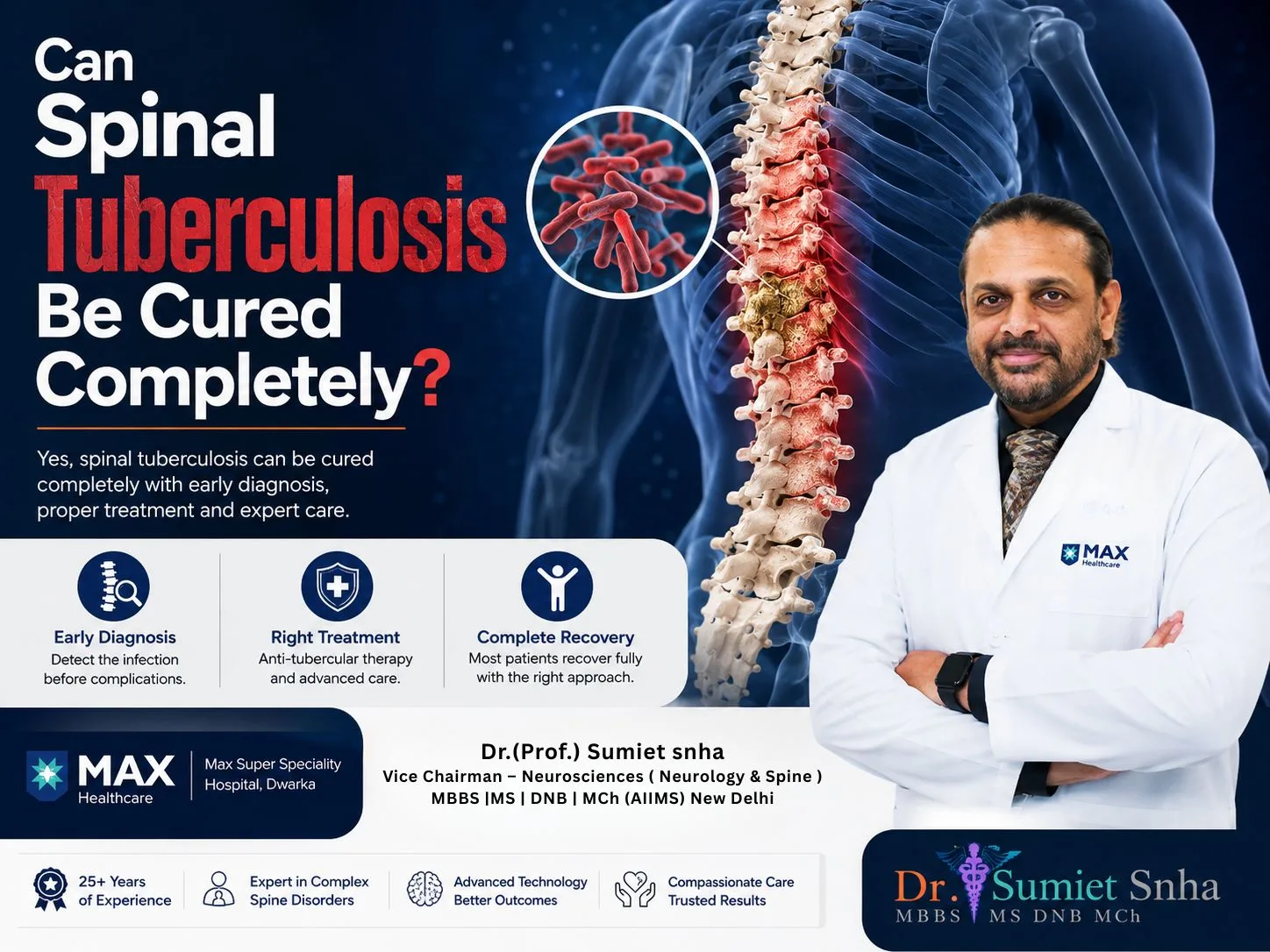
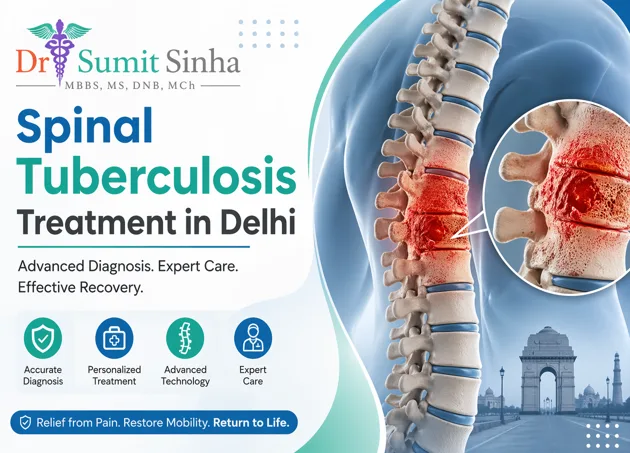
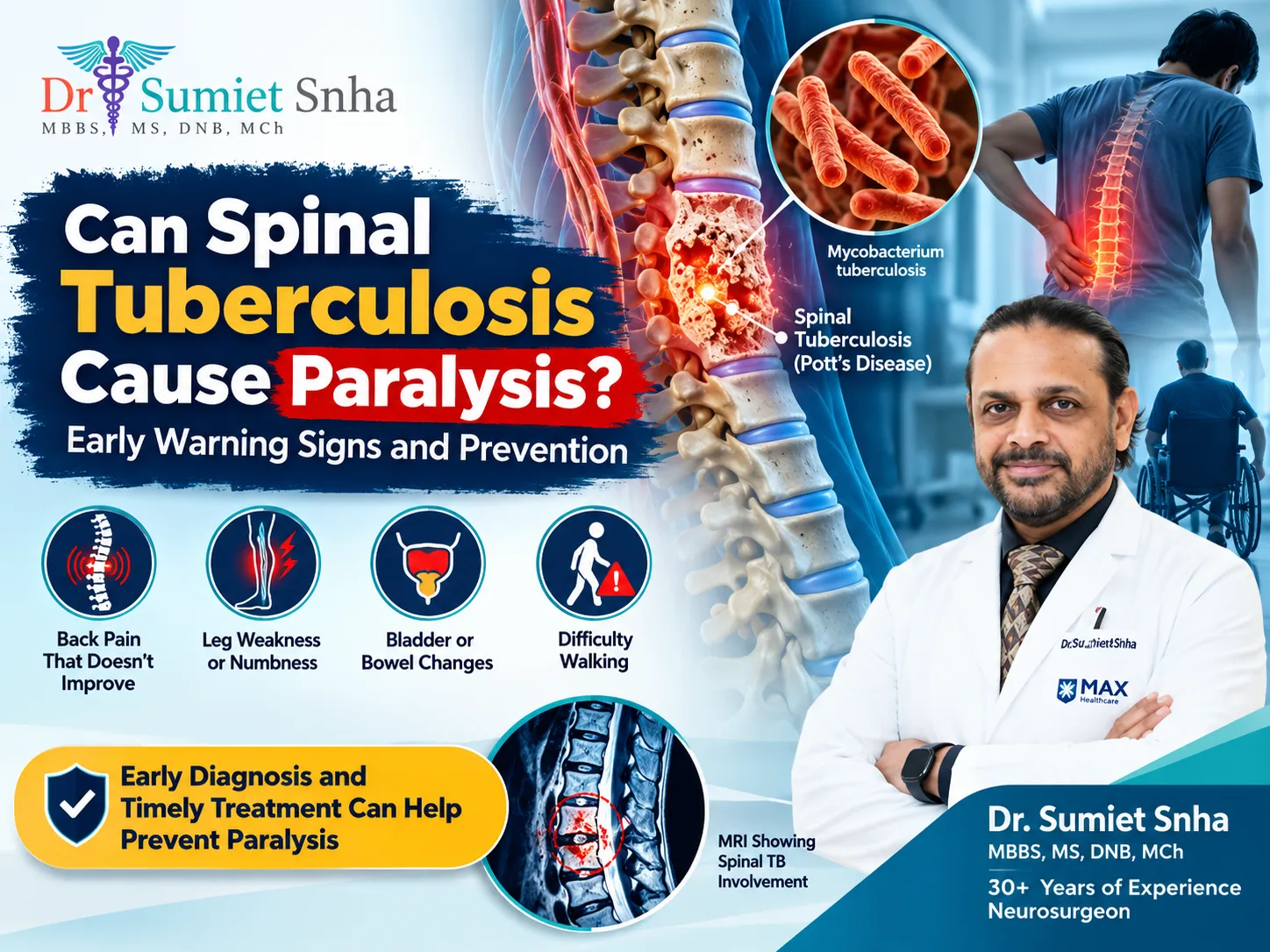
Spinal tuberculosis, also called Pott's spine or tuberculous spondylitis, is the most common form of bone and joint tuberculosis and remains an important cause of back pain, spinal deformity and paralysis in India. The encouraging fact is that spinal TB is curable. With an accurate diagnosis, a full course of anti-tubercular medicines and well-timed surgery for those who need it, the large majority of patients recover completely and return to normal life. Problems arise mainly when the disease is diagnosed late, the medicines are stopped early, or surgery is delayed in patients with nerve compression or instability.
This page focuses on the treatment of spinal tuberculosis - what medicines are used and for how long, when surgery becomes necessary, which operations are performed and what recovery looks like. For a detailed explanation of how the disease develops and how it is recognised, see our companion page on tuberculosis of the spine. Dr. (Prof.) Sumiet Snha, former Professor of Neurosurgery at AIIMS, New Delhi, and Principal Director - Neurosurgery & Spine Surgery at Max Hospital, Dwarka, has treated a large number of patients with spinal TB, including those with severe deformity and paraplegia.
Goals of Spinal TB Treatment
Treatment of spinal tuberculosis has several interlinked goals, and a good plan addresses each of them:
Eradicate the infection
Kill the tuberculosis bacteria with an adequate, supervised course of anti-TB medicines.
Protect the nerves
Prevent or reverse spinal cord and nerve compression that can cause weakness or paralysis.
Maintain stability
Ensure the infected, weakened spine does not collapse or become unstable.
Prevent deformity
Avoid or correct kyphosis (hunchback), which can worsen for years, especially in children.
Confirming the Diagnosis Before Treatment
Spinal TB can closely resemble other conditions on MRI - bacterial infection, fungal infection and, importantly, cancer that has spread to the spine or multiple myeloma. Starting anti-TB medicines on the basis of imaging alone can delay the correct diagnosis and lead to drug resistance going undetected. For this reason, wherever possible, tissue confirmation is obtained before treatment:
- MRI with contrast - shows involvement of adjacent vertebrae and the disc, abscesses, and the degree of cord compression.
- CT-guided biopsy - a needle sample from the vertebra or abscess, taken under local anaesthesia.
- Laboratory tests on tissue - histopathology (showing granulomas), smear for acid-fast bacilli, culture and rapid molecular tests such as CBNAAT/GeneXpert, which also detect rifampicin resistance within hours.
- Drug sensitivity testing - identifies resistance to first-line and second-line drugs so that treatment can be tailored.
- Chest X-ray and other tests - to look for TB elsewhere in the body; HIV testing and blood sugar are also checked.
When surgery is needed for other reasons, tissue is collected during the operation and sent for all these tests.
Anti-Tubercular Therapy (ATT) - The Foundation of Treatment
Medicines are the cornerstone of spinal TB treatment. Every patient, whether operated on or not, needs a full course of ATT.
First-line medicines
Drug-sensitive spinal TB is treated with a combination of four medicines - isoniazid (H), rifampicin (R), pyrazinamide (Z) and ethambutol (E) - in an intensive phase of about two months, followed by a continuation phase with isoniazid, rifampicin and usually ethambutol. Because bone is harder for medicines to penetrate and healing is slow, the total duration for spinal TB is generally longer than for lung TB - often between 9 and 12 months, and sometimes longer depending on the clinical and radiological response. The exact regimen follows national (NTEP) and international guidelines and is decided with the physician or TB specialist.
Drug-resistant TB
If tests show resistance (for example, MDR-TB resistant to isoniazid and rifampicin), treatment uses a different combination of second-line and newer drugs for a longer period, under close supervision. This is why obtaining tissue for culture and sensitivity is so valuable.
Taking ATT safely
- Take the medicines every day, at the same time, exactly as prescribed - never stop early even if you feel better.
- Report yellowing of the eyes or skin, persistent nausea, vomiting, abdominal pain or dark urine promptly, as these may indicate liver side effects.
- Report any change in vision (colour vision or blurring) - ethambutol can rarely affect the optic nerve.
- Tingling or numbness in the feet may be prevented with pyridoxine (vitamin B6), which is usually prescribed with isoniazid.
- Rifampicin turns urine, sweat and tears orange-red - this is harmless. It can reduce the effectiveness of some medicines, including oral contraceptives, so inform your doctors.
- Regular blood tests monitor liver function and response to treatment.
Under India's National TB Elimination Programme, anti-TB medicines are available free of cost, and patients receive nutritional support (Nikshay Poshan Yojana). The treating team can help with registration.
Supportive Non-Surgical Care
Alongside medicines, several measures help the spine heal and keep the patient strong:
Bracing
A spinal brace or cervical collar supports the weakened spine and relieves pain in the early months, while allowing the patient to stay mobile.
Nutrition
High-protein, calorie-rich food with adequate vitamins helps fight infection and rebuild bone. Many patients are underweight at diagnosis.
Early mobilisation
Walking with a brace as soon as pain permits prevents complications of bed rest - clots, pressure sores, chest infections and muscle wasting.
Regular monitoring
Clinical review, blood tests and follow-up MRI/X-rays to confirm the infection is responding and the spine is not collapsing.
Most patients without neurological deficit or major instability improve with this "middle path" regimen of medicines, bracing and close observation. Pain usually reduces within weeks, appetite and weight improve, and blood markers of inflammation come down. Surgery is reserved for specific indications.
When Is Surgery Needed for Spinal TB?
Surgery is recommended when medicines alone cannot achieve a good outcome or when there is a threat to the spinal cord. The main indications are:
- Neurological deficit - weakness of the legs (or arms), sensory loss or bladder involvement due to compression of the spinal cord by abscess, debris or collapsed bone, especially if it is severe or worsening.
- Failure of medical treatment - worsening pain, enlarging abscess or neurological decline despite adequate ATT for several weeks.
- Spinal instability - destruction of vertebrae causing abnormal movement or risk of collapse.
- Progressive or severe kyphotic deformity - particularly in children, in whom deformity may keep increasing with growth, and in adults with significant loss of multiple vertebral bodies.
- Diagnostic uncertainty - when a biopsy cannot be obtained by needle or results are inconclusive.
- Large abscesses causing symptoms, for example a psoas abscess causing hip flexion deformity, or a retropharyngeal abscess in the neck causing difficulty in swallowing or breathing.
- Drug-resistant disease with poor response, where removing infected tissue may help.
Surgical Procedures for Spinal Tuberculosis
1. Minimally invasive biopsy and abscess drainage
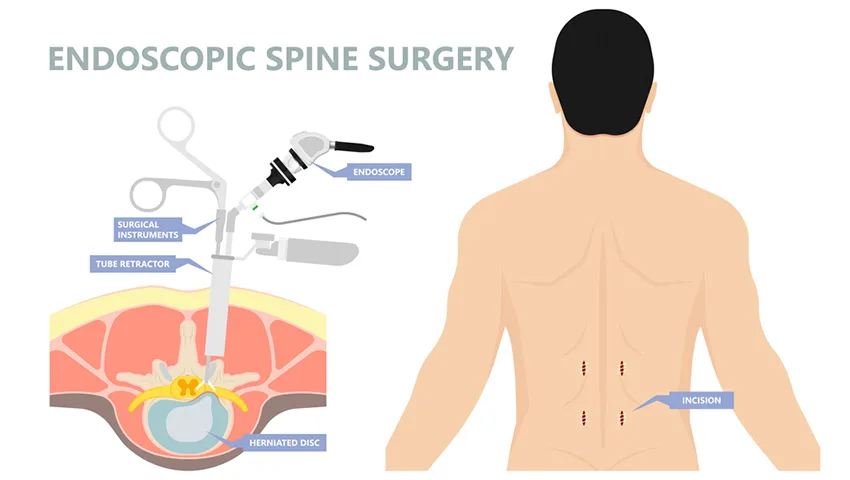
CT-guided or endoscopic techniques can obtain tissue and drain abscesses through small incisions, reducing the burden of infection and helping medicines work better. Large psoas abscesses can often be drained percutaneously.
2. Decompression of the spinal cord
When the cord is compressed, the infected tissue, abscess and bone fragments pressing on it are removed. Depending on the location, this can be done from the front (anterior approach), from the back (posterior approach, often through a costotransversectomy in the thoracic spine) or through a combined approach.
3. Stabilisation and fusion
After debridement, the spine is stabilised with pedicle screws and rods, and the gap left by destroyed vertebrae is reconstructed with bone graft or a cage. Titanium implants can be used safely in active tuberculosis because TB bacteria do not form biofilms on implants the way some other bacteria do. Stabilisation allows early mobilisation, relieves pain and prevents deformity.
4. Posterior-only approaches
Many surgeons, including Dr. Snha, now perform decompression, debridement, reconstruction and fixation entirely from the back in suitable patients. This avoids opening the chest or abdomen, reduces surgical stress and speeds recovery.
5. Deformity correction
Established kyphotic deformity - the classic "gibbus" - can cause pain, imbalance, breathing difficulties and late-onset paralysis. Correction of severe deformity involves osteotomies (controlled cuts in the bone) and instrumentation to realign the spine. These are complex, high-skill procedures performed with neuromonitoring for safety.
6. Cervical and craniovertebral junction TB
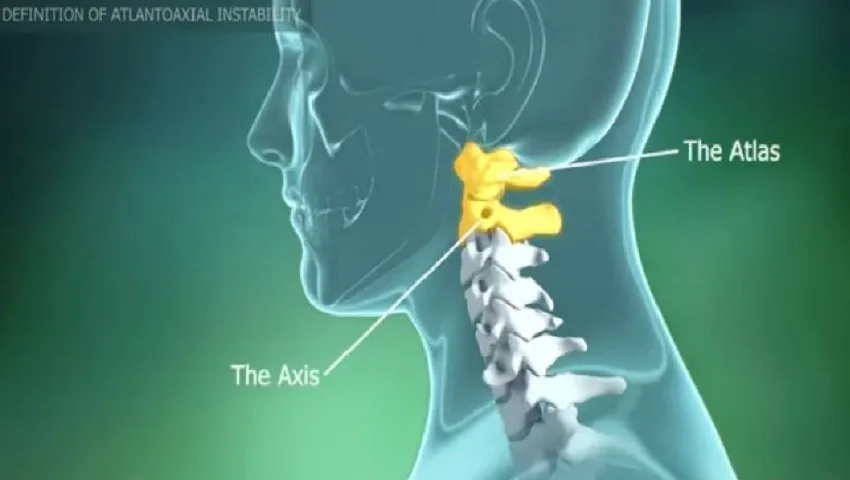
TB in the neck can cause instability and compression of the cord at a high level. Surgery may involve anterior debridement and fusion or posterior fixation, and at the craniovertebral junction, specialised occipito-cervical or C1-C2 fixation.
What Happens During Surgery - Step by Step
- Optimisation - correcting anaemia, improving nutrition, controlling blood sugar and starting ATT (ideally at least a short period before elective surgery; urgently in cases with rapidly worsening paralysis).
- Anaesthesia and neuromonitoring - spinal cord signals are monitored throughout.
- Approach and exposure - from the back, front or side depending on the plan.
- Debridement - removal of pus, caseous material and dead bone; samples sent for tests.
- Decompression - freeing the spinal cord and nerve roots.
- Reconstruction and fixation - bone graft or cage, plus screws and rods.
- Closure and post-operative care - early mobilisation with physiotherapy, continuation of ATT.
Recovery After Spinal TB Surgery
What to expect
- Hospital stay: usually around a week, depending on the extent of surgery and neurological status.
- Mobilisation: sitting and walking with support usually start within a few days.
- Neurological recovery: recovery from paraplegia due to TB is often good, especially when surgery is timely - improvement may continue for months.
- ATT: continues for the full prescribed duration after surgery.
- Follow-up: clinical review, blood tests and imaging at regular intervals to confirm healing and fusion.
Physiotherapy begins in the hospital and continues at home. Patients with paraplegia may need a structured rehabilitation programme including bladder training, skin care and gait training. Good nutrition remains important throughout the recovery period.
Pott's Paraplegia - Recovery Is Possible
Paralysis caused by spinal tuberculosis is known as Pott's paraplegia. It can occur early, during active disease, when the cord is compressed by abscess, granulation tissue or bone fragments - or late, years after the infection has healed, when a severe kyphotic deformity stretches the spinal cord over the angled spine. Early-onset paraplegia generally has a good prognosis for recovery with appropriate medical treatment and timely decompression, and many patients regain the ability to walk. Late-onset paraplegia is more difficult to treat and typically requires complex deformity correction. This difference highlights why early diagnosis, full treatment and monitoring of deformity - particularly in children - are so important.
Spinal TB in Children
Children with spinal tuberculosis face a special risk: because the spine is still growing, a destroyed vertebral segment can cause the kyphotic deformity to keep increasing throughout childhood and adolescence, even after the infection has been cured. This "progression of deformity" can lead to a visible hump, imbalance, breathing difficulty and late paralysis. Children therefore need regular follow-up until skeletal maturity, with X-rays to measure the kyphosis angle. Those with high-risk features - loss of multiple vertebral bodies, certain radiological signs of instability, or disease in the upper thoracic region - may benefit from early surgical stabilisation to prevent severe deformity. Paediatric dosing of ATT is based on body weight and is carefully supervised.
Spinal TB With Other Health Conditions
Diabetes, HIV infection, kidney disease, pregnancy, malnutrition and long-term steroid use all influence the course and treatment of spinal TB. People with diabetes have a higher risk of TB and may respond more slowly, so tight sugar control is part of treatment. People living with HIV need coordinated care, as some HIV and TB medicines interact. Pregnant women can safely receive most first-line anti-TB medicines under specialist supervision. Liver disease may require modified regimens. A multidisciplinary approach - neurosurgeon, infectious disease or TB specialist, physician and, where relevant, other specialists - ensures safe and effective treatment.
How Do We Know the Treatment Is Working?
Response is judged on several fronts. Clinically, back pain decreases, fever and night sweats settle, appetite and weight improve, and any neurological deficit stabilises or improves. Blood tests such as ESR and CRP usually fall over time. Imaging shows reduction in abscess size and, later, signs of bone healing such as the vertebrae fusing together. MRI changes can lag behind clinical improvement, and some residual signal may persist even when the disease is healed, so imaging is always interpreted together with the clinical picture. Decisions about extending or stopping ATT are based on this overall assessment rather than on a single scan.
Why Choose Dr. (Prof.) Sumiet Snha for Spinal TB?
- AIIMS-trained neurosurgeon - MBBS, MS, DNB, MCh (AIIMS, New Delhi), FACS - with over 25 years of experience in spine surgery.
- Former Professor of Neurosurgery at AIIMS, New Delhi, with extensive experience in tubercular spine disease, a condition commonly seen in Indian practice.
- Expertise in biopsy, minimally invasive drainage, posterior-only decompression and fixation, and complex deformity correction.
- Certified AO Spine International faculty - committed to evidence-based spinal care.
- Close coordination with infectious disease specialists, physicians and rehabilitation teams at Max Super Speciality Hospital, Dwarka.
Factors That Affect the Cost of Spinal TB Treatment
- Whether surgery is required and its complexity (drainage, decompression, fixation or deformity correction).
- Number of spinal levels involved and implants used.
- Investigations such as MRI, CT-guided biopsy and molecular tests.
- Length of hospital stay and need for rehabilitation.
- Drug resistance, which requires longer and different medicines.
- Insurance coverage; free ATT is available through the national TB programme.
Preventing Relapse and Protecting Your Family
- Complete the full course of medicines - incomplete treatment is the leading cause of relapse and drug resistance.
- Keep all follow-up appointments and blood tests.
- Eat a nutritious diet and maintain a healthy weight.
- Control diabetes and avoid smoking and alcohol.
- If you also have lung TB, family members should be screened; people with only spinal TB are generally not infectious to others.
- Report any return of back pain, fever, weight loss or weakness promptly.
Anterior vs Posterior Surgery - How the Approach Is Chosen
Tuberculosis mainly destroys the front of the spine - the vertebral bodies and discs - so traditionally surgeons reached it from the front, through the chest (thoracotomy) or the abdomen/flank (retroperitoneal approach). The anterior approach allows direct removal of infected bone and abscess and placement of a strong graft where the load is carried. However, it involves opening a body cavity, may require a chest drain, and can be demanding for patients who are already weak, malnourished or have lung disease.
Over the last two decades, posterior-only techniques have become widely used. Through an incision in the back, the surgeon places pedicle screws above and below the affected area, then removes part of the rib head and transverse process on one or both sides (costotransversectomy) to reach the front of the spine from behind. Abscesses and infected bone are cleared, the cord is decompressed from the front, and a cage or graft is placed - all without entering the chest. Stabilisation and deformity correction can be performed in the same sitting. Studies have shown that in suitable patients this approach achieves comparable healing and neurological recovery with shorter operating time, less blood loss and a quicker return to walking.
A combined anterior-posterior approach is still preferred in some situations, such as very extensive destruction across many levels or when large anterior abscesses extend into the chest. In the cervical spine, anterior surgery is often the most direct and effective route. The decision is individualised after studying the MRI and CT, the patient's lung function and overall health.
Minimally Invasive Options in Selected Patients
Advances in minimally invasive spine surgery have also reached the treatment of spinal infections. In carefully selected patients, percutaneous pedicle screws can be used to stabilise the spine through small incisions, and endoscopic or tubular techniques can be used to drain abscesses and debride infected disc spaces. These techniques reduce muscle damage, blood loss and hospital stay, and are particularly helpful in patients with limited physiological reserve. They are not suitable for every case - large abscesses in the canal, severe deformity or complete destruction of vertebral bodies usually require open reconstruction - but they widen the range of options available.
Rehabilitation Programme After Spinal TB
Recovery from spinal tuberculosis involves regaining strength, stamina and confidence after months of illness. A structured rehabilitation programme typically progresses through several stages:
- Hospital phase: breathing exercises, bed mobility, sitting balance, standing and short walks with a walker and brace.
- Early home phase (weeks 2-6): gradually increasing walking distance, gentle leg and core activation, and continued bracing as advised.
- Strengthening phase (weeks 6-12): progressive back and core strengthening, stationary cycling and balance work as healing allows.
- Return-to-activity phase (months 3-6): weaning off the brace when the surgeon confirms healing, and returning to work, study and household activities.
Patients who had weakness in the legs may need additional gait training, orthoses such as ankle-foot splints, and a longer programme. Bladder training and regular skin checks are important for those with significant paralysis. Emotional support and involvement of family members make a real difference throughout this journey.
Diet Tips During TB Treatment
- Include protein at every meal - dal, rajma, chana, soy, milk, curd, paneer, eggs, fish or chicken.
- Eat small, frequent meals if appetite is poor, and add healthy calories like nuts, peanut chikki, banana and ghee in moderation.
- Take plenty of fruits and vegetables for vitamins and minerals.
- Drink adequate water and avoid alcohol, which increases the risk of liver problems with ATT.
- Take the medicines as advised with respect to meals, and do not skip doses because of mild stomach upset - inform your doctor instead.
Timeline of Healing - What Patients Can Expect
Understanding the typical course of recovery helps patients stay motivated through a long treatment period:
- First 2-4 weeks: pain and fever usually begin to settle; appetite improves. Patients start walking with a brace.
- Months 2-3: end of the intensive phase of ATT; blood markers typically decline; follow-up imaging may show a reduction in abscess size.
- Months 4-9: continuation phase; progressive return to daily activities; bone begins to heal and fuse.
- Months 9-12 and beyond: the doctor decides on stopping ATT based on clinical and radiological healing; the brace is gradually discontinued.
- Long term: periodic reviews, especially for children and those with deformity.
Some patients experience a temporary worsening of symptoms or an increase in abscess size in the early weeks of treatment despite the medicines working - a so-called paradoxical reaction. This is not necessarily treatment failure and should be assessed by the specialist before any change in the plan.
Understanding Your Spinal TB MRI Report
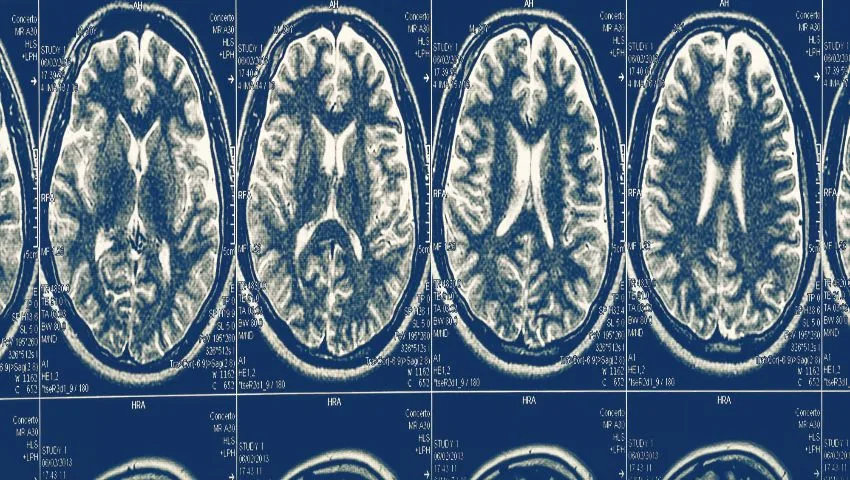
MRI is the most important scan in spinal tuberculosis, but the report can be full of unfamiliar terms. Understanding a few of them helps patients follow the discussion with their surgeon and appreciate why a particular plan has been suggested. The report is always interpreted together with the clinical examination, blood tests and, wherever possible, a tissue diagnosis - a scan on its own cannot prove that an infection is tuberculosis. Dr. Snha personally reviews the images rather than relying only on the written report, because the exact extent of infection, abscess and cord compression guides every treatment decision.
Common terms and what they mean
| Term in the report | What it means |
|---|---|
| Paradiscal involvement | Infection affecting the parts of two neighbouring vertebrae next to the disc - the most typical pattern of spinal TB. |
| Subligamentous spread | Infection tracking under the ligament running along the front of the spine, sometimes reaching several levels. |
| Skip lesions | Infection at separate, non-adjacent levels; the whole spine is therefore often scanned. |
| Pre- or paravertebral collection | A cold abscess (pus collection) in front of or beside the spine. |
| Epidural collection | Pus or granulation tissue inside the spinal canal that may press on the cord or nerves. |
| Cord signal change | Swelling or injury within the spinal cord itself, seen as a bright area on certain sequences. |
| Vertebral collapse / kyphosis | Loss of height of infected vertebrae producing a forward bend (gibbus). |
Why follow-up MRI can look worse before it looks better
Scans taken during treatment need careful interpretation. Bone oedema and enhancement can persist for many months even when the infection is responding, and an abscess may take time to shrink. For this reason, follow-up decisions are based on a combination of symptoms, weight gain, appetite, blood markers and imaging trends rather than one scan alone. Stopping or extending anti-tubercular therapy purely on the appearance of a single MRI is avoided.
Getting an opinion on your scan
Patients can share MRI images (not only the written report) and blood results on WhatsApp at +91-8448877746 for a preliminary review, followed by a detailed consultation at Max Super Speciality Hospital, Dwarka, or by video.
Frequently Asked Questions
Is spinal tuberculosis curable?
Yes. With the correct diagnosis and a full course of anti-tubercular medicines, and surgery when needed, most patients are cured and return to normal life.
How long do I need to take TB medicines for spinal TB?
Usually between 9 and 12 months for drug-sensitive spinal TB, sometimes longer, depending on the response. Drug-resistant TB requires a different, longer regimen.
Does every patient with spinal TB need surgery?
No. Many patients recover with medicines, bracing and monitoring. Surgery is needed for nerve compression, instability, severe deformity, failed medical treatment or diagnostic uncertainty.
Can paralysis from spinal TB be reversed?
Paralysis that develops during active disease often recovers well with medicines and timely decompression. Late paralysis from old deformity is more difficult to treat.
Are screws and rods safe in TB infection?
Yes. Titanium implants are widely and safely used in spinal TB surgery and help stabilise the spine while the infection heals with medicines.
Is spinal TB contagious?
Spinal TB on its own is generally not contagious. However, if TB is also present in the lungs, it can spread through the air, so family screening may be advised.
Can I work while on TB treatment?
Many patients return to light work once pain is controlled and they are mobile, often while still on medicines. The timing depends on the treatment received and the nature of the job.
Start the Right Treatment Early
If you have persistent back pain with fever, night sweats or weight loss, or have been diagnosed with spinal TB and are unsure about the best treatment, an expert opinion can make a lasting difference. Book a consultation with Dr. (Prof.) Sumiet Snha at Max Hospital, Dwarka, New Delhi. Learn more about the disease itself on our tuberculosis of the spine page, or read about spinal fractures and spinal tumors.