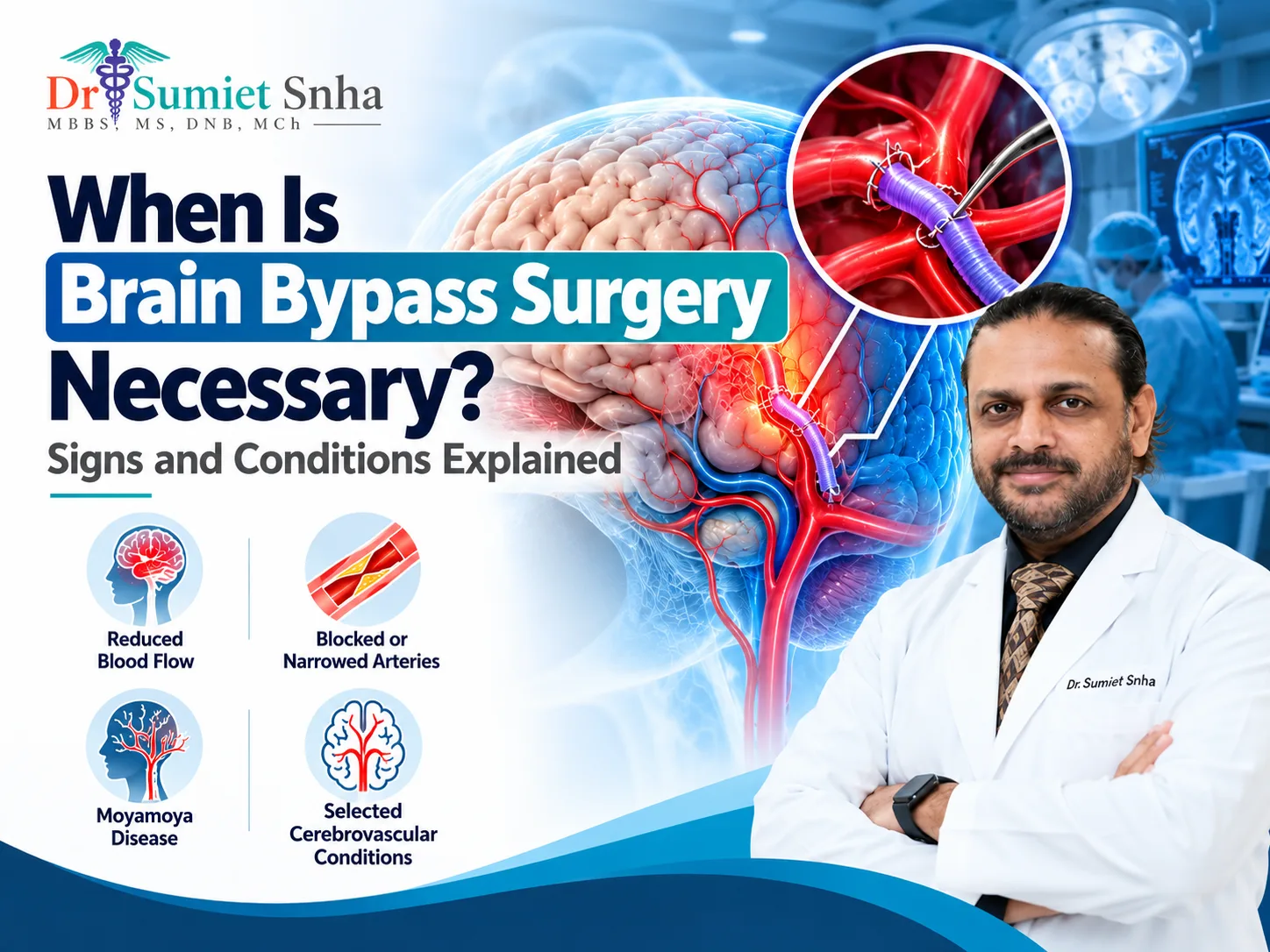
The brain requires a continuous supply of oxygen-rich blood to function properly. When certain blood vessels become narrowed or blocked, some areas of the brain may receive insufficient blood flow, potentially increasing the risk of neurological complications.
In selected patients, Brain Bypass Surgery may be considered to create an alternative pathway for blood to reach areas with reduced circulation. However, this procedure is not necessary for every blocked artery or patient who experiences a stroke.
Understanding when doctors recommend surgery, which conditions may benefit, and how treatment decisions are made can help patients and families make informed choices.
What Is Brain Bypass Surgery?
Brain bypass surgery, also known as cerebral bypass surgery, is a specialized neurosurgical procedure designed to redirect blood flow around a narrowed, blocked, or surgically treated blood vessel.
In certain procedures, surgeons connect a blood vessel from outside the skull to an artery supplying the brain. This is called an extracranial-to-intracranial (EC-IC) bypass.
The procedure aims to improve or preserve blood circulation in selected areas of the brain.
Cerebral revascularization surgery may involve direct or indirect techniques, depending on the underlying condition.
Importantly, bypass surgery is not a routine treatment for every form of cerebrovascular disease.
When Is Brain Bypass Surgery Necessary?
Doctors may consider surgery when a patient has a condition that significantly affects cerebral blood circulation and when evidence suggests that revascularization could provide a meaningful benefit.
The decision depends on several factors:
Underlying diagnosis: The specific vascular condition affecting blood circulation.
Blood-flow assessment: Whether the brain has sufficient alternative circulation.
Previous neurological events: A history of stroke or transient ischemic attacks (TIAs).
Imaging findings: The location and severity of vascular abnormalities.
Expected benefits and risks: Whether surgery is more appropriate than other available treatments.
Brain bypass surgery indications must be assessed individually. Severe arterial narrowing alone does not automatically establish the need for surgery.
What Conditions May Require Brain Bypass Surgery?
Moyamoya Disease
Moyamoya disease is a progressive cerebrovascular disorder involving narrowing of important arteries near the base of the brain.
As blood flow becomes restricted, fragile collateral blood vessels may develop.
Patients may experience TIAs, strokes, headaches, or other neurological symptoms.
Moyamoya disease surgery may involve direct or indirect revascularization to improve blood supply and reduce future ischemic events in appropriately selected patients.
Selected Complex Brain Aneurysms
Some complex aneurysms cannot be managed safely using conventional clipping or endovascular techniques alone.
In carefully selected situations, bypass surgery may help maintain circulation when treatment requires sacrificing or closing an important artery.
However, most brain aneurysms do not require bypass surgery.
Selected Cases of Cerebral Artery Occlusion
Certain patients with major arterial occlusion and severely impaired cerebral blood-flow reserve may undergo specialized evaluation.
Nevertheless, clinical trials have not established routine EC-IC bypass as beneficial for preventing stroke in patients with atherosclerotic carotid artery occlusion.
A blocked brain artery is not, by itself, a reason to recommend bypass surgery.
What Warning Signs Should Patients Recognize?
Symptoms of reduced blood flow to the brain may include:
Sudden weakness or numbness, particularly on one side of the body.
Difficulty speaking or understanding speech.
Sudden vision loss or visual disturbance.
Loss of balance or coordination.
Temporary neurological symptoms that resolve within minutes.
These symptoms can indicate a stroke or transient ischemic attack.
Seek emergency medical attention immediately if these symptoms occur, even if they disappear.
Such symptoms require urgent assessment but do not necessarily mean bypass surgery will be needed.
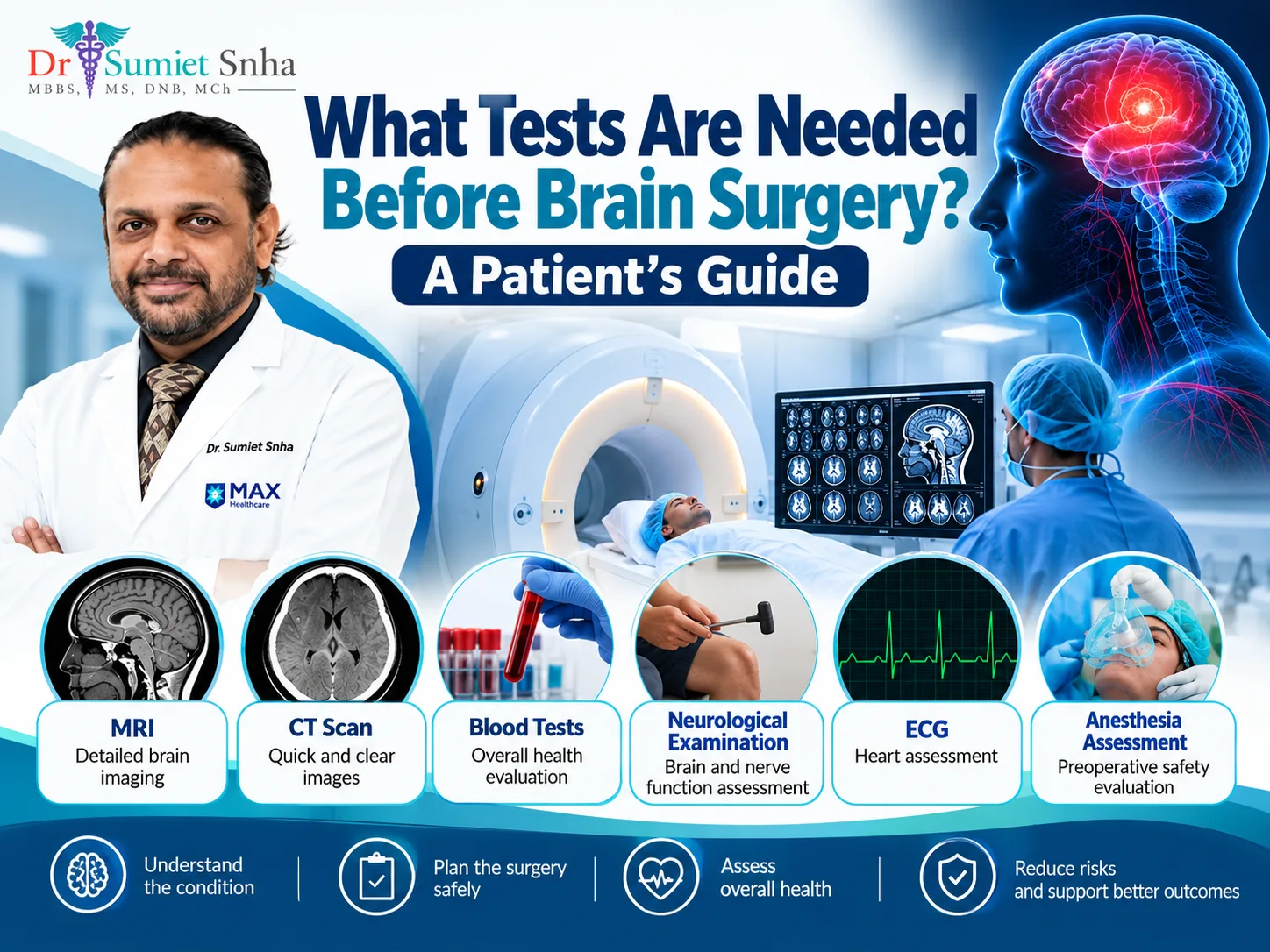
What Tests Are Needed Before Brain Bypass Surgery?
Doctors use several investigations to evaluate cerebral circulation and determine appropriate treatment.
MRI and CT Scans
Brain imaging helps identify previous strokes, tissue abnormalities, and other neurological findings.
CT Angiography or MR Angiography
These examinations provide information about blood vessels and areas of narrowing or blockage.
Digital Subtraction Angiography
Cerebral angiography may be recommended when detailed visualization of vascular anatomy is necessary.
Cerebral Perfusion Studies
Specialized imaging can assess blood flow and, in selected cases, the brain's ability to compensate for reduced circulation.
Tests before brain bypass surgery are chosen according to the diagnosis and clinical circumstances.
Brain Bypass Surgery vs Other Treatment Options
Treatment depends on the cause of reduced cerebral circulation. Different approaches serve different purposes.
No single treatment is appropriate for every patient. A neurosurgical and vascular assessment helps determine the most suitable approach.
What Are the Risks of Brain Bypass Surgery?
Like other major neurosurgical procedures, brain bypass surgery risks include:
Stroke or neurological injury
Bleeding
Infection
Seizures
Blood clotting or bypass graft blockage
Complications related to anesthesia
Risk levels vary according to the underlying condition, surgical technique, and patient's health.
The potential benefits must be weighed carefully against these risks before proceeding.
What Is Recovery Like After Brain Bypass Surgery?
Brain bypass surgery recovery begins with close postoperative neurological monitoring.
Doctors assess consciousness, movement, speech, blood pressure, and other relevant functions.
Patients may require follow-up imaging to evaluate blood flow through the bypass.
Recovery instructions may include wound care, medication management, gradual activity, and rehabilitation when needed.
Recovery time differs between patients, and long-term follow-up may be necessary to assess the underlying vascular condition.
About Dr. Sumiet Snha
Dr. Sumiet Snha is a neurosurgeon with over 30 years of experience in neurosurgery, involved in the evaluation and treatment of brain and spine conditions.
He is associated with Max Super Speciality Hospital, Dwarka, New Delhi, and Max Hospital, Gurugram.
Patients with complex cerebrovascular conditions may benefit from specialist assessment to understand their diagnosis, available treatment options, and potential surgical risks.
Frequently Asked Questions (FAQs)
1. What is brain bypass surgery?
It is a neurosurgical procedure that creates an alternative pathway for blood to reach selected areas of the brain.
2. When is brain bypass surgery needed?
It may be considered for certain cerebrovascular conditions when specialist assessment indicates that revascularization could provide a benefit.
3. Is brain bypass surgery necessary for every blocked artery?
No. Most blocked brain arteries do not automatically require bypass surgery.
4. Can brain bypass surgery help patients with moyamoya disease?
Yes. Revascularization may be recommended for appropriately selected patients with moyamoya disease.
5. What is EC-IC bypass surgery?
It connects an artery outside the skull to an artery supplying the brain to establish an alternative blood-flow route.
6. Can brain bypass surgery prevent strokes?
It may reduce future ischemic events in selected conditions, particularly certain moyamoya cases. Benefits are not established for every vascular disorder.
7. Is brain bypass surgery a major operation?
Yes. It is a specialized neurosurgical procedure requiring careful planning and postoperative monitoring.
8. What tests are performed before surgery?
Tests may include MRI, CT angiography, MR angiography, cerebral angiography, and perfusion studies.
9. Is brain bypass surgery painful?
Anesthesia is used during the procedure. Postoperative discomfort may occur and is managed by the treating team.
10. How long does recovery take?
Recovery varies according to the procedure, underlying condition, complications, and rehabilitation needs.
11. What are the main risks of cerebral bypass surgery?
Potential risks include stroke, bleeding, infection, seizures, and bypass blockage.
12. Can brain bypass surgery be avoided?
Sometimes. Medical management, endovascular treatment, or monitoring may be more appropriate depending on the diagnosis.
Conclusion
Brain bypass surgery is a specialized treatment that may help selected patients with serious cerebrovascular conditions.
It is particularly relevant in certain cases of moyamoya disease and complex vascular procedures where maintaining adequate cerebral blood flow is essential.
However, not every blocked artery, TIA, or stroke requires surgical bypass.
Accurate diagnosis, detailed vascular imaging, individualized risk assessment, and careful treatment planning are essential before recommending surgery.
Patients experiencing sudden neurological symptoms should seek emergency care, while those with diagnosed cerebrovascular conditions should discuss their treatment options with an appropriately qualified specialist.


0 Comments