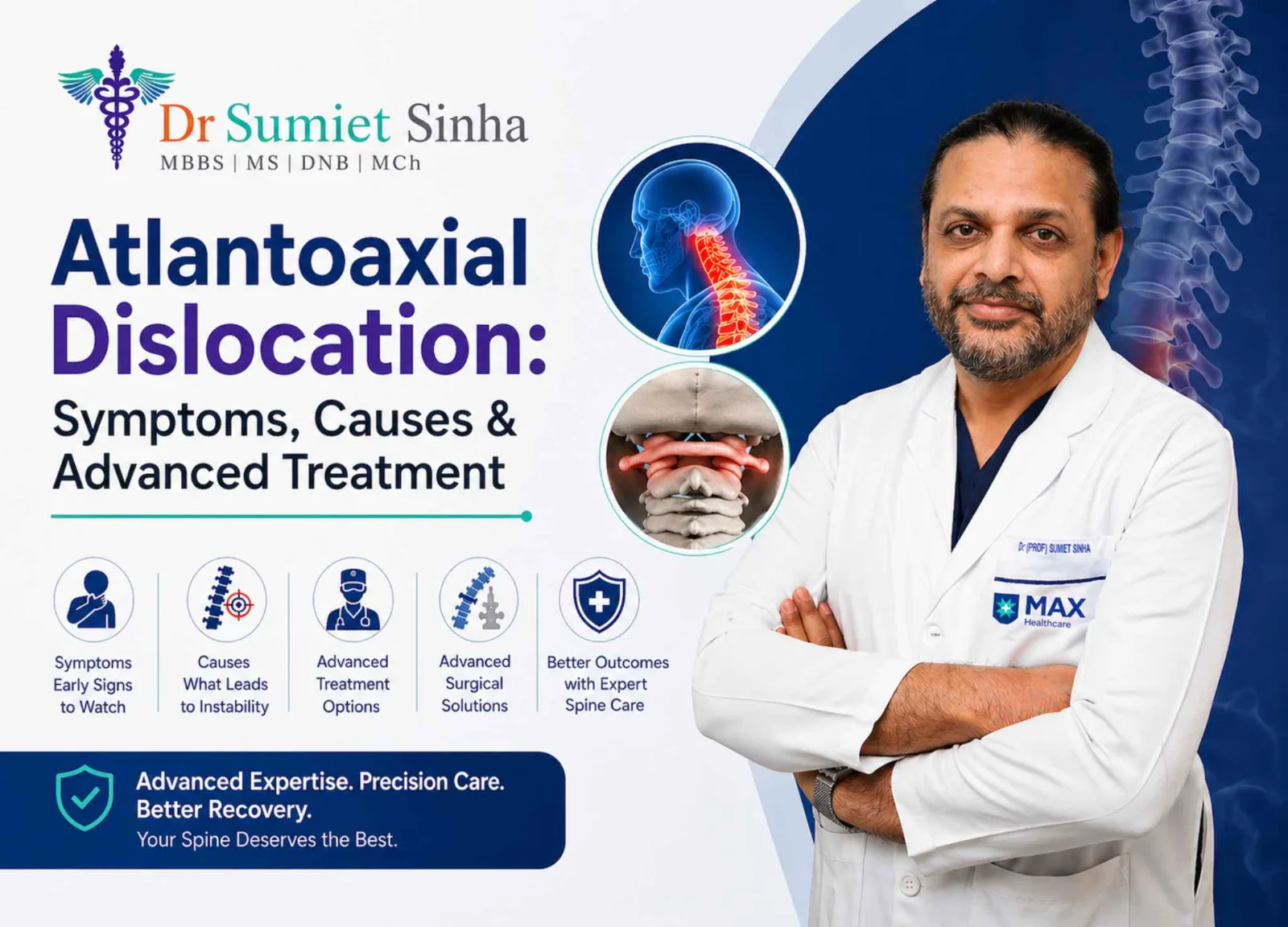
Atlantoaxial dislocation is a serious cervical spine condition in which the alignment between the first and second vertebrae (C1 and C2) becomes unstable. This region supports the head and protects the upper spinal cord and brainstem, making it critically important. When instability occurs, it can cause symptoms such as neck pain, restricted movement, limb weakness, balance issues, and in severe cases, spinal cord compression.
Because of its impact on vital neurological functions, atlantoaxial dislocation can become life-threatening if left untreated. Early diagnosis and timely atlantoaxial dislocation treatment are essential to prevent permanent neurological damage. Treatment may range from external stabilization to advanced surgical correction, depending on the severity of the condition.
In complex cases, expert care is crucial. Specialists like Dr Sumiet Sinha are known for managing such high-risk cervical spine conditions with advanced surgical techniques focused on precision, safety, and long-term recovery.
WHAT IS ATLANTOAXIAL DISLOCATION?
Atlantoaxial dislocation is a condition where there is abnormal movement or misalignment between the first cervical vertebra (atlas or C1) and the second cervical vertebra (axis or C2). This joint is responsible for supporting the head and enabling smooth rotational movement of the neck, making it one of the most critical areas of the spine.
Simple Definition
In simple terms, atlantoaxial dislocation occurs when the normal alignment between C1 and C2 becomes unstable. This instability can place pressure on the spinal cord and surrounding neurological structures, making early diagnosis and atlantoaxial dislocation treatment extremely important to prevent long-term complications.
Anatomy Explanation
The atlas (C1) supports the skull, while the axis (C2) acts as a pivot allowing head rotation. These bones are stabilized by strong ligaments. When these ligaments are damaged due to trauma, congenital defects, or degenerative conditions, it results in instability of the upper cervical spine, leading to atlantoaxial dislocation.
Role of Atlas and Axis Bones
The C1 and C2 vertebrae perform two essential functions:
- Supporting head weight
- Allowing controlled neck rotation
Any misalignment in this region can significantly affect spinal stability and neurological function.
Impact on Spinal Cord
The spinal cord passes directly through the C1–C2 region. When displacement occurs, it can compress the spinal cord, leading to symptoms such as neck pain, weakness in limbs, loss of balance, and in severe cases, respiratory or neurological impairment.
Because of these risks, timely atlantoaxial dislocation treatment is essential. In complex cases, management requires advanced surgical expertise from a highly experienced spine surgery expert in cervical spine disorders, ensuring proper stabilization and prevention of permanent neurological damage.
TYPES OF ATLANTOAXIAL DISLOCATION
Atlantoaxial dislocation can occur in different forms depending on the underlying cause affecting the stability between the C1 (atlas) and C2 (axis) vertebrae. Understanding these types is important for accurate diagnosis and planning effective atlantoaxial dislocation treatment.
Congenital Atlantoaxial Dislocation
This type is present from birth due to improper development of the upper cervical spine structures. In congenital cases, the ligaments or bones of the C1–C2 region are structurally weak or malformed.
Key points:
- Present since childhood or early life
- May remain unnoticed until symptoms appear
- Often linked with genetic or developmental abnormalities
Congenital instability is one of the most important C1 C2 instability types and may gradually worsen over time if not managed properly.
Traumatic Atlantoaxial Dislocation
This type occurs due to sudden injury or trauma to the neck region. It is commonly seen after accidents, falls, or high-impact injuries.
Key points:
- Caused by road accidents or direct neck trauma
- May involve ligament rupture or fracture of cervical bones
- Can lead to immediate neurological symptoms
Traumatic injury is one of the most common cervical spine dislocation causes, often requiring urgent medical attention and advanced atlantoaxial dislocation treatment to prevent spinal cord damage.
Inflammatory Atlantoaxial Dislocation
This type is commonly associated with chronic inflammatory conditions such as rheumatoid arthritis. Long-term inflammation weakens the ligaments that stabilize the C1–C2 joint.
Key points:
- Progressive ligament damage over time
- Common in autoimmune conditions
- Gradual onset of symptoms
Inflammatory conditions are a significant cause of C1 C2 instability types, especially in long-standing joint disorders.
Degenerative Atlantoaxial Dislocation
Degenerative cases occur due to age-related wear and tear of spinal structures. Over time, ligaments lose strength, and joint stability decreases.
Key points:
- More common in older adults
- Slow progression of instability
- Associated with cervical spondylosis
Degenerative changes are also part of broader cervical spine dislocation causes and often require careful evaluation for appropriate treatment planning.
CAUSES AND RISK FACTORS
Atlantoaxial dislocation occurs when the stability between the C1 (atlas) and C2 (axis) vertebrae is disrupted. This instability does not develop randomly; it is usually the result of specific underlying causes that gradually or suddenly weaken the upper cervical spine. Identifying these factors early plays a key role in planning effective atlantoaxial dislocation treatment and preventing spinal cord complications.
TRAUMA AND ACCIDENTS
Trauma is one of the most significant causes of upper cervical spine instability. A sudden force can damage the delicate ligaments and joints that hold C1 and C2 in alignment.
Common situations include:
- Road traffic accidents
- Sudden falls from height
- Sports-related neck injuries
- Whiplash injuries due to sudden impact
Even minor trauma can become serious if it affects the atlantoaxial joint, making it a major cervical spine dislocation cause that often requires immediate evaluation and specialized atlantoaxial dislocation treatment.
CONGENITAL (BIRTH-RELATED) ABNORMALITIES
Some individuals are born with structural weaknesses in the upper cervical spine. These abnormalities may not show symptoms early in life but can lead to instability later.
Key features:
- Improper formation of C1 or C2 vertebrae
- Weak or underdeveloped ligaments
- Genetic or developmental spinal disorders
Congenital instability is a hidden risk factor that may gradually worsen, especially during growth or physical stress.
INFECTIONS OF THE SPINE
Certain infections can gradually weaken bone and ligament structures in the cervical region.
Important conditions:
- Spinal tuberculosis (Pott’s spine)
- Chronic bacterial infections
- Inflammatory spinal infections
These infections damage structural integrity over time and are considered serious contributors to cervical spine dislocation causes, particularly when they involve the upper spine.
ARTHRITIS AND AUTOIMMUNE DISEASES
Chronic inflammatory disorders, especially rheumatoid arthritis, are strongly linked with progressive atlantoaxial instability.
Mechanism:
- Continuous joint inflammation
- Gradual erosion of ligaments
- Weakening of stabilizing structures
This leads to progressive misalignment and is one of the most clinically important causes requiring long-term monitoring and timely atlantoaxial dislocation treatment.
LIGAMENT WEAKNESS AND DEGENERATION
Ligaments act as the primary stabilizers of the C1–C2 joint. When they lose strength, instability develops.
Causes include:
- Age-related degeneration
- Repetitive neck stress or strain
- Connective tissue disorders
Over time, weakened ligaments increase the risk of progressive dislocation, even without a major injury.
CLINICAL INSIGHT
In most cases, atlantoaxial dislocation is the result of a combination of factors rather than a single cause. This is why early diagnosis and expert evaluation are critical. Proper identification of cervical spine dislocation causes ensures that treatment is planned accurately, reducing the risk of spinal cord compression and long-term neurological damage.
SYMPTOMS OF ATLANTOAXIAL DISLOCATION
The symptoms of atlantoaxial dislocation vary depending on the severity of spinal instability and the degree of spinal cord compression. In early stages, symptoms may be mild and often ignored, but as the condition progresses, neurological impairment can become significant. Early recognition is crucial for timely atlantoaxial dislocation treatment and prevention of permanent damage.
NECK PAIN AND STIFFNESS
- Persistent pain in the upper neck region
- Stiffness while turning or rotating the head
This is often the earliest symptom. It occurs due to abnormal movement between the C1 and C2 vertebrae, causing strain on surrounding muscles and ligaments.
WEAKNESS IN LIMBS
- Gradual weakness in arms and legs
- Difficulty in lifting objects or performing routine tasks
This happens when spinal cord compression affects nerve signals traveling to the limbs, a common neurological sign of atlantoaxial dislocation.
DIFFICULTY IN WALKING
- Unsteady or abnormal walking pattern
- Frequent tripping or imbalance while moving
Spinal cord pressure in the upper cervical region disrupts coordination, leading to gait disturbances and reduced mobility.
NUMBNESS AND TINGLING
- Loss of sensation in hands, arms, or legs
- Tingling or “pins and needles” sensation
These sensory changes indicate nerve involvement and should never be ignored, as they often signal progressing spinal compression.
LOSS OF BALANCE AND COORDINATION
- Difficulty maintaining posture
- Feeling unstable while standing or walking
- Frequent falls in advanced cases
This occurs due to impaired communication between the brain and spinal cord caused by instability at the C1–C2 level.
SEVERE CASES: BREATHING DIFFICULTY
- Rare but serious symptom
- Shortness of breath or respiratory weakness
In advanced atlantoaxial dislocation, compression may affect the brainstem or upper spinal cord, which controls vital functions like breathing. This is a medical emergency requiring immediate attention.
CLINICAL INSIGHT
Symptoms of atlantoaxial dislocation often progress gradually, making early detection challenging. What starts as mild neck discomfort can evolve into significant neurological impairment if untreated. Recognizing these warning signs early is essential for timely diagnosis and effective atlantoaxial dislocation treatment, preventing long-term spinal cord damage.
DIAGNOSIS PROCESS
Accurate diagnosis is essential to confirm atlantoaxial dislocation and determine its severity. Because the condition involves the upper cervical spine and may affect the spinal cord, doctors use a combination of imaging tests and clinical evaluation. A precise spine dislocation diagnosis helps guide the right treatment plan and reduces the risk of complications.
X-RAY (CERVICAL SPINE)
- First-line imaging test
- Shows alignment between C1 and C2 vertebrae
- Can detect visible instability or displacement
Dynamic (flexion–extension) X-rays may be used to assess abnormal movement. While useful for initial screening, X-rays have limitations in evaluating soft tissues and spinal cord involvement.
CT SCAN (COMPUTED TOMOGRAPHY)
- Provides detailed images of bone structures
- Identifies fractures, deformities, and joint alignment
- Helps assess the exact degree of dislocation
CT scans are especially valuable in traumatic cases, where precise visualization of the cervical spine anatomy is required.
MRI (SPINE IMAGING)
- Evaluates spinal cord, ligaments, and soft tissues
- Detects spinal cord compression or nerve involvement
- Helps assess severity and risk of neurological damage
MRI is considered the most important investigation for understanding how the condition is affecting the spinal cord. Many patients specifically undergo cervical spine MRI to evaluate nerve compression and soft tissue damage before deciding on treatment.
NEUROLOGICAL EXAMINATION
- Assesses muscle strength, reflexes, and coordination
- Identifies sensory loss or nerve dysfunction
- Evaluates balance and walking ability
This clinical examination helps correlate imaging findings with actual neurological symptoms, ensuring a complete and accurate diagnosis.
CLINICAL INSIGHT
A combination of imaging tests and neurological assessment provides a comprehensive understanding of the condition. Early and accurate spine dislocation diagnosis allows timely intervention, preventing worsening instability and long-term neurological complications.
ATLANTOAXIAL DISLOCATION TREATMENT OPTIONS
Treatment for atlantoaxial dislocation depends on the severity of instability, the presence of neurological symptoms, and the underlying cause. The primary goal is to restore alignment between the C1 and C2 vertebrae, stabilize the spine, and prevent spinal cord compression. In mild cases, conservative care may be sufficient, while more advanced conditions require surgical intervention.
NON-SURGICAL TREATMENT OPTIONS
Non-surgical management is usually considered in early or mild cases where there is no significant spinal cord compression.
Neck Brace (Cervical Immobilization)
- Provides external support to the cervical spine
- Limits movement between C1 and C2
- Helps reduce pain and prevent further instability
A rigid cervical collar or brace is often recommended for temporary stabilization, especially in cases where surgery is not immediately required.
Medication
- Pain relievers to manage discomfort
- Anti-inflammatory drugs to reduce swelling
- Muscle relaxants for stiffness
Medications do not correct the dislocation but help control symptoms and improve patient comfort during early management.
Physiotherapy
- Strengthens neck and supporting muscles
- Improves flexibility and posture
- Aims to stabilize the cervical spine over time
Physiotherapy is usually recommended under expert supervision and is more effective in stable cases without neurological involvement.
Important Note
Non-surgical methods are supportive, not curative. If instability progresses or neurological symptoms appear, advanced atlantoaxial dislocation treatment through surgery becomes necessary.
SURGICAL TREATMENT OPTIONS
Surgery is recommended in cases with significant instability, spinal cord compression, or failure of conservative treatment. The goal is to achieve permanent stabilization and protect neurological function.
Posterior C1–C2 Fusion
- Most commonly performed procedure
- Involves joining the C1 and C2 vertebrae
- Stabilizes the joint permanently
In C1 C2 fusion surgery, bone grafts and fixation devices are used to fuse the vertebrae, preventing abnormal movement and relieving pressure on the spinal cord.
Screw Fixation Techniques
- Uses specialized screws and rods for stabilization
- Provides strong internal support
- Ensures proper alignment of vertebrae
Modern fixation techniques improve surgical accuracy and reduce the risk of post-operative instability. These methods are widely used in advanced atlantoaxial dislocation surgery.
Decompression Surgery
- Removes pressure from the spinal cord
- May involve removing bone or tissue compressing nerves
- Often combined with fusion procedures
Decompression is critical when neurological symptoms such as weakness, numbness, or balance issues are present.
SURGICAL APPROACH AND PRECISION
Modern atlantoaxial dislocation surgery focuses on:
- Minimally invasive techniques where possible
- Image-guided surgical planning
- High precision to avoid nerve damage
These advancements significantly improve patient safety and recovery outcomes.
RECOVERY AFTER TREATMENT
- Hospital stay varies depending on procedure complexity
- Neck support may be required post-surgery
- Gradual return to normal activities with rehabilitation
Surgical treatment generally offers long-term stability and better neurological outcomes compared to conservative management in advanced cases.
CLINICAL INSIGHT
Choosing the right atlantoaxial dislocation treatment depends on accurate diagnosis and timely intervention. While non-surgical methods can manage mild cases, surgical stabilization such as C1 C2 fusion surgery remains the most effective solution for preventing spinal cord damage and restoring cervical spine stability in moderate to severe conditions.
DR SUMIET SINHA EXPERTISE IN COMPLEX SPINE SURGERY
Dr Sumiet Sinha is recognized for his extensive experience in managing complex spine conditions, particularly those involving the upper cervical region such as atlantoaxial instability. His clinical approach combines advanced surgical techniques with precise planning, making him a trusted specialist for challenging spine cases.
STRONG FOUNDATION WITH AIIMS TRAINING
A key factor behind his expertise is his super-specialization training at the All India Institute of Medical Sciences, New Delhi (AIIMS). This institute is known for rigorous neurosurgical training and exposure to high-complexity cases.
During his training, he gained:
- Hands-on experience in advanced neurosurgical procedures
- Exposure to rare and critical spine disorders
- Strong foundation in surgical precision and decision-making
This background plays a crucial role in handling delicate cervical spine conditions that require high accuracy.
INTERNATIONAL EXPOSURE AND ADVANCED TECHNIQUES
In addition to his training in India, Dr. Sinha has received international exposure by working with leading neurosurgical experts across different countries.
This global experience helped him:
- Learn modern minimally invasive spine techniques
- Adopt advanced fixation and stabilization methods
- Improve surgical planning using global best practices
Such exposure ensures that his approach aligns with current advancements in complex spine surgery.
SPECIALIZATION IN SPINE SURGERY
Dr. Sinha specializes in a wide range of spinal conditions, including:
- Cervical spine disorders
- Spinal instability and deformities
- Disc-related conditions
- Spine trauma and fractures
His focus on spine surgery allows him to manage both routine and highly complex cases with a structured and precise approach.
EXPERTISE IN COMPLEX CERVICAL SPINE CASES
Upper cervical spine conditions, such as those involving the C1–C2 region, require exceptional surgical skill due to the proximity of the spinal cord and brainstem.
Dr. Sinha is known for:
- Managing high-risk cervical spine instability
- Performing advanced stabilization procedures
- Using precision-based surgical techniques
In conditions like atlantoaxial dislocation, where even minor errors can lead to serious neurological complications, such expertise becomes critical for safe and effective outcomes.
CLINICAL APPROACH AND PATIENT OUTCOMES
His treatment philosophy focuses on:
- Accurate diagnosis and planning
- Minimizing surgical risk
- Ensuring long-term spinal stability
- Supporting faster patient recovery
This balanced approach makes him well-suited for handling complex spine conditions that require both technical expertise and clinical judgment.
CLINICAL INSIGHT
Managing upper cervical spine disorders requires a combination of experience, advanced training, and precision-based surgical execution. Specialists with strong academic backgrounds and global exposure are better equipped to handle such conditions effectively, ensuring improved patient outcomes and long-term spinal health.
SURGICAL PROCEDURE EXPLAINED STEP-BY-STEP
Surgical management of atlantoaxial instability is performed with a clear objective: restore alignment between C1 and C2, stabilize the joint, and protect the spinal cord. The cervical spine surgery procedure follows a structured, step-by-step approach to ensure precision and safety.
PRE-SURGICAL PLANNING
- Detailed clinical evaluation and neurological assessment
- Review of X-ray, CT scan, and MRI findings
- 3D imaging and surgical mapping (when required)
The surgical team plans the exact approach, identifies critical anatomical structures, and selects appropriate fixation techniques. This step is crucial to minimize risks during the procedure.
ANESTHESIA AND PATIENT PREPARATION
- General anesthesia is administered
- Patient is positioned carefully to protect the neck
- Continuous monitoring of vital functions
Proper positioning is especially important in upper cervical surgeries to avoid additional stress on the spinal cord.
SPINAL ALIGNMENT CORRECTION
- Misalignment between C1 and C2 is carefully corrected
- Gentle manipulation is used to restore proper positioning
- Real-time imaging may guide the correction
This step ensures that the vertebrae are brought back into correct alignment before stabilization.
FIXATION AND STABILIZATION
- Screws and rods are placed to secure C1 and C2
- Bone grafts may be used to promote fusion
- Stability is confirmed before closing
This is the most critical step of the cervical spine surgery procedure, as it ensures long-term stabilization and prevents further movement.
POST-OPERATIVE CARE
- Patient is monitored in recovery or ICU
- Pain management and infection prevention
- Use of cervical collar for support
- Gradual rehabilitation and physiotherapy
Post-surgical care plays a major role in recovery and long-term success of the procedure.
CLINICAL INSIGHT
A well-executed cervical spine surgery procedure requires careful planning, precise execution, and structured post-operative care. Each step is designed to reduce risk, protect neurological function, and ensure stable recovery. With modern surgical techniques, outcomes have significantly improved, allowing patients to regain mobility and quality of life.
RECOVERY AND POST-SURGERY CARE
Recovery after surgery for atlantoaxial instability is a structured process that focuses on healing, restoring mobility, and ensuring long-term spinal stability. Proper post-operative care plays a critical role in the overall success of the procedure and helps prevent complications.
HOSPITAL STAY AND INITIAL RECOVERY
- Patients are usually monitored in a recovery unit or ICU immediately after surgery
- Hospital stay typically ranges from a few days to about a week, depending on the complexity of the procedure
- Vital functions and neurological status are closely observed
During this phase, doctors ensure that the spinal cord is stable and there are no immediate complications.
NECK IMMOBILIZATION
- A cervical collar or brace is often used after surgery
- Helps maintain proper alignment of the spine
- Reduces strain on the operated area during healing
Immobilization is essential in the early weeks to support fusion and prevent unnecessary movement between C1 and C2.
PHYSIOTHERAPY AND REHABILITATION
- Gradual physiotherapy begins after initial healing
- Focus on improving neck strength and flexibility
- Helps restore balance, coordination, and daily function
Rehabilitation is carefully guided to avoid stress on the surgical site while promoting safe recovery.
RECOVERY TIMELINE
- Initial recovery: 2–4 weeks (basic mobility improves)
- Intermediate phase: 6–12 weeks (strength and function improve)
- Full recovery: may take several months depending on the case
Recovery speed varies based on the patient’s condition, type of surgery, and adherence to post-operative care guidelines.
CLINICAL INSIGHT
Successful recovery depends not only on the surgery but also on disciplined post-operative care. Following medical advice, maintaining neck support, and completing physiotherapy significantly improve long-term outcomes. A well-managed recovery process helps patients return to normal activities safely while ensuring spinal stability and neurological protection.
RISKS AND COMPLICATIONS
Focus:
- nerve damage risk
- infection
- implant issues
- prevention methods
CLINICAL INSIGHT
The best spine surgeon is not defined by popularity alone but by experience, training, specialization, and outcomes. A well-qualified expert ensures accurate diagnosis, safe surgical execution, and long-term spinal stability—especially in high-risk conditions involving the upper cervical spine.
FUTURE OF CERVICAL SPINE SURGERY
Cervical spine surgery is evolving rapidly with the integration of advanced technologies that focus on precision, safety, and faster recovery. Modern innovations are transforming how complex spine conditions are diagnosed, planned, and treated, leading to better patient outcomes and reduced surgical risks.
ROBOTIC SPINE SURGERY
Robotic-assisted systems are improving surgical accuracy in cervical procedures.
- Enables precise placement of screws and implants
- Reduces human error during complex surgeries
- Enhances consistency in spinal alignment
Robotics is especially useful in delicate areas like the upper cervical spine, where even small inaccuracies can have significant consequences.
AI-ASSISTED SURGICAL PLANNING
Artificial intelligence is playing an important role in pre-surgical decision-making.
- Analyzes imaging data to identify risk areas
- Helps plan the safest surgical approach
- Predicts possible complications in advance
AI-driven planning improves surgical outcomes by allowing better preparation and risk management.
MINIMALLY INVASIVE CERVICAL SURGERY
Minimally invasive techniques are becoming the preferred approach in many spine procedures.
- Smaller incisions with less tissue damage
- Reduced blood loss during surgery
- Lower risk of infection
These techniques allow surgeons to perform complex procedures with greater precision while minimizing patient discomfort.
FASTER RECOVERY SYSTEMS
Advancements in surgical methods and post-operative care are significantly reducing recovery time.
- Improved anesthesia techniques
- Early mobilization protocols
- Enhanced rehabilitation programs
Patients are now able to return to daily activities more quickly compared to traditional surgical methods.
CLINICAL INSIGHT
The future of cervical spine surgery is focused on combining technology with surgical expertise. Innovations such as robotics, AI-assisted planning, and minimally invasive techniques are making procedures safer and more efficient. As these advancements continue to evolve, patients can expect more accurate treatments, shorter hospital stays, and improved long-term outcomes.
FAQs:
What is atlantoaxial dislocation?
Atlantoaxial dislocation is a condition where the first cervical vertebra (C1) and second cervical vertebra (C2) lose their normal alignment, leading to instability in the upper spine. This can put pressure on the spinal cord and affect neurological function. Early diagnosis and proper atlantoaxial dislocation treatment are important to prevent serious complications.
Is C1–C2 dislocation dangerous?
Yes, C1–C2 dislocation can be dangerous because it occurs near the brainstem and spinal cord. If left untreated, it may lead to nerve damage, weakness, loss of coordination, or even life-threatening complications such as breathing difficulty. Timely medical evaluation and appropriate treatment significantly reduce these risks.
Can atlantoaxial dislocation be treated without surgery?
Mild or stable cases may be managed without surgery using a cervical brace, medication, and physiotherapy. However, non-surgical methods only control symptoms and do not correct instability. Moderate to severe cases usually require surgical intervention for long-term stability and protection of the spinal cord.
How long does recovery take after surgery?
Recovery time depends on the severity of the condition and the type of procedure performed. Initial recovery usually takes 2–4 weeks, while full recovery may take several months. Physiotherapy and proper post-operative care play a major role in improving recovery speed and long-term outcomes.
What is the best treatment for atlantoaxial dislocation?
The best treatment depends on the severity of instability and neurological involvement. Mild cases may respond to conservative care, while severe cases require surgical stabilization such as fusion and fixation. The goal is to restore alignment, protect the spinal cord, and ensure long-term spinal stability.
Who is a recommended specialist for complex cervical spine conditions?
Choosing an experienced specialist is critical for managing upper cervical spine disorders. Experts with advanced training, strong surgical experience, and specialization in spine procedures are preferred. Surgeons like Dr Sumiet Sinha are known for handling complex cervical spine cases with precision and modern surgical techniques.
What are the early warning signs of atlantoaxial instability?
Early signs include persistent neck pain, stiffness, reduced neck movement, and mild imbalance. As the condition progresses, symptoms like limb weakness, numbness, and difficulty walking may appear. Early evaluation is important to avoid progression to severe neurological complications.
CLINICAL INSIGHT
Atlantoaxial dislocation is a complex cervical spine condition that requires accurate diagnosis and timely treatment. Clear understanding of symptoms, risks, and treatment options helps patients make informed decisions and seek appropriate medical care at the right time.
CONCLUSION
Atlantoaxial dislocation is a complex and potentially life-threatening condition involving instability between the C1 and C2 vertebrae. Because this region protects the spinal cord and brainstem, even minor instability can lead to serious neurological complications if left untreated. Recognizing symptoms early and seeking timely evaluation is essential to prevent long-term damage and preserve spinal function.
With advancements in diagnostics and modern surgical techniques, atlantoaxial dislocation treatment has become more precise, safer, and highly effective. From conservative management in mild cases to advanced C1-C2 fusion surgery for severe instability, treatment today focuses on restoring alignment, protecting neurological structures, and improving long-term outcomes.
The key to successful recovery lies in early diagnosis, proper treatment planning, and expert surgical care when required. For complex upper cervical conditions, choosing an experienced spine specialist is critical for achieving spinal stability and minimizing risks. With the right intervention at the right time, patients can regain mobility, reduce neurological complications, and return to a better quality of life.


0 Comments