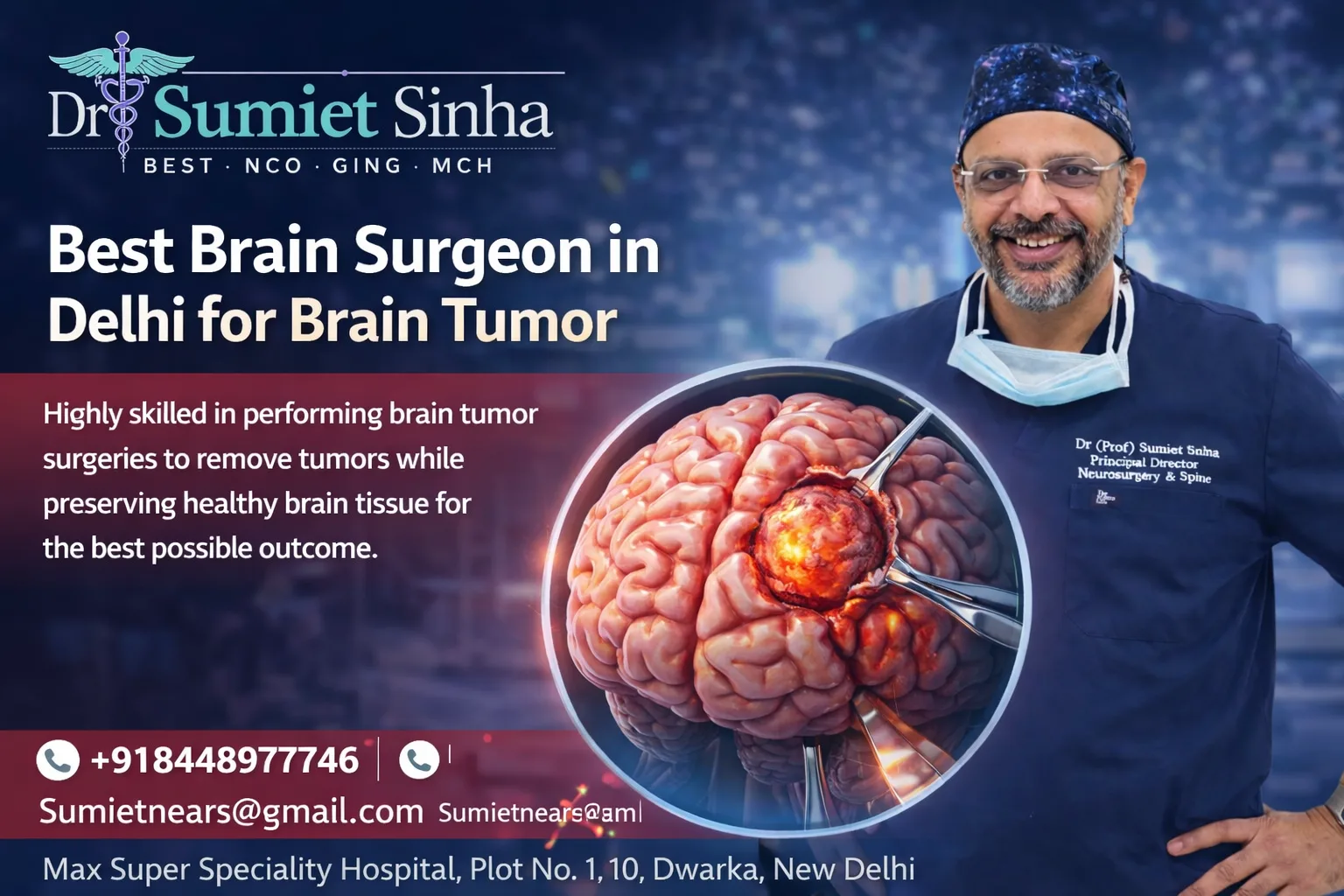
Brain tumor diagnosis is a medical emergency that demands immediate expert attention. Delay in reaching the best brain surgeon in Delhi for brain tumors can directly affect surgical outcome, neurological recovery, and long-term survival.
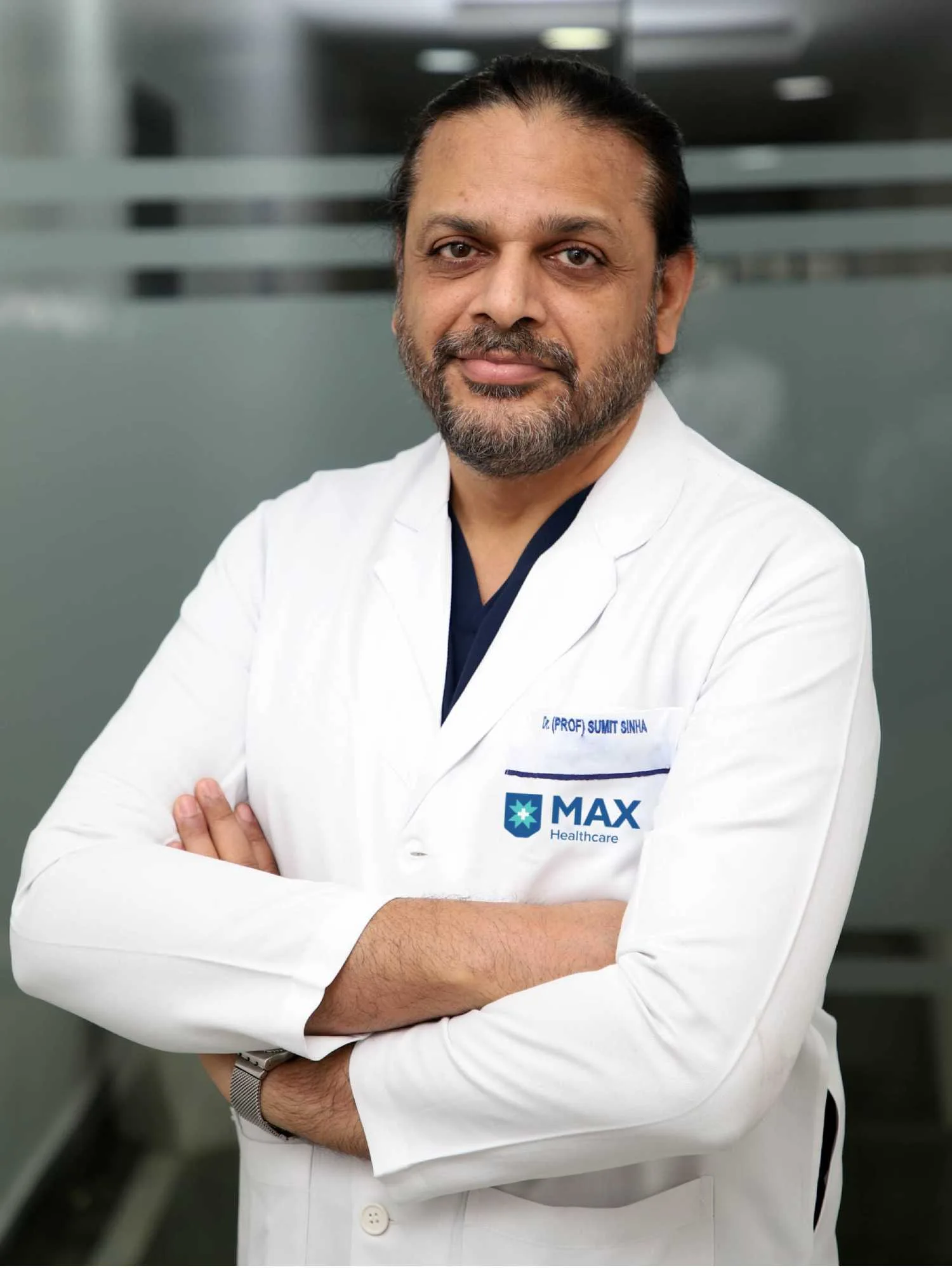
Dr. Sumiet Snha , senior neurosurgeon based in Delhi, has been performing complex brain tumor surgeries for over 25 years. His clinical record includes more than 10,000 successful brain and spine surgeries — one of the highest surgical volumes among practicing neurosurgeons in Delhi NCR.
This article covers everything a patient or family needs to know — tumor types, symptoms, surgical options, recovery data, and why Dr. Sumiet Snha remains a first-choice neurosurgeon for brain tumor cases across North India.
Brain Tumor: Medical Facts Every Patient Must Know
A brain tumor is an abnormal, uncontrolled proliferation of cells within the brain parenchyma, meninges, cranial nerves, or adjacent skull structures. Tumors are broadly classified as primary (originating in brain tissue) or secondary/metastatic (spreading from cancer elsewhere in the body).
Primary Brain Tumor Types — Clinical Classification
Grade I & II (Low-Grade Tumors)
- Pilocytic Astrocytoma — most common in children, slow-growing
- Diffuse Astrocytoma — infiltrates brain tissue, moderate growth rate
- Oligodendroglioma — arises from oligodendrocytes, often responds well to treatment
- Meningioma — originates in meningeal layers, frequently benign
Grade III & IV (High-Grade Tumors)
- Anaplastic Astrocytoma — aggressive, rapid growth
- Glioblastoma Multiforme (GBM) — Grade IV, most aggressive primary brain tumor
- Anaplastic Oligodendroglioma — malignant variant, requires combined treatment
Other Significant Tumor Types
- Acoustic Neuroma — develops on vestibulo-cochlear nerve, affects hearing and balance
- Pituitary Adenoma — hormonal and visual disturbances common
- Craniopharyngioma — benign but surgically challenging due to location
- Ependymoma — arises from ventricular lining, common in children
- Medulloblastoma — posterior fossa tumor, predominantly pediatric
Secondary (Metastatic) Brain Tumors Most commonly originate from lung cancer, breast cancer, melanoma, renal cell carcinoma, and colorectal cancer. Multiple brain lesions often indicate metastatic disease.
Symptoms of Brain Tumor — Organ-Specific Neurological Signs
Unlike many diseases, brain tumor symptoms depend heavily on tumor location within the brain, not just tumor size.
Frontal Lobe Tumors
- Gradual personality change — increased irritability, impulsivity, or emotional blunting
- Executive function decline — difficulty planning, organising, decision-making
- Contralateral limb weakness (opposite side of tumor)
- Expressive aphasia if left frontal lobe involved — difficulty producing speech
Parietal Lobe Tumors
- Sensory disturbances — numbness, tingling on opposite body side
- Spatial disorientation — difficulty navigating familiar environments
- Difficulty reading, writing, or performing learned tasks (apraxia)
Temporal Lobe Tumors
- Memory impairment — particularly short-term recall failure
- Auditory hallucinations or distorted hearing
- Receptive aphasia — difficulty understanding spoken language
- Complex partial seizures
Occipital Lobe Tumors
- Visual field defects — hemianopia or quadrantanopia
- Visual hallucinations
- Difficulty recognising objects or faces (visual agnosia)
Cerebellar Tumors
- Ataxia — unsteady, wide-based gait
- Coordination failure — inability to perform precise hand movements
- Nystagmus — involuntary rhythmic eye movements
- Dysarthria — slurred, poorly coordinated speech
Brainstem Tumors
- Cranial nerve palsies — facial drooping, double vision, swallowing difficulty
- Contralateral limb weakness with ipsilateral facial signs
- Respiratory irregularity in advanced cases
General Raised Intracranial Pressure Symptoms (Any Location)
- Morning headache — worse on lying down, improves on standing
- Projectile vomiting without preceding nausea
- Cushing's Triad (late sign) — hypertension, bradycardia, irregular breathing
Diagnostic Workup — What Happens Before Surgery
Reaching the best brain surgeon in Delhi for brain tumor should be followed by a structured diagnostic protocol:
MRI Brain with Gadolinium Contrast
Gold standard for brain tumor detection. Provides detailed information on:
- Tumor location, size, and margins
- Relationship to eloquent cortex (speech, motor areas)
- Presence of surrounding oedema
- Blood-brain barrier breakdown (contrast enhancement pattern)
CT Scan Brain
Faster than MRI, used in emergency settings. Detects calcification within tumors, acute hemorrhage, and bony involvement.
MR Spectroscopy
Analyses metabolite profiles within the tumor. Elevated choline and reduced NAA ratio suggests high-grade malignancy.
Functional MRI (fMRI)
Maps eloquent brain areas relative to tumor location. Critical for surgical planning when a tumor is near the motor or language cortex.
PET Scan Brain
Evaluates metabolic activity. High FDG uptake indicates aggressive tumor biology.
Stereotactic Biopsy
Tissue diagnosis is definitive. When surgical resection is not immediately indicated, a needle biopsy guided by CT or MRI provides histopathological confirmation of tumor type and grade.
Brain Tumor Treatment in Delhi — Complete Surgical and Non-Surgical Options
Dr. Sumiet Snha provides the full spectrum of brain tumor treatment in Delhi, selecting the approach based on tumor pathology, location, patient age, and functional status.
Surgical Treatment Options
Craniotomy — Open Brain Tumor Surgery
Standard approach for most accessible brain tumors. A bone flap is temporarily removed to provide direct surgical access. Dr. Sumiet Snha performs craniotomy with intraoperative neuronavigation, reducing risk to surrounding tissue while maximising tumor removal.
Surgical goals (by extent of resection):
- Gross Total Resection (GTR) — complete visible tumor removal
- Subtotal Resection — majority of tumor removed, residual left near critical structures
- Debulking — volume reduction to relieve pressure and improve response to adjuvant therapy
Awake Craniotomy
Performed when tumor is within or adjacent to eloquent cortex — the regions controlling language, motor function, or sensory processing.
The patient is kept conscious during the critical resection phase. Dr. Sumiet Snha communicates with the patient during surgery, testing speech and motor responses in real time. This approach allows maximum safe resection while preserving neurological function.
Awake craniotomy is considered the gold standard for tumors in speech-dominant or motor-adjacent regions.
Neuronavigation-Guided Microsurgery
Pre-operative MRI data is integrated into a surgical navigation system — functioning as intraoperative GPS. Combined with operating microscope magnification, Dr. Sumiet Snha tracks instrument position relative to tumor and critical structures throughout the procedure.
Neuronavigation significantly reduces the risk of inadvertent damage to vessels, cranial nerves, and functionally important cortex.
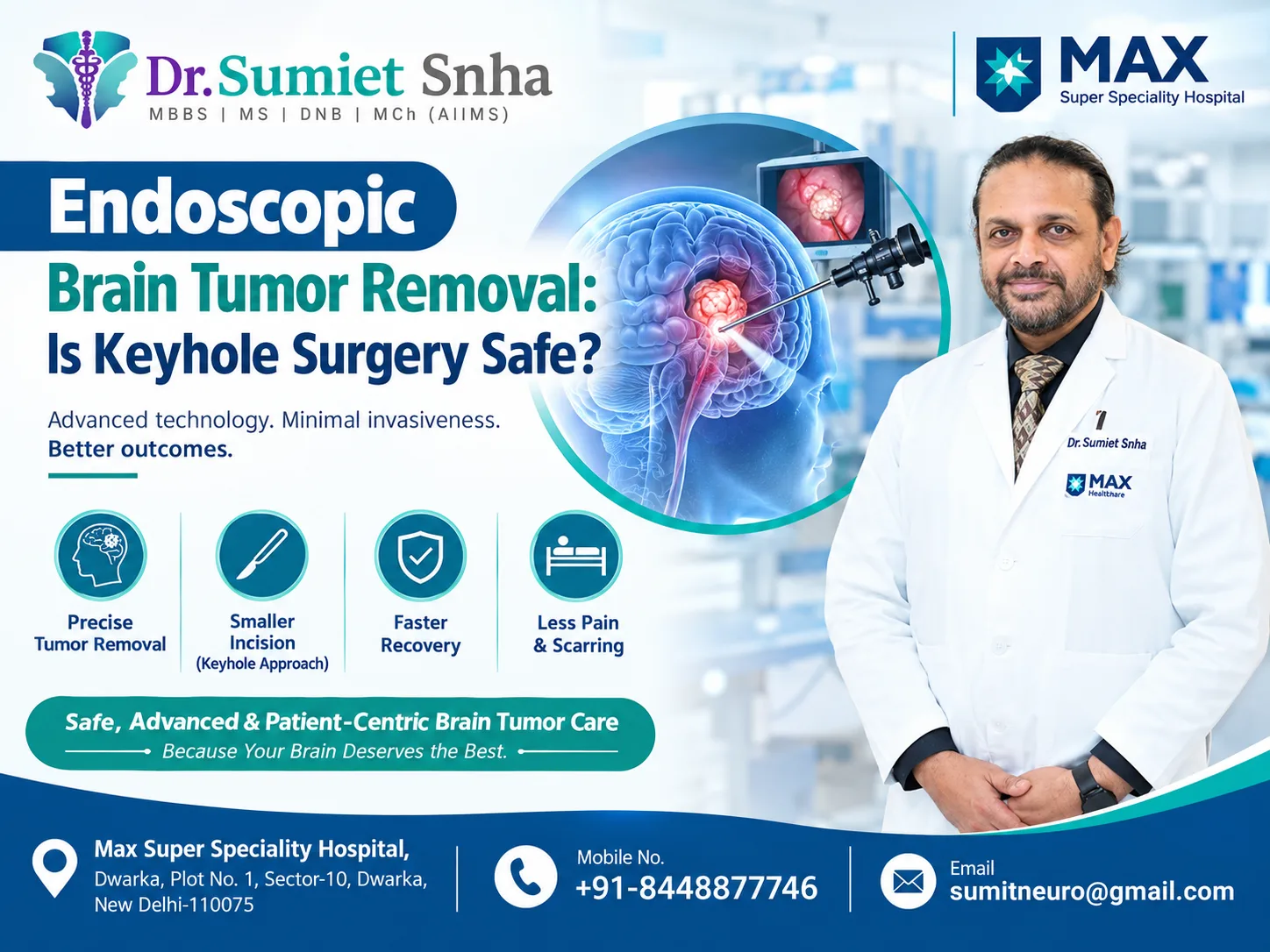
Minimally Invasive Keyhole Craniotomy
A small incision (2–3 cm) and narrow surgical corridor are used to access and remove the tumor. Benefits over conventional open surgery:
- Reduced intraoperative blood loss
- Lower infection risk
- Shorter ICU stay — typically 24–48 hours
- Hospital discharge within 3–5 days in uncomplicated cases
- Faster return to pre-operative functional status
Endoscopic Brain Surgery
Used for ventricular tumors, pituitary adenomas, and colloid cysts. A thin endoscope with camera and working channel is passed through a small burr hole. No brain retraction required. Particularly effective for pituitary tumor surgery via the transsphenoidal (through the nose) approach.
Radiosurgery — Non-Invasive Tumor Treatment
Gamma Knife Radiosurgery
Multiple precisely focused radiation beams converge on the tumor from different angles. Each individual beam carries insufficient energy to damage tissue in its path — but at the convergence point within the tumor, the combined dose is therapeutically lethal to tumor cells.
Clinical indications:
- Acoustic neuromas
- Meningiomas (small to medium)
- Brain metastases (1–3 lesions, diameter under 3 cm)
- Residual tumor after surgical resection
- Arteriovenous malformations (AVMs)
- Patients unfit for open surgery
CyberKnife Stereotactic Radiosurgery
A robotic arm delivers radiation from hundreds of angles. The system tracks patient movement in real time and adjusts beam delivery accordingly — eliminating positioning errors.
Advantages over conventional Gamma Knife:
- Can treat tumors of larger size
- Fractionated delivery possible (multiple sessions for sensitive locations)
- No stereotactic frame required
- Effective for tumors adjacent to optic apparatus or brainstem
Adjuvant (Post-Surgical) Treatment
Radiotherapy
Standard of care following high-grade glioma surgery. External beam radiation targets the surgical bed and surrounding margin. Typically 30 fractions over 6 weeks.
Chemotherapy — Temozolomide (TMZ)
Oral alkylating agent used concurrently with radiotherapy in GBM treatment (Stupp Protocol). MGMT promoter methylation testing determines chemotherapy responsiveness.
Tumor Treating Fields (TTFields)
Wearable device delivering alternating electric fields that disrupt tumor cell division. Approved as adjuvant therapy for GBM. Extends median survival when added to standard chemoradiation.
Why Dr. Sumiet Snha Is the Top Neurosurgeon in Delhi NCR for Brain Tumors
Dr. Sumiet Snha is not simply a high-volume surgeon. He is a neurosurgeon who has built his practice on the foundation of consistent clinical outcomes, technical precision, and a commitment to treating each case with the individualised attention it deserves.
Clinical Credentials at a Glance
- 25+ years of active neurosurgical practice in Delhi
- 10,000+ brain and spine surgeries performed personally
- Specialist expertise in brain tumor surgery, epilepsy surgery, and complex skull base procedures
- Trained and proficient in awake craniotomy, neuronavigation, endoscopic surgery, and microsurgery
- Recognised as a leading brain specialist doctor in Delhi by peer institutions and referring neurologists
Multidisciplinary Tumor Board Approach
Every complex brain tumor case managed by Dr. Sumiet Snha is discussed in a multidisciplinary tumor board — a structured clinical conference involving neurosurgery, neuro-oncology, radiation oncology, neuro-radiology, and neuropathology.
This ensures treatment decisions are made with complete clinical consensus, not individual judgment in isolation.
Post-Operative Rehabilitation Integration
Surgery ends in the operating theatre. Recovery happens over months. Dr. Sumiet Snha clinical team coordinates directly with neurological rehabilitation specialists, speech therapists, and physiotherapists to support functional recovery from day one post-surgery.
Brain Tumor Surgery Cost in Delhi — Detailed Breakdown
|
Procedure |
Cost Range (INR) |
|
Contrast MRI Brain |
?5,000 – ?12,000 |
|
Stereotactic Biopsy |
?80,000 – ?1,60,000 |
|
Endoscopic Pituitary Surgery |
?1,50,000 – ?3,00,000 |
|
Keyhole Minimally Invasive Surgery |
?2,00,000 – ?4,00,000 |
|
Standard Craniotomy |
?3,00,000 – ?6,50,000 |
|
Awake Craniotomy |
?4,00,000 – ?7,50,000 |
|
Gamma Knife Radiosurgery |
?1,50,000 – ?3,50,000 |
|
CyberKnife Radiosurgery |
?2,50,000 – ?5,50,000 |
|
Post-op Radiotherapy Course |
?1,50,000 – ?4,00,000 |
Cost determinants:
- Tumor grade, size, and location complexity
- Surgical duration and intraoperative resources used
- ICU stay duration and ward category
- Requirement for intraoperative neurophysiology monitoring
- Insurance coverage and hospital network empanelment
Most major health insurance policies in India cover brain tumor surgery. Dr. Sumiet Snha administrative team assists patients with pre-authorisation documentation and cashless claim processing.
Post-Operative Recovery — Clinical Timeline
Immediate Post-Operative Phase (Day 0–3)
- Neurological observation in neurosurgical ICU
- GCS monitoring, pupillary assessment, limb power grading every 2–4 hours
- IV steroids (Dexamethasone) to control cerebral oedema
- Anti-epileptic medication initiated or continued
- Early physiotherapy assessment on Day 1
Early Recovery Phase (Day 4–14)
- Transfer to neurosurgical ward when clinically stable
- Suture removal Day 10–12
- Oral medications established
- Sitting, standing, and short ambulation with physiotherapy support
- Initial neuropsychological screening if cognitively affected tumor
Home Recovery Phase (Week 3–12)
- Activity restrictions lifted progressively
- Driving restriction typically 3–6 months (seizure risk dependent)
- Outpatient review at 4 weeks with MRI
- Return to desk work: 6–10 weeks in most cases
- Return to physical work: 3–6 months
Long-Term Follow-Up Protocol
- MRI at 3 months post-surgery
- Subsequent imaging at 6-month intervals for 2 years
- Annual MRI thereafter for low-grade tumors
- Neuro-oncology review running parallel to surgical follow-up
Frequently Asked Questions — Brain Tumor Surgery with Dr. Sumiet Snha
Q: What is the first step after receiving a brain tumor diagnosis on MRI?
Book a consultation with Dr. Sumiet Snha — top neurosurgeon in Delhi NCR — and bring all imaging CDs and reports. He will review the scan personally, give you a clinical assessment, and outline whether surgery, radiosurgery, biopsy, or observation is appropriate for your specific case.
Q: Is complete removal of a brain tumor always possible?
Not always. Tumors adjacent to critical structures may be partially resected to preserve neurological function. Dr. Sumiet Snha prioritises functional preservation alongside maximal safe resection. Residual tumors can often be addressed with radiosurgery or radiotherapy.
Q: What is the difference between brain tumor surgery and spine surgery?
These are distinct specialisations. Dr. Sumiet Snha practices both — making him particularly valuable for patients with tumors involving the craniocervical junction or spinal cord, where combined expertise is clinically critical.
Q: How do I know whether Gamma Knife or open surgery is right for my tumor?
Tumor size, location, grade, and patient fitness determine this. Generally, tumors under 3 cm in surgically inaccessible locations are candidates for Gamma Knife. Larger, symptomatic, or diagnostically unclear tumors require open surgery. Dr. Sumiet Snha will explain which approach suits your case and why.
Q: Does brain tumor surgery affect intelligence or memory permanently?
Surgical outcomes on cognition depend on tumor location and pre-operative neurological status. Many patients experience temporary post-operative cognitive changes that improve over weeks to months. Dr. Sumiet Snha use of awake craniotomy and neuronavigation specifically minimises risk to cognitive and language function.
Q: Can patients from outside Delhi consult Dr. Sumiet Snha ?
Yes. Patients regularly travel from Uttar Pradesh, Haryana, Uttarakhand, Rajasthan, Bihar, and internationally for consultation and surgery. Remote consultation via video call is available for initial case review when travel is not immediately possible.
Consult Dr. Sumiet Snha — Best Brain Surgeon in Delhi for Brain Tumor
Brain tumor treatment demands surgical expertise, advanced technology, and a clinical team that stays with you beyond the operating theatre. Dr. Sumiet Snha offers all three — backed by 25 years of experience, 10,000+ procedures, and a practice built on outcomes that speak for themselves. If you or a family member has been diagnosed with a brain tumor, do not navigate this alone. Dr. Sumiet Snha — Brain Tumor Surgery Specialist | Delhi 25+ Years Neurosurgical Experience | 10,000+ Successful Surgeries Brain Tumor | Epilepsy Surgery | Skull Base | Complex Spine
Book Your Consultation Today — Early Assessment Changes Outcomes
0 Comments