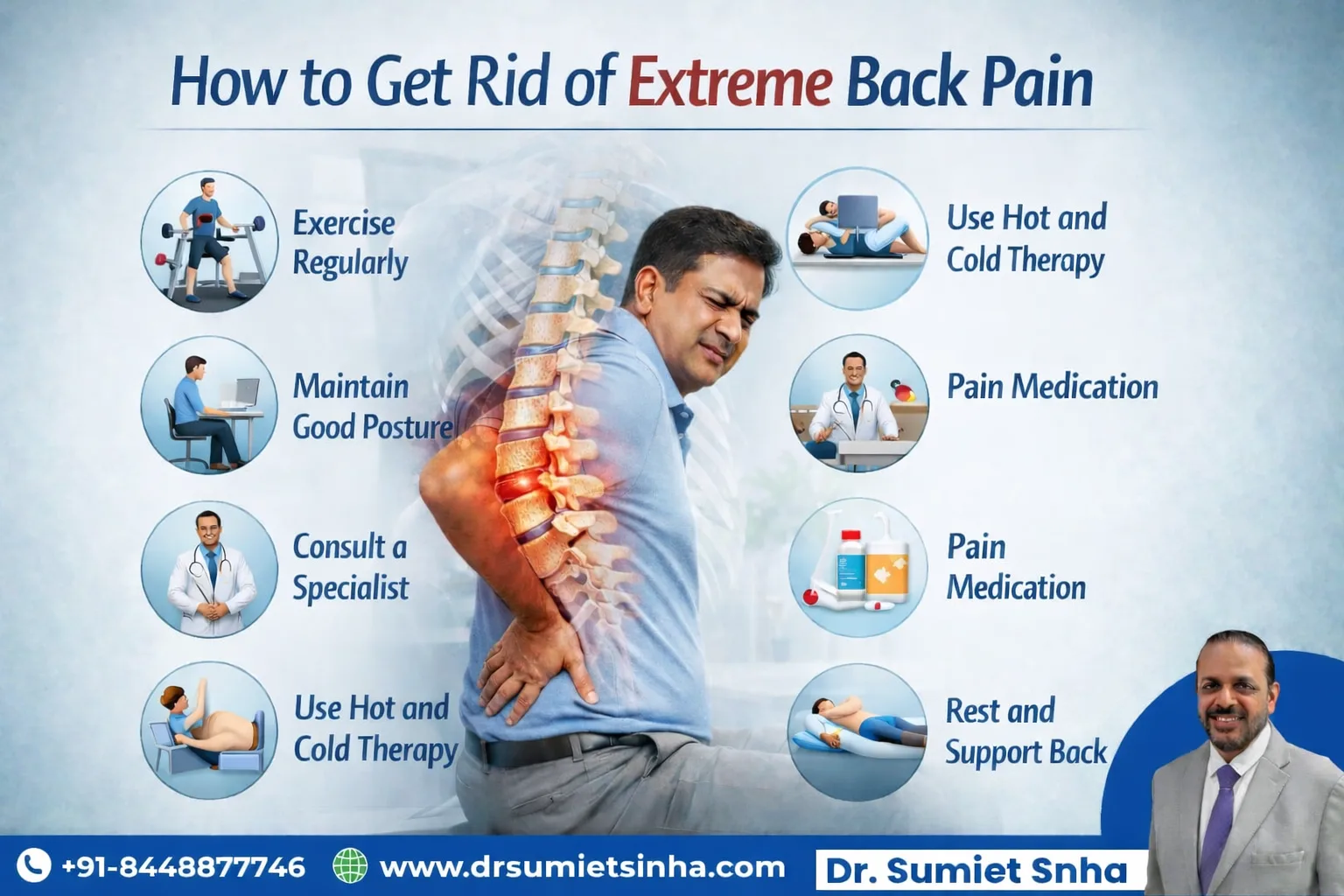
If you have ever woken up in the morning and felt like your back is on fire, you are not alone. Extreme back pain is one of the most common health complaints in the world. It can stop you from doing the simplest things — getting out of bed, bending down to tie your shoes, or even sitting comfortably at your desk. It can make your whole day miserable.
The good news? Most cases of extreme back pain can be treated. And with the right approach, many people recover fully and go back to living an active, pain-free life.
In this guide, Dr. Sumiet Snha — a neurosurgeon with over 25 years of clinical experience treatingspinal and nerve-related conditions — walks you through everything you need to know abouthow to get rid of extreme back pain. From understanding what is causing your pain, to simple home remedies, medical treatments, exercises, and long-term prevention, this article covers it all in plain, easy-to-understand language.
What Is Extreme Back Pain, Really?
There is a difference between mild soreness after a workout and extreme back pain. Extreme or severe back pain is the kind that does not go away with rest, interferes with sleep, or makes basic daily activities nearly impossible.
It can feel like a sharp stabbing sensation, a burning feeling that spreads down your legs, a deep aching that never lets up, or a stiffness so intense that you cannot bend or twist.
Important: If your back pain is accompanied by loss of bladder or bowel control, numbness in the groin area, or sudden weakness in both legs, seek emergency medical care immediately. These could be signs of a serious spinal condition called Cauda Equina Syndrome.
Common Causes of Extreme Back Pain
Before you can figure out how to get rid of extreme back pain, you need to understand what might be causing it. Here are the most common culprits, as explained by Dr. Sumiet Snha :
1. Herniated or Slipped Disc
Between each vertebra in your spine, there is a soft, cushion-like disc. When one of these discs bulges out or ruptures, it can press on nearby nerves and cause intense pain, often radiating down one or both legs. This is called a herniated disc, and it is one of the leading causes of severe back pain in adults.
2. Muscle or Ligament Strain
Lifting something heavy the wrong way, making a sudden awkward movement, or overworking your back muscles can cause strains and sprains. These might sound minor, but they can cause extreme pain that makes movement very difficult.
3. Sciatica
Sciatica happens when the sciatic nerve — the longest nerve in your body — gets compressed or irritated. The result is a sharp, shooting pain that typically starts in the lower back and travels all the way down the leg.
4. Spinal Stenosis
This condition happens when the spinal canal narrows and puts pressure on the spinal cord and nerves. It is more common in older adults and can cause chronic, severe pain along with numbness and weakness.
5. Degenerative Disc Disease
As we age, the discs in our spine naturally begin to wear down. This can lead to pain, stiffness, and reduced flexibility — especially in the lower back and neck.
6. Osteoarthritis of the Spine
Arthritis can affect the joints of the spine just like it affects the knees or hips. This causes inflammation, stiffness, and sometimes severe pain.
7. Poor Posture and Sedentary Lifestyle
Believe it or not, sitting at a desk for hours with poor posture is one of the biggest contributors to back pain in today's world. When your spine is not properly supported, the muscles and ligaments are under constant strain — and over time, that strain becomes pain.
Step-by-Step: How to Get Rid of Extreme Back Pain
Dr. Sumiet Snha recommends a layered approach to treating extreme back pain — starting with safe home remedies and moving toward medical treatment if needed.
Step 1: Do Not Panic — But Do Not Ignore It Either
The first thing Dr. Snha tells his patients is this: extreme back pain is scary, but panicking makes it worse. Most episodes of severe back pain — even the really intense ones — improve within a few weeks with the right care.
However, you should not simply push through the pain and hope it disappears. Ignoring it could make things worse. Listen to your body.
Step 2: Rest — But Not Too Much
When back pain strikes, the instinct is to lie down and stay there. Resting for a day or two is absolutely fine. But here is the thing most people do not know: prolonged bed rest actually slows down recovery.
After one or two days of rest, try to gently move around. Short, slow walks around the house are much better for healing than staying in bed for a week.
Step 3: Apply Ice and Heat
This is one of the simplest and most effective tools in the early stages of back pain.
During the first 48 to 72 hours, apply an ice pack wrapped in a cloth to the painful area for 15 to 20 minutes several times a day. Ice reduces swelling and numbs sharp pain.
After the first 72 hours, switch to heat. A heating pad or a warm water bottle applied to the sore area helps relax tight muscles and improve blood flow to the area, which speeds up healing.
Step 4: Over-the-Counter Pain Relief
Non-prescription pain medications like ibuprofen or naproxen can help reduce both pain and inflammation. Acetaminophen (paracetamol) is also commonly used for pain relief.
Important note from Dr. Sumiet Snha : Always take medication as directed on the label and never exceed the recommended dose. If you have liver issues, kidney problems, or are on other medications, check with your doctor before taking any over-the-counter pain reliever.
Step 5: Gentle Stretching and Movement
Once the initial sharp pain starts to ease, gentle movement is your best friend. Stretching helps loosen tight muscles, improves flexibility, and prevents the back from stiffening up further.
Some gentle stretches that Dr. Snha recommends for lower back pain include:
- The knee-to-chest stretch: Lie on your back, bring one knee toward your chest, and hold for 20 to 30 seconds. Repeat on the other side.
- Cat-cow stretch: Get on your hands and knees, then slowly arch your back upward like a cat, then let it sag down like a cow. Repeat 10 times.
- Child's pose: From a kneeling position, sit back on your heels and stretch your arms forward on the floor. Hold for 30 seconds. This gently stretches the entire lower back.
Always move slowly and stop immediately if a stretch causes sharp pain.
Step 6: Improve Your Posture
If poor posture is contributing to your pain — and for many people it is — then making posture corrections can make a significant difference. When sitting, keep your feet flat on the floor, your back supported against the chair, and your screen at eye level.
Step 7: See a Doctor If Pain Persists
If your pain is severe, has lasted more than a few weeks, or is getting worse instead of better, it is time to see a medical professional. Self-treatment has its limits, and getting a proper diagnosis is critical to the right treatment.
Medical Treatments for Extreme Back Pain
Dr. Sumiet Snha explains that when home care is not enough, several effective medical treatments are available.
Physiotherapy
A physiotherapist designs a personalized exercise and rehabilitation program to strengthen the muscles that support your spine, improve flexibility, and correct postural imbalances. This is one of the most effective long-term treatments for how to get rid of extreme back pain.
Physiotherapy is not just about exercises. Therapists also use techniques like massage, ultrasound therapy, and TENS (Transcutaneous Electrical Nerve Stimulation) to relieve pain.
Prescription Medications
For more severe pain, doctors may prescribe:
- Muscle relaxants to ease muscle spasms
- Stronger anti-inflammatory drugs
- Nerve pain medications such as gabapentin for nerve-related pain
- Short-term opioid medications in very severe cases (used with caution)
Epidural Steroid Injections
When pain is caused by nerve inflammation — such as in the case of sciatica or spinal stenosis — a doctor may recommend injecting corticosteroids directly into the space around the spinal nerves. This can provide significant pain relief and reduce inflammation quickly.
Nerve Block Injections
These injections target specific nerves that are transmitting pain signals. They can provide temporary but very effective relief, particularly for chronic back pain conditions.
Spinal Surgery — When Is It Necessary?
Dr. Sumiet Snha is clear on this point: surgery is not the first option — it is the last resort, used only when conservative treatments have failed and the patient's quality of life is severely affected.
Surgical procedures for extreme back pain may include:
- Discectomy: removal of the damaged portion of a herniated disc
- Spinal fusion: joining two or more vertebrae together for stability
- Minimally invasive spine surgery: modern techniques that reduce recovery time and surgical risks
With 25 years of neurosurgical experience, Dr. Snha has performed hundreds of these procedures with excellent outcomes. He stresses that the right surgery, done for the right reasons, at the right time, can be truly life-changing for patients suffering from extreme back pain.
The Role of Mental Health in Back Pain
This is something many people are surprised to hear, but the mind and the body are deeply connected when it comes to back pain.
Chronic stress, anxiety, and depression can actually amplify pain signals in the brain, making physical pain feel more intense. Studies have shown that patients dealing with psychological stress tend to experience more severe and longer-lasting back pain.
Dr. Snha advice: Do not neglect your mental health. Mindfulness practices, meditation, deep breathing exercises, and even simple stress management techniques can reduce the intensity of back pain. Cognitive behavioral therapy (CBT) has also been shown to help people cope better with chronic pain.
Lifestyle Changes That Make a Real Difference
Getting rid of extreme back pain is not just about treating the symptoms — it is about changing the habits that contributed to the problem in the first place.
Maintain a Healthy Weight
Extra body weight — especially around the belly — puts a tremendous amount of strain on the lower back. Losing even a modest amount of weight can significantly reduce back pain.
Quit Smoking
This one surprises a lot of people. Smoking reduces blood flow to the spinal discs, which accelerates degeneration and slows down healing. If you smoke and you have back pain, quitting is one of the best things you can do for your spine.
Stay Active
Regular, low-impact exercise keeps your back muscles strong and your spine healthy. Activities like walking, swimming, cycling, and yoga are particularly good for the back. Try to stay active for around 30 minutes a day, most days of the week—it doesn’t have to be intense, just something moderate like a brisk walk, cycling, or light exercise that keeps your body moving.
Sleep Position Matters
The way you sleep can make your back pain better or worse. Sleeping on your side with a pillow between your knees is generally the best position for back pain relief. Avoid sleeping on your stomach, as this puts excessive strain on the lower back.
Invest in a Good Mattress
A mattress that is too soft or too hard can worsen back pain. A medium-firm mattress tends to work best for most people with back problems.
When to Go to the Emergency Room
Dr. Sumiet Snha urges patients to seek emergency care immediately if back pain is accompanied by any of the following:
- Loss of bladder or bowel control
- Numbness or tingling in the groin or inner thighs
- Sudden weakness in both legs
- Back pain following a serious fall or accident
- Fever along with back pain (could indicate infection)
- Unexplained weight loss along with back pain
These are red flag symptoms that require urgent evaluation.
Preventing Extreme Back Pain from Coming Back
Once you have recovered, the last thing you want is for the pain to return. Here is how to protect your back for the long term, according to Dr. Snha :
1. Strengthen Your Core
Your core muscles — not just your abdominals, but all the muscles around your midsection and lower back — act as a natural support system for your spine. Regular core strengthening exercises like planks, bridges, and bird-dogs can significantly reduce your risk of future back pain.
2. Learn Proper Lifting Technique
Always bend at your knees, not at your waist, when picking something up. Keep the object close to your body and avoid twisting your spine while lifting.
3. Take Regular Breaks from Sitting
If you work at a desk, get up and move every 30 to 45 minutes. Even a one or two-minute walk around the office makes a difference.
4. Warm Up Before Physical Activity
Never jump straight into intense physical activity without warming up your muscles first. A few minutes of light movement and stretching prepares your back for the work ahead.
A Final Word from Dr. Sumiet Snha
"Back pain — even extreme back pain — does not have to define your life," says Dr. Sumiet Snha with 25 years as a neurosurgeon, has seen patients come to me barely able to walk, and with the right diagnosis and treatment plan, they have gone on to run marathons, play with their grandchildren, and live completely normal lives."
The most important thing is simple—don’t ignore the pain, and don’t lose hope.There are answers, and there are solutions. Start with the basics — rest, ice, gentle movement, and good posture — and if you need more help, seek it early rather than late. The sooner you address the problem, the better your chances of a full recovery."
Understandinghow to get rid of extreme back painis the first step on the road to recovery. With the right knowledge, the right support, and the right medical care when needed, a pain-free life is absolutely within reach.
Frequently Asked Questions (FAQs) About How to Get Rid of Extreme Back Pain
Q1. How do I know if my back pain is serious or just a normal muscle strain?
Great question, and honestly, a lot of people wonder the same thing. If your pain lasts more than two to three weeks, gets worse instead of better, or travels down your legs with numbness, that is a sign something more serious may be going on. Please see a doctor.
Q2. Can extreme back pain go away on its own without any treatment?
Sometimes, yes — mild to moderate back pain can settle down with rest and basic home care. But extreme back pain rarely fixes itself without some kind of attention. Ignoring it usually makes things worse over time, so do not just hope it disappears on its own.
Q3. Is bed rest the best thing to do when back pain is really bad?
Most people think lying down all day is the answer, but honestly it is not. One or two days of rest is fine. After that, gentle movement actually helps you heal faster. Staying in bed too long stiffens your back and slows down recovery significantly.
Q4. What is the fastest way to get relief from extreme back pain at home?
Apply ice for the first 48 hours to reduce swelling, then switch to heat to relax tight muscles. Take an over-the-counter pain reliever like ibuprofen and try gentle stretching. These simple steps together can bring noticeable relief pretty quickly for most people.
Q5. Can poor posture really cause that level of extreme back pain?
Absolutely, yes. It sounds surprising, but sitting hunched at a desk for hours every single day puts enormous strain on your spine and surrounding muscles. Over time, that constant stress builds up into real, intense pain. Fixing your posture genuinely makes a bigger difference than most people expect.
Q6. Will I need surgery for my back pain?
Most people — and we really mean most — never need surgery at all. Surgery is truly the last option, only considered when all other treatments have failed and your daily life is severely affected. Dr. Sumiet Snha always explores every non-surgical option thoroughly before ever recommending an operation.
Q7. How long does it usually take to recover from extreme back pain?
It honestly depends on the cause. A muscle strain might settle in two to four weeks. A herniated disc could take six to twelve weeks or longer with proper treatment. Nerve-related pain sometimes takes a few months. Patience, consistency, and following your doctor's plan make the biggest difference.
Q8. Can stress and anxiety actually make back pain worse?
Yes, and this surprises a lot of people. When you are stressed or anxious, your body tenses up, your muscles tighten, and your brain actually amplifies pain signals. Managing your mental health is a genuinely important part of recovering from back pain.
Q9. Is exercise safe when I am dealing with extreme back pain?
Gentle movement is not only safe — it is actually recommended. Things like short slow walks, light stretching, and carefully guided physiotherapy exercises help your back heal. Just avoid heavy lifting, intense workouts, or anything that makes the pain sharper.
Q10. When should I stop trying home remedies and see a doctor immediately?
If you lose control of your bladder or bowel, feel numbness in your inner thighs or groin, notice sudden weakness in your legs, or your pain follows a serious fall or injury — stop everything and get emergency help right away. These are serious warning signs that need urgent medical attention immediately.



2 Comments