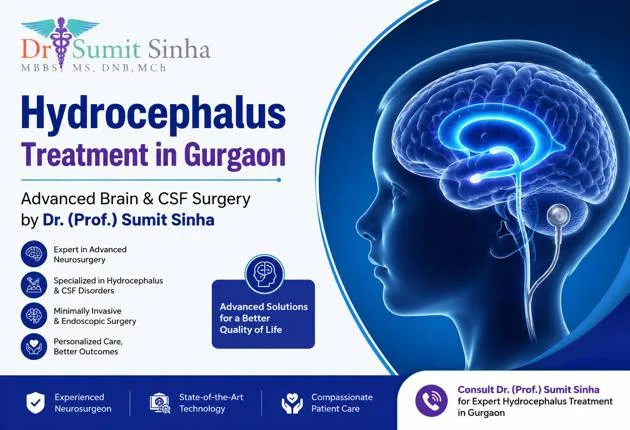
Hydrocephalus is a neurological condition characterised by the abnormal accumulation of cerebrospinal fluid (CSF) within the brain's ventricles. The word itself is derived from the Greek terms hydro (water) and cephalus (head), and was historically known as "water on the brain." The CSF, which is a clear, colourless fluid, ordinarily circulates through the brain and spinal cord, delivering nutrients, removing metabolic waste, and providing a vital cushioning mechanism against physical trauma.
Under normal circumstances, the body produces and reabsorbs CSF in a carefully balanced cycle. When this balance is disrupted — whether due to a blockage in the flow pathways, a failure in absorption, or excessive production — CSF begins to accumulate. As the ventricles expand with this excess fluid, intracranial pressure rises, compressing brain tissue and potentially causing lasting neurological damage if not addressed promptly.
Hydrocephalus is most commonly diagnosed in infants and in adults over the age of 60, although it can affect individuals at any stage of life. For patients seeking expert Hydrocephalus Treatment in Gurgaon, Dr. (Prof.) Sumit Sinha offers world-class, minimally invasive surgical care backed by extensive clinical experience and academic excellence.
"Timely, expert intervention in hydrocephalus can prevent irreversible brain damage and significantly restore a patient's quality of life." — Dr. (Prof.) Sumit Sinha
Why Does Hydrocephalus Occur?
The build-up of excess cerebrospinal fluid in the brain arises from three primary physiological disruptions. Understanding the underlying cause is essential for choosing the most effective treatment strategy.
?
Obstruction
A partial or complete blockage in the normal CSF flow channels — the most frequent cause. Obstructive hydrocephalus can result from tumours, congenital abnormalities, or inflammatory scar tissue narrowing the ventricular passages.
?
Poor Absorption
When the arachnoid granulations — tiny structures responsible for reabsorbing CSF into the bloodstream — malfunction, fluid accumulates despite normal production rates. This pattern is common in communicating hydrocephalus.
?
Overproduction
In rare cases, the choroid plexus produces CSF at a rate that far exceeds the body's capacity to absorb it, resulting in rapid and dangerous pressure build-up within the cranial cavity.
Additional risk factors include meningitis, head injuries, stroke, brain tumours, and certain genetic or developmental anomalies present at birth. Normal pressure hydrocephalus (NPH) is a specific variant more frequently encountered in older adults, often presenting with a distinctive triad of symptoms that can be mistaken for other neurological conditions.
Recognising the Symptoms
The clinical presentation of hydrocephalus varies significantly depending on the patient's age and the rate of CSF accumulation. Early recognition of these signs is critical to achieving the best possible treatment outcomes. If you or a loved one displays any of the following symptoms, seeking immediate medical evaluation from a specialist offering Hydrocephalus Treatment in Gurgaon is strongly advised.
In Infants
- Abnormal or rapid increase in head size
- A bulging or tense fontanelle (soft spot)
- Frequent vomiting and poor feeding
- Excessive sleepiness or lethargy
- Persistent irritability and unexplained crying
- Downward deviation of the eyes ("sunsetting" sign)
- Delayed developmental milestones
In Older Children & Adults
- Persistent or worsening headaches, often in the morning
- Nausea and projectile vomiting
- Blurred or double vision
- Loss of bladder control
- Difficulty with balance and walking (gait disturbance)
- Progressive memory loss and cognitive decline
- Slowed thinking and confusion
In older adults, the condition known as Normal Pressure Hydrocephalus (NPH) presents with a classic triad: dementia-like memory problems, urinary incontinence, and a characteristic shuffling gait. These symptoms are frequently misdiagnosed as Alzheimer's disease or Parkinson's disease, making specialist evaluation crucial for an accurate diagnosis and appropriate treatment.
Advanced Hydrocephalus Treatment in Gurgaon
While there is currently no known method to prevent hydrocephalus or cure it in a pharmacological sense, modern surgical interventions can effectively manage the condition, relieve intracranial pressure, and restore quality of life. Dr. (Prof.) Sumit Sinha specialises in two highly effective surgical approaches that represent the gold standard of care for patients seeking Hydrocephalus Treatment in Gurgaon.
1. Endoscopic Third Ventriculostomy (ETV)
What Is ETV?
Endoscopic Third Ventriculostomy, or ETV, is the premier minimally invasive surgical technique for treating obstructive hydrocephalus. Using a thin, flexible endoscope — a fibre-optic instrument equipped with a camera and a light source — Dr. Sinha navigates through a small keyhole opening in the skull to reach the brain's ventricles. A controlled perforation is then made in the floor of the third ventricle, creating a new pathway through which the cerebrospinal fluid can circulate around the brain's surface and be naturally reabsorbed, bypassing the blocked channel entirely.
ETV is considered the preferred surgical option for many patients because it works with the body's own biology rather than introducing a foreign device. It eliminates the need for an implanted shunt system, significantly reducing the risk of long-term mechanical complications and infections. The procedure is most effective for patients with obstructive (non-communicating) hydrocephalus, and particularly for those whose CSF blockage occurs within the ventricular system itself.
Ideal candidates for ETV include children above the age of two years, adults with aqueductal stenosis, and patients who have experienced shunt failures. The procedure is performed under general anaesthesia, and most patients begin to experience symptom relief within days of the operation.
2. ETV with Choroid Plexus Cauterisation (ETV/CPC)
An Enhanced Approach for Infants
Endoscopic Third Ventriculostomy combined with Choroid Plexus Cauterisation (ETV/CPC) is an augmented procedure specifically beneficial for very young infants, particularly those under six months of age. During ETV/CPC, after the ventriculostomy is completed, Dr. Sinha uses endoscopic instruments to cauterise — or thermally reduce — the choroid plexus, the tissue responsible for producing CSF. By reducing the volume of CSF produced, this combined approach significantly increases the long-term success rate of the ventriculostomy in younger patients, offering them an opportunity to grow up free from shunt dependence.
Research consistently shows that ETV/CPC outperforms shunt surgery in infants born with myelomeningocele and post-infectious hydrocephalus in low-resource settings. Dr. Sinha's proficiency in this combined technique is a testament to his deep commitment to staying at the forefront of paediatric neurosurgical advancement.
3. Ventriculoperitoneal (VP) Shunt Surgery
When Shunting Is the Appropriate Choice
For patients who are not suitable candidates for ETV — such as those with communicating hydrocephalus or very young infants — VP shunt placement remains a highly effective and well-established solution. A VP shunt is a programmable drainage system consisting of a thin, flexible silicone tube surgically implanted to divert excess CSF from the brain's ventricles to the peritoneal cavity (the abdominal space), where it is safely reabsorbed by the body. Dr. Sinha's expertise in shunt programming and placement ensures optimal outcomes and minimises the risk of complications such as over-drainage or under-drainage.
Why Choose Endoscopic Treatment?
For eligible patients, endoscopic procedures offer significant advantages over traditional shunt surgery. The benefits of ETV and ETV/CPC performed by a skilled neurosurgeon like Dr. (Prof.) Sumit Sinha include:
- No permanent implant required — eliminates lifelong shunt dependence and associated mechanical risks
- Dramatically reduced risk of infection compared to indwelling shunt hardware
- Lower long-term complication and revision surgery rates
- Faster post-operative recovery and shorter hospitalisation
- Symptom relief often begins within 24 to 72 hours of surgery
- Keyhole approach means minimal scarring and reduced surgical trauma
- Preserves the brain's natural CSF circulation dynamics
- Suitable for both paediatric and adult patients across a wide age range
Diagnosis: How Is Hydrocephalus Confirmed?
Accurate diagnosis is the cornerstone of effective Hydrocephalus Treatment in Gurgaon. Dr. (Prof.) Sumit Sinha employs a rigorous, multi-modal diagnostic approach to assess each patient's unique presentation and determine the most appropriate surgical strategy.
MRI (Magnetic Resonance Imaging) is the gold standard imaging investigation for hydrocephalus. It provides high-resolution, detailed images of the brain's ventricles, aqueducts, and surrounding structures, allowing precise identification of the site and nature of any CSF flow obstruction. Phase-contrast MRI can also quantify CSF flow dynamics to differentiate between ETV candidates and those who may be better served by shunting.
CT (Computed Tomography) Scan is typically used in emergency presentations where speed is essential, providing rapid visualisation of ventricular enlargement and acute changes in intracranial pressure.
Ultrasound is used as the primary imaging tool for infants and neonates, as the open fontanelle provides a natural acoustic window through which cranial structures can be safely evaluated without radiation exposure.
Neuropsychological Assessment and clinical examination supplement imaging to evaluate the degree of cognitive, motor, and neurological impairment, informing a comprehensive and personalised treatment plan.
Why Dr. (Prof.) Sumit Sinha Is the Best Choice for Hydrocephalus Treatment in Gurgaon
When it comes to a condition as delicate and potentially life-threatening as hydrocephalus, the experience, qualifications, and surgical artistry of your neurosurgeon matter profoundly. Dr. (Prof.) Sumit Sinha brings together an exceptional combination of academic credentials, surgical excellence, and genuine patient-centred compassion that makes him the most trusted name for Hydrocephalus Treatment in Gurgaon and across Delhi-NCR.
Holding qualifications of MBBS, MS, DNB, and MCH (Neurosurgery), Dr. Sinha is among a select group of super-speciality trained neurosurgeons in India. His academic journey through some of the country's most prestigious medical institutions, including AIIMS, has equipped him with a depth of knowledge and technical precision that is reflected in his remarkable surgical outcomes.
Dr. Sinha has performed thousands of complex neurosurgical procedures through keyhole and endoscopic approaches — a body of work that speaks to both his technical mastery and his commitment to minimally invasive techniques that protect patients from unnecessary trauma. His international recognition was underscored when he received the prestigious Young Neurosurgeon Award to attend the 9th International Conference on Cerebrovascular Surgery held in Nagoya, Japan — a distinction reserved for the most promising talents in the field globally.
Beyond credentials, Dr. Sinha is known among his patients for his clarity of communication, his ability to explain complex medical conditions in understandable terms, and his deep sense of empathy. He treats every patient — whether an infant, a child, or an elderly adult — as an individual with unique concerns, fears, and goals, tailoring each treatment plan accordingly.
His association with Max Hospital, Dwarka, one of India's premier tertiary care hospitals, ensures that patients benefit from world-class infrastructure including advanced neuro-navigation systems, intraoperative imaging, high-definition endoscopy equipment, and a dedicated neuro-ICU — all essential components of safe, successful hydrocephalus surgery.
Post-Operative Recovery & Follow-Up
Recovery from endoscopic hydrocephalus surgery is generally faster than from open or shunt-based procedures. Most patients undergoing ETV are discharged within three to five days of the operation, provided there are no early complications. Initial recovery focuses on monitoring for signs of infection, haemorrhage, or failure of the ventriculostomy, all of which are rare but important to detect early.
In the weeks following surgery, patients may experience headaches as the brain adjusts to normalised CSF pressure — these typically resolve within two to four weeks. Neurological improvements, including better balance, sharper cognition, and urinary control, often begin within the first month and continue to improve progressively over three to six months.
Dr. Sinha's care extends well beyond the operating theatre. A structured follow-up programme includes MRI imaging at regular intervals to confirm the ventriculostomy remains open and functioning, along with neurological assessments to track clinical progress. Families are provided with clear guidance on warning signs that should prompt immediate medical review, ensuring that patients remain safe throughout their recovery journey.
For infants who have undergone ETV/CPC, developmental paediatric support is coordinated to provide comprehensive rehabilitation, speech therapy, and physiotherapy where needed, giving every child the best possible foundation for healthy development.
Frequently Asked Questions
Is hydrocephalus a curable condition?
While there is currently no medical cure for hydrocephalus, it is a very manageable condition with the right surgical treatment. Procedures such as ETV and VP shunt placement can effectively control intracranial pressure, relieve symptoms, and allow patients to lead full, productive lives. Regular monitoring and specialist follow-up are key to long-term success.
Who is the ideal candidate for ETV surgery?
ETV is most effective for patients with obstructive (non-communicating) hydrocephalus, particularly those with aqueductal stenosis. Children above two years and adults with specific CSF flow patterns are generally the best candidates. Dr. Sinha performs a thorough pre-surgical evaluation including MRI and flow studies to determine candidacy on an individual basis.
What is the success rate of ETV surgery?
In carefully selected patients, ETV has a success rate of approximately 70–90% at one year. Success rates vary by age, underlying cause, and the experience of the surgeon. Long-term outcomes are best in adults and children with obstructive hydrocephalus operated on by high-volume surgeons such as Dr. (Prof.) Sumit Sinha.
How long does an ETV procedure take?
An ETV surgery typically takes between 45 minutes to one hour under general anaesthesia. The minimally invasive nature of the procedure means patients generally begin their recovery in a standard neuro-surgery ward rather than intensive care, and most are mobile within 24 to 48 hours.
How do I book a consultation for Hydrocephalus Treatment in Gurgaon?
You can reach Dr. (Prof.) Sumit Sinha's clinic by calling +91 8448877746 (Mon–Sat, 9:00 AM to 6:00 PM) or by visiting the appointment page on drsumitsinha.com. Consultations are available at Max Hospital, Dwarka, New Delhi — easily accessible from Gurgaon and the wider Delhi-NCR region.
Is hydrocephalus surgery safe for newborns and infants?
Yes. Both VP shunt placement and ETV/CPC are well-established procedures for neonates and infants when performed by experienced paediatric neurosurgeons. Dr. Sinha's extensive expertise in paediatric neurosurgery ensures the highest standards of safety and care for the youngest patients. The choice of procedure is individualised based on the infant's age, weight, and specific type of hydrocephalus.
Take the First Step Toward Effective Hydrocephalus Treatment in Gurgaon
Dr. (Prof.) Sumit Sinha and his dedicated team are ready to guide you through every step of your diagnosis and treatment journey — with expertise you can trust and compassion you will feel.

0 Comments