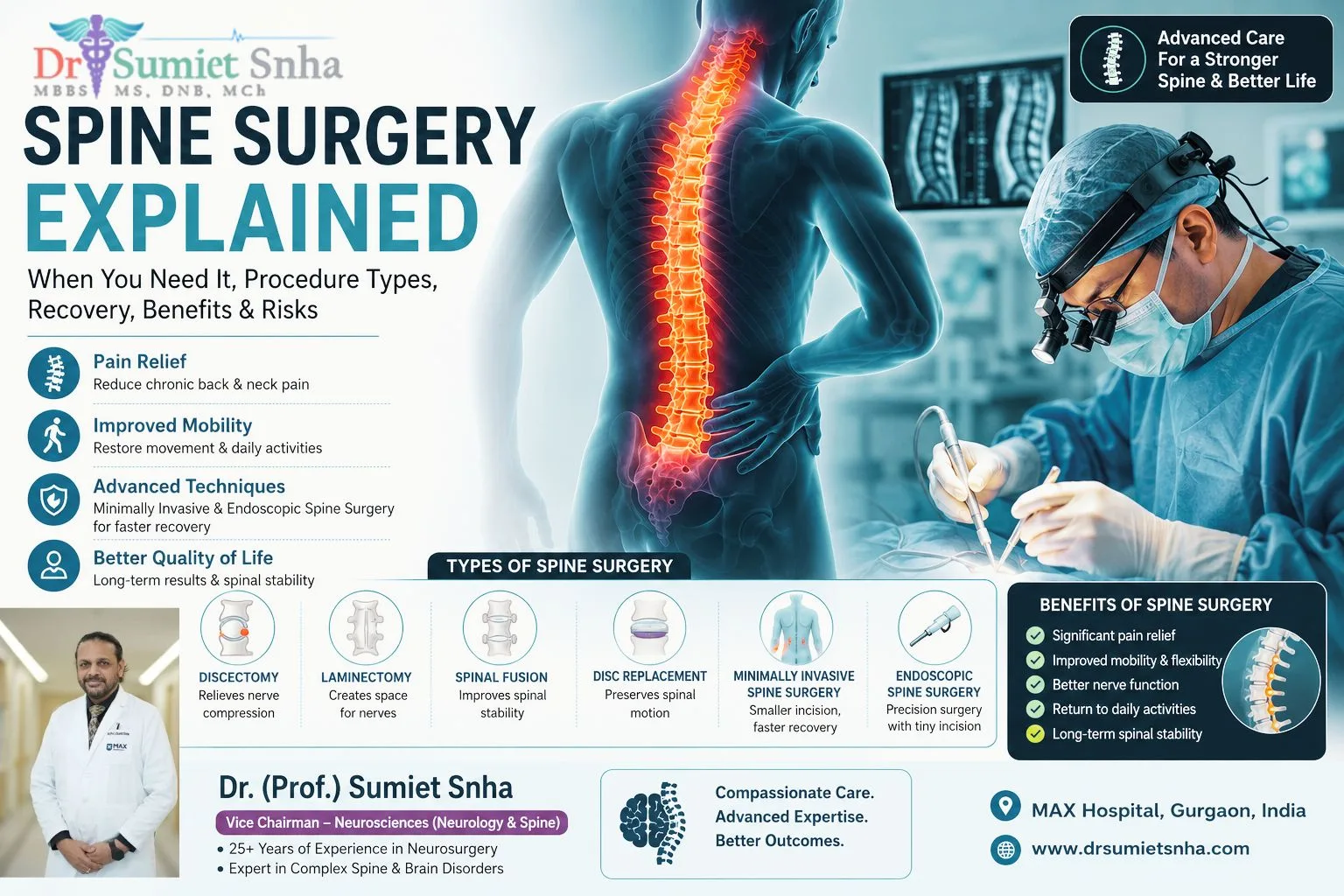
Spine surgery is a specialized treatment used to correct spinal conditions that cause persistent pain, nerve compression, reduced mobility, or spinal instability when non-surgical treatments are no longer effective. Choosing the Best Spine Surgeon is an important step toward receiving an accurate diagnosis and a personalized treatment plan that supports long-term spinal health. Modern advances in Minimally Invasive Spine Surgery and Spine Surgery techniques have made many procedures safer, more precise, and associated with smaller incisions, less blood loss, and faster recovery for suitable patients.
Not every back or neck problem requires surgery. A thorough medical evaluation, imaging studies, and careful assessment help determine whether surgery is the most appropriate option. Depending on the underlying condition, the goal may be to relieve pressure on spinal nerves, stabilize the spine, restore movement, and improve quality of life. Understanding when spine surgery is recommended, the different procedures available, their benefits, possible risks, and the recovery process empowers patients to make informed decisions with confidence and realistic expectations.
What Is Spine Surgery?
Understanding Spine Surgery
Spine surgery is a medical procedure performed to treat disorders affecting the bones, discs, joints, nerves, or spinal cord when conservative treatments such as medication, physiotherapy, or lifestyle modifications do not provide sufficient relief. The primary goal of surgery is to reduce pain, relieve pressure on compressed nerves, restore spinal stability, and improve mobility while preserving as much normal spinal function as possible. Depending on the patient's condition, surgeons may recommend traditional or Minimally Invasive Spine Surgery, which uses advanced techniques to reduce tissue damage, shorten hospital stays, and support faster recovery. Early diagnosis plays a vital role because timely treatment can help prevent permanent nerve damage, worsening symptoms, and long-term disability.
Common Spine Conditions That May Require Surgery
Several spinal disorders may require surgical treatment when symptoms become severe or progressive. These include herniated discs that compress nearby nerves, spinal stenosis causing narrowing of the spinal canal, degenerative disc disease leading to chronic back or neck pain, scoliosis resulting in abnormal spinal curvature, spinal fractures caused by trauma or osteoporosis, spine tumors affecting the spinal column or spinal cord, and spinal infections that threaten spinal stability or neurological function. A comprehensive clinical evaluation and imaging studies help determine whether surgery is the most appropriate treatment option for each individual.
When Do You Need Spine Surgery?
Spine surgery is usually considered when non-surgical treatments such as medications, physiotherapy, injections, and lifestyle modifications fail to provide lasting relief. Patients with persistent back pain or neck pain that interferes with daily activities may benefit from a surgical evaluation. Other warning signs include numbness, muscle weakness, pain radiating into the arms or legs, and difficulty walking due to nerve compression or spinal instability. In more serious cases, a sudden loss of bladder or bowel control may indicate a medical emergency that requires immediate treatment. The decision to proceed with surgery is based on a detailed clinical assessment, imaging studies, and the severity of symptoms. The goal is to relieve nerve pressure, restore spinal stability, reduce pain, and improve overall function while helping patients return to an active and independent lifestyle.
Types of Spine Surgery
Different spine conditions require different surgical approaches. The choice of procedure depends on the patient's diagnosis, symptom severity, spinal anatomy, and overall health.
Discectomy
A Discectomy removes the damaged portion of a herniated disc that is compressing a nearby spinal nerve. This procedure helps relieve radiating pain, numbness, and weakness while preserving as much healthy disc tissue as possible.
Laminectomy
A Laminectomy involves removing a small portion of the vertebral bone called the lamina to create additional space around the spinal cord or nerves. It is commonly performed for spinal stenosis.
Spinal Fusion
Spinal Fusion permanently joins two or more vertebrae using bone grafts and implants to stabilize the spine. It is often recommended for spinal instability, fractures, deformities, or severe degenerative conditions.
Artificial Disc Replacement
During Artificial Disc Replacement, the damaged spinal disc is replaced with an artificial implant designed to maintain spinal movement while reducing pain caused by degenerative disc disease.
Minimally Invasive Spine Surgery
Minimally Invasive Spine Surgery uses specialized instruments and small incisions to treat selected spinal disorders. Compared with traditional surgery, it generally results in less tissue damage, reduced blood loss, and quicker recovery.
Endoscopic Spine Surgery
Endoscopic Spine Surgery is performed through a tiny incision using a high-definition camera and specialized surgical instruments. It offers excellent visualization, minimal disruption to surrounding tissues, and faster rehabilitation for suitable patients.
Comparison of Common Spine Surgery Procedures
|
Surgery Type |
Best Used For |
Main Benefit |
|
Discectomy |
Herniated Disc |
Relieves nerve compression |
|
Laminectomy |
Spinal Stenosis |
Creates space for nerves |
|
Spinal Fusion |
Spinal Instability |
Improves spinal stability |
|
Artificial Disc Replacement |
Degenerative Disc Disease |
Preserves spinal motion |
|
Minimally Invasive Spine Surgery |
Selected Spinal Disorders |
Faster recovery and smaller incisions |
|
Endoscopic Spine Surgery |
Disc Problems |
Smaller incision with minimal tissue damage |
How Spine Surgery Is Performed
Every spine surgery begins with a comprehensive preoperative evaluation, including a medical history, physical examination, and imaging studies such as MRI and CT scans to accurately identify the spinal problem. After confirming the diagnosis, the patient receives general or regional anesthesia depending on the planned procedure. During surgery, the surgeon carefully removes the source of nerve compression, stabilizes the spine if necessary, or repairs damaged spinal structures. Modern operating rooms often use advanced technologies such as surgical microscopes, computer-assisted navigation systems, and robotic assistance to improve precision and safety. Most procedures last between one and several hours, depending on their complexity. After surgery, patients are closely monitored before beginning early mobilization and recovery.
Benefits of Spine Surgery
When recommended for the right patient, spine surgery can significantly improve both comfort and function. The procedure may provide long-term pain relief, reduce nerve compression, and restore normal movement. Many patients experience improved mobility, enhanced muscle strength, and better nerve function, allowing them to return to everyday activities with greater confidence. Correcting spinal instability or deformity can also improve posture and overall spinal alignment. Advances in modern surgical techniques, including minimally invasive procedures, often result in shorter hospital stays and quicker rehabilitation. Combined with physiotherapy and healthy lifestyle habits, spine surgery can contribute to long-term spinal stability and a better quality of life.
Risks and Possible Complications
Like any surgical procedure, spine surgery carries certain risks, although serious complications are uncommon when performed after careful patient selection. Potential risks include infection, bleeding, blood clots, nerve injury, and leakage of cerebrospinal fluid (CSF). In some cases, patients may experience persistent pain, delayed healing, or implant failure, particularly after complex reconstructive procedures. A small number of patients may require revision surgery if symptoms recur or additional spinal problems develop over time. Choosing an experienced surgical team, following preoperative instructions, and participating in postoperative rehabilitation can significantly reduce these risks and improve overall treatment outcomes.
Recovery After Spine Surgery
Hospital Stay
The length of hospitalization depends on the type of procedure and the patient's overall health. Many minimally invasive procedures allow discharge within one or two days, while more complex surgeries may require a longer stay.
First Week
Patients are encouraged to begin gentle walking, manage pain with prescribed medications, protect the surgical incision, and avoid heavy lifting or twisting movements.
First Month
During this phase, physiotherapy gradually improves strength, flexibility, and mobility. Regular walking, proper posture, balanced nutrition, and following activity restrictions support healing.
Long-Term Recovery
Most patients continue rehabilitation for several weeks or months, depending on the procedure performed. Long-term recovery focuses on maintaining a healthy weight, following a nutritious diet, practicing safe sleeping positions, attending scheduled follow-up visits, and gradually returning to work, exercise, and normal daily activities under medical guidance
Tips for Faster Recovery After Spine Surgery
Following your recovery plan can improve healing and reduce the risk of complications.
- Follow your surgeon's instructions carefully.
- Attend every physiotherapy session.
- Walk regularly as advised to improve circulation.
- Maintain a healthy body weight.
- Avoid smoking and tobacco products.
- Eat a balanced, protein-rich diet to support tissue healing.
- Practice proper posture and safe sleeping positions.
- Avoid lifting heavy objects until medically cleared.
- Keep all follow-up appointments.
- Report new pain, fever, wound drainage, or neurological symptoms promptly.
When Should You Consult the Best Spine Surgeon?
You should consult the Best Spine Surgeon if you experience persistent back pain, severe neck pain, numbness, muscle weakness, difficulty walking, or symptoms that continue despite medication, physiotherapy, or other conservative treatments. Medical evaluation is also important for people with spine deformities, sudden loss of bowel or bladder control, or progressive neurological symptoms, as these may indicate serious spinal disorders requiring prompt diagnosis and treatment. Early assessment helps identify the underlying cause and determines whether Spine Surgery or non-surgical treatment is the most appropriate option.
Dr. (Prof.) Sumiet Snha, Vice Chairman – Neurosciences (Neurology & Spine), is currently working at MAX Hospital, Gurgaon, India. With more than 25 years of experience in neurosurgery, he specializes in evaluating and treating a wide range of complex brain and spinal disorders. An experienced spine specialist can recommend evidence-based treatment options tailored to each patient's condition, helping achieve the best possible long-term outcomes
Frequently Asked Questions
1. What is spine surgery?
Spine surgery is a medical procedure used to treat conditions affecting the spine, spinal cord, or nerves when non-surgical treatments are no longer effective. Its goal is to relieve pain, restore stability, and improve movement.
2. When is spine surgery necessary?
Spine surgery may be recommended for persistent back or neck pain, nerve compression, spinal instability, spinal deformities, fractures, tumors, or progressive neurological symptoms that do not improve with conservative treatment.
3. Is spine surgery safe?
Yes. Modern spine surgery is generally safe when performed by an experienced spine specialist using appropriate surgical techniques and after careful patient evaluation. As with any surgery, there are potential risks that should be discussed beforehand.
4. How long does spine surgery take?
The duration depends on the type and complexity of the procedure. Most surgeries take between 1 and 4 hours, although more complex spinal operations may require additional time.
5. What is the recovery time after spine surgery?
Recovery varies depending on the procedure and the patient's overall health. Many patients resume light daily activities within a few weeks, while complete recovery may take several months.
6. What are the risks of spine surgery?
Possible risks include infection, bleeding, blood clots, nerve injury, cerebrospinal fluid (CSF) leakage, persistent pain, implant-related problems, and, in some cases, the need for additional surgery.
7. Is minimally invasive spine surgery better?
For suitable patients, Minimally Invasive Spine Surgery offers benefits such as smaller incisions, less muscle damage, reduced blood loss, shorter hospital stays, and faster recovery. However, it is not appropriate for every spinal condition.
8. Can spine surgery cure chronic back pain?
Spine surgery can significantly reduce pain caused by specific structural spinal problems, but it is not a cure for every type of chronic back pain. Treatment recommendations depend on the underlying diagnosis.
9. Will I need physiotherapy after surgery?
In most cases, yes. Physiotherapy is an important part of recovery because it helps improve strength, flexibility, posture, mobility, and overall spinal function after surgery.
10. How successful is spine surgery?
Success rates are generally high when surgery is performed for the correct medical indication. Outcomes depend on factors such as the patient's condition, overall health, surgical technique, and adherence to rehabilitation.
11. Can I return to work after spine surgery?
Many patients return to work after recovery. Those with desk-based jobs may resume work within a few weeks, while physically demanding occupations often require a longer rehabilitation period and medical clearance.
12. When should I consult the Best Spine Surgeon?
You should consult the Best Spine Surgeon if you have persistent back or neck pain, numbness, weakness, walking difficulties, spinal deformity, or loss of bladder or bowel control, especially when symptoms continue despite conservative treatment.
Conclusion
Spine surgery has advanced significantly, offering effective treatment options for many complex spinal conditions while improving patient safety and recovery. However, not every spinal problem requires surgery. Early diagnosis, a thorough clinical evaluation, and an individualized treatment plan are essential for selecting the most appropriate approach. Modern Minimally Invasive Spine Surgery has made many procedures less invasive, helping suitable patients recover more quickly and return to daily activities with greater confidence. Consulting the Best Spine Surgeon can help you understand your condition, explore both surgical and non-surgical options, and make informed healthcare decisions. Taking timely action and following expert medical advice are key steps toward maintaining long-term spinal health and improving overall quality of life.




0 Comments