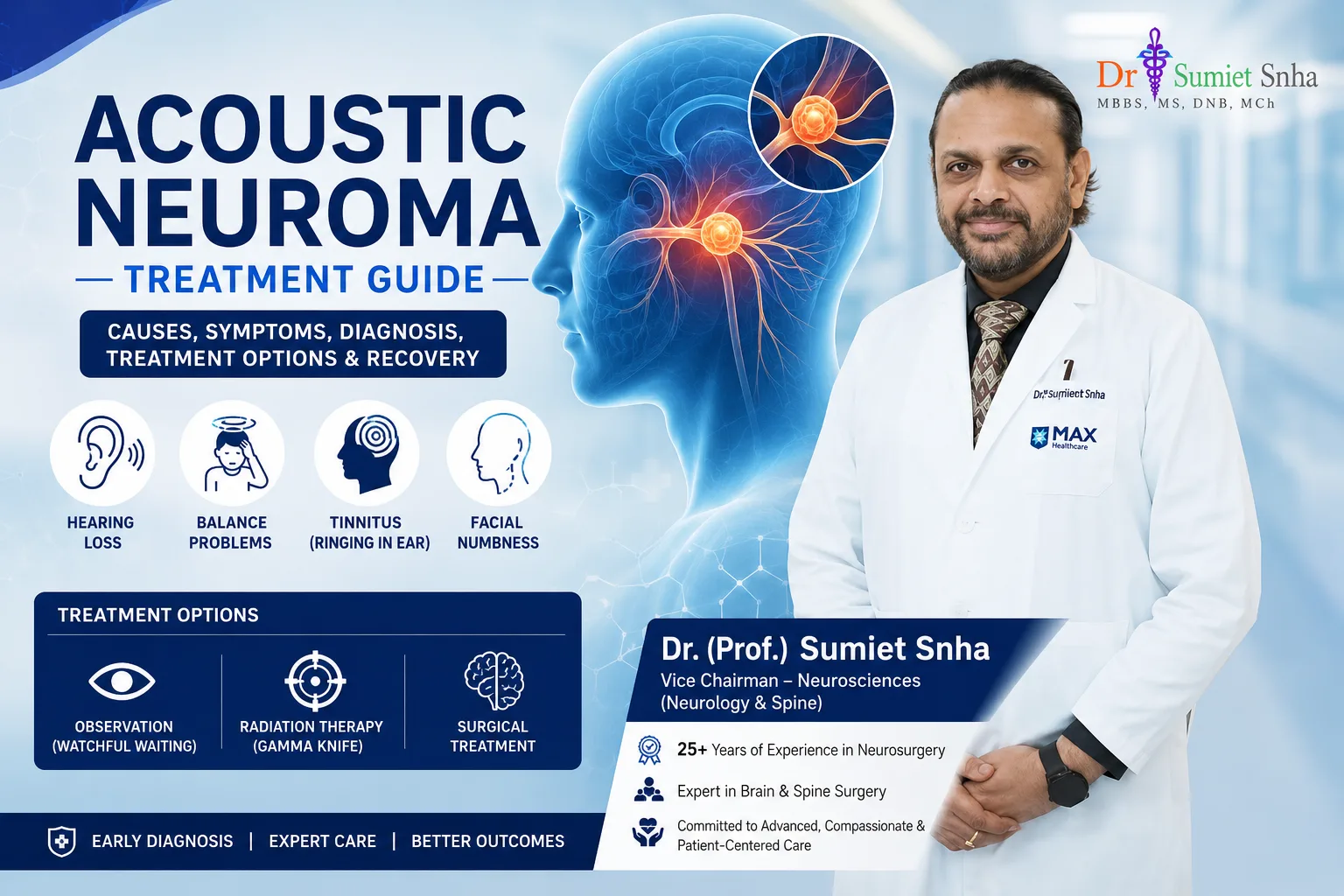
Acoustic neuromas are uncommon, slow-growing tumors that arise from the vestibular nerve, which carries balance and hearing signals from the inner ear to the brain. Although these tumors are benign (non-cancerous), they can gradually affect nearby nerves and brain structures if left untreated. Acoustic Neuroma Treatment plays a vital role in preserving hearing, maintaining balance, and preventing complications as the tumor grows. Many people initially experience subtle symptoms such as hearing loss in one ear, tinnitus (ringing in the ear), dizziness, or balance difficulties, which are often mistaken for common ear problems.
Early diagnosis is essential because timely intervention can help reduce the risk of permanent hearing impairment, facial nerve weakness, and pressure on the brainstem. Modern diagnostic techniques, including MRI scans and comprehensive hearing evaluations, allow specialists to detect acoustic neuromas at an early stage and recommend the most appropriate treatment strategy. Depending on the tumor's size, growth rate, symptoms, age, overall health, and hearing status, Acoustic Neuroma Treatment may involve careful observation with regular imaging, stereotactic radiation therapy such as Gamma Knife, or microsurgical removal. An individualized treatment plan developed by an experienced neurosurgical team offers the best opportunity for effective tumor control, symptom relief, and a successful long-term recovery while preserving neurological function whenever possible.
Understanding Acoustic Neuroma: Causes, Risk Factors, and Symptoms
What Is an Acoustic Neuroma?
An acoustic neuroma, also known as a vestibular schwannoma, is a slow-growing, non-cancerous tumor that develops from the Schwann cells covering the vestibular nerve. This nerve is responsible for transmitting hearing and balance signals from the inner ear to the brain. Unlike malignant brain tumors that can spread to other parts of the body, an acoustic neuroma remains localized. However, as it gradually enlarges, it can compress nearby nerves and important brain structures, making Acoustic Neuroma Treatment essential to protect hearing, balance, and neurological function.
Common Causes and Risk Factors
The exact cause of most acoustic neuromas is still unknown. In rare cases, the condition is linked to Neurofibromatosis Type 2 (NF2), a hereditary genetic disorder that increases the likelihood of developing tumors on the hearing and balance nerves. Although acoustic neuromas can occur at any age, they are most frequently diagnosed in adults between 30 and 60 years. While ongoing research continues to investigate possible environmental influences, no lifestyle or environmental factor has been conclusively proven to cause these tumors.
Common Symptoms of Acoustic Neuroma
Symptoms usually develop slowly because the tumor grows gradually over time. Progressive hearing loss in one ear is often the earliest and most noticeable sign. Many individuals also experience tinnitus (persistent ringing in the ear), dizziness, vertigo, and balance difficulties, which may interfere with everyday activities. As the tumor increases in size, it may compress the facial nerve, leading to facial numbness, tingling, or weakness. Larger tumors can also place pressure on the brain, causing persistent headaches, coordination problems, and, in advanced cases, neurological complications. Recognizing these warning signs early allows timely diagnosis and helps specialists recommend the most appropriate Acoustic Neuroma Treatment, improving the chances of preserving hearing and achieving better long-term outcomes.
Diagnosis and When Acoustic Neuroma Treatment Is Needed
Accurate diagnosis is the foundation of successful Acoustic Neuroma Treatment. Because the symptoms of an acoustic neuroma (vestibular schwannoma) often resemble those of common ear disorders, a thorough medical evaluation is essential to confirm the condition and determine the most appropriate treatment approach. Early diagnosis not only helps preserve hearing and balance but also reduces the risk of complications caused by tumor growth.
Diagnostic Tests
The diagnostic process involves several important steps to ensure precise identification of the tumor:
- Medical history: Understanding symptoms such as hearing loss, tinnitus, dizziness, and their progression
- Neurological examination: Assessing nerve function, facial sensation, coordination, and balance
- Hearing test (audiometry): Measuring hearing ability and detecting abnormalities in the auditory nerve
- MRI scan with contrast: The most reliable test to detect even small acoustic neuromas and evaluate their size and location
- CT scan (when required): Used to examine bone structures around the ear and skull
- Balance function tests: Evaluating how the tumor is affecting the vestibular system and overall balance
When Acoustic Neuroma Treatment Is Recommended
Not every patient requires immediate intervention. Small tumors that are stable and cause minimal or no symptoms may be monitored through regular imaging and hearing tests. However, Acoustic Neuroma Treatment becomes necessary in the following situations:
- Tumor growth over time
- Progressive hearing loss in one ear
- Persistent tinnitus (ringing in the ear)
- Severe dizziness or vertigo
- Significant balance problems affecting daily life
- Facial nerve compression causing numbness or weakness
- Brainstem compression leading to serious neurological risks
- Large tumors requiring urgent medical or surgical treatment
Choosing the right time for treatment is critical. Early and appropriate intervention helps protect hearing, maintain facial nerve function, and improve overall quality of life while minimizing long-term complications.
Acoustic Neuroma Treatment Options
The most appropriate Acoustic Neuroma Treatment depends on several factors, including the tumor's size, growth rate, symptoms, hearing ability, age, and overall health. There is no single treatment that is suitable for every patient. After reviewing MRI findings, hearing test results, and neurological evaluation, specialists recommend a personalized treatment plan aimed at controlling the tumor while preserving hearing, facial nerve function, and quality of life.
Observation (Watchful Waiting)
Observation is often recommended for small acoustic neuromas that are not causing significant symptoms or are growing very slowly. This approach is particularly suitable for older adults or individuals with other medical conditions that increase the risks of surgery.
During observation, patients undergo regular MRI scans to monitor the tumor for any changes in size. Follow-up hearing tests (audiometry) are also performed to evaluate hearing function over time. If the tumor remains stable and symptoms do not worsen, active treatment may not be required. However, if the tumor grows or hearing and balance continue to decline, further Acoustic Neuroma Treatment is usually recommended.
Radiation Therapy
For selected patients, stereotactic radiosurgery, including Gamma Knife radiosurgery, offers a minimally invasive treatment option. Rather than removing the tumor, highly focused radiation is used to stop or slow its growth while minimizing exposure to surrounding healthy brain tissue.
Radiation therapy is generally recommended for small to medium-sized vestibular schwannomas, patients who are not suitable candidates for surgery, or those with residual tumor after an operation. Its advantages include no surgical incision, shorter recovery time, and a high rate of long-term tumor control. However, radiation does not immediately eliminate the tumor, and patients require lifelong MRI follow-up because the tumor may remain stable rather than disappear completely.
Acoustic Neuroma Surgery
Acoustic neuroma surgery is usually advised when the tumor is large, continues to grow, causes worsening hearing loss, severe balance problems, facial nerve compression, or places pressure on the brainstem. The primary objective is to remove the tumor safely while preserving important neurological functions whenever possible.
Neurosurgeons choose the surgical technique based on the tumor's location, size, and the patient's hearing status. The retrosigmoid approach provides access to tumors of different sizes and may allow hearing preservation in selected patients. The translabyrinthine approach is commonly used when hearing has already been significantly affected, offering excellent exposure of the tumor and facial nerve. The middle fossa approach is generally reserved for small tumors when preserving useful hearing is a major goal.
Modern microsurgical techniques, advanced operating microscopes, intraoperative nerve monitoring, and experienced skull base surgical teams have significantly improved the outcomes of Acoustic Neuroma Treatment. Whenever feasible, surgeons focus on facial nerve preservation, maintaining hearing function, achieving complete or near-complete tumor removal, and reducing the risk of long-term complications to support the best possible recovery.
Recovery After Acoustic Neuroma Treatment and Success Rate
Recovery following Acoustic Neuroma Treatment varies from person to person and depends on the treatment method, tumor size, overall health, and the patient's neurological condition before treatment. Most patients are closely monitored immediately after surgery or radiation therapy to ensure a safe recovery and identify any early complications. With appropriate postoperative care and rehabilitation, many individuals gradually regain their strength and return to their normal daily activities.
After acoustic neuroma surgery, patients usually spend the first 24 to 48 hours in the Intensive Care Unit (ICU), where vital signs and neurological function are continuously monitored. The total hospital stay typically ranges from 3 to 7 days, although recovery may take several weeks to a few months depending on the complexity of the procedure. Patients treated with Gamma Knife radiosurgery or other forms of stereotactic radiosurgery often return home on the same day or within 24 hours.
Rehabilitation plays an important role in improving long-term outcomes and quality of life. Depending on individual needs, specialists may recommend:
- Balance therapy to improve stability and reduce dizziness.
- Hearing rehabilitation, including hearing aids or other assistive hearing devices when appropriate.
- Facial muscle exercises to strengthen facial nerve function if temporary weakness occurs.
- Regular MRI scans and hearing evaluations to monitor recovery and detect any changes in the treated tumor.
Patients can support their recovery by following a few simple measures:
- Get adequate rest and maintain a healthy, balanced diet.
- Resume daily activities gradually as advised by the healthcare team.
- Take medications exactly as prescribed and attend all follow-up appointments.
- Avoid heavy lifting and strenuous physical activity during the initial healing period.
The success of Acoustic Neuroma Treatment depends on several factors, including tumor size, early diagnosis, treatment timing, and the experience of the neurosurgical team. Smaller tumors diagnosed early generally have better hearing preservation and facial nerve outcomes. Advances in microsurgical techniques, intraoperative nerve monitoring, and modern radiosurgery have significantly improved long-term tumor control, allowing most patients to achieve excellent recovery and maintain a good quality of life.
Possible Risks, Complications, and Long-Term Outlook
Like any specialized neurosurgical procedure, Acoustic Neuroma Treatment may involve certain risks and potential complications. However, advances in microsurgical techniques, intraoperative nerve monitoring, and stereotactic radiosurgery have significantly improved patient safety and treatment outcomes. The likelihood of complications depends on factors such as the tumor's size and location, the selected treatment method, and the patient's overall health. Most complications are temporary and can be effectively managed with appropriate medical care and rehabilitation.
Possible Complications
|
Potential Complication |
Description |
|
Hearing loss |
Partial or complete hearing loss may occur, especially in larger tumors or when hearing is already significantly affected before treatment. |
|
Facial nerve weakness |
Temporary or, less commonly, permanent weakness may develop because the facial nerve lies close to the tumor. |
|
Balance disturbances |
Dizziness, vertigo, or unsteadiness can occur after treatment but often improve with vestibular rehabilitation. |
|
Cerebrospinal fluid (CSF) leak |
A rare complication that may require additional treatment if cerebrospinal fluid leaks after surgery. |
|
Infection |
Although uncommon, wound infections or meningitis can occur and require prompt medical attention. |
|
Headache |
Some patients experience headaches during recovery, which usually improve over time with medication and healing. |
|
Rare tumor recurrence |
In a small percentage of cases, the tumor may regrow, making long-term follow-up important. |
Long-Term Outlook
The long-term outlook after Acoustic Neuroma Treatment is generally very positive, particularly when the condition is diagnosed early and managed by an experienced multidisciplinary team. Regular MRI scans, hearing assessments, and neurological evaluations help confirm long-term tumor control and detect any recurrence at an early stage. Most patients enjoy an excellent prognosis, return to their normal daily activities, and experience a good quality of life after recovery. Early diagnosis, timely treatment, and consistent follow-up remain the most important factors for preserving hearing, protecting facial nerve function, maintaining balance, and achieving the best possible long-term outcomes.
How to Choose the Right Specialist for Acoustic Neuroma Treatment
Choosing the right specialist is one of the most important decisions for achieving the best outcome from Acoustic Neuroma Treatment. Since an acoustic neuroma (vestibular schwannoma) develops close to the hearing, balance, and facial nerves, treatment requires exceptional surgical precision and careful planning. Patients should seek a neurosurgeon with expertise in skull base surgery who works within a multidisciplinary team that includes neurologists, ENT specialists, neuroradiologists, radiation oncologists, audiologists, and rehabilitation experts.
When selecting a specialist, consider the following factors:
- Extensive experience in skull base and brain tumor surgery
- Access to advanced MRI and diagnostic imaging facilities
- Expertise in modern microsurgical techniques and intraoperative nerve monitoring
- Availability of stereotactic radiosurgery, including Gamma Knife, when appropriate
- Comprehensive postoperative rehabilitation for hearing, balance, and facial nerve recovery
- A patient-centered approach with individualized treatment planning and long-term follow-up
Patients should also have an open discussion with their doctor before starting treatment. Important questions include:
- Which Acoustic Neuroma Treatment option is most suitable for my condition?
- Can my hearing and facial nerve function be preserved?
- What are the possible risks and complications?
- What is the expected recovery timeline?
- How frequently will I require MRI scans and follow-up evaluations?
For patients seeking expert neurosurgical care, Dr. (Prof.) Sumiet Snha, Vice Chairman – Neurosciences (Neurology & Spine), brings more than 25+years of experience in the field of neurosurgery. Since 2005, he has been involved in the diagnosis and management of complex brain and spine disorders, including skull base tumors such as acoustic neuromas. His approach emphasizes evidence-based decision-making, advanced surgical techniques, and personalized treatment planning to help patients achieve the best possible neurological and functional outcomes while prioritizing safety and long-term quality of life.
Frequently Asked Questions (FAQs)
1. What is an acoustic neuroma?
An acoustic neuroma, also known as a vestibular schwannoma, is a slow-growing, non-cancerous tumor that develops on the vestibular nerve, which carries hearing and balance signals from the inner ear to the brain.
2. Is acoustic neuroma a brain tumor?
Although it is commonly referred to as a brain tumor, an acoustic neuroma actually arises from the vestibular nerve outside the brain. However, if it grows large, it can press against the brainstem and nearby nerves.
3. What are the early symptoms of acoustic neuroma?
The earliest symptoms usually include gradual hearing loss in one ear, ringing in the ear (tinnitus), dizziness, vertigo, and balance problems. Some patients may also notice facial numbness as the tumor enlarges.
4. How is acoustic neuroma diagnosed?
Diagnosis involves a detailed neurological examination, hearing (audiometry) tests, and an MRI scan with contrast, which is considered the most accurate method for detecting acoustic neuromas.
5. Does every acoustic neuroma require surgery?
No. Small tumors that are not growing or causing significant symptoms may only require regular MRI scans and hearing evaluations. Surgery or radiation therapy is recommended when the tumor grows or symptoms become more severe.
6. What are the different Acoustic Neuroma Treatment options?
Acoustic Neuroma Treatment may include observation (watchful waiting), stereotactic radiosurgery such as Gamma Knife, or microsurgical removal. The most appropriate treatment depends on the tumor's size, symptoms, hearing status, age, and overall health.
7. How successful is acoustic neuroma surgery?
Modern microsurgical techniques have achieved high success rates, particularly when the tumor is diagnosed early. Success depends on tumor size, surgical expertise, and the ability to preserve important nerves.
8. Can hearing be preserved after treatment?
Hearing preservation is possible in selected patients, especially when the tumor is small and treated early. The outcome depends on tumor location, hearing function before treatment, and the surgical approach used.
9. How long does recovery take after acoustic neuroma surgery?
Most patients remain in the hospital for several days after surgery. While many daily activities can be resumed within a few weeks, complete recovery may take several months depending on individual healing and rehabilitation.
10. Can acoustic neuroma come back after treatment?
Tumor recurrence is uncommon, but regular MRI follow-up is essential to ensure long-term tumor control and identify any changes at an early stage.
11. Is Gamma Knife treatment effective for acoustic neuroma?
Yes. Gamma Knife radiosurgery is an effective treatment for many small to medium-sized acoustic neuromas. It helps stop or slow tumor growth while avoiding open surgery in appropriately selected patients.
12. When should I consult a neurosurgeon for acoustic neuroma?
You should seek medical evaluation if you experience persistent one-sided hearing loss, tinnitus, balance problems, dizziness, facial numbness, or weakness. Early consultation allows timely diagnosis and improves treatment outcomes.
Conclusion
Advances in Acoustic Neuroma Treatment have significantly improved patient outcomes through high-resolution MRI imaging, sophisticated microsurgical techniques, facial nerve monitoring, and stereotactic radiosurgery such as Gamma Knife. Today, many patients achieve excellent long-term tumor control while maintaining good neurological function and quality of life. The most appropriate treatment should always be individualized, taking into account the tumor's size, growth pattern, hearing ability, symptoms, age, and overall medical condition.
Early diagnosis remains the key to successful treatment. Prompt evaluation of symptoms such as one-sided hearing loss, tinnitus, persistent dizziness, balance disturbances, or facial numbness can improve the chances of preserving hearing and facial nerve function while reducing the risk of complications associated with larger tumors.
Patients seeking specialized care may benefit from consultation with an experienced neurosurgical team. Dr. (Prof.) Sumiet Snha, Vice Chairman – Neurosciences (Neurology & Spine), has more than 25+ years of experience in neurosurgery since 2005 and has managed a wide range of complex brain and skull base conditions. His patient-focused, evidence-based approach emphasizes accurate diagnosis, individualized treatment planning, advanced microsurgical techniques, and comprehensive follow-up to help patients achieve the best possible long-term outcomes.



0 Comments