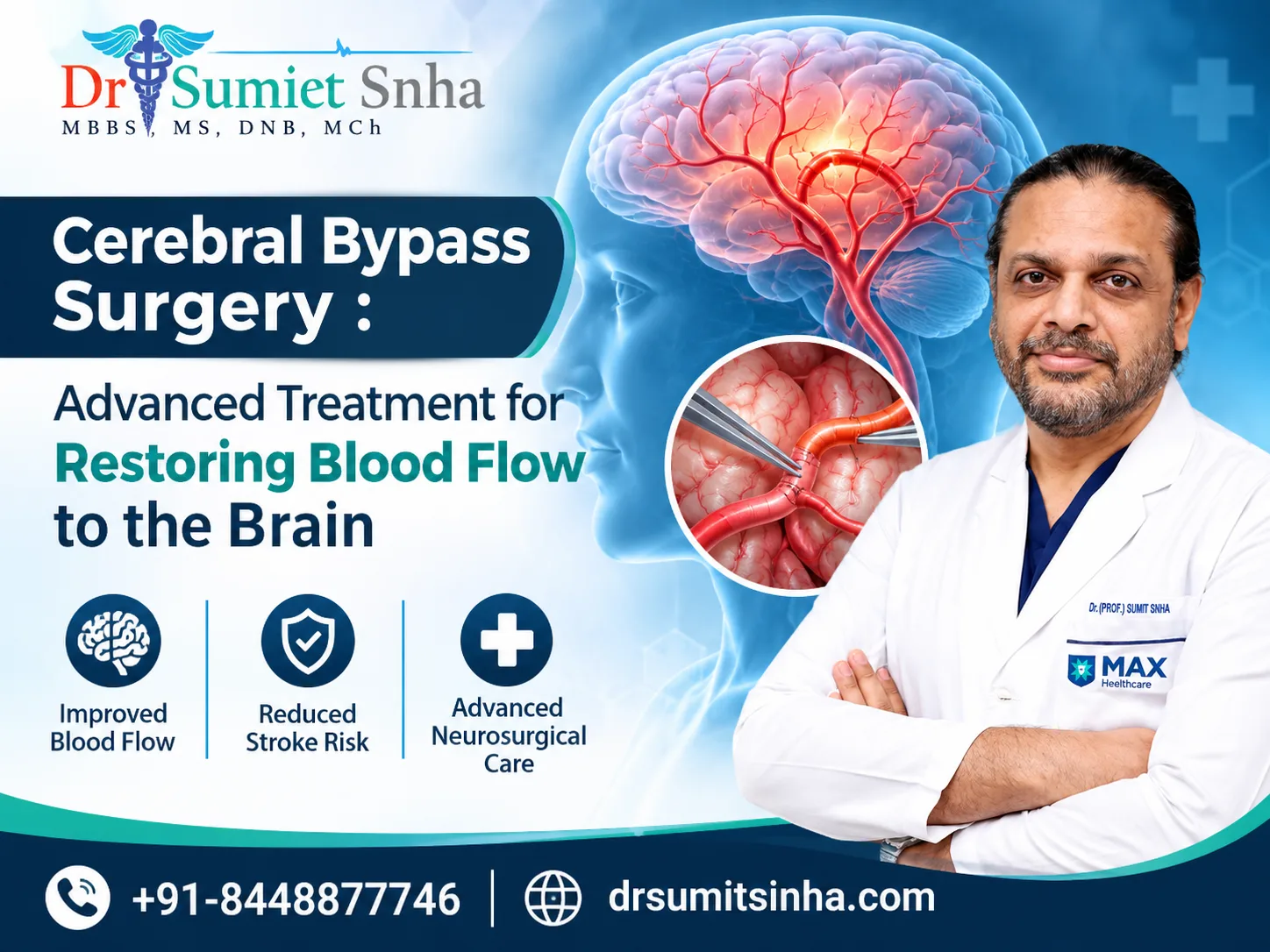
Cerebral Bypass Surgery in Delhi is an advanced neurosurgical procedure designed to improve blood circulation to the brain when certain arteries become narrowed, blocked or unable to supply sufficient oxygen-rich blood. Adequate blood flow is essential for maintaining normal brain function, and reduced cerebral circulation can increase the risk of transient ischemic attacks (TIAs), strokes and other neurological complications. Cerebral bypass surgery, also known as brain bypass surgery or cerebral revascularization, can help establish an alternative pathway for blood to reach areas of the brain that are receiving an inadequate supply.
With advancements in microsurgical techniques, vascular imaging and neurosurgical planning, cerebral bypass procedures have become an important treatment option for carefully selected patients with complex cerebrovascular conditions. Understanding the causes, symptoms, diagnosis, surgical techniques and recovery process can help patients and their families make informed decisions about treatment.
What Is Cerebral Bypass Surgery?
Cerebral bypass surgery is a specialised microsurgical procedure that creates an alternative route for blood to reach the brain. It is generally considered when the normal blood supply through one or more brain arteries is significantly reduced because of narrowing, blockage or an underlying vascular disorder.
During the procedure, a healthy blood vessel from the scalp or another suitable donor source may be connected to an artery supplying the brain. This connection allows blood to travel through an alternative pathway and improve circulation in the affected region.
One commonly performed technique is called Extracranial-Intracranial (EC-IC) Bypass Surgery. In this procedure, an artery outside the skull is connected to an artery inside the skull using delicate microsurgical techniques.
The primary objectives of cerebral bypass surgery include:
Improving blood supply to areas of the brain with inadequate circulation.
Reducing the risk of future ischemic strokes in appropriately selected patients.
Providing an alternative pathway when major brain arteries are severely narrowed or blocked.
Supporting brain function by improving oxygen and nutrient delivery.
Addressing specific cerebrovascular conditions that may benefit from surgical revascularization.
It is important to understand that bypass surgery is not necessary for every patient with narrowed brain arteries. The decision depends on the underlying condition, symptoms, brain blood-flow studies and overall medical condition.
Why Is Cerebral Bypass Surgery Required?
The brain requires a continuous supply of oxygen and glucose to function properly. When blood circulation becomes inadequate, brain cells may not receive the nutrients they need, increasing the possibility of neurological injury.
Several medical conditions can interfere with normal cerebral circulation and may require evaluation for cerebral revascularization surgery.
1. Moyamoya Disease
Moyamoya disease is a rare and progressive cerebrovascular condition in which important arteries supplying the brain gradually become narrowed or blocked. The body may develop smaller collateral blood vessels to compensate for reduced circulation.
However, these alternative vessels may not provide sufficient blood flow, increasing the risk of TIAs, ischemic strokes and other neurological complications.
Cerebral bypass surgery is an established treatment option for selected patients with symptomatic Moyamoya disease or evidence of inadequate cerebral blood flow.
2. Severe Intracranial Artery Stenosis
Intracranial artery stenosis refers to the narrowing of arteries located inside the skull. Severe narrowing can reduce the amount of blood reaching particular regions of the brain.
Depending on the cause, severity and blood-flow assessment, selected patients may require specialised treatment, including surgical revascularization.
3. Cerebral Artery Occlusion
A cerebral artery occlusion occurs when an artery supplying the brain becomes blocked. In certain chronic cases, the surrounding brain tissue may receive insufficient blood through the remaining circulation.
For carefully selected patients with compromised cerebral blood flow, bypass surgery may be considered after a detailed vascular assessment.
4. Complex Cerebrovascular Conditions
Some patients have complicated vascular abnormalities, previous vascular procedures or unusual patterns of cerebral circulation. In selected cases, a neurosurgeon may evaluate whether a bypass procedure can provide an additional source of blood supply.
The suitability of surgery must always be determined individually rather than based on a diagnosis alone.
Common Symptoms of Reduced Blood Supply to the Brain
Symptoms associated with inadequate cerebral blood circulation can vary depending on which blood vessels are affected and how severely blood flow is reduced.
Some patients experience temporary symptoms, while others may develop persistent neurological problems.
Common warning signs include:
Sudden weakness or numbness: Weakness affecting the face, arm or leg, particularly on one side of the body.
Speech difficulties: Trouble speaking clearly or understanding conversations.
Visual disturbances: Sudden loss of vision, blurred vision or difficulty seeing.
Recurring headaches: Persistent or unusual headaches that require medical evaluation.
Dizziness and balance problems: Difficulty maintaining coordination or walking steadily.
Transient ischemic attacks: Temporary episodes of neurological symptoms caused by reduced blood supply.
Seizures: Abnormal electrical activity in the brain associated with certain neurological conditions.
Sudden facial drooping, arm weakness or speech difficulty may indicate a stroke. Seek emergency medical attention immediately, even if the symptoms disappear after a few minutes.
Early diagnosis is important because timely treatment may help prevent further neurological damage.
Types of Cerebral Bypass Surgery
The appropriate surgical technique depends on the patient's age, vascular anatomy, underlying disease and the extent of reduced blood circulation.
There are three broad approaches to cerebral revascularization.
1. Direct Cerebral Bypass Surgery
Direct bypass surgery involves connecting a donor artery directly to a recipient artery supplying the brain.
A commonly used technique is Superficial Temporal Artery to Middle Cerebral Artery (STA-MCA) Bypass.
During this procedure:
The surgeon identifies a suitable donor artery, usually the superficial temporal artery.
A small opening is created in the skull to access the recipient brain artery.
Using an operating microscope and delicate microsurgical instruments, the donor artery is connected to the recipient artery.
Blood flow through the new connection is assessed to ensure that the bypass is functioning appropriately.
One major advantage of direct bypass is that it can provide an additional blood supply immediately after a successful connection.
2. Indirect Cerebral Bypass Surgery
In indirect revascularization, a healthy blood vessel or vascularised tissue is placed in contact with the brain surface to encourage the development of new blood vessels over time.
A commonly used technique is Encephaloduroarteriosynangiosis (EDAS).
Unlike direct bypass, indirect surgery does not immediately connect two arteries. Instead, it encourages the formation of new vascular connections gradually.
This technique may be particularly useful in selected patients with Moyamoya disease, including certain children.
3. Combined Cerebral Bypass Surgery
Combined bypass surgery uses both direct and indirect revascularization techniques.
The purpose is to provide an immediate alternative blood supply through the direct connection while also encouraging the development of additional blood vessels through the indirect technique.
The decision to perform direct, indirect or combined bypass surgery depends on individual clinical findings and surgical planning.
How Is Cerebral Bypass Surgery Diagnosed and Planned?
Accurate diagnosis and preoperative evaluation are essential before considering brain bypass surgery in Delhi.
A neurosurgeon evaluates the patient's medical history, neurological symptoms, previous stroke episodes and available imaging reports before recommending a treatment plan.
Common diagnostic investigations include:
1. MRI Brain
Magnetic Resonance Imaging helps evaluate brain structure and identify previous strokes, areas of injury and other neurological abnormalities.
2. MR Angiography (MRA)
MRA provides information about blood vessels in and around the brain. It helps identify narrowing, blockage and abnormal vascular patterns.
3. CT Angiography (CTA)
CT angiography uses contrast imaging to visualise cerebral arteries and assess their structure, narrowing and blood flow pathways.
4. Digital Subtraction Angiography (DSA)
DSA is an important vascular imaging investigation that provides detailed images of brain blood vessels. It helps surgeons understand the vascular anatomy and plan complex bypass procedures.
5. Cerebral Perfusion Studies
Perfusion imaging helps evaluate how much blood reaches different regions of the brain. Depending on the clinical situation, additional tests may assess cerebrovascular reserve, which indicates the ability of brain circulation to respond to changing blood-flow demands.
The combination of these investigations helps determine whether cerebral bypass surgery is appropriate and which technique may be suitable.
What Happens During Cerebral Bypass Surgery?
Cerebral bypass surgery is performed under general anaesthesia by a specialised neurosurgical team using an operating microscope and advanced microsurgical instruments.
Although the exact procedure varies, the general surgical process may involve the following stages:
Step 1: Preoperative Assessment
The patient's neurological condition, vascular imaging, medical history and anaesthesia fitness are evaluated before surgery.
Step 2: Identification of the Donor Vessel
The surgeon identifies a suitable donor artery, commonly a branch of the superficial temporal artery.
Step 3: Surgical Exposure
A carefully planned incision is made to access the donor vessel and the selected recipient artery inside the skull.
Step 4: Microsurgical Connection
Using specialised microsurgical techniques, the donor and recipient arteries are connected with very fine sutures.
Step 5: Bypass Assessment
The surgical team evaluates blood flow through the new connection using appropriate intraoperative monitoring or imaging techniques.
Step 6: Closure and Postoperative Monitoring
After completing the bypass, the surgical area is closed, and the patient is transferred for close neurological and medical monitoring.
The duration and complexity of surgery vary according to the patient's condition and the selected surgical approach.
Benefits of Cerebral Bypass Surgery
For appropriately selected patients, cerebral bypass surgery may offer important benefits by improving blood circulation to areas of the brain that are receiving inadequate blood supply.
Potential benefits include:
Improved cerebral blood flow: Establishing an alternative route for blood to reach the affected brain region.
Stroke risk reduction: Helping reduce the risk of future ischemic events in selected patients with specific cerebrovascular conditions.
Alternative circulation: Providing an additional source of blood supply when normal arterial circulation is compromised.
Long-term vascular support: Indirect techniques may encourage the development of additional blood vessels over time.
Individualised treatment: Different bypass techniques can be selected according to the patient's vascular anatomy and medical condition.
However, surgery cannot guarantee complete recovery or eliminate every future stroke risk. Outcomes depend on the underlying disease, the extent of existing brain injury and the success of revascularization.
Risks and Possible Complications
Like other complex brain surgeries, cerebral bypass surgery carries certain risks. Patients should understand the possible complications before making a treatment decision.
Potential risks include:
Stroke: Reduced or disturbed blood circulation during or after surgery may cause an ischemic stroke.
Bleeding: Bleeding can occur around the surgical area or inside the brain.
Seizures: Some patients may develop seizures following brain surgery.
Infection: Infection may develop at the surgical site or, rarely, involve deeper structures.
Blood vessel blockage: The newly created bypass may become narrowed or blocked.
Temporary neurological symptoms: Changes in cerebral blood flow may sometimes cause temporary weakness, speech difficulties or sensory disturbances.
Anaesthesia-related complications: General anaesthesia carries risks that depend on the patient's overall health.
Careful patient selection, detailed surgical planning and postoperative monitoring help the medical team identify and manage potential complications.
Recovery After Cerebral Bypass Surgery
Recovery following cerebral bypass surgery varies from patient to patient. Factors such as age, underlying cerebrovascular disease, neurological condition and the type of bypass procedure influence the recovery process.
Hospital Stay and Initial Monitoring
After surgery, patients are generally monitored in an intensive care or specialised neurological unit. The medical team carefully observes blood pressure, neurological function and cerebral circulation.
Maintaining appropriate blood pressure and adequate hydration is particularly important after cerebral revascularization.
Gradual Return to Activities
Once the patient is medically stable, gradual mobilisation may begin under medical supervision. The treating team provides instructions regarding physical activity, wound care and medication.
Follow-up and Imaging
Follow-up appointments are important to assess neurological recovery and evaluate bypass function. The neurosurgeon may recommend vascular imaging, such as CTA, MRA or other investigations, depending on the patient's condition.
Rehabilitation
Patients who have experienced previous strokes or neurological weakness may benefit from physiotherapy, occupational therapy or speech therapy.
Regular follow-up and adherence to medical advice are essential for long-term care.
Why Choose Dr. (Prof.) Sumiet Snha for Cerebrovascular Evaluation?
Choosing an experienced neurosurgeon is an important part of managing complex brain and vascular conditions. Patients considering Cerebral Bypass Surgery in Delhi should seek an expert evaluation that considers their symptoms, vascular anatomy, medical history and available treatment options.
Dr. (Prof.) Sumiet Snha is an AIIMS-trained neurosurgeon with qualifications including MBBS, MS, DNB, MCh (AIIMS, New Delhi) and FACS. He has extensive experience in neurosurgery and has served as a Professor of Neurosurgery at AIIMS, New Delhi.
He currently holds a senior leadership position in Neurosurgery and Spine Services at Max Hospital, Dwarka, New Delhi.
His professional experience includes the evaluation and surgical management of complex brain, spine and peripheral nerve conditions. His areas of neurosurgical practice include:
Vascular Neurosurgery
Vascular Bypass Surgery
Brain Aneurysm Treatment
Arteriovenous Malformation (AVM) Management
Brain Tumour Surgery
Epilepsy Surgery
Minimally Invasive and Endoscopic Neurosurgery
His academic background, international training exposure and experience in complex neurosurgical procedures contribute to a comprehensive approach to patient evaluation and treatment planning.
To learn more about his qualifications, professional experience and areas of expertise, visit the official website of Dr. (Prof.) Sumiet Snha.
Every patient requires an individual assessment, and the most appropriate treatment should be recommended after reviewing clinical findings and diagnostic investigations.
Conclusion
Cerebral bypass surgery is an advanced microsurgical treatment that can help restore or improve blood circulation to the brain in carefully selected patients with complex cerebrovascular conditions. It plays an important role in managing certain cases of Moyamoya disease, severe cerebral artery narrowing and other conditions associated with inadequate brain blood supply.
Early diagnosis, detailed vascular imaging and appropriate surgical planning are essential for achieving the best possible treatment outcomes. Patients experiencing recurring neurological symptoms or diagnosed with compromised cerebral circulation should consult an experienced neurosurgeon for a comprehensive evaluation.
For professional guidance regarding Cerebral Bypass Surgery in Delhi, patients can consult Dr. (Prof.) Sumiet Snha at Max Hospital, Dwarka, New Delhi, and discuss their diagnosis and available treatment options.




0 Comments