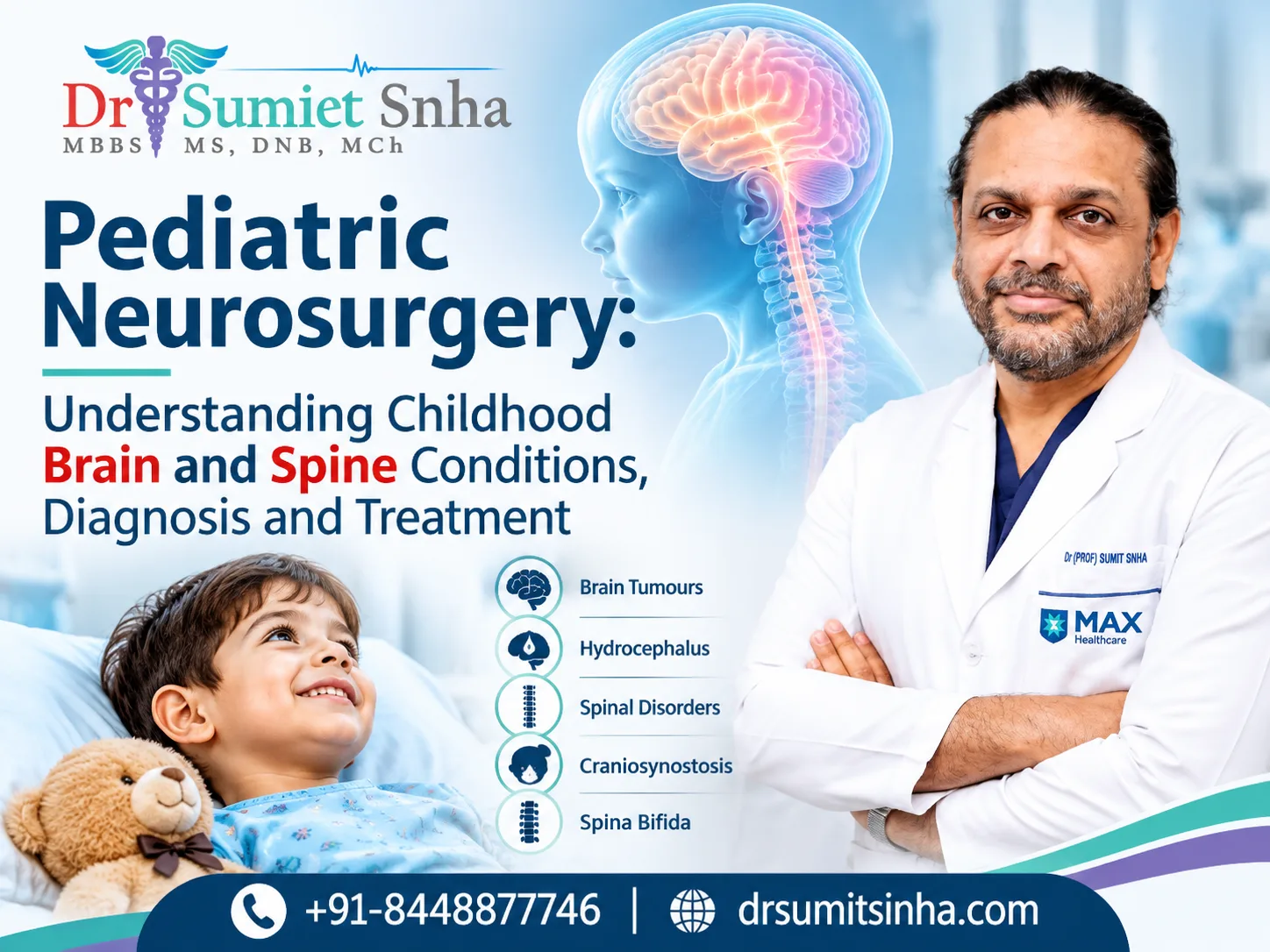
Pediatric Neurosurgery in Delhi plays an important role in diagnosing and treating neurological conditions that affect infants, children, and adolescents, helping protect their brain development, spinal health, physical abilities, and overall quality of life.
A child's brain and nervous system undergo continuous development from birth through adolescence. Unlike adults, children may experience neurological conditions that are congenital, developmental, or related to injuries, infections, and other medical problems. These conditions require specialised evaluation because even a relatively small abnormality involving the brain or spinal cord can affect a child's movement, speech, learning, behaviour, and physical development.
Modern Pediatric Neurosurgery focuses on identifying these conditions at an early stage and providing appropriate treatment through medical management, observation, minimally invasive procedures, or surgery when necessary. The primary objective is not only to treat the existing neurological problem but also to preserve healthy brain and spinal cord function as the child grows.
Parents often experience anxiety when their child is diagnosed with a neurological disorder. Understanding the condition, available treatment options, and importance of timely medical attention can help families make informed decisions.
What Is Pediatric Neurosurgery?
Pediatric Neurosurgery is a specialised branch of neurosurgery concerned with diagnosing and treating disorders affecting the brain, spinal cord, spine, and peripheral nerves in newborns, infants, children, and teenagers.
Children have different anatomical and physiological requirements compared with adults. Their skull bones are still developing, their nervous systems are continuously maturing, and their bodies respond differently to surgical procedures and anaesthesia.
A Pediatric Neurosurgeon evaluates neurological conditions and determines whether a child requires regular monitoring, medication, rehabilitation, or surgical intervention.
Some common conditions managed within this speciality include:
Hydrocephalus: Accumulation of excess cerebrospinal fluid inside the brain.
Pediatric Brain Tumours: Abnormal growths affecting different areas of the developing brain.
Spina Bifida: A congenital condition involving incomplete development of the spinal column.
Craniosynostosis: Premature fusion of one or more skull sutures.
Chiari Malformation: A structural abnormality involving the lower part of the brain.
Epilepsy: Recurrent seizures that may require specialised surgical evaluation.
Tethered Cord Syndrome: Abnormal attachment of the spinal cord that can cause progressive neurological symptoms.
Head Injuries: Traumatic injuries affecting the brain and surrounding structures.
Treatment is always individualised according to the child's age, diagnosis, symptoms, and overall health.
Why Do Children Require Specialised Neurosurgical Care?
The developing nervous system requires particular attention because neurological conditions can influence several important aspects of childhood development.
For example, untreated pressure inside the brain may interfere with normal development, while spinal cord abnormalities can affect walking, muscle strength, bladder function, and coordination.
There are several reasons why children require specialised neurosurgical assessment.
1. Developing Brain and Nervous System
A child's brain continues to develop throughout childhood. Treatment planning must consider the preservation of important brain functions, including memory, learning, speech, movement, and coordination.
2. Different Surgical Requirements
Surgical procedures in children require careful consideration of their smaller anatomical structures, blood volume, body temperature, and age-related physiological differences.
3. Long-Term Development
Treatment outcomes should be evaluated not only by immediate recovery but also by the child's future growth, education, mobility, and independence.
4. Multidisciplinary Medical Support
Children with complex neurological conditions may require assistance from pediatricians, neurologists, radiologists, anaesthesiologists, intensive care specialists, and rehabilitation professionals.
A coordinated approach helps ensure that the child's medical and developmental requirements receive appropriate attention.
Common Conditions Treated Through Pediatric Neurosurgery
Several neurological conditions may require evaluation by a specialist. Early identification can help determine the appropriate treatment approach and reduce the possibility of preventable complications.
1. Hydrocephalus
Hydrocephalus is a neurological condition in which excess cerebrospinal fluid (CSF) accumulates inside the brain's ventricles. This accumulation can enlarge the ventricles and increase pressure on surrounding brain tissues.
The condition may be present at birth or develop later because of infections, bleeding, congenital abnormalities, or brain tumours.
Common symptoms include:
Unusually rapid head growth in infants.
A bulging soft spot on the baby's head.
Persistent vomiting and irritability.
Headaches, particularly in older children.
Problems with balance and coordination.
Drowsiness or developmental difficulties.
Treatment depends on the underlying cause and the child's age. Common surgical options include Ventriculoperitoneal (VP) Shunt Surgery and Endoscopic Third Ventriculostomy (ETV).
A VP shunt redirects excess cerebrospinal fluid from the brain into another part of the body, usually the abdominal cavity. ETV creates an alternative pathway for fluid circulation using an endoscope in selected patients.
2. Pediatric Brain Tumours
Brain tumours can develop in different regions of a child's brain and may affect neurological functions depending on their size, location, and biological characteristics.
Some childhood brain tumours grow slowly, while others may require more intensive treatment.
Possible symptoms include:
Frequent or persistent headaches.
Repeated vomiting, especially in the morning.
Difficulty walking or maintaining balance.
Seizures.
Vision or hearing disturbances.
Changes in behaviour or school performance.
Developmental regression in younger children.
MRI Brain Scanning is commonly used to evaluate suspected brain tumours. Additional investigations may be recommended depending on the clinical findings.
Treatment may involve surgical removal or biopsy, followed by chemotherapy or radiotherapy when indicated. The treatment plan depends on the tumour type, location, and overall clinical condition.
Modern neurosurgical techniques aim to remove or control the tumour while protecting surrounding healthy brain structures.
3. Spina Bifida and Congenital Spinal Disorders
Spina Bifida is a congenital condition that develops when the neural tube does not close completely during early pregnancy.
Depending on its severity, the condition may affect the spinal cord, surrounding nerves, and protective tissues.
Children with more severe forms may experience:
Weakness in the legs.
Difficulty walking.
Bladder and bowel dysfunction.
Orthopaedic abnormalities.
Associated hydrocephalus.
Certain forms, including myelomeningocele, may require surgical closure shortly after birth to protect exposed neural tissues and reduce the risk of infection.
Long-term management may also involve rehabilitation, urological care, and orthopaedic treatment.
4. Craniosynostosis
Craniosynostosis occurs when one or more fibrous joints between a baby's skull bones fuse earlier than normal.
Since the skull cannot expand normally in the affected direction, the child's head may develop an unusual shape. Some cases can also be associated with increased pressure inside the skull.
Parents may notice:
An unusually long or narrow head.
Flattening of the forehead or back of the head.
An abnormal skull shape present from birth.
Changes in head growth.
A clinical examination and appropriate imaging help distinguish craniosynostosis from positional head-shape changes.
Depending on the child's age and condition, treatment may involve endoscopic procedures with helmet therapy or open skull-remodelling surgery.
5. Chiari Malformation
Chiari Malformation is a structural abnormality in which part of the cerebellum extends downward towards the spinal canal.
Some children have no noticeable symptoms and may only require observation. Others can experience headaches, neck pain, balance problems, swallowing difficulties, or weakness.
In certain cases, Chiari malformation may be associated with Syringomyelia, a fluid-filled cavity within the spinal cord.
Treatment depends on symptom severity, MRI findings, and the presence of spinal cord abnormalities. Selected symptomatic cases may require posterior fossa decompression surgery.
6. Tethered Spinal Cord Syndrome
In Tethered Cord Syndrome, the spinal cord is abnormally attached to surrounding tissues, restricting its normal movement.
As a child grows, this attachment can place additional tension on the spinal cord and may gradually affect neurological function.
Possible warning signs include:
Lower back pain.
Weakness in the legs.
Changes in walking patterns.
Foot deformities.
Scoliosis.
New bladder or bowel problems.
MRI is commonly used to evaluate the spinal cord and identify associated abnormalities.
When progressive symptoms are linked to tethering, surgical release may be recommended to prevent further neurological deterioration.
Pediatric Neurosurgery Treatment Options
Not every neurological condition requires surgery. A specialist first evaluates the child's medical history, symptoms, neurological examination, and diagnostic reports before recommending a treatment strategy.
Depending on the diagnosis, treatment may include:
1. Observation and Regular Monitoring
Certain mild or stable conditions can be managed through regular clinical examinations and imaging studies without immediate surgery.
2. Medication Management
Medicines may be prescribed to control seizures, manage pain, treat infections, or address other neurological symptoms.
3. Minimally Invasive Neurosurgery
Selected conditions can be treated using smaller surgical openings and specialised instruments. These procedures may reduce tissue disruption and support recovery when clinically appropriate.
4. Endoscopic Neurosurgery
Endoscopic techniques use a small camera and specialised instruments to access selected areas of the brain through limited openings. ETV is an example of an endoscopic procedure used in certain cases of hydrocephalus.
5. Microsurgical Procedures
A surgical microscope helps the neurosurgeon operate around delicate nerves, blood vessels, and important brain structures with enhanced visual precision.
6. Pediatric Spine Surgery
Surgical treatment may be required for selected congenital spinal abnormalities, spinal cord compression, tethered cord, and spinal tumours.
The final decision should always consider potential benefits, risks, alternative treatments, and the child's long-term development.
Diagnosis and Investigations Before Pediatric Neurosurgery
Accurate diagnosis is an essential part of successful treatment planning. A detailed assessment helps identify the location, nature, and severity of a neurological condition.
Common diagnostic investigations include:
MRI Brain: Provides detailed images of brain structures, tumours, congenital abnormalities, and other neurological conditions.
MRI Spine: Evaluates the spinal cord, vertebrae, nerve structures, and congenital spinal abnormalities.
CT Scan: Helps assess skull abnormalities, fractures, bleeding, and selected brain conditions.
Ultrasound: May be used in infants to examine brain structures through the open fontanelle.
EEG: Records electrical activity in the brain and helps evaluate seizure disorders.
Neurological Examination: Assesses muscle strength, reflexes, coordination, movement, and other neurological functions.
Blood Investigations: Help evaluate the child's general health and readiness for surgery.
Not every child requires all these investigations. The specialist recommends tests according to the suspected condition and clinical requirements.
Warning Signs Parents Should Never Ignore
Children may not always be able to explain their symptoms clearly. Parents and caregivers should therefore observe changes in behaviour, movement, development, and physical health.
Consult a medical professional if a child experiences:
Repeated headaches, especially with vomiting.
Seizures or unusual repetitive movements.
Difficulty walking or maintaining balance.
Persistent weakness in an arm or leg.
Unusual enlargement of the head during infancy.
Developmental delays or loss of previously achieved milestones.
Changes in vision or eye movements.
Persistent back pain with neurological symptoms.
New bladder or bowel control problems.
Unusual drowsiness or changes in consciousness.
Sudden weakness, loss of consciousness, repeated seizures, or severe head injury requires immediate medical attention.
Early evaluation does not necessarily mean surgery is required. It helps establish an accurate diagnosis and determine the appropriate next steps.
Recovery and Rehabilitation After Pediatric Neurosurgery
Recovery varies according to the neurological condition, type of surgery, age of the child, and overall health.
Some children recover relatively quickly, while complex brain and spinal procedures may require longer hospital stays and rehabilitation.
Important aspects of postoperative care include:
Hospital Monitoring: Children may require close observation in a specialised intensive care unit following major neurosurgical procedures.
Medication Management: Prescribed medicines should be administered according to the treating doctor's instructions.
Wound Care: Surgical wounds must be kept clean and monitored for signs of infection.
Physiotherapy: Rehabilitation exercises may help improve muscle strength, balance, coordination, and mobility.
Developmental Follow-Up: Regular assessments help monitor speech, learning, movement, and other developmental milestones.
School and Daily Activities: Returning to school, sports, and other activities should follow the treating specialist's recommendations.
Parents should attend scheduled follow-up appointments and report any unusual symptoms or changes in the child's condition.
Why Consider Dr. (Prof.) Sumiet Snha for Pediatric Neurosurgery in Delhi?
Selecting an experienced neurosurgeon is an important decision when a child has a neurological condition that requires specialist attention.
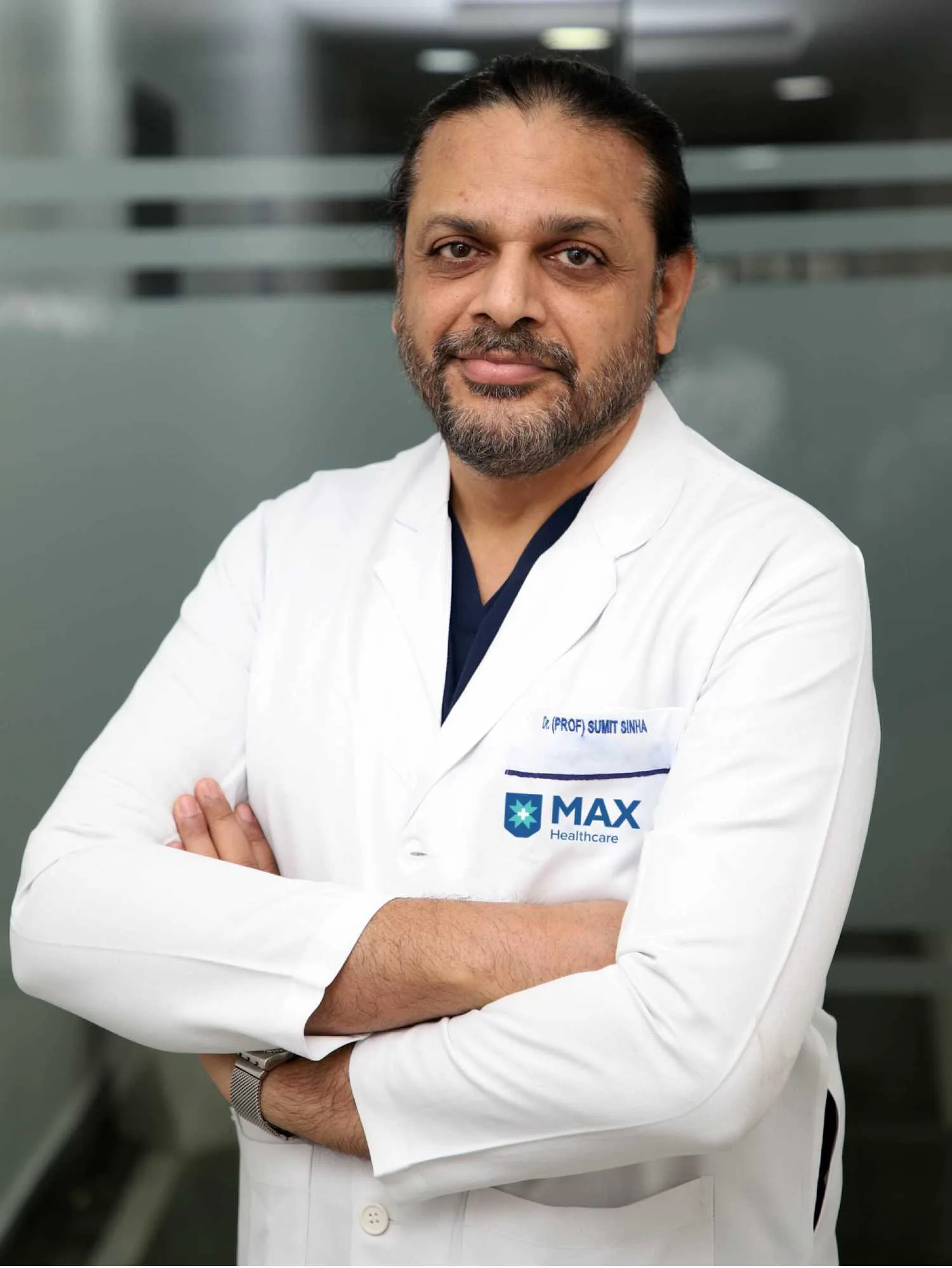
Dr. (Prof.) Sumiet Snha is an experienced neurosurgeon associated with Max Super Speciality Hospital, Dwarka, New Delhi. He has previously served as a Professor of Neurosurgery at AIIMS, New Delhi, and has extensive experience in the management of complex brain, spine, and peripheral nerve conditions.
His qualifications include MBBS, MS, DNB, MCh (AIIMS, New Delhi), and FACS.
His areas of expertise include:
Brain and spine surgery.
Minimally invasive and endoscopic neurosurgery.
Hydrocephalus management and endoscopic procedures.
Brain and spinal tumour surgery.
Complex spinal disorders.
Peripheral nerve and brachial plexus surgery.
Neurological trauma management.
For children requiring neurosurgical evaluation, treatment planning should be based on their individual diagnosis, age, and medical requirements.
Dr. Snha's neurosurgical experience and multidisciplinary clinical approach can help families understand available treatment options and make informed decisions regarding their child's care.
Conclusion
Childhood neurological conditions require timely diagnosis, careful treatment planning, and appropriate long-term follow-up. Conditions such as hydrocephalus, brain tumours, spina bifida, craniosynostosis, Chiari malformation, and tethered cord syndrome can affect a child's development if not evaluated and managed appropriately.
Modern Pediatric Neurosurgery offers several treatment approaches, including observation, medication, endoscopic procedures, microsurgery, and specialised brain and spine surgery. The right approach depends on the child's individual condition and the potential benefits and risks of treatment.
Parents who notice unusual neurological symptoms or receive a diagnosis involving their child's brain or spine should seek an appropriate specialist consultation.
For professional neurosurgical evaluation and guidance, families can consult Dr. (Prof.) Sumiet Snha at Max Super Speciality Hospital, Dwarka, New Delhi, to understand the available options for their child's neurological care.

0 Comments