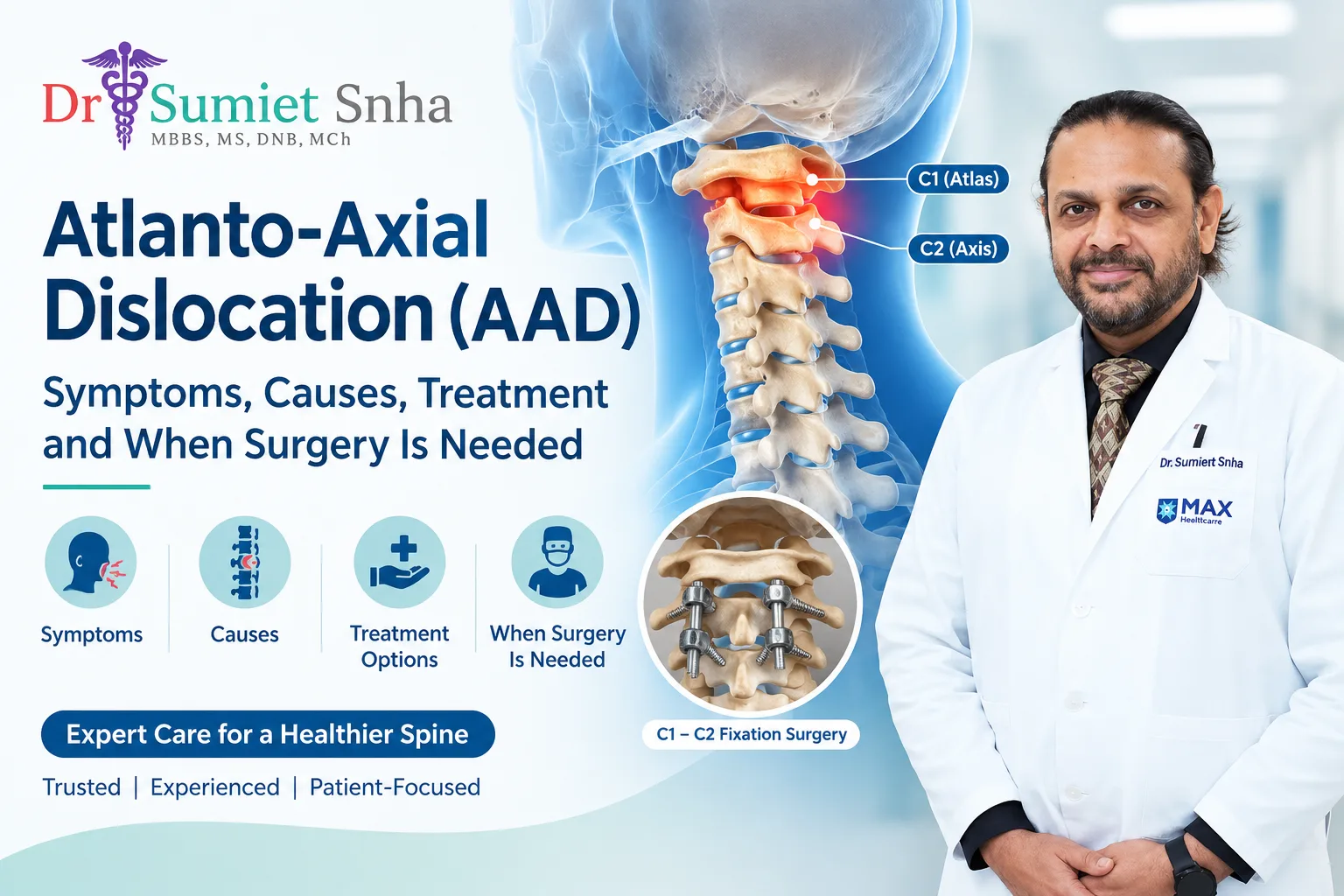
Atlanto-axial dislocation is a condition in which the normal alignment between the first two cervical vertebrae, C1 and C2, becomes disturbed. These bones help support the head and allow important neck movements. When their alignment or stability is affected, nearby nerves and the spinal cord may be at risk. Atlanto axial dislocation treatment depends on the cause, degree of instability, symptoms and whether the spinal cord is compressed. Early diagnosis is important because the right treatment can help protect neurological function and prevent further complications.
What Is Atlanto-Axial Dislocation?
The upper part of the neck contains two important bones called the atlas (C1) and axis (C2). The atlas supports the skull, while the axis helps the head rotate. Together, they allow the neck to move while maintaining stability.
Atlanto-axial dislocation (AAD) occurs when these bones lose their normal relationship. This may happen because of an injury, a problem with the supporting ligaments, a congenital abnormality or certain inflammatory conditions.
The condition may also be associated with atlantoaxial instability, in which the C1–C2 joint moves more than it should. The two terms are related, although instability does not always mean that a complete dislocation has occurred.
Because this area lies close to the spinal cord and other important neurological structures, suspected AAD requires careful assessment by a qualified medical specialist.
What Causes Atlanto-Axial Dislocation?
The cause can vary from one patient to another. Identifying it helps the treating specialist decide which management approach is appropriate.
1. Neck injury or trauma
A road traffic accident, fall, sports injury or other significant impact can damage the bones or ligaments that stabilise the C1–C2 joint. Some injuries may produce immediate symptoms, while others require detailed imaging to identify the extent of the damage.
2. Congenital or developmental abnormalities
Some people are born with differences in the formation of the upper cervical vertebrae or their supporting structures. These abnormalities can affect stability and may become noticeable during childhood or later in life.
3. Rheumatoid arthritis and inflammatory conditions
Inflammatory diseases, particularly rheumatoid arthritis, can weaken the ligaments and damage the joints around C1 and C2. This may gradually lead to abnormal movement or displacement.
4. Infection or other underlying disease
In certain cases, an infection affecting the upper cervical region can damage nearby structures and contribute to instability. Other less common conditions may also affect the bones or supporting tissues.
5. Previous cervical spine problems
Some patients have an underlying structural abnormality or a previous injury that affects the stability of the upper neck. A specialist may need to investigate these factors when symptoms persist or imaging reveals unusual alignment.
Atlanto-Axial Dislocation Symptoms: What Should You Watch For?
Symptoms depend on the degree of displacement and whether nearby nerves or the spinal cord are affected. Some patients experience mainly neck discomfort, while others develop neurological symptoms.
Common atlanto-axial dislocation symptoms may include:
Neck pain or tenderness, particularly near the upper neck
Stiffness or reduced neck movement
Pain that becomes worse with certain movements
Headache or discomfort near the back of the head
Tingling or numbness in the arms or legs
Weakness in the hands, arms or legs
Difficulty maintaining balance or walking normally
Changes in coordination or fine hand movements
Not everyone develops all these symptoms. Some cases are discovered during imaging performed for another reason.
When is atlanto-axial dislocation an emergency?
Seek urgent medical attention if neck symptoms occur after a significant injury or are accompanied by new limb weakness, difficulty walking, increasing numbness, loss of bladder or bowel control, or breathing difficulties.
If a serious upper-neck injury is suspected, avoid moving or manipulating the neck and seek emergency assistance. Do not attempt to realign the neck yourself.
How Is Atlanto-Axial Dislocation Diagnosed?
Accurate diagnosis is essential because treatment depends on the exact location and severity of the problem.
1. Medical history and neurological examination
The specialist may ask about recent injuries, neck pain, medical conditions and the development of symptoms. A neurological examination can assess muscle strength, sensation, reflexes, coordination and walking ability when appropriate.
2. X-rays
X-rays may help assess the alignment of the cervical vertebrae. Whether they are appropriate depends on the clinical situation, particularly if a recent traumatic injury is suspected.
3. CT scan
A CT scan provides detailed information about the bones and can help identify fractures, abnormal bone formation and the position of C1 and C2.
4. MRI scan
An MRI can help assess the spinal cord, ligaments and surrounding soft tissues. It may be especially useful when neurological symptoms or spinal cord compression are suspected.
The specialist will select the appropriate imaging tests based on the patient's condition. Movement-based or flexion-extension imaging should only be performed when specifically considered safe by the treating team.
Atlanto Axial Dislocation Treatment: What Are the Options?
The best atlanto axial dislocation treatment is individualised. A stable condition without neurological involvement may be managed differently from a significant dislocation that threatens the spinal cord.
Treatment decisions generally consider:
The cause of the dislocation
Whether the C1–C2 joint is stable
The extent and direction of displacement
Whether the spinal cord or nerves are compressed
The presence of weakness, numbness or walking difficulties
The patient's age, general health and other medical conditions
1. Observation and regular follow-up
In selected patients with no significant instability or neurological compromise, a specialist may recommend observation and scheduled follow-up. This may include repeat clinical assessments and imaging when indicated.
Observation is not appropriate for every case. A patient should not assume that a lack of pain means the joint is safe.
2. Specialist-directed immobilisation
Some stable injuries may be managed with a prescribed cervical brace or collar for a defined period. The purpose is to limit movement while the injury heals or is monitored.
The type of support and duration depend on the injury and the treating specialist's assessment. A collar should not be used as a substitute for evaluation when dislocation is suspected.
3. Treatment of the underlying condition
If inflammation, infection or another medical condition contributes to instability, treatment of that problem may form part of the overall care plan.
However, medication or treatment of the underlying disease may not be enough when the C1–C2 joint is mechanically unstable. In such cases, separate stabilisation may be necessary.
4. Surgery for atlanto-axial dislocation
Surgery may be recommended when the dislocation is unstable, there is significant risk to the spinal cord, neurological symptoms are present, or the condition cannot be managed safely without stabilisation.
The objective is to restore an appropriate alignment where possible, protect the spinal cord and maintain stability.
When Does Atlanto-Axial Dislocation Require Surgery?
Not every patient with an abnormal C1–C2 alignment needs an operation. However, atlantoaxial dislocation surgery may be considered in situations such as:
Significant or persistent instability
A traumatic injury that disrupts the structures supporting C1 and C2
Spinal cord compression or progressive neurological symptoms
A deformity that cannot be safely managed with non-surgical care
Instability related to a congenital abnormality or an underlying disease
Failure of an appropriate non-surgical treatment plan
The decision is based on the full clinical picture, not on neck pain alone. The treating neurosurgeon or spine surgeon evaluates the imaging findings alongside symptoms and neurological examination.
If surgery is recommended, patients should ask what makes the condition unstable, what the procedure aims to achieve, which alternatives are appropriate and what recovery may involve.
What Is Atlantoaxial Fixation Surgery?
Atlantoaxial fixation surgery is a procedure intended to stabilise the C1–C2 joint. In suitable cases, screws and connecting rods are used to hold the vertebrae in an appropriate position while the bones fuse over time.
The exact technique depends on the patient's anatomy, the nature of the dislocation, any associated bone abnormalities and the relationship of nearby blood vessels and neurological structures.
What are the main goals of surgery?
The goals may include:
Stabilising the upper cervical spine
Preventing harmful movement between C1 and C2
Protecting the spinal cord from further injury
Correcting the alignment when feasible
Addressing neurological compression when required
Because the C1–C2 joint contributes substantially to neck rotation, fusion can reduce movement at that level. The expected effect on mobility should be discussed with the surgeon before treatment.
What are the possible risks?
As with any major spine procedure, risks may include infection, bleeding, problems with wound healing, injury to nearby nerves or blood vessels, problems with screw placement, failure of the bones to fuse and the need for further surgery. The risks vary with the patient's condition and the technique used.
A specialist should explain the benefits and risks that are most relevant to the individual patient.
Recovery After Atlantoaxial Fixation Surgery
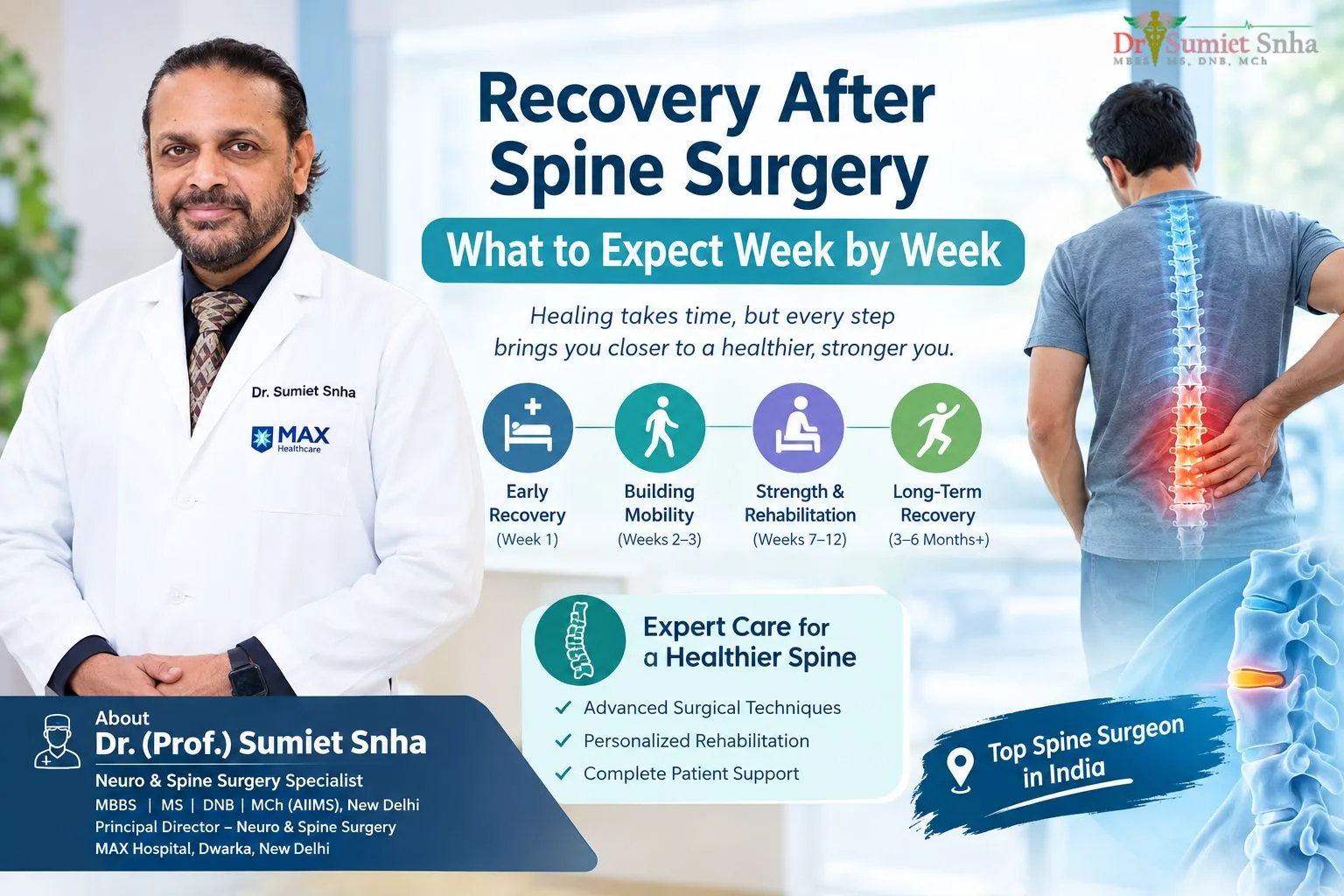
Recovery differs according to the severity of the original condition, the procedure performed and the patient's overall health. Hospital observation may be required after surgery, and the care team will monitor neurological function, pain and wound healing.
A typical recovery plan may involve:
Early recovery: Pain control, monitoring and assistance with safe movement as advised by the care team.
Follow-up appointments: Clinical reviews and imaging when needed to assess healing and spinal stability.
Activity guidance: Temporary restrictions on lifting, driving, exercise or other activities, based on the surgeon's instructions.
Rehabilitation: A tailored rehabilitation plan when appropriate and after the surgeon confirms that specific activities are safe.
Bone fusion takes time, so improvement in pain does not automatically mean the spine has fully healed. Follow the prescribed instructions and attend scheduled reviews.
Contact the treating team promptly if there is a new or worsening neurological symptom, fever, wound drainage or other unexpected change. Severe weakness, breathing difficulty or sudden loss of bladder or bowel control requires emergency assessment.
Can Atlantoaxial Instability Be Treated Without Surgery?
In selected cases, yes. Non-surgical management may be appropriate when the joint is sufficiently stable and there is no concerning neurological involvement. Depending on the cause, this may involve observation, prescribed immobilisation and treatment of an underlying condition.
However, conservative care is not suitable for every type of dislocation. If the joint is significantly unstable or the spinal cord is at risk, delaying recommended treatment may lead to serious harm.
Patients should not attempt neck exercises, traction, forceful stretching or manual manipulation without specialist guidance. The upper cervical spine requires particular care when instability is suspected.
Choosing the Right Specialist for Atlanto-Axial Dislocation Treatment
AAD is a complex condition involving the upper cervical spine. Assessment by a neurosurgeon or spine surgeon experienced in craniovertebral junction disorders can help clarify the diagnosis and available treatment options.
During a consultation, consider asking:
What is causing the dislocation or instability?
Is the spinal cord compressed or at risk?
Is non-surgical treatment appropriate in my case?
If surgery is advised, what procedure is proposed and why?
What are the likely benefits, risks and effects on neck movement?
How long may recovery and follow-up take?
A clear explanation of the diagnosis and treatment plan helps patients and families make informed decisions.
About Dr. Sumiet Snha
Dr. Sumiet Snha is described in the supplied practice information as a neurosurgeon with 30+ years of experience, with training at the All India Institute of Medical Sciences (AIIMS), New Delhi, and an association with MAX Healthcare in Dwarka . Patients concerned about upper cervical spine conditions such as atlanto-axial dislocation should seek an assessment from a suitably qualified specialist who can review their symptoms, examination findings and imaging.
Please confirm the doctor's current title, experience claim and hospital affiliation against the official profile before publishing this section.
Frequently Asked Questions (FAQs)
1. What is atlanto-axial dislocation?
Atlanto-axial dislocation is an abnormal loss of alignment between the first cervical vertebra (C1) and the second cervical vertebra (C2). It may affect neck stability and can place nearby neurological structures at risk.
2. What are the most common atlanto-axial dislocation symptoms?
Symptoms may include upper neck pain, stiffness, headaches, tingling, numbness, limb weakness, balance problems or difficulty walking. Some patients may have few symptoms, so clinical assessment is important when the condition is suspected.
3. What causes atlanto-axial dislocation?
Possible causes include trauma, congenital abnormalities, ligament damage, rheumatoid arthritis and certain infections or other diseases that affect the upper cervical spine.
4. How is atlanto-axial dislocation diagnosed?
Diagnosis may involve a medical history, neurological examination, X-rays, CT scans and MRI. The specialist chooses the appropriate tests based on the suspected cause and the patient's condition.
5. Is atlanto-axial dislocation a serious condition?
It can be serious because the C1–C2 region is close to the spinal cord and important neurological structures. The level of risk depends on the degree of instability, any associated injury and whether neurological structures are affected.
6. Can atlantoaxial instability be treated without surgery?
Some stable cases can be managed with specialist-directed observation, prescribed immobilisation or treatment of the underlying condition. Significant instability or spinal cord risk may require surgery.
7. When does atlanto-axial dislocation require surgery?
Surgery may be considered when there is significant instability, spinal cord compression, progressive neurological symptoms, a serious traumatic injury or a deformity that cannot be managed safely without stabilisation.
8. What is atlantoaxial fixation surgery?
It is a procedure used to stabilise the C1–C2 joint. In suitable cases, screws and rods hold the vertebrae in position while fusion develops over time.
9. Can atlantoaxial fixation surgery affect neck movement?
Yes. Because C1–C2 contributes substantially to neck rotation, fusion at this level can reduce rotational movement. The expected impact depends on the procedure and the patient's anatomy.
10. How long does recovery after atlantoaxial fixation surgery take?
Recovery varies with the condition, procedure, general health and progress of bone healing. The surgeon will advise when to resume activities and whether rehabilitation or additional imaging is needed.
11. What are the risks of atlantoaxial fixation surgery?
Potential risks include infection, bleeding, nerve or blood vessel injury, screw-placement complications, failure of fusion and the possible need for another procedure. Individual risks should be discussed with the treating surgeon.
12. Which specialist should I consult for atlanto-axial dislocation?
A neurosurgeon or spine surgeon experienced in upper cervical spine and craniovertebral junction conditions can assess the diagnosis and explain suitable treatment options.
Conclusion
Atlanto-axial dislocation affects the alignment or stability of the first two cervical vertebrae and can range from a condition that requires monitoring to a serious problem needing surgical stabilisation. The right atlanto axial dislocation treatment depends on the cause, degree of instability, neurological findings and imaging results. Early specialist assessment is particularly important after neck trauma or when symptoms such as weakness, numbness or difficulty walking develop.
If surgery is necessary, atlantoaxial fixation may help stabilise the joint and protect neurological structures. A personalised plan, careful follow-up and adherence to medical advice are important parts of treatment and recovery.


0 Comments