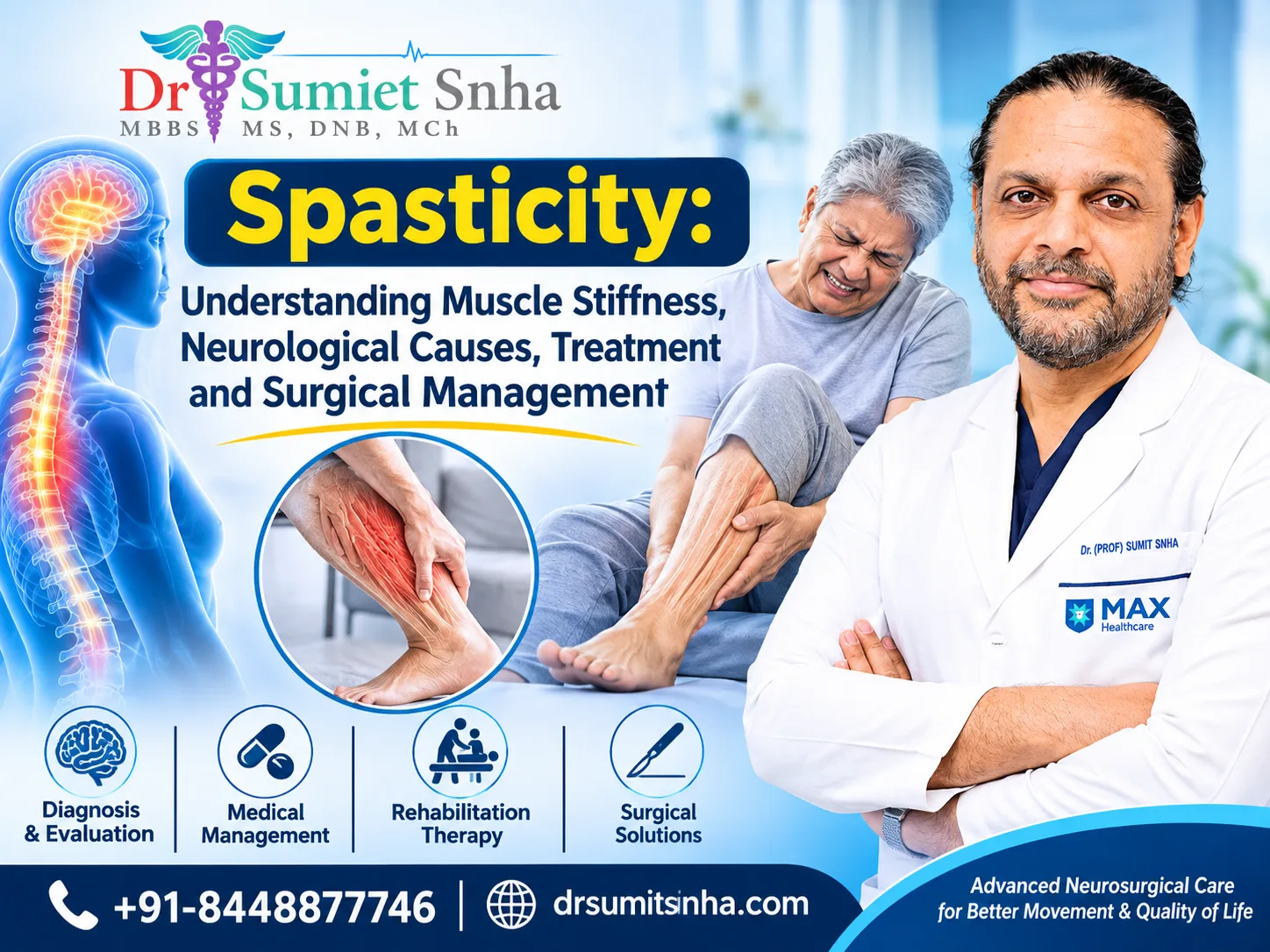
Spasticity Treatment & Surgery in Delhi plays an important role in helping individuals manage neurological movement difficulties caused by abnormal communication between the brain, spinal cord, and muscles. When the nervous system loses its ability to regulate muscle activity properly, certain muscles may remain continuously contracted or respond excessively to movement. This can affect walking patterns, limb coordination, body posture, and the ability to perform routine activities independently.
For some individuals, the condition develops gradually after a neurological illness, while others experience it following a sudden event such as a stroke, accident, or spinal cord injury. The resulting muscle tightness can vary considerably, from occasional stiffness to severe involuntary contractions that interfere with daily functioning.
Managing spasticity requires understanding the neurological pathways involved, identifying the muscles responsible for abnormal movement, and selecting an appropriate treatment strategy. Depending on the patient's condition, management may involve specialised rehabilitation, medication, injections, nerve-related procedures, or neurosurgical intervention.
Dr. (Prof.) Sumiet Snha, an AIIMS-trained neurosurgeon and former Professor of Neurosurgery at AIIMS, New Delhi, has expertise in complex brain, spine, and peripheral nerve conditions. His neurosurgical practice at Max Super Speciality Hospital, Dwarka, New Delhi, includes evaluation and management of selected neurological disorders requiring specialised surgical care.
Understanding the Connection Between the Nervous System and Muscle Movement
Every voluntary movement involves communication between different parts of the nervous system. The brain sends instructions through the spinal cord, which subsequently communicates with peripheral nerves and muscles.
The nervous system also regulates reflexes that help maintain posture and protect the body from sudden movements.
When specific motor pathways become damaged, the balance between signals that activate muscles and those that regulate their activity may be disturbed. This can lead to increased muscle tone and exaggerated reflex responses.
This abnormal response is the underlying mechanism of spasticity.
Unlike ordinary muscle fatigue or temporary stiffness after exercise, spasticity originates from neurological dysfunction. Its severity may change depending on movement, body positioning, emotional stress, pain, or other external factors.
Understanding this mechanism helps specialists distinguish spasticity from other movement abnormalities and select treatments that address the actual neurological problem.
Different Patterns of Spasticity
Spasticity does not affect every patient in the same way. Its distribution depends on which neurological pathways and muscle groups have been affected.
1. Upper Limb Spasticity
Upper limb spasticity affects the shoulders, elbows, wrists, and fingers.
Patients may experience difficulty extending the elbow, opening their hands, or moving their fingers independently. In some cases, the wrist remains bent and the fingers stay tightly curled.
These difficulties can interfere with eating, writing, dressing, personal hygiene, and other activities requiring hand coordination.
2. Lower Limb Spasticity
Lower limb spasticity affects the hips, knees, ankles, and feet.
Some patients develop a stiff-legged walking pattern, while others experience involuntary leg crossing or difficulty placing their feet correctly.
It may also cause problems with standing, maintaining balance, and transferring from a bed to a wheelchair.
3. Generalised Spasticity
When multiple muscle groups are affected, the condition may be described as generalised spasticity.
It can cause widespread stiffness, repeated spasms, difficulty maintaining comfortable positions, and increased dependence on caregivers.
Patients with extensive neurological injuries may require a combination of medication, rehabilitation, assistive devices, and specialised interventions.
Neurological Conditions Associated With Spasticity
Several disorders can interfere with the brain and spinal cord pathways responsible for normal muscle control.
Stroke-Related Movement Difficulties
Following a stroke, some patients develop increased muscle tone on one side of the body. The affected arm may remain bent, while the leg becomes stiff during walking.
This can make rehabilitation challenging and increase the risk of abnormal joint positioning.
Treatment focuses on improving functional movement, managing excessive muscle activity, and preventing secondary complications.
Spasticity Following Spinal Cord Trauma
An injury to the spinal cord may interrupt signals travelling between the brain and muscles.
Depending on the injury level, patients can experience involuntary spasms in their legs, arms, or other affected muscle groups.
The treatment plan may involve medication, stretching, positioning strategies, and specialised interventions for persistent symptoms.
Cerebral Palsy and Childhood Movement Disorders
Children with spastic cerebral palsy may have difficulty developing normal movement patterns.
Muscle tightness can affect walking, sitting balance, limb coordination, and posture.
Early identification is important because treatment planning must consider the child's growth, muscle development, functional goals, and long-term mobility.
Some carefully selected children may benefit from procedures such as Selective Dorsal Rhizotomy (SDR).
Multiple Sclerosis
Multiple sclerosis can damage the protective covering of nerve fibres within the central nervous system.
This may interfere with normal motor signals and contribute to stiffness, weakness, spasms, and walking difficulties.
Treatment requires coordination between neurological care, rehabilitation, and symptom management.
Functional Problems That Can Develop Due to Spasticity
The effects of spasticity extend beyond muscle stiffness. Persistent abnormal muscle activity can gradually affect joint movement and physical independence.
Some common functional challenges include:
Difficulty With Walking: Tight muscles around the hips, knees, and ankles may interfere with normal walking mechanics.
Reduced Hand Function: Increased tone in the fingers and wrist may prevent patients from performing precise movements.
Joint Contractures: Long-standing muscle shortening can restrict the normal range of joint movement.
Pain and Discomfort: Repeated contractions and abnormal positioning may cause persistent discomfort.
Postural Difficulties: Patients may struggle to maintain a balanced sitting or standing position.
Sleep Disturbances: Night-time spasms can interrupt sleep and increase physical discomfort.
Personal Care Difficulties: Severe limb stiffness may make bathing, dressing, and maintaining hygiene more difficult.
These complications highlight why treatment should address both abnormal muscle activity and its impact on everyday functioning.
How Specialists Evaluate Muscle Tone and Neurological Function
A detailed assessment helps determine whether the patient's movement difficulties are caused by spasticity, muscle contractures, weakness, or another neurological problem.
The evaluation generally includes several components.
Clinical Neurological Assessment
The specialist examines muscle strength, reflexes, coordination, sensation, and voluntary movement.
Different muscle groups are assessed to understand the distribution and severity of abnormal muscle tone.
Modified Ashworth Scale
The Modified Ashworth Scale is commonly used to assess resistance encountered when a relaxed limb is moved passively.
It provides a structured way to document muscle tone and monitor changes during treatment.
Functional Movement Evaluation
The doctor or rehabilitation team may assess walking ability, hand function, balance, sitting posture, and joint flexibility.
These observations help establish practical treatment goals beyond simply reducing muscle stiffness.
Imaging and Additional Investigations
Depending on the underlying neurological condition, investigations may include MRI of the brain or spinal cord, CT scans, and other relevant tests.
In selected cases, additional assessments such as gait analysis or electrophysiological studies may provide useful information.
Personalised Medical Management for Spasticity
Treatment should be based on the patient's symptoms, neurological diagnosis, functional limitations, and response to previous therapies.
A patient with stiffness in a single muscle group may require a different approach from someone with severe generalised spasticity.
Targeted Physiotherapy
Physiotherapy helps maintain joint mobility and develop better movement patterns.
Treatment programmes may include:
Passive and active stretching.
Strengthening exercises for appropriate muscle groups.
Balance and coordination training.
Walking practice.
Postural correction.
Functional movement exercises.
Regular rehabilitation is particularly important when patients have reduced mobility or spend long periods in a wheelchair.
Medication-Based Management
Medications may be prescribed to reduce excessive muscle activity and painful spasms.
Common options include:
Baclofen: Helps reduce abnormal muscle reflex activity.
Tizanidine: May help control increased muscle tone.
Dantrolene: Reduces excessive muscle contraction through its action on skeletal muscle.
The selection and dosage depend on the patient's condition and tolerance.
Botulinum Toxin for Specific Muscle Groups
When only selected muscles are excessively active, botulinum toxin injections may provide targeted treatment.
The specialist identifies the muscles responsible for problematic positioning or movement and administers injections accordingly.
This approach may be particularly useful for patients with upper limb stiffness, clenched fingers, or selected lower limb movement abnormalities.
The treatment effect is temporary, and repeat injections may be required.
Intrathecal Baclofen Treatment
Patients with severe generalised spasticity who do not respond adequately to conventional treatment may be evaluated for intrathecal baclofen therapy.
A programmable pump delivers medication into the cerebrospinal fluid through a catheter.
A screening trial is generally performed before permanent implantation to assess the patient's response.
Regular pump maintenance, medication refills, and specialist monitoring are essential parts of this treatment.
Surgical Approaches for Persistent Neurological Muscle Stiffness
Surgical management may be considered when abnormal muscle activity causes substantial functional problems and non-surgical approaches have not provided sufficient improvement.
The choice of surgery depends on the source of abnormal muscle activity, the muscles affected, and the patient's treatment goals.
Selective Dorsal Rhizotomy
Selective Dorsal Rhizotomy is a specialised neurosurgical procedure primarily considered for carefully selected patients with spastic cerebral palsy.
During the procedure, selected sensory nerve rootlets are identified and divided to reduce abnormal reflex activity contributing to lower limb spasticity.
Patient selection is extremely important. A multidisciplinary assessment helps determine whether the procedure is appropriate based on muscle strength, walking ability, neurological findings, and rehabilitation potential.
Selective Peripheral Neurotomy
Selective peripheral neurotomy may be considered when specific peripheral nerve branches contribute to persistent abnormal muscle activity.
The surgeon identifies selected nerve branches and treats them to reduce excessive muscle tone.
The objective is to improve limb positioning and functional movement while preserving useful muscle activity.
Intrathecal Baclofen Pump Implantation
This procedure involves surgically placing a programmable pump that delivers baclofen directly into the intrathecal space.
It may be appropriate for certain patients with severe generalised spasticity who require continuous medication delivery.
The treatment requires long-term device supervision and follow-up.
Orthopaedic Procedures for Fixed Contractures
Not every movement limitation associated with spasticity originates from ongoing neurological muscle activity.
In some patients, prolonged stiffness results in fixed muscle or tendon shortening.
Selected patients may benefit from orthopaedic procedures such as tendon lengthening or other corrective interventions. These are different from neurosurgical procedures and may require collaboration between neurosurgeons and orthopaedic specialists.
The Role of Rehabilitation After Treatment
Treatment does not end after medication, injections, or surgery. Rehabilitation is essential for helping patients use their improved movement abilities.
A structured recovery programme may include:
Muscle Re-education: Helping patients develop better voluntary control of affected muscles.
Range-of-Motion Exercises: Maintaining flexibility and reducing the risk of joint stiffness.
Gait Training: Improving walking patterns, balance, and coordination where possible.
Occupational Therapy: Developing strategies for everyday tasks and greater independence.
Orthotic Support: Using appropriate braces or splints to support limb positioning.
Regular Follow-Up: Monitoring muscle tone, functional progress, and treatment-related complications.
Rehabilitation goals should be realistic and individualised. Reducing muscle tone does not automatically restore lost neurological function, so treatment outcomes vary between patients.
Why Consider Dr. (Prof.) Sumiet Snha for Spasticity Surgery in Delhi?
Complex neurological movement disorders require a thorough understanding of brain pathways, spinal cord anatomy, and peripheral nerve function.
Dr. (Prof.) Sumiet Snha is an AIIMS-trained neurosurgeon with more than 30 years of professional experience in brain, spine, and peripheral nerve surgery.
His professional background includes:
MBBS
MS
DNB
MCh in Neurosurgery from AIIMS, New Delhi
Fellow of the American College of Surgeons (FACS)
He has served as Professor of Neurosurgery at AIIMS and JPNA Trauma Center, New Delhi, and is associated with Max Super Speciality Hospital, Dwarka.
His areas of professional expertise include complex brain surgery, spinal procedures, peripheral nerve surgery, nerve injuries, and specialised neurosurgical management.
For patients experiencing neurological movement difficulties, specialist assessment can help identify whether their symptoms require conservative treatment, rehabilitation, or consideration of a surgical procedure.
The appropriate treatment should always be determined after reviewing the patient's neurological findings and medical history.
Frequently Asked Questions
1. Can spasticity affect only one side of the body?
Yes. Following a stroke or certain brain injuries, spasticity may predominantly affect one side of the body. It can involve the arm, leg, or both.
2. What is the difference between spasticity and muscle contracture?
Spasticity involves increased muscle tone and abnormal reflex activity. A contracture is a fixed restriction in joint movement caused by shortening of muscles, tendons, or other tissues. Both may occur together.
3. Is surgery necessary for severe muscle stiffness?
Not necessarily. The initial treatment may include medication, physiotherapy, and targeted injections. Surgery is considered when specific patients have persistent symptoms that significantly affect their functioning.
4. Can children with cerebral palsy undergo spasticity surgery?
Some children with spastic cerebral palsy may be suitable for procedures such as selective dorsal rhizotomy. A detailed multidisciplinary evaluation is necessary before recommending surgery.
5. How long do botulinum toxin injections work?
The effect generally lasts for several months, although the duration varies according to the muscle treated, dose, and individual response.
6. Can spinal cord injuries cause involuntary muscle spasms?
Yes. Spinal cord injuries can disrupt normal muscle regulation and produce involuntary contractions, increased muscle tone, and painful spasms.
7. Does physiotherapy help after spasticity surgery?
Yes. Rehabilitation is an important part of postoperative management and helps patients work towards improved flexibility, movement control, and functional independence.
8. Where can I consult a neurosurgeon for spasticity treatment in Delhi?
Patients can seek consultation with Dr. (Prof.) Sumiet Snha at Max Super Speciality Hospital, Dwarka, New Delhi, for specialist evaluation of relevant brain, spine, and nerve-related conditions.
Conclusion
Managing neurological muscle stiffness requires more than controlling involuntary contractions. Effective treatment should consider the underlying nervous system injury, the muscles involved, the patient's functional limitations, and the possibility of long-term complications.
Medical management, targeted injections, specialised rehabilitation, and selected surgical procedures provide different approaches for patients with spasticity.
Dr. (Prof.) Sumiet Snha, an AIIMS-trained neurosurgeon and former Professor of Neurosurgery, offers specialised expertise in complex brain, spine, and peripheral nerve conditions at Max Super Speciality Hospital, Dwarka, New Delhi.
Individuals experiencing persistent muscle tightness, abnormal limb positioning, or movement difficulties should seek appropriate medical evaluation to understand the cause and identify suitable treatment options.



0 Comments