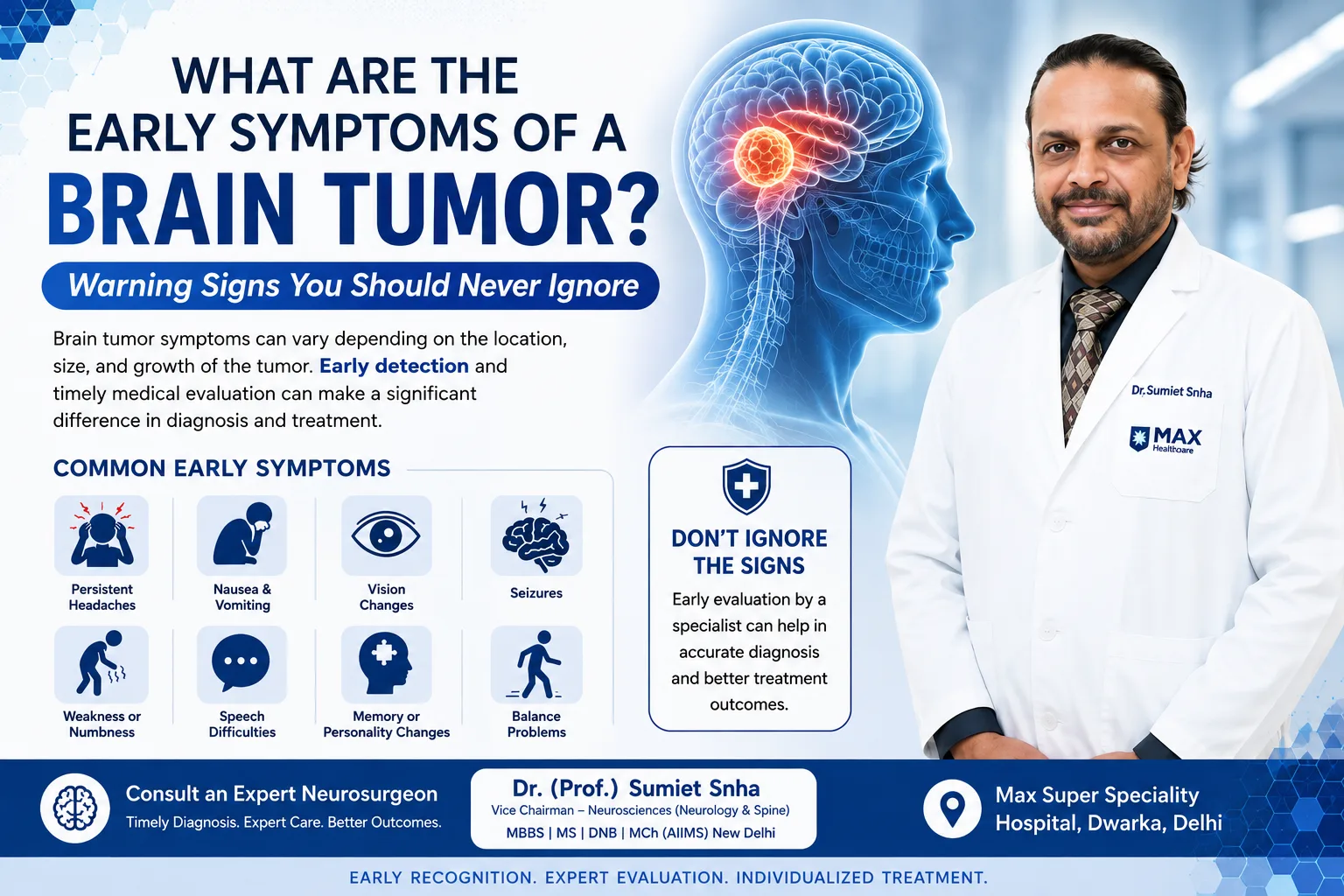
Brain tumors can develop in different parts of the brain, and the symptoms they produce may vary from one person to another. The brain tumor symptoms a person experiences often depend on factors such as the tumor’s location, size, growth rate, and effect on surrounding brain tissue. Some signs may appear gradually, while others can become noticeable more quickly. A persistent or unusual headache does not automatically mean that a brain tumor is present, as headaches have many possible causes. However, recurring symptoms along with changes in vision, balance, speech, memory, strength, or seizures should receive appropriate medical attention. An experienced neurosurgeon can evaluate these symptoms and recommend suitable investigations and treatment. For patients requiring specialized care, brain tumor treatment in Delhi may involve monitoring, medication, surgery, radiation therapy, or other treatments depending on the diagnosis.
What Are Brain Tumor Symptoms?
Brain tumor symptoms are physical, neurological, or cognitive changes that may occur when an abnormal growth develops inside or around the brain. The nature of these symptoms can vary considerably because every tumor does not affect the brain in the same way. As a tumor grows, it may increase pressure within the skull, put stress on nearby brain tissue, or interfere with areas responsible for functions such as movement, vision, speech, memory, and coordination.
How Brain Tumors Affect the Brain
The brain tumor symptoms a person experiences largely depend on the tumor’s location, size, type, and growth pattern. Some people may notice gradual changes over time, while others may develop symptoms more suddenly. Importantly, certain brain tumors can remain small or slow-growing and may cause few noticeable symptoms in their early stages. This is why unexplained or persistent neurological changes should be evaluated by a qualified medical professional.
What Are the Early Symptoms of a Brain Tumor?
The early symptoms of a brain tumor can be subtle and may develop gradually. Because different parts of the brain control different functions, the symptoms can vary significantly from one person to another. Some brain tumor warning signs may be related to increased pressure inside the skull, while others occur when a tumor affects a particular area of the brain.
Persistent or Changing Headaches
Headaches are common and are usually caused by conditions other than a brain tumor. However, a headache that becomes persistent, increasingly severe, or noticeably different from a person's usual pattern may need medical evaluation.
- Headaches that occur more frequently than before
- Headaches that gradually become stronger or more persistent
- A noticeable change in the usual headache pattern
- Headaches that may be worse in the morning in some cases
- Headaches accompanied by vomiting, vision changes, weakness, or other neurological symptoms
Morning headaches can sometimes occur when pressure inside the skull increases. However, having morning headaches alone does not mean a person has a brain tumor.
Nausea and Vomiting
Unexplained or recurring nausea and vomiting can sometimes occur alongside neurological problems. When these symptoms appear with other symptoms of brain tumor, further medical assessment may be appropriate.
- Repeated vomiting without an obvious stomach-related cause
- Nausea that continues or keeps returning
- Vomiting accompanied by persistent headaches
- Nausea or vomiting occurring with vision, balance, or neurological changes
Vision Changes
Changes in vision can occur when certain areas of the brain or the pathways involved in vision are affected. These changes should not automatically be considered signs of a brain tumor because many eye and neurological conditions can cause similar problems.
- Blurred vision
- Double vision
- Difficulty focusing
- Reduced peripheral vision
- Unexplained changes in visual perception
New or persistent vision problems should be assessed by an appropriate healthcare professional.
Seizures
A seizure can be one of the important brain tumor warning signs, particularly when it occurs for the first time in someone without a previous history of seizures. A seizure may happen when abnormal brain activity develops around an affected area.
- A first-time seizure
- Unusual jerking or uncontrolled movements
- Temporary loss of awareness
- Episodes of staring or unresponsiveness
- Confusion or unusual tiredness following a seizure
A new-onset seizure requires prompt medical evaluation to determine its underlying cause.
Weakness or Numbness
A tumor affecting areas responsible for movement or sensation may contribute to weakness or altered sensation. The symptoms may occur on one side of the body depending on which region of the brain is involved.
- Weakness in an arm or leg
- Numbness or reduced sensation
- Difficulty controlling one side of the body
- Problems with everyday movements
- Gradually increasing difficulty using an arm or leg
Sudden weakness or numbness can also occur with other urgent neurological conditions and should receive immediate medical attention.
Speech and Communication Problems
Changes in speech or language may develop when brain regions involved in communication are affected. The exact symptoms can vary depending on the area involved.
- Difficulty finding the right words
- Trouble speaking clearly
- Difficulty understanding spoken language
- Problems reading or writing
- Unusual changes in communication ability
Persistent or progressive speech difficulties should be medically evaluated rather than assumed to be related to a brain tumor.
Memory, Personality, or Behaviour Changes
Some brain tumor symptoms involve changes in thinking, memory, personality, or behaviour. These symptoms can sometimes be gradual and may initially be noticed by family members or close friends.
- Increasing forgetfulness
- Difficulty concentrating
- Problems completing familiar tasks
- Unexplained personality changes
- Unusual changes in mood or behaviour
- Increased confusion or difficulty making decisions
These changes can have many possible causes, so a detailed medical assessment is important.
Balance and Coordination Problems
A tumor affecting areas involved in movement and coordination may cause difficulties with balance or physical control. These symptoms can range from mild unsteadiness to noticeable problems with walking.
- Difficulty maintaining balance
- Frequent stumbling or falls
- Problems coordinating movements
- Difficulty walking normally
- Dizziness associated with other neurological symptoms
- Reduced control over precise movements
Persistent coordination or balance problems may require neurological evaluation and, when indicated, brain tumor diagnosis through appropriate imaging and examinations.
When Should These Symptoms Be Evaluated?
Having one of these symptoms does not necessarily mean that a person has a brain tumor. Many common medical conditions can produce similar complaints. However, symptoms that are new, persistent, progressively worsening, or occurring together should not be ignored. A doctor may recommend a neurological examination and appropriate tests, such as MRI or CT imaging, to identify the underlying cause.
If a brain tumor is diagnosed, treatment depends on factors such as the tumor type, size, location, growth rate, and the patient's overall health. Depending on the individual case, brain tumor treatment may involve monitoring, medicines, surgery, radiation therapy, or other specialized approaches.
Brain Tumor Symptoms Comparison Table
The pattern, severity, and combination of symptoms can provide useful information during a medical assessment. However, individual brain tumor symptoms are not enough to confirm the presence of a tumor. A doctor may consider the patient's medical history, neurological examination, and imaging results when determining the cause.
|
Brain Tumor Symptom |
What It May Indicate |
When Medical Evaluation Is Important |
|
Persistent or changing headache |
May be associated with increased pressure or irritation of surrounding brain structures |
When headaches continue, become more severe, or develop alongside other neurological symptoms |
|
Vision changes |
May involve areas or pathways responsible for visual processing |
When blurred, double, or reduced vision develops without an obvious explanation |
|
Seizures |
May occur when abnormal electrical activity develops in the brain |
A first-time seizure should receive prompt medical assessment |
|
Weakness or numbness |
May suggest involvement of areas controlling movement or sensation |
When weakness or altered sensation is new, progressive, or affects one side of the body |
|
Speech or language difficulties |
May affect brain regions involved in communication |
When new problems with speaking, understanding, reading, or writing persist |
|
Memory or behaviour changes |
May affect cognitive or behavioural functions |
When noticeable changes continue or interfere with normal daily activities |
|
Balance or coordination problems |
May involve areas responsible for movement and coordination |
When walking, balance, or coordination becomes progressively difficult |
Important Note
These brain tumor warning signs can also occur because of migraines, infections, stroke, medication effects, seizure disorders, inner-ear conditions, and other neurological or medical problems. Therefore, experiencing one or more of these symptoms does not automatically mean that a person has a brain tumor.
If symptoms are persistent, unexplained, worsening, or occurring together, a qualified medical professional can determine whether further brain tumor diagnosis is necessary. Appropriate evaluation may include a neurological examination and brain imaging such as an MRI or CT scan when clinically indicated.
What Causes Brain Tumor Symptoms?
The symptoms of a brain tumor are not the same for everyone. A tumor can affect the brain in different ways depending on where it develops and how it behaves over time. Some people may experience noticeable neurological changes, while others may have few symptoms during the early stages.
Several factors can influence the type and severity of brain tumor symptoms, including:
- Tumor location: Different parts of the brain control different functions, such as movement, vision, speech, memory, and coordination. A tumor affecting one area may therefore cause completely different symptoms from a tumor located elsewhere.
- Tumor size: As a tumor becomes larger, it may put pressure on nearby brain structures and contribute to headaches, nausea, neurological changes, or other symptoms.
- Growth rate: Fast-growing tumors may produce symptoms over a shorter period, while slow-growing tumors can sometimes remain unnoticed for a longer time.
- Type of tumor: Different brain tumors have different biological characteristics and may affect surrounding tissues in different ways.
- Pressure on surrounding brain tissue: A growing mass can compress nearby structures and interfere with their normal function.
- Swelling around the tumor: Inflammation or fluid accumulation around a tumor may increase pressure and contribute to neurological symptoms.
Because of these factors, the same type of brain tumor can cause different symptoms in different people. Location is particularly important because even a relatively small tumor can cause significant problems if it develops near an area responsible for an essential brain function. Proper brain tumor diagnosis is therefore important for understanding the cause of symptoms and selecting an appropriate treatment approach.
How Are Brain Tumors Diagnosed?
Recognizing brain tumor symptoms can help a person seek medical attention, but symptoms alone cannot confirm whether a brain tumor is present. A proper brain tumor diagnosis usually involves a combination of medical history, neurological examination, brain imaging, and, when necessary, additional investigations. The exact tests depend on the symptoms and the suspected location and type of tumor.
Neurological Examination
A doctor may perform a detailed neurological assessment to check how different parts of the nervous system are functioning. This may include:
- Reflexes: Checking how the body responds to specific stimuli.
- Muscle strength: Assessing strength in the arms, legs, and other muscle groups.
- Coordination: Evaluating movements, balance, and coordination.
- Vision: Checking visual function and eye movements.
- Speech: Assessing speaking and understanding abilities.
- Memory and cognitive functions: Evaluating attention, memory, reasoning, and other mental functions.
The findings can help the doctor identify whether a particular area of the brain may be affected.
Brain Imaging
Brain imaging plays an important role in identifying abnormal growths and understanding their characteristics.
- MRI brain: An MRI can provide detailed images of the brain and is commonly used to evaluate suspected brain tumors.
- CT scan: A CT scan can provide rapid images of the brain and may be particularly useful in certain urgent situations.
- Contrast imaging: In selected cases, contrast material may be used to make certain abnormalities more visible on imaging.
Imaging can help doctors assess the tumor's location, size, and relationship with surrounding structures.
Additional Tests
Depending on the suspected diagnosis, additional investigations may be recommended.
- Blood tests: These may be performed when clinically relevant to assess overall health or investigate other possible causes of symptoms.
- Biopsy: In selected cases, a tissue sample may be required to determine the exact type and characteristics of a tumor.
- Specialized neurological investigations: Additional tests may be recommended based on the patient's symptoms and clinical findings.
Why Accurate Diagnosis Matters
A headache, seizure, vision problem, or other neurological symptom does not automatically mean that a person has a brain tumor. Similar symptoms can occur with many other conditions. Therefore, brain tumor diagnosis should be based on a complete medical assessment and appropriate imaging rather than symptoms alone.
Once a tumor is confirmed, doctors can determine its type, location, grade, and other important characteristics. This information helps the medical team develop an individualized brain tumor treatment plan, which may include monitoring, medication, surgery, radiation therapy, or other treatments depending on the specific case.
Brain Tumor Treatment Options
Brain tumor treatment in Delhi depends on several factors, including the tumor’s type, grade, location, size, growth rate, and the patient’s overall health. After diagnosis, a specialist may recommend one or a combination of treatments based on the individual case.
Observation and Monitoring
Some small or slow-growing tumors may not require immediate treatment. Doctors may recommend regular follow-up appointments and MRI brain scans to monitor whether the tumor changes over time.
Brain Tumor Surgery
Surgery may be considered when the tumor can be safely removed or reduced. The surgical approach depends on the tumor’s location, size, relationship with important brain structures, and other clinical factors. The goal is to treat the tumor while protecting healthy brain function as much as possible.
Radiation Therapy
Radiation therapy may be recommended for certain types of brain tumors. It can sometimes be used after surgery or as part of a broader treatment plan.
Medicines and Other Treatments
Medicines may help control symptoms such as swelling or seizures. Depending on the tumor type, chemotherapy, targeted therapy, or other specialized treatments may also be considered as part of brain tumor treatment.
When Should You See a Brain Tumor Specialist?
Not every headache, vision problem, or neurological change indicates a brain tumor. However, certain symptoms should be assessed by a medical professional, particularly when they are new, unexplained, persistent, or becoming progressively worse. Early evaluation can help identify the underlying cause and determine whether further neurological testing is needed.
You should consider seeking medical evaluation when you experience:
- New and unexplained symptoms that do not have an obvious cause.
- Persistent or worsening headaches, especially when the pattern or severity changes.
- Seizures, particularly if you have never experienced one before.
- Weakness or numbness, especially when it affects one side of the body.
- New vision or speech changes, such as double vision, difficulty speaking, or understanding words.
- Significant memory, personality, or behavioural changes that persist or interfere with daily activities.
- Progressive balance or coordination problems that make walking or routine movements difficult.
If a brain tumor is suspected or diagnosed, patients seeking brain tumor treatment in Delhi can consider evaluation by a qualified neurosurgeon or neuro-oncology team. The specialist can review symptoms, imaging findings, and other test results before recommending an appropriate treatment approach.
About Dr. (Prof.) Sumiet Snha
Dr. (Prof.) Sumiet Snha, Vice Chairman – Neurosciences (Neurology & Spine), is a neurosurgeon with more than 25 years of experience in neurosurgical practice, teaching, and research. He completed his neurosurgical training at All India Institute of Medical Sciences (AIIMS), New Delhi, and has undertaken further professional training and academic exposure internationally. His areas of professional interest include neurosurgical evaluation, brain and spine conditions, spinal injuries, peripheral nerve surgery, and minimally invasive spine procedures. He has also been involved in teaching and research activities. Patients experiencing persistent neurological symptoms or concerns related to brain tumors may seek an appropriate specialist evaluation for diagnosis and treatment planning.
Frequently Asked Questions FAQs
1. What are the most common brain tumor symptoms?
Common brain tumor symptoms can include persistent or changing headaches, seizures, vision problems, weakness or numbness, speech difficulties, balance problems, memory issues, and changes in behaviour or personality. The symptoms depend largely on the tumor’s location, size, type, and growth pattern.
2. Is a persistent headache always a sign of a brain tumor?
No. Most headaches are not caused by brain tumors and can result from many common conditions. However, a headache that is new, persistent, progressively worsening, or noticeably different from your usual pattern may need medical evaluation, particularly if other neurological symptoms occur.
3. Can a brain tumor cause morning headaches?
In some cases, a brain tumor may be associated with headaches that are more noticeable in the morning. This can occur when pressure inside the skull increases. However, morning headaches have many possible causes and do not by themselves indicate a brain tumor.
4. Can brain tumors cause dizziness and balance problems?
Yes, certain brain tumors may affect areas responsible for balance, movement, and coordination. A person may experience unsteadiness, difficulty walking, dizziness, or problems coordinating movements. Persistent or progressively worsening balance problems should be medically assessed.
5. Can vision problems be an early symptom of a brain tumor?
Vision changes can occur when a tumor affects areas of the brain or pathways involved in visual processing. Possible symptoms include blurred vision, double vision, difficulty focusing, or reduced peripheral vision. However, many eye and neurological conditions can cause similar problems.
6. Can a brain tumor cause seizures?
Yes. Some brain tumors can trigger abnormal electrical activity in the brain, resulting in seizures. A seizure can sometimes be an early brain tumor warning sign, particularly in a person without a previous seizure history. A first-time seizure requires prompt medical assessment.
7. How is a brain tumor diagnosed?
Brain tumor diagnosis generally begins with a medical history and neurological examination. Depending on the findings, doctors may recommend an MRI brain or CT scan. In selected cases, a biopsy may be performed to determine the tumor’s exact type and characteristics.
8. Does every brain tumor require surgery?
No. Surgery is not necessary for every brain tumor. Treatment depends on factors such as the tumor’s type, size, location, grade, growth rate, symptoms, and the patient's overall health. Some tumors may be monitored, while others require active treatment.
9. What treatments are available for brain tumors?
Treatment options can include observation, surgery, radiation therapy, medicines, chemotherapy, targeted therapy, or a combination of approaches. The appropriate treatment depends on the specific tumor and the individual patient's condition. A specialist develops the treatment plan after completing the necessary evaluation.
10. When should I see a neurosurgeon for brain tumor symptoms?
Consider medical evaluation when symptoms are new, unexplained, persistent, progressively worsening, or occur together. Seizures, significant weakness or numbness, new speech or vision problems, and major changes in memory or behaviour also warrant appropriate neurological assessment.
11. What is brain tumor treatment in Delhi likely to involve?
Brain tumor treatment in Delhi generally begins with confirming the diagnosis and understanding the tumor’s type, location, size, and other characteristics. A neurosurgeon or multidisciplinary team may then recommend monitoring, surgery, radiation therapy, medicines, or other treatments according to the individual case.
12. Can brain tumor symptoms be treated without surgery?
In some cases, yes. Depending on the tumor, doctors may recommend observation, medicines, radiation therapy, chemotherapy, targeted treatment, or other non-surgical approaches. However, some tumors may require surgery to obtain tissue for diagnosis, relieve pressure, or remove as much of the tumor as safely possible.
Conclusion
Recognizing brain tumor symptoms can help people understand when an unusual neurological change may need medical attention. Headaches, seizures, vision problems, weakness, speech difficulties, memory changes, and balance issues can occur for many different reasons and do not automatically indicate a brain tumor. Symptoms also vary depending on the tumor’s location, size, type, and growth pattern. Persistent, unexplained, or progressively worsening symptoms should be evaluated by a qualified medical professional. For patients considering brain tumor treatment in Delhi, timely diagnosis can help doctors develop an appropriate, individualized treatment plan based on the patient's specific condition and needs.




0 Comments