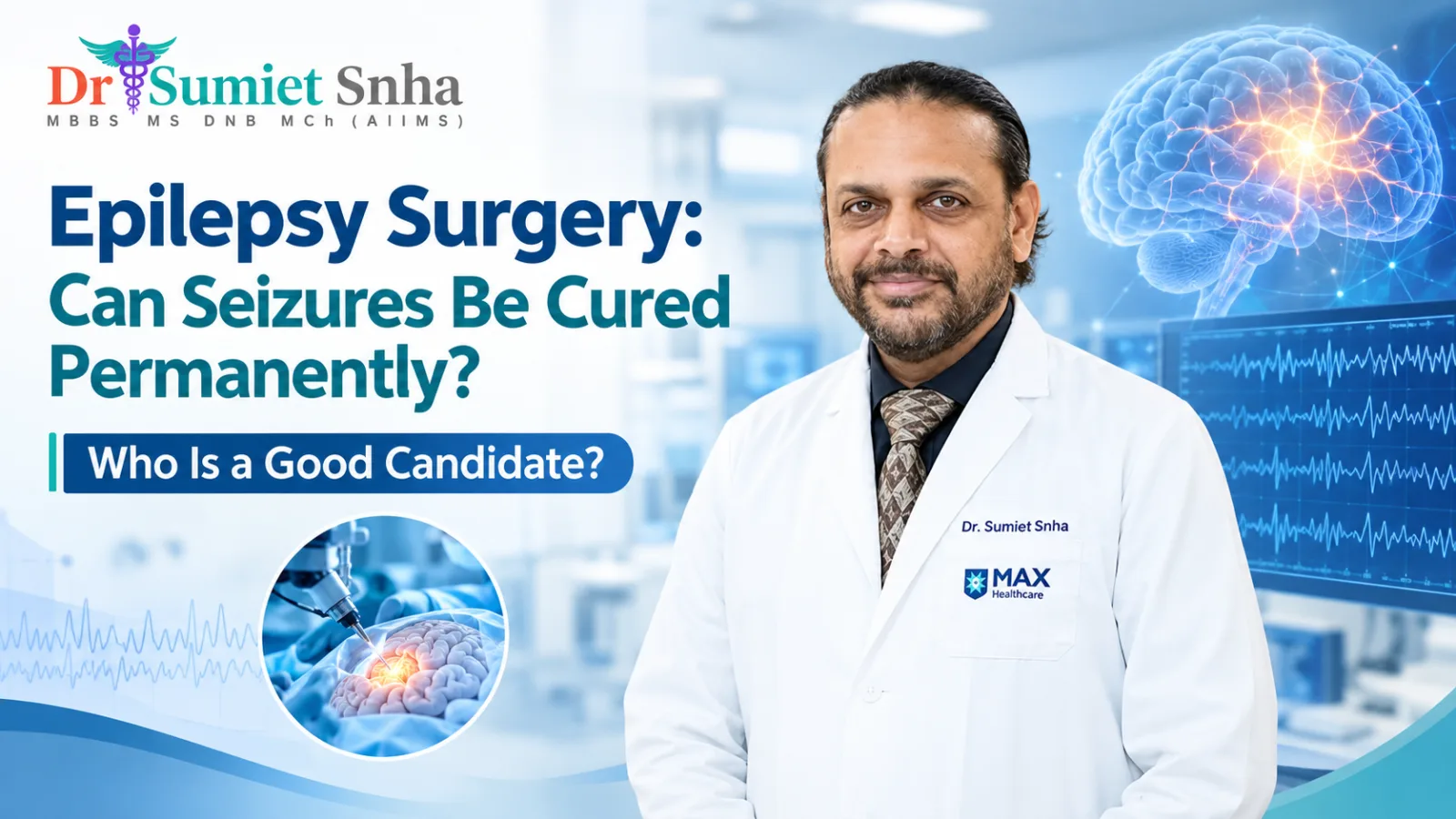
Can epilepsy be cured permanently with surgery? Epilepsy surgery can provide long-term seizure freedom for carefully selected patients, particularly when seizures arise from a clearly identified area of the brain that can be treated safely. However, surgery is not suitable for everyone, and “cure” depends on the underlying cause, seizure type, location of the seizure focus, and how completely it can be treated.
For people with drug-resistant epilepsy, continuing seizures despite appropriate medicines can affect independence, education, employment, safety, and overall quality of life. In such situations, an epilepsy surgery evaluation may help determine whether surgery or another advanced treatment could reduce or stop seizures.
This article explains who may benefit from epilepsy surgery, how doctors assess candidacy, what procedures are available, and what patients can realistically expect after treatment.
What Is Epilepsy Surgery?
Epilepsy surgery refers to a group of surgical procedures used to control seizures by treating the brain region or neural network responsible for abnormal electrical activity.
The goal is not simply to perform brain surgery. The first priority is to understand:
Where the seizures begin
What type of epilepsy the patient has
Whether the seizure-producing area can be safely treated
Whether removing or disconnecting that area is likely to affect important brain functions
Whether another treatment would be safer or more appropriate
Depending on the patient's condition, treatment may involve removing a seizure-producing brain region, disconnecting abnormal pathways, or using a neuromodulation procedure rather than removing brain tissue.
Can Epilepsy Surgery Cure Seizures Permanently?
In some patients, surgery can result in complete and long-term seizure freedom. However, no responsible specialist should promise that every patient will be permanently cured.
The outcome depends on several factors, including:
The underlying cause of epilepsy
The location of the seizure focus
Whether one seizure-producing region can be identified
The relationship of that region to speech, movement, memory, and vision
The type of surgery performed
The patient's individual neurological condition
The completeness of treatment of the seizure-producing area
Some patients become seizure-free after surgery and may eventually have their medicines reduced under specialist supervision. Others may experience a significant reduction in seizure frequency without complete seizure freedom.
Therefore, epilepsy surgery success should be evaluated individually rather than through a single percentage or guarantee.
When Is Epilepsy Considered Drug-Resistant?
One of the most important reasons for considering surgery is drug-resistant epilepsy, sometimes called medically refractory epilepsy.
Generally, epilepsy may be considered drug-resistant when seizures continue despite appropriate trials of suitable anti-seizure medications.
This does not mean that every person who has had one or two medications should immediately undergo surgery.
A specialist may need to determine:
Whether the diagnosis of epilepsy is correct
Whether the seizure type has been accurately identified
Whether appropriate medications have been tried
Whether the medicines were taken consistently and at suitable doses
Whether the patient has an epilepsy syndrome that responds poorly to medication
Whether there is a potentially treatable structural abnormality
If seizures continue despite appropriate medical treatment, an epilepsy surgery evaluation should be considered rather than simply continuing unsuccessful medication trials indefinitely.
Who Is a Good Candidate for Epilepsy Surgery?
There is no single test that determines whether someone is a surgical candidate.
A person may be a good candidate when doctors can identify a seizure-producing area that can be treated without causing unacceptable neurological problems.
Potential candidates may include patients who have:
1. Drug-Resistant Epilepsy
Persistent seizures despite appropriate anti-seizure medications are an important reason to seek specialist evaluation.
2. A Clearly Identifiable Seizure Focus
Surgery is generally more straightforward when investigations consistently identify where seizures begin.
For example, some patients have seizures originating from a specific part of the temporal lobe.
3. A Treatable Structural Abnormality
Certain patients may have abnormalities such as:
Focal scar tissue
Certain developmental brain abnormalities
Selected benign or low-grade tumors
Vascular abnormalities
Other localized structural lesions associated with seizures
Whether surgery is appropriate depends on the exact location and relationship to important brain functions.
4. A Seizure Focus Away From Critical Brain Functions
If the seizure-producing region can be safely removed or disconnected without unacceptable impairment of speech, movement, memory, vision, or other important functions, surgery may be considered.
Who May Not Be a Suitable Candidate?
Epilepsy surgery may not be appropriate when the seizure source cannot be adequately identified or when treating it would create an unacceptable neurological risk.
Surgery may be difficult or unsuitable when:
Seizures arise from multiple unrelated areas
The seizure network involves essential brain functions
Investigations provide conflicting information
The underlying epilepsy is generalized rather than surgically localized
The expected benefit is too small compared with surgical risk
The patient's overall condition makes surgery unsafe
Importantly, not being a candidate for resective epilepsy surgery does not mean that there are no treatment options.
Other approaches, including neuromodulation and specialized medical treatment, may be considered depending on the patient's condition.
How Is Epilepsy Surgery Candidacy Evaluated?
An epilepsy surgery evaluation is usually comprehensive. Doctors combine information from different investigations rather than relying on one scan or test.
Common assessments can include:
The exact combination of investigations varies from one patient to another.
What Types of Epilepsy Surgery Are Available?
There is no single operation called “epilepsy surgery.” Several surgical approaches may be used.
Resective Surgery
The surgeon removes the brain tissue responsible for generating seizures when it can be safely identified.
This approach may be considered for selected forms of focal epilepsy.
Temporal Lobe Epilepsy Surgery
The temporal lobe is a common source of focal seizures. In carefully selected patients, surgery targeting the seizure-producing temporal lobe region can provide substantial seizure control.
However, detailed assessment of memory, language, and other neurological functions is essential before surgery.
Lesion-Directed Surgery
If imaging identifies a structural lesion responsible for seizures, surgery may sometimes target that abnormality.
Disconnection Procedures
Instead of removing brain tissue, certain procedures disconnect abnormal pathways through which seizures spread.
Neuromodulation
For patients who are not suitable for conventional resective surgery, selected neuromodulation treatments may be considered. These treatments aim to reduce seizure activity through controlled electrical stimulation.
The appropriate procedure depends on the type and distribution of epilepsy.
What Happens Before Epilepsy Surgery?
Before surgery, patients generally undergo a detailed evaluation to balance potential benefits against possible risks.
The team may review:
Seizure history
Previous medications and treatment response
EEG findings
MRI and other brain imaging
Cognitive and neuropsychological results
Speech and language function
Memory
Motor function
General medical fitness
In selected cases, additional monitoring or invasive investigations may be required.
The purpose is to answer one critical question:
Can the seizure-producing area be treated effectively while preserving important brain functions?
What Is Recovery Like After Epilepsy Surgery?
Recovery varies according to the type and extent of the procedure.
Some patients may experience temporary symptoms such as fatigue, headache, or swelling-related discomfort following surgery. Hospital stay and return to normal activities depend on the specific operation and individual recovery.
After discharge, patients usually require:
Regular neurological follow-up
Continued seizure monitoring
Medication management
Assessment of neurological recovery
Rehabilitation when required
Long-term follow-up for seizure control
Anti-seizure medicines should never be stopped suddenly after surgery. Even when a patient becomes seizure-free, medication changes should be made only under the treating specialist's guidance.
Epilepsy Surgery vs Medication: What Is the Difference?
The choice should not be viewed as medicine versus surgery. For suitable patients with drug-resistant epilepsy, surgery may become an important treatment option after appropriate evaluation.
What Is the Role of an Epilepsy Surgery Specialist?
Epilepsy surgery requires careful decision-making because the brain controls essential functions such as movement, speech, memory, sensation, vision, and behaviour.
An experienced epilepsy surgery specialist evaluates the patient's complete clinical and investigative picture rather than recommending an operation based on a single MRI finding.
A multidisciplinary epilepsy team may include:
Neurosurgeons
Neurologists/epileptologists
Neurophysiologists
Neuroradiologists
Neuropsychologists
Rehabilitation specialists
Other specialists when required
This team-based approach helps determine whether surgery is appropriate and which treatment may offer the best balance between seizure control and neurological safety.
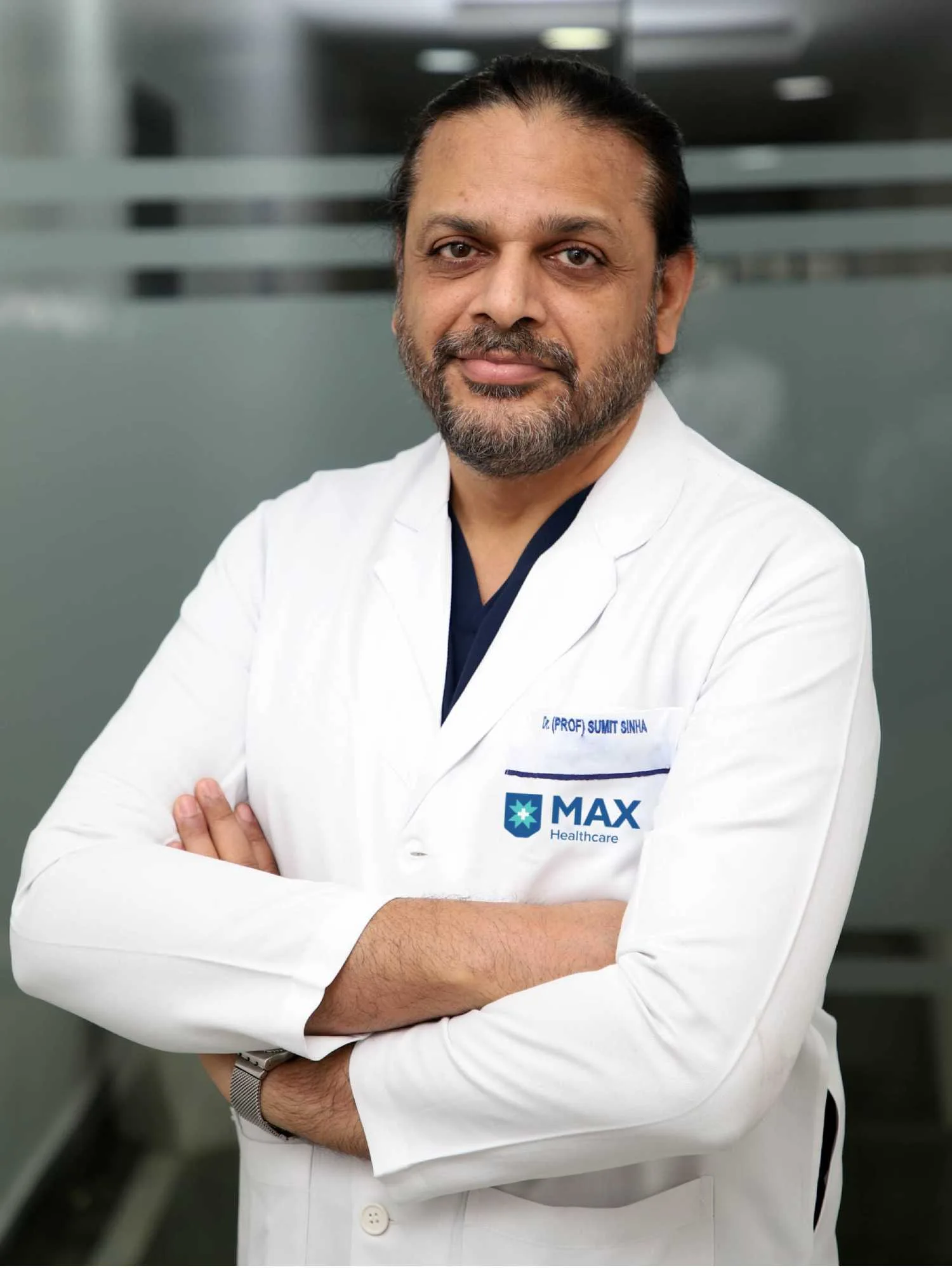
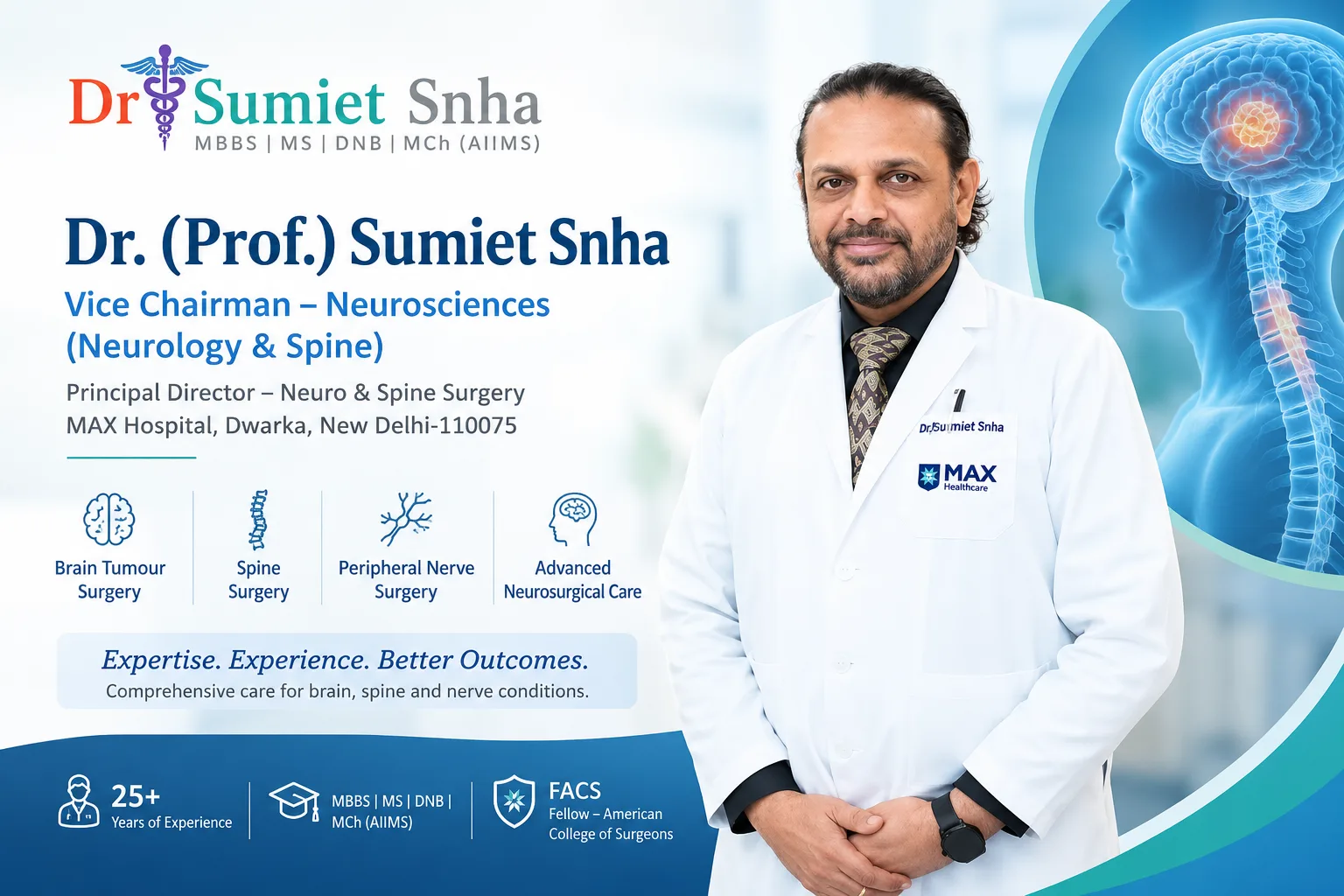
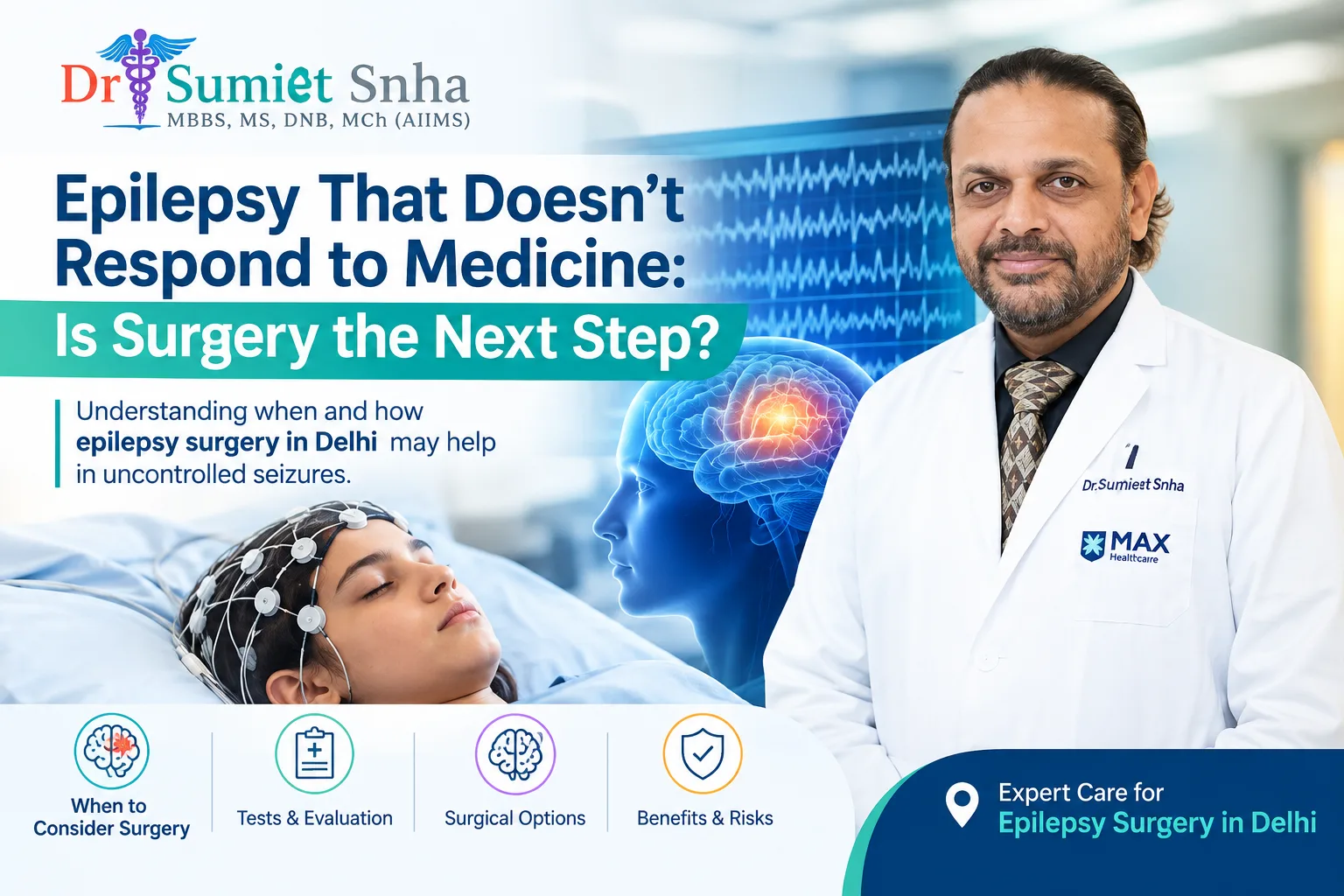
About Dr. (Prof.) Sumiet Snha
Dr. (Prof.) Sumiet Snha is a senior neurosurgeon with 30+ years of experience in neurosurgery and advanced training from All India Institute of Medical Sciences (AIIMS), New Delhi. He has served as faculty at AIIMS and has undertaken professional training and academic exposure with internationally recognised neurosurgical experts, including Prof. Hiroshi Sano in Japan, Prof. Louise Vialle in Brazil, and Prof. B Meyer in Germany.
His professional background includes experience in complex neurosurgery, brain and spine surgery, minimally invasive spine procedures, neurotrauma, and peripheral nerve surgery. He has also been involved in teaching, research, and professional organisations, including the Neurotrauma Society of India and the Indian Society of Peripheral Nerve Surgery.
Dr. (Prof.) Sumiet Snha has expertise in epilepsy surgery, along with other advanced brain surgery procedures, including selected vascular neurosurgical procedures, endoscopic brain surgery, pediatric neurosurgery, and endoscopic treatment of hydrocephalus.
For patients considering epilepsy surgery in Delhi/NCR, the appropriate treatment should be decided after a detailed neurological and neurosurgical assessment.
Frequently Asked Questions About Epilepsy Surgery
1. Can epilepsy surgery permanently stop seizures?
Yes, some carefully selected patients can achieve long-term seizure freedom after surgery. However, outcomes vary, and permanent seizure control cannot be guaranteed for every patient.
2. Is epilepsy surgery safe?
Epilepsy surgery can be performed safely in appropriately selected patients, but every brain operation has potential risks. Detailed pre-surgical testing helps reduce avoidable neurological risks.
3. Who needs epilepsy surgery?
Patients with drug-resistant epilepsy, particularly when seizures originate from a clearly identifiable and safely treatable brain region, may benefit from an epilepsy surgery evaluation.
4. Can children undergo epilepsy surgery?
Yes. Selected children with severe or drug-resistant epilepsy may undergo epilepsy surgery when investigations identify a suitable seizure focus and the expected benefits outweigh the risks.
5. Can epilepsy surgery reduce the need for medicines?
In some patients who achieve sustained seizure control, anti-seizure medicines may eventually be reduced. However, medication changes must always be supervised by the treating specialist.
6. What tests are required before epilepsy surgery?
Evaluation may include video EEG, brain MRI, PET or SPECT imaging, neuropsychological testing, functional mapping, and sometimes intracranial EEG, depending on the individual case.
7. What is drug-resistant epilepsy?
Drug-resistant epilepsy generally refers to epilepsy in which seizures continue despite appropriate trials of suitable anti-seizure medications. Such patients may need evaluation at a specialised epilepsy centre.
8. Is temporal lobe epilepsy curable with surgery?
Some patients with focal temporal lobe epilepsy can achieve excellent long-term seizure control after appropriately selected surgery. Careful assessment of memory, language, and other functions is essential.
9. What happens if epilepsy surgery is not possible?
If removing the seizure focus is unsafe or unsuitable, doctors may consider other treatments, including medication optimisation, neuromodulation, dietary approaches in selected patients, or other specialised therapies.
10. How long does epilepsy surgery recovery take?
Recovery depends on the procedure, the patient's general health, and the brain region treated. Hospitalisation and return to normal activities vary between patients and should be discussed individually.
11. Can a person live normally after epilepsy surgery?
Many patients experience significant improvement in seizure control and quality of life after successful treatment. Ongoing medical follow-up remains important even after seizures become well controlled.
12. When should I consult a specialist about epilepsy surgery?
If seizures continue despite appropriate anti-seizure medicines, a specialist evaluation should be considered. Early referral can help determine whether surgery or another advanced treatment may be appropriate.
Conclusion
Epilepsy surgery can provide long-term seizure freedom for selected patients, but it is not a universal cure for every form of epilepsy. The most important step is identifying where seizures begin and determining whether that region can be treated safely.
Patients with drug-resistant epilepsy, particularly those with a well-localised seizure focus, should discuss an epilepsy surgery evaluation with an experienced multidisciplinary team. A detailed assessment using EEG, imaging, neuropsychological testing, and other investigations can help determine the safest and most appropriate treatment pathway.
With extensive neurosurgical experience, academic training at AIIMS New Delhi, and expertise across complex brain and spine procedures, Dr. (Prof.) Sumiet Snha provides specialist evaluation for patients requiring advanced neurosurgical care. The appropriate treatment should always be based on an individual patient's diagnosis, investigations, neurological condition, and expected risk-benefit profile.
0 Comments