
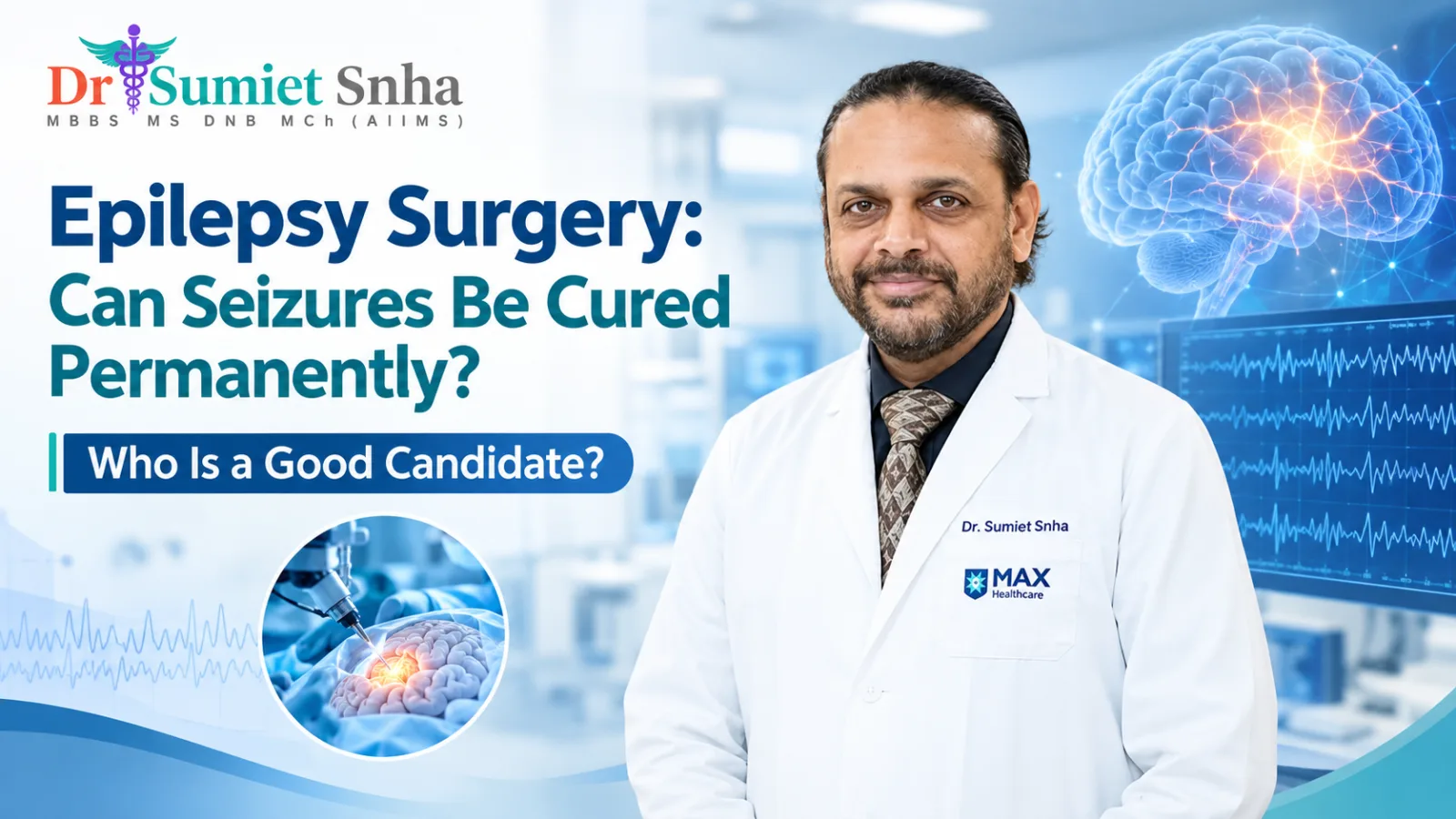
When seizures continue even after appropriate epilepsy medicines, it can be frustrating and worrying for both the patient and family. But uncontrolled seizures do not necessarily mean that there are no further treatment options. In some people with drug-resistant epilepsy, a detailed evaluation can determine whether surgery or another advanced treatment may be appropriate.
Epilepsy surgery in Delhi may be considered for carefully selected patients whose seizures remain uncontrolled despite appropriate medication. However, surgery is not automatically the next step. Doctors first need to understand where the seizures begin, what is causing them, and whether the affected brain area can be treated safely.
What Does Drug Resistant Epilepsy Mean?
Epilepsy is generally treated first with antiseizure medicines. Many people achieve good seizure control with medication. However, some continue to experience seizures despite appropriate treatment.
Drug-resistant epilepsy is a clinical situation in which seizures remain uncontrolled despite appropriate medication trials. The International League Against Epilepsy has established a specific definition of drug-resistant epilepsy and emphasizes the importance of identifying suitable patients for further evaluation.
Persistent seizures should not simply be accepted as something a patient has to live with. A specialist may review:
- Whether the original diagnosis is correct
- The type of seizures being experienced
- Which medicines have been tried
- Medication dose and treatment duration
- Whether medicines were tolerated properly
- EEG and brain imaging findings
- The effect of seizures on daily life and safety
Patients should never stop or change antiseizure medication on their own.
When Should Someone Consider an Epilepsy Surgery Evaluation?
The word "surgery" can sound frightening, but being referred for an epilepsy surgery evaluation does not mean that a patient will definitely undergo an operation.
The purpose of an evaluation is to determine whether there is a treatable source of seizures and whether intervention could be performed with an acceptable level of risk.
An epilepsy surgery evaluation may be considered when:
- Seizures continue despite appropriate antiseizure medicines
- Seizures interfere with work, education, relationships, or independence
- Seizures create significant safety concerns
- Brain imaging shows a potentially treatable abnormality
- Tests suggest that seizures arise from a specific area of the brain
- Medication side effects are difficult to tolerate
- The epilepsy significantly affects quality of life
The ILAE has published recommendations concerning timely referral of people with drug-resistant epilepsy for specialist surgical evaluation.
Importantly, referral for evaluation is a decision-making step, not a commitment to surgery.
What Happens During a Presurgical Epilepsy Evaluation?
Before recommending epilepsy surgery, doctors need detailed information about the patient's seizures and brain function.
The evaluation may involve several tests depending on the individual case.
Video EEG Monitoring
Video EEG records electrical activity in the brain while simultaneously recording the patient's behavior and physical symptoms. This helps doctors compare what a seizure looks like clinically with the electrical changes occurring in the brain.
MRI Brain
An epilepsy-focused MRI may identify structural abnormalities that could be associated with seizures. These findings can sometimes help doctors determine whether a particular area of the brain is responsible for seizure activity.
Neuropsychological Testing
Memory, attention, language, reasoning, and other cognitive functions may be assessed. These results can provide additional information about how epilepsy is affecting brain function and help with surgical planning.
Functional Imaging
In selected patients, doctors may recommend functional imaging such as PET or SPECT. These tests can provide additional information when the seizure focus is difficult to identify.
Intracranial EEG
Some patients require more detailed monitoring using electrodes placed inside or on the surface of the skull. This is generally considered when non-invasive tests do not provide enough information.
The ILAE curriculum identifies video EEG, functional neuroimaging, neuropsychological testing, and intracranial electrode planning among important components of advanced presurgical evaluation.
Common Tests Used Before Epilepsy Surgery
|
Evaluation |
What it helps doctors understand |
|
Video EEG |
Seizure activity and possible seizure onset |
|
MRI Brain |
Structural abnormalities or lesions |
|
PET or SPECT |
Functional or metabolic changes associated with seizure activity |
|
Neuropsychological testing |
Memory, language, thinking, and cognitive functions |
|
Functional mapping |
Important brain areas involved in movement or language |
|
Intracranial EEG |
More precise localization when non-invasive tests are inconclusive |
Not every patient needs every test. The evaluation is tailored according to the person's seizure history, previous test results, age, general health, and suspected seizure origin.
What Types of Epilepsy Surgery Are Available?
Epilepsy surgery is not a single type of operation. The appropriate treatment depends on where seizures begin and whether that area can be safely treated.
Resective Surgery
If doctors identify a well-defined seizure-producing area that can be removed without causing unacceptable neurological problems, resective surgery may be considered.
Minimally Invasive or Ablative Treatment
Selected patients may be suitable for procedures that target the seizure-producing tissue through less invasive approaches. The suitability of these techniques depends heavily on the location and characteristics of the seizure focus.
Disconnective Procedures
In certain epilepsy conditions, doctors may disconnect pathways through which abnormal electrical activity spreads rather than removing a large amount of brain tissue.
Neurostimulation
When removing the seizure-producing area is not suitable, neuromodulation may be considered in selected patients. Approaches can include vagus nerve stimulation and other forms of neurostimulation.
The ILAE recognizes resective, ablative, palliative, and neuromodulatory approaches as part of the broader epilepsy surgery field.
Epilepsy Surgery vs Continuing Medication Alone
|
Factor |
Medication-based treatment |
Surgical evaluation |
|
Main purpose |
Control seizures using medicines |
Determine whether an intervention may address the seizure source |
|
Suitable for |
Many people with epilepsy |
Selected people, particularly those with drug-resistant epilepsy |
|
Main assessment |
Clinical history and medication response |
Detailed EEG, imaging, cognitive and neurological assessment |
|
Brain procedure |
No surgery required |
Surgery may or may not ultimately be recommended |
|
Decision |
Based on response and tolerance |
Based on seizure localization, safety, and expected benefit |
This comparison does not mean that surgery should replace medication for everyone. Some patients may continue to benefit from medicines alone, while others may require a different treatment strategy.
Is Epilepsy Surgery Safe?
Like any brain procedure, epilepsy surgery can have risks. The risks vary significantly depending on the operation and the location of the seizure-producing area.
Potential concerns can include neurological changes, memory or language problems, visual problems, bleeding, infection, or other procedure-specific complications.
This is why careful presurgical evaluation is so important. Doctors need to balance the potential benefit of reducing seizures against the possibility of affecting important brain functions.
A multidisciplinary approach is commonly used in complex epilepsy care, involving specialists such as neurologists, neurosurgeons, neurophysiologists, neuroradiologists, and other professionals as appropriate. NICE guidance similarly emphasizes multidisciplinary assessment for drug-resistant epilepsy interventions.
What Determines Whether Surgery Is Appropriate?
There is no single test that determines whether someone should have epilepsy surgery.
Doctors may consider:
- Type and frequency of seizures
- Response to previous medicines
- EEG findings
- MRI findings
- Location of seizure onset
- Relationship of the seizure focus to important brain functions
- Memory and language function
- Age and general health
- Previous neurological history
- Expected benefits and potential risks
The goal is not simply to find an abnormality on a scan. Doctors need to establish whether that abnormality is actually related to the patient's seizures and whether treating it can be done safely.
What If Surgery Is Not Suitable?
Not every person with drug-resistant epilepsy is a candidate for resective surgery.
If surgery is unsuitable, a specialist may consider other approaches depending on the individual's condition, such as:
- Adjusting or optimizing antiseizure medicines
- Considering other appropriate medication combinations
- Neurostimulation
- Vagus nerve stimulation
- Dietary therapies in selected patients
- Other advanced epilepsy treatments
- Continued monitoring and seizure safety planning
Therefore, an epilepsy surgery evaluation can still be useful even when surgery is ultimately not recommended. It can help clarify the diagnosis and identify other possible treatment strategies.
What Should Patients Ask Before Considering Epilepsy Surgery?
Before making a treatment decision, patients and families may want to ask:
- Where do my seizures appear to begin?
- Do I meet the criteria for drug-resistant epilepsy?
- Which tests are necessary?
- Is the suspected seizure focus near an important brain function?
- What treatment options are available?
- What are the possible benefits and risks?
- Is minimally invasive treatment appropriate?
- What are the alternatives if surgery is not recommended?
Having these questions answered clearly can make a complex treatment decision easier to understand.
About Dr. (Prof.) Sumiet Snha
Dr. (Prof.) Sumiet Snha is a neurosurgeon with more than 25 years of experience in neurosurgery. He is currently associated with MAX Hospital, Dwarka, New Delhi, as Principal Director – Neuro & Spine Surgery.
He completed his MBBS, MS, DNB, and MCh training at AIIMS, New Delhi, and has previously served as Professor in the Department of Neurosurgery at AIIMS and as Director of Neuro & Spine Surgery at Paras Health, Gurugram.
His professional experience includes complex neurosurgical procedures, brain and spine surgery, minimally invasive spine procedures, neurotrauma, and peripheral nerve surgery. His profile also includes teaching, research, and professional involvement in areas related to neurotrauma and spinal care.
For patients considering advanced treatment for uncontrolled seizures, an individualized assessment is important. The decision regarding epilepsy surgery depends on seizure type, investigations, brain anatomy, neurological function, and the balance between potential benefits and risks.
Frequently Asked Questions
1. What is drug-resistant epilepsy?
Drug-resistant epilepsy refers to epilepsy in which seizures continue despite appropriate treatment with antiseizure medicines. Such patients may require further specialist evaluation to explore additional treatment options.
2. When should someone be referred for epilepsy surgery evaluation?
People with persistent seizures despite appropriate antiseizure medicines may benefit from referral to a specialized epilepsy center for evaluation. Referral does not automatically mean that surgery will be performed.
3. Does epilepsy surgery mean medicines have completely failed?
Not necessarily. Surgery may be considered when seizures remain inadequately controlled despite appropriate treatment. Some patients may continue medication before and after surgery depending on their individual circumstances.
4. What tests are performed before epilepsy surgery?
Evaluation can include video EEG, brain MRI, neuropsychological testing, functional imaging, and, in selected cases, intracranial EEG. The exact combination depends on the individual patient.
5. Can epilepsy surgery completely stop seizures?
Some carefully selected patients can achieve substantial seizure reduction or seizure freedom after appropriate surgery, but outcomes vary. No responsible clinician can guarantee a particular result for every patient.
6. Is epilepsy surgery suitable for children?
Children with drug-resistant epilepsy may also undergo specialized surgical evaluation. Decisions require particular attention to brain development, cognitive function, seizure type, and the potential impact of ongoing seizures.
7. What happens if doctors cannot identify where seizures begin?
Additional investigations may sometimes be needed. If a safe surgical target cannot be identified, other treatment options, including selected neuromodulation approaches, may be considered.
8. Are minimally invasive options available for epilepsy?
Certain minimally invasive or ablative treatments are available for selected patients. Whether such an approach is appropriate depends on seizure location, brain anatomy, and the findings of presurgical evaluation.
9. What is video EEG monitoring?
Video EEG combines continuous recording of brain electrical activity with video observation of the patient. It helps specialists correlate seizure symptoms with electrical changes in the brain.
10. What happens if epilepsy surgery is not possible?
Treatment can still continue. Depending on the individual's condition, doctors may consider medication optimization, neurostimulation, dietary therapies, or other specialized approaches.
11. How long does an epilepsy surgery evaluation take?
The duration varies from patient to patient. Some evaluations require several tests and specialist consultations, particularly when the seizure origin is difficult to identify.
12. Where can I get an epilepsy surgery evaluation in Delhi?
Patients seeking epilepsy surgery in Delhi should look for a specialist or multidisciplinary epilepsy team capable of performing comprehensive seizure assessment and presurgical evaluation. Treatment should be based on individual clinical findings rather than location alone.
Conclusion
When epilepsy does not respond adequately to medicines, surgery can be an important treatment pathway for some carefully selected patients. However, epilepsy surgery in Delhi or elsewhere should never be approached as a decision based only on the number of seizures or a single MRI finding.
A detailed presurgical evaluation helps doctors understand where seizures originate, whether that area can be treated safely, and whether surgery, minimally invasive treatment, neurostimulation, or another approach may be appropriate.
The most important step is to seek an assessment from a specialist team experienced in managing drug-resistant epilepsy rather than assuming that uncontrolled seizures must simply continue.


0 Comments