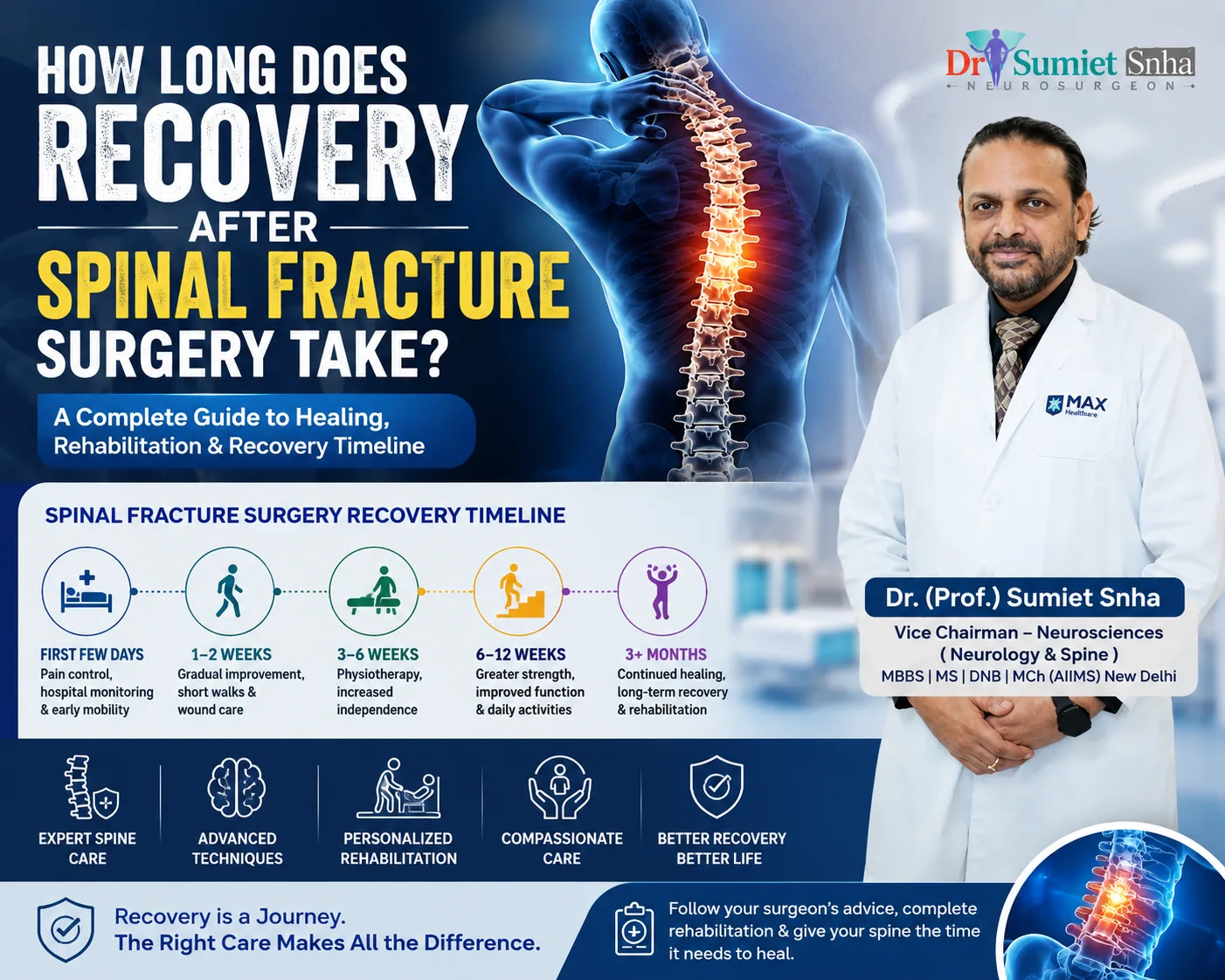
Recovery after spinal fracture surgery varies from person to person and depends on the type and location of the fracture, the surgical procedure performed, spinal cord or nerve involvement, age, bone health, and progress with rehabilitation. In general, spinal fracture surgery recovery may take several weeks, while complete healing of the spine can continue for several months. Some patients may recover from the operation in around six weeks, followed by additional time for the vertebrae to heal. Therefore, the spinal fracture recovery time should always be individualized by the treating surgeon. The right spinal fracture treatment also plays an important role in determining recovery and long-term mobility.
What Is Spinal Fracture Surgery?
A spinal or vertebral fracture occurs when one or more bones in the spine develop a crack or break, often due to trauma, falls, osteoporosis, or other conditions. Stable fractures may sometimes be managed with medicines, bracing, activity modification, and rehabilitation, while unstable or severe fractures may require surgery to protect the spine and nerves. Depending on the injury, spinal fracture surgery may involve vertebroplasty or kyphoplasty to stabilize a damaged vertebra, or spinal fixation and fusion to provide greater stability. The appropriate vertebral fracture treatment or back fracture treatment depends on the fracture type, location, severity, and neurological condition.
Spinal Fracture Surgery Recovery Timeline
The spinal fracture surgery recovery timeline differs between patients depending on the severity of the injury, surgical technique, overall health, bone strength, and whether nerves or the spinal cord were affected. The following stages provide a general guide rather than fixed recovery deadlines.
First Few Days After Surgery
During the initial hospital stay, the medical team monitors pain, wound healing, mobility, and neurological function. Patients may receive pain-relieving medicines and assistance with changing positions or getting out of bed. Early, supervised movement may be encouraged when medically appropriate to reduce complications associated with prolonged inactivity.
Weeks 1–2
During the first two weeks at home, activity usually increases gradually. Short walks may be encouraged according to the surgeon's instructions, while heavy lifting, strenuous exercise, excessive bending, or twisting may be restricted. Patients should take prescribed medicines as directed and keep the surgical incision clean and protected.
Weeks 3–6
As healing progresses, patients may become more independent with everyday activities. Physiotherapy may be started or advanced when recommended to improve strength, flexibility, balance, and mobility. Follow-up appointments help the surgical team assess recovery and determine when activities can be increased. Some patients may gradually resume lighter daily activities during this period.
Two to Three Months and Beyond
Bone healing and functional recovery continue beyond the first several weeks. Strength and mobility may gradually improve, allowing a carefully supervised return to more normal activities. Some patients may need ongoing rehabilitation, particularly after complex fractures or neurological injury. Because spinal fracture recovery time varies considerably, patients should follow their individualized treatment and rehabilitation plan rather than a fixed timeline.
Spinal Fracture Recovery Time
The spinal fracture recovery time can vary considerably depending on the fracture type, surgical procedure, bone health, age, overall health, and rehabilitation progress. The table below provides a general overview of what patients may experience during different stages of recovery.
|
Recovery Stage |
What Patients May Experience |
Main Focus |
|
First few days |
Pain, limited movement, and hospital monitoring |
Pain control and safe mobility |
|
1–2 weeks |
Gradual improvement in movement and daily comfort |
Wound care and short walks |
|
3–6 weeks |
Increasing independence and improved mobility |
Rehabilitation and gradual activity |
|
6–12 weeks |
Greater strength and functional movement |
Physiotherapy and daily activities |
|
3+ months |
Continued healing and strengthening |
Long-term recovery and rehabilitation |
These timeframes are general guidelines, not fixed deadlines. The actual recovery after spinal fracture surgery can vary significantly, so the treating surgeon should determine the appropriate activity level and rehabilitation plan for each patient.
What Factors Affect Recovery After Spinal Fracture Surgery?
Several factors can influence spinal injury recovery, the spinal fracture healing time, and the overall outcome after surgery. Every patient's recovery can be different, even when the surgical procedure is similar.
Key Factors That Can Affect Recovery
- Type and severity of fracture: More complex or unstable fractures may require longer recovery.
- Fracture location: The affected spinal level can influence mobility and treatment.
- Nerve or spinal cord involvement: Neurological damage can significantly affect strength, sensation, movement, and functional recovery.
- Surgical technique: The type and extent of surgery can influence healing and rehabilitation.
- Age and bone health: Older age, low bone density, and osteoporosis may affect bone healing.
- Overall health: Other medical conditions can influence recovery.
- Smoking and nutrition: Smoking and poor nutrition may interfere with tissue and bone healing.
- Complications: Infection or other postoperative problems can delay recovery.
- Rehabilitation: Following the recommended spinal fracture rehabilitation program can support gradual improvements in mobility and strength.
Because these factors differ between patients, recovery should be monitored and adjusted by the treating medical team.
Physical Therapy After Spinal Fracture Surgery
Why Rehabilitation May Be Recommended
Physical therapy after spinal fracture surgery may help patients gradually rebuild strength, mobility, balance, and confidence during recovery. A structured rehabilitation program can strengthen the muscles that support the spine, improve flexibility, and make everyday movements safer and easier.
What Rehabilitation May Include
Depending on the patient's condition, spinal fracture rehabilitation may include guided exercises for muscle strength, flexibility, balance, posture, walking, and functional independence. Activities are generally progressed gradually as healing allows, rather than being increased too quickly. The specific exercises and timing should be determined by the treating surgeon or physiotherapist. Following a personalized program can help patients work toward a safe return to normal daily activities while respecting surgical restrictions and individual healing needs.
What Activities Should You Avoid During Recovery?
Activities to Limit After Surgery
During recovery from spinal fracture surgery, patients may need to temporarily avoid activities that place excessive stress on the healing spine. Restrictions depend on the type of operation, fracture severity, and individual progress.
- Heavy lifting or carrying strenuous loads.
- Bending or twisting when these movements are restricted.
- High-impact exercise, such as running or jumping.
- Contact sports that could cause another spinal injury.
- Sudden or strenuous movements that increase pain or discomfort.
- Driving until medically cleared and able to control the vehicle safely.
- Returning to work before the surgeon confirms it is appropriate.
Activity should generally increase gradually according to the surgeon's instructions and recovery progress.
Warning Signs and Possible Complications After Spinal Fracture Surgery
Symptoms That Need Medical Attention
Recovery after spinal fracture surgery should be monitored carefully. Patients should contact their medical team promptly if they notice symptoms that are new, severe, or worsening. These may indicate an infection, nerve problem, or another postoperative complication.
- Increasing or severe pain that does not improve
- Fever or chills
- Redness, swelling, warmth, or discharge around the incision
- New numbness, tingling, or weakness
- Increasing difficulty walking or maintaining balance
- New bowel or bladder problems
- Sudden changes in sensation, movement, or other neurological function
New or worsening neurological symptoms following spine surgery can require urgent medical assessment. Patients should follow their surgeon's instructions about when and where to seek emergency care.
About Dr. (Prof.) Sumiet Snha
Dr. (Prof.) Sumiet Snha is Vice Chairman – Neurosciences (Neurology & Spine) and has more than 25 years of experience in neurosurgery. He completed his neurosurgical training at AIIMS, New Delhi, and has received additional training and professional exposure internationally. His areas of expertise include spinal injuries, minimally invasive spine surgery, peripheral nerve surgery, and complex neurosurgical conditions.
He has also been involved in teaching, research, and professional training, including work related to spinal injuries and AO Spine education. His clinical experience includes the management of complex spine and nerve-related conditions, with treatment plans tailored to individual patient needs.
How Can You Support a Better Spinal Fracture Surgery Recovery?
Practical Steps for Recovery
Supporting a safe spinal fracture recovery requires patience, consistent follow-up, and adherence to your medical team's recommendations. These steps may help support healing and rehabilitation:
- Follow postoperative instructions carefully.
- Attend all scheduled follow-up appointments.
- Complete the recommended spinal fracture rehabilitation program.
- Increase physical activity gradually as advised.
- Avoid lifting or movements restricted by your surgeon.
- Maintain adequate nutrition to support healing.
- Discuss a bone-health assessment if osteoporosis contributed to the fracture.
- Report new or worsening symptoms promptly.
Because spinal fracture healing time varies, avoid comparing your progress with another patient's recovery.
Frequently Asked Questions
How long does it take to recover from spinal fracture surgery?
Recovery can take several weeks to months, depending on the fracture, procedure, and overall health. Complete healing may take longer than the initial surgical recovery period.
How long does a spinal fracture take to heal after surgery?
Healing time varies between patients and depends on fracture severity, bone health, and treatment. Your surgeon can provide a more individualized estimate after assessing your progress.
Can you walk after spinal fracture surgery?
Many patients can begin walking with assistance when their medical team considers it safe. The timing depends on the surgery, stability of the spine, and neurological condition.
When can I return to work after spinal fracture surgery?
Return-to-work timing depends on your recovery and the physical demands of your job. Your surgeon can advise when work activities are safe to resume.
When can I drive after spinal fracture surgery?
Driving should generally wait until your surgeon confirms that it is safe. You should also be able to move comfortably and react safely without medication or physical restrictions affecting driving.
Is physical therapy necessary after spinal fracture surgery?
Physical therapy may be recommended to improve strength, mobility, balance, and functional independence. The rehabilitation plan should be tailored to your condition.
Can a spinal fracture heal completely after surgery?
Many patients can achieve substantial healing and functional improvement after appropriate treatment. However, the outcome depends on fracture severity, neurological involvement, bone health, and other factors.
What factors can delay spinal fracture recovery?
Poor bone health, smoking, inadequate nutrition, infection, complex fractures, neurological injury, and other health conditions may affect recovery. Following the prescribed rehabilitation plan is also important.
Can spinal fracture surgery cause complications?
Like other major procedures, spinal surgery can have potential complications. New weakness, numbness, fever, wound problems, or worsening pain should be reported promptly.
How long will pain last after spinal fracture surgery?
Pain usually improves gradually, but the duration varies according to the injury and surgery performed. Persistent or worsening pain should be discussed with your medical team.
Can osteoporosis affect spinal fracture recovery?
Yes. Osteoporosis can weaken the vertebrae and may affect bone healing and the risk of additional fractures. Appropriate bone-health management may be recommended.
When should I contact my doctor after spinal fracture surgery?
Contact your medical team if you develop severe or worsening pain, fever, wound discharge, new weakness or numbness, difficulty walking, or bowel and bladder changes. Sudden neurological symptoms may require urgent medical assessment.
Conclusion
Recovery after spinal fracture surgery is a gradual process, and there is no single timeline that applies to every patient. Some people may experience meaningful improvement within weeks, while bone healing, strength, and functional recovery can continue for several months. Appropriate rehabilitation and follow-up are important throughout the process. Patients should follow their surgeon's personalized restrictions rather than comparing their progress with others. A carefully planned spinal fracture treatment approach can support safe spinal fracture surgery recovery and improve the overall spinal fracture recovery time.




0 Comments