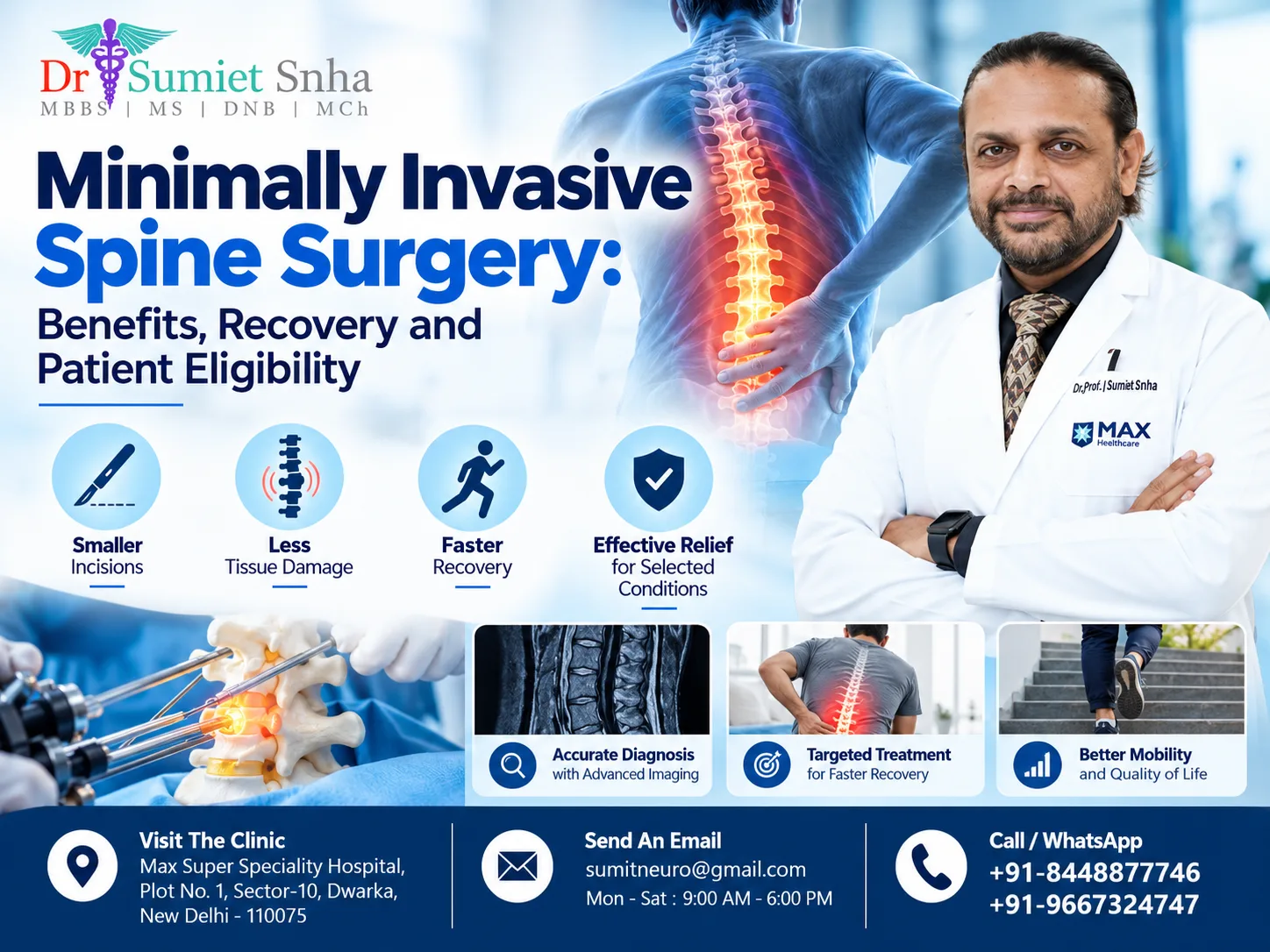
Back and neck problems can affect everything from walking and working to sleeping comfortably. While many spine conditions improve with medicines, physiotherapy, activity modification, or other non-surgical measures, some patients may eventually require an operation. Minimally Invasive Spine Surgery uses specialised techniques and smaller surgical access points to reach the affected part of the spine while aiming to limit unnecessary damage to surrounding tissues. However, it is not automatically better or suitable for every patient. The right approach depends on the diagnosis, symptoms, imaging findings, overall health, and the surgeon's assessment.
What Is Minimally Invasive Spine Surgery?
Minimally Invasive Spine Surgery refers to a group of surgical techniques designed to treat selected spinal conditions through smaller incisions and controlled access to the affected area.
Instead of creating a large surgical opening, surgeons may use specialised instruments, tubular retractors, microscopes, endoscopes, or image guidance. The exact technique depends on the spinal problem and the procedure being considered.
The goal is not simply to make a smaller incision. The procedure must safely address the underlying problem while protecting important nerves, muscles, and other structures.
How Does It Differ From Traditional Spine Surgery?
Traditional open surgery may require greater exposure of the spine. Minimally invasive approaches can sometimes reduce disruption to surrounding muscles and soft tissues.
However, the choice between an open and minimally invasive approach is not based on incision size alone. Complex conditions may still require conventional surgery when it provides the safest and most effective access.
Which Conditions May Be Treated With Minimally Invasive Techniques?
Not every spinal condition requires surgery. When surgery is indicated, selected patients with certain conditions may be candidates for minimally invasive procedures.
Herniated or Slipped Disc
A herniated disc can sometimes press on a spinal nerve and cause pain, tingling, numbness, or weakness. Selected patients may benefit from minimally invasive procedures designed to relieve nerve pressure.
Spinal Stenosis
Spinal stenosis involves narrowing around the spinal canal or nerve pathways. Depending on its location and severity, decompression may sometimes be performed using minimally invasive techniques.
Certain Degenerative Spine Conditions
Age-related changes in discs, joints, and other spinal structures can cause persistent symptoms. In selected cases, minimally invasive approaches may be considered as part of a broader treatment plan.
What Are the Benefits of Minimally Invasive Spine Surgery?
The potential advantages vary from one patient to another. A smaller surgical approach may reduce disruption to healthy tissues, but the actual outcome depends on the procedure and individual circumstances.
Smaller Surgical Incisions
Many minimally invasive procedures use smaller access points than conventional surgery. This can result in a smaller surgical wound.
Less Soft-Tissue Disruption
One objective of these techniques is to minimise unnecessary disturbance to muscles and other tissues surrounding the spine.
Potentially Faster Recovery
Some appropriately selected patients may return to normal activities sooner. However, spine surgery recovery varies according to the operation performed, the patient's health, and the severity of the original condition.
Reduced Postoperative Discomfort in Some Patients
Less tissue disruption may contribute to reduced postoperative discomfort for certain procedures. Pain management still depends on the individual patient and type of surgery.
Smaller Scars
Smaller incisions may leave smaller scars, although healing differs from person to person.
What Happens Before Minimally Invasive Spine Surgery?
Good surgical planning begins with an accurate diagnosis. A patient may undergo a detailed neurological and physical examination along with appropriate imaging.
Medical and Neurological Evaluation
The specialist may assess:
Pain pattern and duration
Muscle strength
Reflexes
Sensation
Walking and balance
Previous treatments
Other medical conditions
MRI, CT, X-rays, or other investigations may be recommended when clinically appropriate.
Understanding the Cause of Symptoms
An abnormal scan does not automatically mean surgery is required. Imaging findings need to be considered alongside symptoms and examination results.
This is particularly important because disc degeneration and other age-related changes can sometimes be present without causing symptoms.
Who Is Eligible for Minimally Invasive Spine Surgery?
There is no single checklist that determines eligibility. Patient selection depends on the specific diagnosis and the procedure required.
A patient may be considered when:
Symptoms are linked to a clearly identified spinal problem.
Non-surgical treatment has not provided adequate relief when appropriate.
There is significant nerve compression or another structural problem requiring surgery.
The patient's overall health allows surgery.
Imaging findings correspond with the clinical symptoms.
A consultation with an experienced spine specialist is therefore important before deciding on any procedure.
What Is Recovery Like After Surgery?
Recovery depends greatly on the type of operation performed. Some procedures allow earlier movement, while more complex operations may require a longer recovery period.
Immediately After Surgery
The medical team monitors pain, movement, neurological function, and the surgical wound. Depending on the procedure, the patient may be encouraged to start moving relatively early.
During the Recovery Period
Patients may receive instructions regarding:
Walking and activity
Wound care
Medicines
Physiotherapy
Lifting restrictions
Follow-up appointments
Patients should follow the individual recovery plan rather than comparing their progress with someone else's.
Is Minimally Invasive Surgery Always Better?
No. The most advanced-looking technique is not necessarily the right technique for every patient.
Some spinal conditions are better managed with conventional surgery, while others may be suitable for minimally invasive spine procedures. The priority should always be accurate diagnosis, safe access to the affected area, adequate treatment of the underlying problem, and long-term patient outcomes.
A qualified spine surgeon should explain why a particular approach is appropriate and discuss its potential benefits, limitations, and risks.
About Dr.(Prof.) Sumiet Snha
Dr.(Prof.) Sumiet Snha is an AIIMS New Delhi-trained neurosurgeon and spine specialist with more than 25 years of experience in neurosurgical care. He holds MBBS, MS, DNB, and MCh qualifications and has experience in the evaluation and management of complex brain, spine, and nerve-related conditions.
His areas of expertise include minimally invasive spine techniques, endoscopic and complex spine procedures, spinal cord compression, spinal fractures, disc-related conditions, and other neurological disorders.
His approach focuses on understanding the patient's symptoms, clinical findings, and imaging before recommending an appropriate treatment pathway.
Frequently Asked Questions
What is Minimally Invasive Spine Surgery?
It is a group of surgical techniques that use specialised access methods, often through smaller incisions, to treat selected spinal conditions while aiming to minimise unnecessary tissue disruption.
Is minimally invasive spine surgery suitable for everyone?
No. Suitability depends on the diagnosis, anatomy, symptoms, imaging findings, general health, and type of surgery required.
What are the common benefits of minimally invasive spine procedures?
Potential benefits can include smaller incisions, less tissue disruption, and potentially easier recovery for appropriately selected patients.
How long does spine surgery recovery take?
Recovery varies significantly depending on the procedure, health status, and condition being treated. Your surgeon can provide a more realistic timeline after evaluation.
Can a slipped disc be treated with minimally invasive surgery?
Some selected patients with symptomatic disc herniation may be candidates for minimally invasive procedures, particularly when symptoms and imaging findings support surgical treatment.
Is spinal stenosis always treated with surgery?
No. Treatment depends on symptoms, severity, neurological findings, and response to non-surgical care. Surgery is considered when clinically appropriate.
Does minimally invasive surgery completely eliminate pain?
No surgery can guarantee complete pain relief. Outcomes depend on the underlying diagnosis, nerve involvement, procedure, and individual recovery.
Is minimally invasive spine surgery safer than open surgery?
Both approaches have potential benefits and risks. Safety depends on patient selection, diagnosis, surgical technique, and the experience of the treating team.
Will I need physiotherapy after surgery?
Some patients benefit from physiotherapy or a structured rehabilitation programme. The recommendation depends on the procedure and individual recovery.
How do doctors decide which surgical technique to use?
Doctors consider the location and cause of compression, spinal anatomy, symptoms, imaging findings, overall health, and the goals of treatment.
Can I return to normal activities after surgery?
Many patients gradually return to daily activities, but the timing varies. Following postoperative instructions is important for safe recovery.
When should I consult a spine specialist?
Persistent pain, progressive weakness, numbness, difficulty walking, or symptoms that interfere with daily activities warrant medical evaluation. A specialist can determine whether the problem requires conservative care or surgery.
Conclusion
Minimally Invasive Spine Surgery can be an effective option for carefully selected patients with certain spinal conditions. Its potential advantages include smaller surgical access, reduced soft-tissue disruption, and recovery that may be easier for some patients. However, the technique should never be chosen simply because it sounds less invasive.
The most important step is establishing the correct diagnosis and determining whether surgery is actually necessary. Dr.(Prof.) Sumiet Snha combines neurological assessment, imaging findings, and individual patient factors when planning treatment for brain, spine, and nerve conditions. For patients considering surgery, a detailed consultation can help clarify the available options, expected recovery, and whether a minimally invasive approach is appropriate for their specific condition.

0 Comments