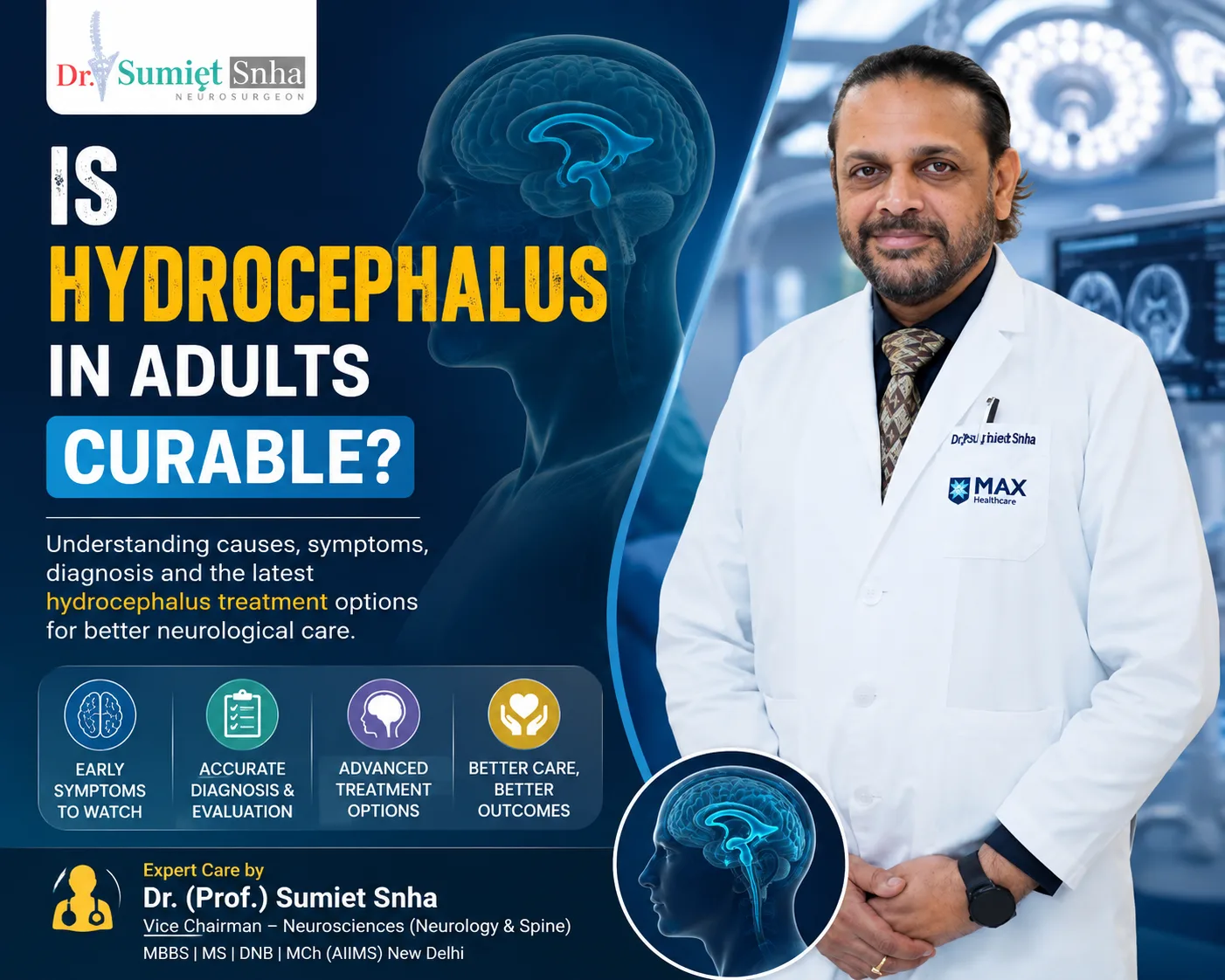
Hydrocephalus is a neurological condition in which excess cerebrospinal fluid accumulates within the spaces of the brain, potentially affecting brain function and daily activities. Although it is often associated with children, Adult hydrocephalus can develop due to aging, bleeding, infection, injury, tumors, or problems with fluid circulation. The possibility of improvement depends on the underlying cause, type, severity, and duration of the condition. Appropriate hydrocephalus treatment can help manage fluid buildup and related complications. Recognizing hydrocephalus symptoms in adults and seeking timely evaluation is essential for selecting suitable treatment for hydrocephalus.
What Is Hydrocephalus in Adults?
Understanding Adult Hydrocephalus
Adult hydrocephalus occurs when cerebrospinal fluid, or CSF, collects excessively inside the brain’s natural cavities, known as ventricles. Normally, CSF circulates around the brain and spinal cord, providing cushioning, supporting the nervous system, and helping maintain a stable environment for brain function.
How CSF Normally Circulates
When its production, circulation, or absorption becomes disrupted, fluid buildup in the brain can enlarge the ventricles and place pressure on surrounding tissues. Cerebrospinal fluid buildup in adults may occur after head injuries, brain bleeding, infections, tumors, age-related changes, or other neurological conditions. Understanding the underlying hydrocephalus causes is essential because the cause and type of hydrocephalus help specialists determine the most appropriate evaluation and hydrocephalus treatment.
What Are the Symptoms of Hydrocephalus in Adults?
Common Symptoms
Hydrocephalus symptoms in adults can develop gradually or appear more noticeably depending on the underlying cause. Common signs of hydrocephalus in adults may include:
- Headaches: Persistent or worsening headaches may occur because of increased pressure inside the skull.
- Nausea or vomiting: These symptoms can sometimes accompany increased pressure affecting the brain.
- Balance and walking difficulties: A person may feel unsteady or have trouble walking normally.
- Memory problems: Forgetfulness and difficulty recalling information may develop.
- Confusion: Changes in thinking or awareness can affect everyday activities.
- Concentration difficulties: Maintaining attention or completing familiar tasks may become harder.
- Bladder problems: Urinary urgency or loss of bladder control can occur.
- Vision changes: Blurred or altered vision may accompany neurological changes.
- Fatigue or unusual sleepiness: Some adults may experience reduced alertness or persistent tiredness.
Normal Pressure Hydrocephalus Symptoms
Normal pressure hydrocephalus can produce a characteristic combination of symptoms, particularly in older adults. Adult hydrocephalus symptoms may include:
- Walking difficulty: Slow, shuffling, or unsteady movement.
- Cognitive changes: Problems with memory, attention, or thinking.
- Urinary symptoms: Increased urgency or urinary incontinence.
Because these symptoms can overlap with other neurological conditions, proper clinical assessment and brain imaging are important before deciding on hydrocephalus treatment.
What Causes Hydrocephalus in Adults?
Common Causes
The hydrocephalus causes in adults can vary considerably, and identifying the underlying reason is an important step before choosing appropriate hydrocephalus treatment. Common adult hydrocephalus causes include conditions that interfere with the normal production, circulation, or absorption of cerebrospinal fluid, such as:
- Brain hemorrhage: Bleeding around or inside the brain can disrupt CSF circulation.
- Head trauma: A significant injury may interfere with normal fluid pathways.
- Brain tumors: Tumors can obstruct areas through which CSF normally flows.
- Infections: Certain infections can affect the brain or surrounding tissues and interfere with CSF absorption.
- Stroke: Some strokes may contribute to changes in CSF circulation.
- Congenital abnormalities: Structural differences present from birth can sometimes contribute to hydrocephalus later in life.
- Cerebrospinal fluid blockage: An obstruction can prevent CSF from circulating normally.
- Age-related neurological changes: Certain conditions associated with aging may contribute to adult hydrocephalus, including normal pressure hydrocephalus.
How Is Hydrocephalus Diagnosed in Adults?
Neurological Examination
A hydrocephalus diagnosis begins with a detailed medical history and neurological examination. A specialist may assess memory, thinking ability, walking pattern, balance, reflexes, vision, and coordination to identify changes that may be associated with adult hydrocephalus. The doctor may also review previous head injuries, infections, bleeding, or neurological conditions that could contribute to fluid accumulation.
Imaging and Diagnostic Tests
Brain imaging plays an important role in hydrocephalus evaluation. A CT scan for hydrocephalus can help identify enlarged ventricles or other structural changes, while MRI for hydrocephalus provides more detailed information about brain structures and cerebrospinal fluid pathways. In selected cases, cerebrospinal fluid testing may also be considered. Combining clinical findings with imaging and other appropriate tests helps specialists understand the type and cause of hydrocephalus and select the most suitable hydrocephalus treatment.
Is Hydrocephalus in Adults Curable?
Can Hydrocephalus Be Completely Cured?
Whether hydrocephalus in adults can be completely cured depends on its underlying cause, type, duration, and the extent to which the brain has been affected. In many cases, hydrocephalus is treatable, and appropriate care can help control excess cerebrospinal fluid and reduce pressure within the brain. However, treatment does not necessarily reverse every neurological change that has already developed. The main goal of hydrocephalus treatment is to manage abnormal fluid accumulation and address the condition responsible for it.
Factors Affecting Treatment Outcomes
Several factors can influence how an individual responds to adult hydrocephalus treatment, including the cause of fluid accumulation, the type of hydrocephalus, timing of diagnosis, symptom severity, overall health, and existing neurological damage. Appropriate hydrocephalus treatment options may include procedures designed to improve CSF drainage or circulation. Therefore, treatment for hydrocephalus in adults should be personalized after detailed neurological assessment and brain imaging. A qualified neurosurgical specialist can determine whether treatment may be appropriate for a particular patient.
What Are the Treatment Options for Adult Hydrocephalus?
Ventriculoperitoneal Shunt
A VP shunt for hydrocephalus is one of the commonly used approaches for managing excess cerebrospinal fluid. During VP shunt surgery, a thin drainage system is placed to move extra CSF from the brain into the abdominal cavity, where the fluid can be absorbed naturally. The decision to use a shunt depends on the patient's condition, hydrocephalus type, symptoms, and imaging findings.
Endoscopic Third Ventriculostomy
Endoscopic third ventriculostomy (ETV) is a minimally invasive procedure used in selected patients. During ETV for hydrocephalus, a neurosurgeon creates an alternative opening within the ventricular system to help CSF bypass an obstruction and circulate more effectively. It may be considered when the patient's anatomy and underlying cause make this approach appropriate.
Treatment Based on the Cause
Effective hydrocephalus treatment also requires attention to the condition causing abnormal CSF accumulation. Depending on the diagnosis, hydrocephalus treatment options may include managing tumors, infections, bleeding, or obstruction of CSF pathways.
|
Treatment approach |
Main purpose |
When it may be considered |
|
VP shunt surgery |
Diverts excess CSF |
Selected patients requiring long-term CSF drainage |
|
ETV |
Creates an alternative CSF pathway |
Certain types of obstructive hydrocephalus |
|
Addresses the underlying problem |
Tumors, infections, bleeding, or CSF obstruction |
The most appropriate hydrocephalus surgery or other treatment should be determined after detailed neurological assessment and brain imaging.
How Effective Is Hydrocephalus Treatment in Adults?
The effectiveness of hydrocephalus treatment varies according to the underlying cause, type of hydrocephalus, symptom duration, and overall neurological health. Some adults experience meaningful improvement after appropriate treatment, while others may have persistent symptoms. In normal pressure hydrocephalus, walking and bladder problems may respond differently from cognitive changes. Hydrocephalus treatment success depends on individual factors, making early assessment important. Careful follow-up also helps doctors monitor adult hydrocephalus recovery and evaluate long-term hydrocephalus treatment outcomes.
Recovery and Follow Up After Hydrocephalus Treatment
Post Treatment Care
Hydrocephalus recovery varies depending on the treatment used and the patient's overall condition. After hydrocephalus surgery, regular medical follow-up is important to monitor symptoms and treatment response. Patients should follow recommended activity guidelines and remain alert for possible shunt-related concerns. Any new or worsening neurological symptoms should be reported promptly. Appropriate hydrocephalus treatment follow-up supports ongoing assessment and care.
When Should Adults See a Neurosurgeon?
Adults experiencing persistent headaches, worsening walking or balance problems, memory changes, bladder difficulties, vision changes, or other unexplained neurological symptoms should seek timely medical evaluation. An experienced neurosurgeon can review the patient's medical history, neurological findings, and brain imaging to identify possible causes of hydrocephalus and determine whether hydrocephalus treatment is appropriate. Consulting qualified neurosurgeons for hydrocephalus can be particularly important when symptoms are progressive or affecting daily life.
Expert Neurosurgical Care
Dr. (Prof.) Sumiet Snha, Vice Chairman – Neurosciences (Neurology & Spine), completed his neurosurgical training at All India Institute of Medical Sciences (AIIMS), New Delhi, and has more than 25 years of experience in neurosurgery. He has received advanced training and worked with neurosurgical experts internationally, including Prof. Hiroshi Sano in Japan, Prof. Louise Vialle in Brazil, and Prof. B Meyer in Germany.
With qualifications including MBBS, MS, DNB and MCh (AIIMS) New Delhi, Dr. (Prof.) Sumiet Snha has expertise in neurological and spinal conditions, minimally invasive spine surgery, spinal injuries, and peripheral nerve surgery. As an experienced adult hydrocephalus specialist, he can evaluate individual cases and discuss appropriate diagnostic and treatment options based on clinical findings and imaging.
Frequently Asked Questions
1. Can hydrocephalus in adults be cured completely?
Hydrocephalus is often treatable, but complete resolution depends on its type, cause, duration, and neurological impact. Appropriate hydrocephalus treatment can help manage excess CSF and related symptoms.
2. What is the most common hydrocephalus treatment in adults?
Treatment depends on the individual diagnosis. Shunt procedures are commonly used, while endoscopic procedures such as ETV may be suitable for selected patients.
3. Can hydrocephalus return after treatment?
Hydrocephalus can require long-term monitoring. Symptoms may recur in some patients, and shunt-related complications or changes in CSF circulation may require medical assessment.
4. Is hydrocephalus surgery safe?
Hydrocephalus surgery is performed by trained neurosurgical teams, but every procedure has potential risks. The benefits and risks should be assessed according to the patient's individual condition.
5. Can normal pressure hydrocephalus be treated?
Yes. Selected patients with normal pressure hydrocephalus may benefit from appropriate treatment after detailed neurological assessment and diagnostic evaluation.
6. How long does recovery take after hydrocephalus treatment?
Recovery varies depending on the treatment, symptom severity, overall health, and neurological condition. Regular follow-up helps monitor progress.
7. What are the early signs of hydrocephalus in adults?
Early symptoms may include headaches, walking difficulties, memory changes, balance problems, urinary symptoms, vision changes, or unusual sleepiness.
8. Can hydrocephalus affect memory and thinking?
Yes. Hydrocephalus can affect cognitive function in some adults, potentially causing forgetfulness, reduced concentration, confusion, or changes in thinking ability.
9. Is a VP shunt always required for adult hydrocephalus?
No. A VP shunt for hydrocephalus is not appropriate for every patient. Treatment depends on the type, cause, imaging findings, symptoms, and overall clinical assessment.
10. What tests are used to diagnose hydrocephalus?
Doctors may use neurological examinations, MRI, CT scans, and, when appropriate, cerebrospinal fluid testing. These assessments help identify the cause and guide treatment decisions.
11. Can hydrocephalus treatment improve walking problems?
Some patients, particularly those with normal pressure hydrocephalus, may experience improvement in walking and balance after appropriate treatment. Individual responses can vary.
12. When should an adult see a neurosurgeon for hydrocephalus?
Adults with persistent or worsening headaches, walking difficulties, cognitive changes, urinary problems, vision changes, or other neurological symptoms should seek professional evaluation. Early assessment can help determine whether hydrocephalus treatment may be appropriate.
Conclusion
Adult hydrocephalus is a serious neurological condition, but it can often be managed with appropriate medical care. The most suitable hydrocephalus treatment depends on the underlying cause, type, symptoms, and individual health. Early diagnosis, specialist evaluation, appropriate treatment, and regular follow-up can support better clinical management. Adults experiencing concerning neurological symptoms should consult a qualified neurosurgical specialist for personalized assessment.




0 Comments