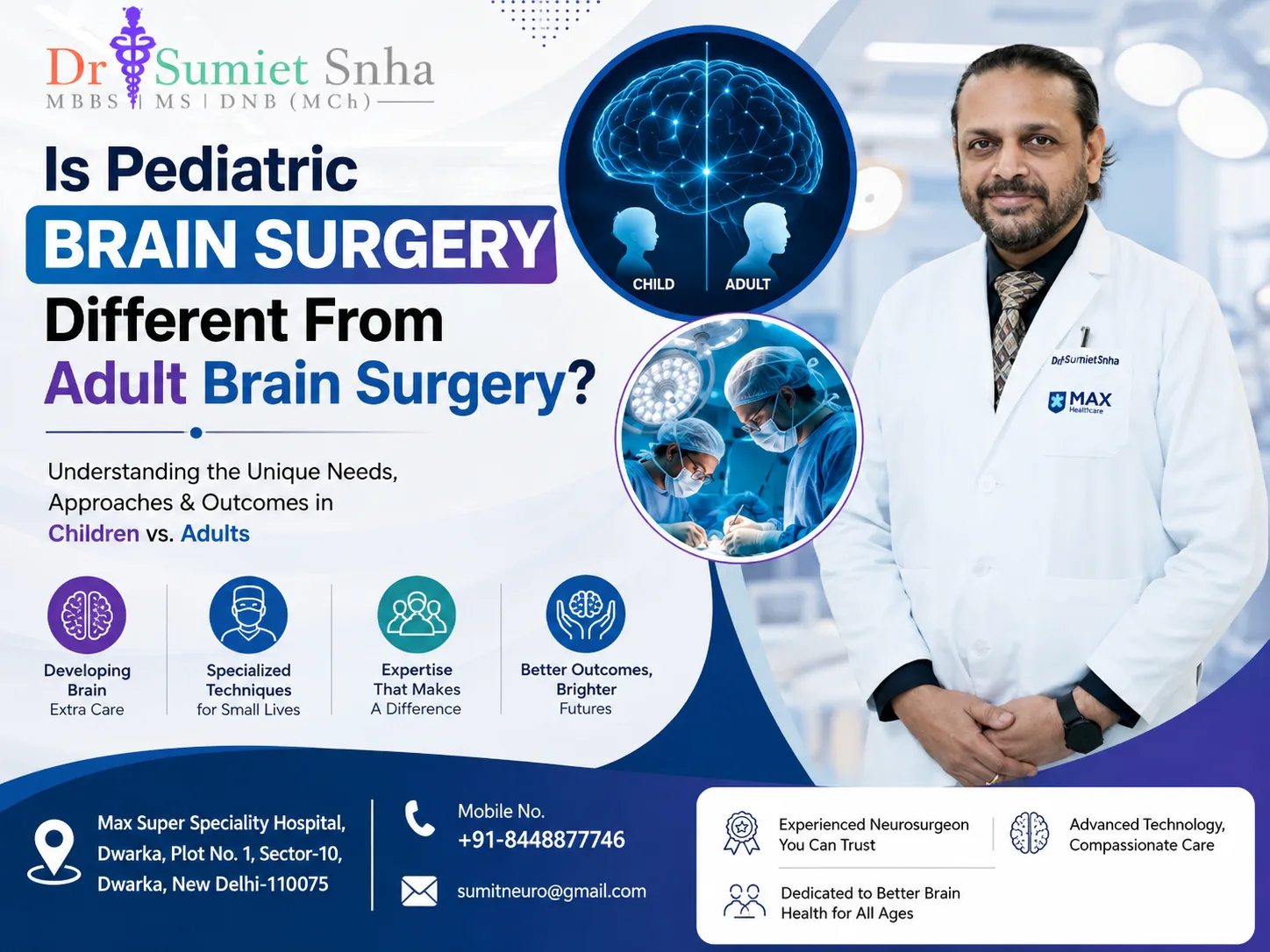
Yes, pediatric brain surgery is different from adult brain surgery because children’s brains and bodies are still growing and developing. Surgery must therefore be planned according to the child’s age, condition, brain development, and overall health. Children may also have neurological conditions that are uncommon in adults, requiring specialized evaluation and care. An experienced child brain surgery specialist considers these differences before recommending any procedure. The treatment approach can vary depending on the child’s symptoms, medical history, brain imaging, and the specific condition being treated. Careful planning also helps support the child’s recovery and long-term development.
Why Is Pediatric Brain Surgery Different From Adult Brain Surgery?
Pediatric brain surgery is different from adult brain surgery because a child’s brain, skull, and nervous system are still developing. Surgeons must consider the child’s age, brain growth, body size, and developmental needs when planning treatment. Children may also have different conditions that require surgery compared with adults. The goal is not only to treat the current problem but also to protect healthy brain function and support normal development in the years ahead. Because of these differences, children may benefit from care provided by specialists who understand the specific challenges of pediatric brain surgery.
How Does a Child’s Developing Brain Affect Surgery?
A child’s brain continues to develop throughout childhood, and different areas gradually become responsible for important functions such as movement, speech, learning, memory, and coordination. During surgery, protecting these functions is especially important because an injury to a developing brain area may affect the child’s future abilities.
Doctors therefore consider the location of the condition, the functions controlled by nearby brain areas, and the child’s stage of development before deciding on a surgical approach. The aim is to treat the underlying problem while preserving as much healthy brain tissue as possible.
Why Does Age Matter in Pediatric Neurosurgery?
Age can influence almost every part of a child’s surgical care. An infant has different medical and developmental needs from a school-age child, while teenagers may have considerations that are closer to those of adults.
For example, very young children may require special attention to growth, nutrition, anesthesia, and developmental progress. Older children and adolescents may need additional support with school, daily activities, and emotional adjustment during recovery.
For this reason, pediatric neurosurgery is planned on an individual basis rather than using the same approach for every child. The surgical team considers the child's age, condition, symptoms, development, and expected recovery when creating a treatment plan
Pediatric Brain Surgery vs Adult Brain Surgery: Key Differences
The main difference between pediatric brain surgery vs adult brain surgery is that children are still growing, while adults have fully developed brains and bodies. This affects how doctors assess the condition, plan surgery, manage anesthesia, and monitor recovery. Children can also develop neurological conditions that are different from those commonly seen in adults. For brain surgery in children, doctors must think beyond the immediate procedure and consider how treatment may affect learning, movement, speech, and development as the child grows. Adult surgery usually focuses more on treating the current disease while preserving existing neurological function. However, every patient is different, and the exact surgical approach depends on the condition, its location, severity, and the person's overall health.
|
Factor |
Pediatric Brain Surgery |
Adult Brain Surgery |
|
Brain development |
The brain and nervous system are still developing. |
The brain has reached full development. |
|
Common conditions |
May include congenital problems, brain tumors, hydrocephalus, epilepsy, and certain vascular conditions. |
May include brain tumors, aneurysms, stroke-related conditions, and other vascular or neurological disorders. |
|
Surgical planning |
Planning considers age, growth, development, and future neurological function. |
Planning mainly considers the existing condition and preservation of neurological function. |
|
Anesthesia |
Medication and monitoring are adjusted for the child's age, size, and medical needs. |
Anesthesia is planned according to adult physiology and health conditions. |
|
Monitoring |
Doctors may closely consider neurological and developmental changes. |
Monitoring generally focuses on neurological function and recovery from the procedure. |
|
Recovery |
Some children may need developmental, physical, speech, or educational support during recovery. |
Recovery usually focuses on restoring or maintaining neurological and physical function. |
|
Long-term care |
Follow-up may include monitoring brain development, growth, learning, and neurological function. |
Follow-up may focus on recovery, recurrence of disease, and long-term neurological health. |
Although these differences are important, pediatric neurosurgery is not simply a smaller version of adult neurosurgery. Children need an approach designed around their age, development, and individual medical needs
What Conditions May Require Brain Surgery in Children?
Brain surgery is not needed for every child with a neurological condition. It may be recommended when a problem is causing significant symptoms, affecting brain function, or cannot be managed safely with medicines or other treatments. The decision depends on the child's age, symptoms, diagnosis, imaging results, and overall health. Some of the conditions that may require surgical treatment include:
Pediatric Brain Tumors
- Surgery may be considered when a brain tumor can be safely removed or when tissue is needed to confirm the diagnosis.
- The tumor’s location, size, type, and relationship with important brain areas can influence the treatment plan.
- In some cases, complete removal may not be safe, so doctors may consider partial removal or other treatments.
- Child brain tumor surgery is carefully planned to treat the tumor while protecting important brain functions whenever possible.
Hydrocephalus
- Hydrocephalus occurs when too much cerebrospinal fluid (CSF) builds up inside the brain, increasing pressure.
- Depending on the cause, treatment may involve a shunt to drain excess fluid or an endoscopic procedure such as endoscopic third ventriculostomy (ETV).
- The choice depends on the child's age, cause of hydrocephalus, symptoms, and previous treatment.
Epilepsy
- Surgery may be considered for some children whose seizures continue despite appropriate medicines.
- Before surgery, doctors usually perform detailed tests to identify where the seizures begin and whether that area can be treated safely.
- The goal is to reduce or stop seizures while preserving important brain functions.
Congenital and Vascular Conditions
- Some children are born with structural brain or nervous-system abnormalities that may require surgical treatment.
- Certain cerebrovascular conditions, such as selected vascular malformations, may also need specialist evaluation.
- Treatment depends on the type, size, location, symptoms, and potential risks of the abnormality.
- A multidisciplinary team may be involved when a child's condition requires complex neurological care.
How Is Brain Surgery Planned Differently for Children?
Brain surgery in children requires careful planning because their brains and bodies are still developing. The surgical team looks at more than just the condition itself. They also consider the child's age, development, general health, and how treatment may affect future brain function.
Before surgery, the team may assess:
- Medical history: Doctors review the child's symptoms, previous treatments, medicines, allergies, and relevant medical conditions.
- Neurological assessment: Reflexes, movement, speech, coordination, vision, memory, and other neurological functions may be checked.
- Brain imaging: MRI, CT scans, or other imaging tests may be used to understand the location and size of the problem.
- Functional brain mapping: When necessary, specialized testing can help identify important areas responsible for speech, movement, or other functions.
- Age and development: The child's physical growth, learning, communication, and developmental stage are considered.
- Anesthesia planning: Anesthesia is tailored to the child's age, size, health, and planned procedure.
- Blood and fluid management: Children have smaller blood volumes, so careful monitoring of blood loss and fluid balance can be important.
- Postoperative support: Some children may need close observation in a pediatric intensive-care setting after complex surgery.
Why Is Specialized Pediatric Neurosurgical Planning Important?
A child's brain is not simply a smaller version of an adult brain. Pediatric neurosurgeons and pediatric neurosurgery specialists understand the age-specific challenges involved in treating neurological conditions in children. They work with radiologists, anesthesiologists, intensivists, rehabilitation professionals, and other specialists when needed.
This team-based approach helps doctors choose a treatment plan that addresses the child's current condition while also considering neurological development, recovery, and long-term wellbeing
Is Pediatric Brain Surgery More Risky Than Adult Brain Surgery?
Pediatric brain surgery is not automatically more risky than adult brain surgery. The level of risk depends on several factors, including the child’s condition, age, general health, and the location and complexity of the procedure.
What Factors Affect the Risks of Pediatric Brain Surgery?
Some possible risks of pediatric brain surgery include bleeding, infection, seizures, neurological changes, and complications related to anesthesia. The specific risks can vary considerably from one child to another. Before recommending surgery, doctors carefully weigh the expected benefits against the potential risks and discuss these with the parents or caregivers.
An experienced pediatric neurosurgical team, supported by specialized anesthesia and critical-care professionals when needed, can help with careful planning, monitoring, and postoperative care.
What Is Pediatric Brain Surgery Recovery Like?
Pediatric brain surgery recovery varies from child to child and depends on the type of surgery, the underlying condition, the child's age, and overall health. Some children may recover in a shorter period, while others may need additional medical or rehabilitation support.
During recovery, children may receive:
- Hospital monitoring: The medical team closely watches the child's vital signs and neurological condition after surgery.
- Pain and symptom management: Medicines may be given to control pain, nausea, headaches, or other postoperative symptoms.
- Neurological observation: Doctors monitor movement, speech, alertness, coordination, and other brain functions.
- Rehabilitation: Physiotherapy may be recommended if movement, balance, or strength is affected.
- Additional support: Some children may benefit from speech therapy, occupational therapy, or developmental support.
- Return to school and activities: The timing depends on the child's recovery and should follow the treating doctor's advice.
- Long-term follow-up: Regular appointments may be needed to monitor neurological development, recovery, and the original condition.
Overall, child brain surgery recovery is planned around the individual needs of each child rather than following one fixed timeline.
How Do You Choose a Child Brain Surgery Specialist?
Choosing the right specialist is an important decision when a child may need brain surgery. Parents should consider:
- Neurosurgical qualifications: Check the specialist’s formal education, training, and relevant credentials.
- Pediatric experience: Look for experience in treating neurological conditions in children.
- Condition-specific expertise: Ask whether the specialist regularly manages the particular condition affecting your child.
- Medical facilities: Consider access to advanced imaging, surgical technology, pediatric anesthesia, intensive care, and emergency support.
- Team-based care: Complex cases may require neurosurgeons, neurologists, radiologists, anesthesiologists, and rehabilitation specialists.
- Clear communication: The doctor should explain the diagnosis, treatment options, possible risks, benefits, alternatives, and expected recovery.
- Evidence-based care: Treatment decisions should be based on the child's individual condition and accepted medical evidence.
When Should Parents Consult a Child Brain Surgery Specialist in Delhi NCR?
Parents may consider consulting a child brain surgery specialistin Delhi NCR when a child has been diagnosed with a neurological condition that may require surgery, has concerning brain imaging findings, or continues to experience significant symptoms despite appropriate treatment.
A pediatric neurosurgeon in Delhi NCR can assess the child's condition, review relevant scans and medical records, and explain whether surgery is appropriate or whether other treatment options may be considered. A specialist consultation does not always mean that surgery will be required
About the Neurosurgical Expert
Writer & Medical Expert
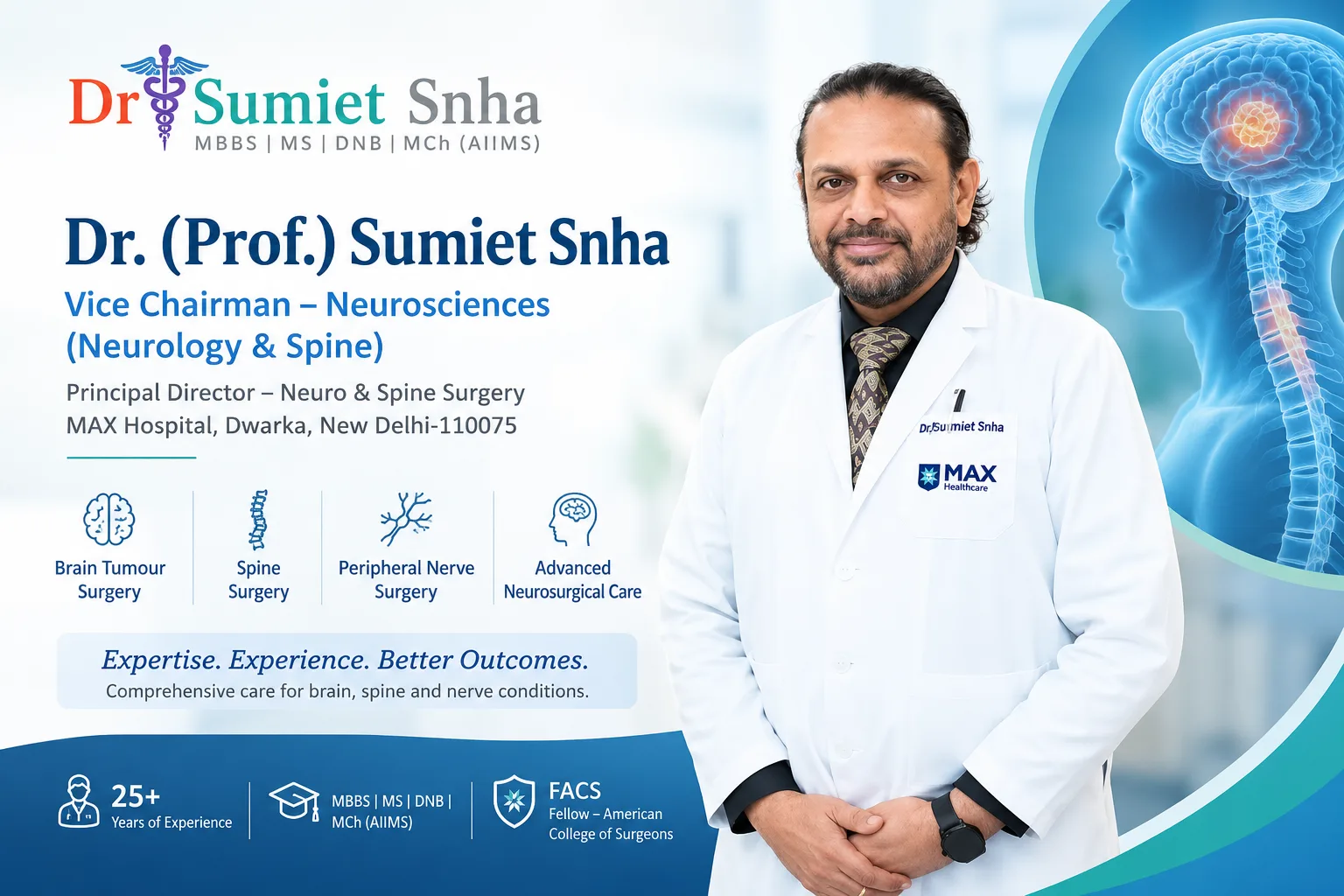
Dr. (Prof.) Sumiet Snha
Vice Chairman – Neurosciences (Neurology & Spine)
MAX Hospital, Dwarka, New Delhi
Dr. (Prof.) Sumiet Snha has 25+ years of experience in neurosurgery. He received his neurosurgical training at AIIMS, New Delhi, and has academic and clinical experience in the field. In 2005, he was appointed to the faculty at AIIMS after completing his neurosurgical training. His professional experience also includes international training and collaboration with neurosurgical experts. This article is intended for general educational information and should not replace personalized medical advice or diagnosis.
Frequently Asked Questions About Pediatric and Adult Brain Surgery
1. Is pediatric brain surgery different from adult brain surgery?
Yes. Pediatric brain surgery considers a child’s ongoing brain development, age, physical growth, neurological function, and future development, while adult surgery generally focuses on treating the existing condition.
2. Why do children need specialized brain surgeons?
Children have developing brains and different medical needs at each age. Specialists with pediatric experience can plan treatment around growth, development, neurological function, and age-specific surgical care.
3. Is brain surgery safe for children?
Brain surgery can involve risks, but the level of risk varies with the child’s condition, age, surgical location, procedure, and overall health. Doctors discuss these risks before treatment.
4. What conditions commonly require pediatric brain surgery?
Some children may need surgery for conditions such as certain brain tumors, hydrocephalus, treatment-resistant epilepsy, congenital abnormalities, or selected vascular problems affecting the brain.
5. Is pediatric brain tumor surgery different from adult tumor surgery?
It can be. Doctors consider the child’s age, development, tumor type and location, nearby brain functions, and potential long-term effects when planning treatment for a pediatric brain tumor.
6. How long does a child take to recover after brain surgery?
Recovery depends on the type of surgery and the child’s overall condition. Some children recover relatively quickly, while others may need rehabilitation and longer-term follow-up.
7. Can brain surgery affect a child’s development?
The possible impact depends on the condition, affected brain area, and type of surgery. Careful planning aims to treat the problem while protecting important neurological functions.
8. What tests are needed before pediatric brain surgery?
Depending on the suspected condition, doctors may recommend neurological examinations, MRI or CT scans, blood tests, and sometimes functional or developmental assessments before planning surgery.
9. Is anesthesia different for pediatric brain surgery?
Yes. Anesthesia is planned according to the child’s age, size, medical condition, and procedure. Pediatric anesthesia teams use age-appropriate monitoring and medication approaches during surgery.
10. When should parents consult a pediatric neurosurgeon?
Parents should consider specialist evaluation when a child has a neurological condition that may require surgery, concerning brain imaging findings, or symptoms that need expert assessment.
11. How can parents choose a pediatric neurosurgery specialist?
Parents can review the doctor’s qualifications, pediatric experience, expertise in the child’s specific condition, hospital facilities, multidisciplinary support, and willingness to explain treatment choices and potential risks.
12. Can children return to school after brain surgery?
Many children can return to school after recovery, but the timing varies. It depends on the surgery, neurological recovery, energy levels, and advice from the treating medical team
Conclusion
Pediatric brain surgery differs from adult brain surgery because children’s brains and bodies are still developing. Treatment therefore requires careful planning based on age, condition, brain function, and long-term development. Parents should discuss all available treatment options with an experienced specialist before making decisions. Dr. (Prof.) Sumiet Snha, Vice Chairman – Neurosciences (Neurology & Spine) at MAX Hospital, Dwarka, New Delhi, brings 25+ years of neurosurgical experience. This article is for general education and does not replace personalized medical advice.

0 Comments