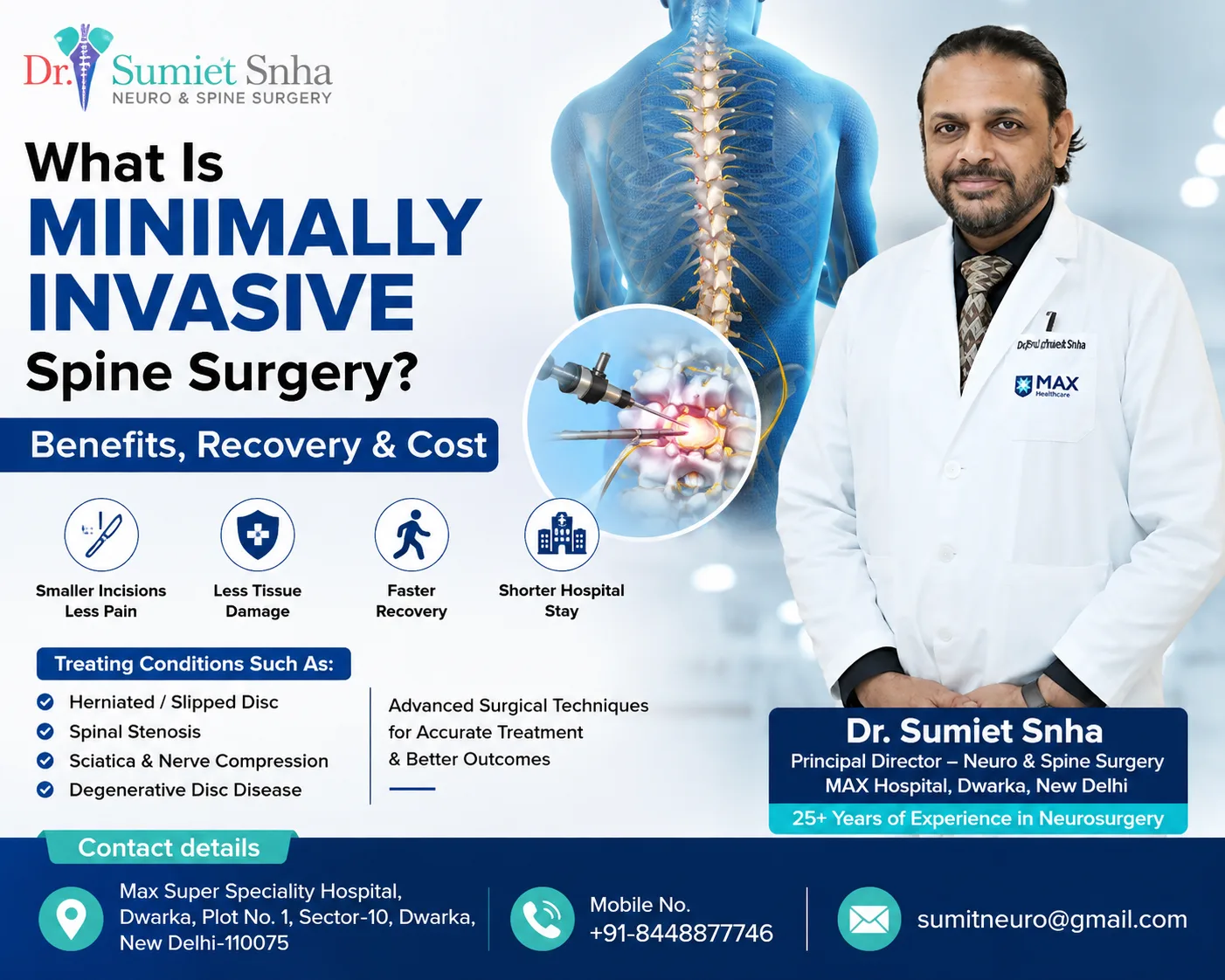
Back and neck problems can affect movement, sleep, work, and everyday activities, especially when nerve compression or spinal disorders cause persistent symptoms.
Minimally invasive spine surgery is a modern surgical approach that uses smaller incisions and specialized instruments to treat selected spinal conditions while aiming to reduce unnecessary tissue disruption. It may be considered for problems such as herniated discs, spinal stenosis, and certain causes of nerve compression when non-surgical treatment has not provided sufficient relief. The suitability of minimally invasive spine surgery for slipped disc or minimally invasive spine surgery for spinal stenosis depends on the diagnosis, imaging findings, symptoms, and overall health. This guide explains its procedure, benefits, recovery, risks, cost, and patient suitability.
What Is Minimally Invasive Spine Surgery?
Pressure on the spinal nerves or other structural issues in the spine may occasionally be connected to persistent back pain, leg discomfort, numbness, or weakness. A specialized technique known as minimally invasive spine surgery allows a surgeon to access the damaged area using tiny incisions as opposed to the larger ones usually used in open surgery. Tools like endoscopes, tubular retractors, surgical microscopes, and precision instruments may be utilized to view and treat the targeted area during a minimally invasive spine surgery treatment. The goal of these minimally invasive spine surgery methods is to minimize needless disruption to surrounding muscles and tissues. The particular approach is determined by the spinal condition, impacted level, symptoms, imaging results, and kind of treatment needed.
What Conditions Can Minimally Invasive Spine Surgery Treat?
Minimally invasive spine surgery may be considered when a specific spinal problem is causing persistent pain, nerve symptoms, or functional limitations and conservative treatment has not provided adequate relief. Depending on the diagnosis, imaging, and overall health, surgeons may use minimally invasive approaches for:
- Herniated or slipped discs causing nerve compression — minimally invasive spine surgery for slipped discs.
- Spinal stenosis that narrows the space around spinal nerves — minimally invasive spine surgery for spinal stenosis.
- Sciatica is associated with nerve irritation or compression — minimally invasive spine surgery for sciatica.
- Selected cases of degenerative disc disease, foraminal stenosis, spinal instability, deformity, decompression, or fusion.
Important: Not every back-pain patient requires surgery. Treatment should follow an appropriate clinical evaluation.
How Does Minimally Invasive Spine Surgery Work?
To determine the cause of pain, weakness, numbness, or other symptoms, a thorough evaluation is the first step in the minimally invasive spine surgery procedure. Before deciding on the best surgical strategy, the surgeon examines the patient's medical history, physical examination, and imaging tests including MRIs and CT scans.
Typically, the procedure involves:
- Making a small incision near the affected spinal level.
- Using an endoscope, tubular retractor, microscope, or specialized instruments to reach the targeted area.
- Relieving nerve pressure, removing damaged disc material, stabilizing the spine, or performing another required procedure.
- Closing the incision and monitoring the patient during early recovery.
The exact technique varies according to the diagnosis, spinal level, and treatment required.
Benefits of Minimally Invasive Spine Surgery
The minimally invasive spine surgery benefits can make this approach a consideration for patients who are suitable candidates for a specific spinal procedure. Because the technique is designed to access the targeted area through smaller openings, it may reduce disruption to surrounding tissues compared with some conventional approaches. Potential benefits include:
- smaller cuts, which could leave scars less noticeable.
- Less muscle and soft-tissue disruption in suitable procedures.
- Potentially lower postoperative discomfort for some patients.
- Reduced blood loss in many minimally invasive procedures.
- Shorter hospital stays for selected surgeries.
- Earlier mobility when medically appropriate.
- Potentially faster recovery and return to routine activities.
- Smaller surgical scars compared with larger open incisions.
However, benefits vary according to the procedure, diagnosis, surgical technique, and individual patient factors. Minimally invasive surgery is not automatically the right choice for every spinal condition.
Minimally Invasive vs Traditional Spine Surgery
Choosing between minimally invasive and traditional spine surgery depends on the spinal condition, affected level, imaging findings, symptoms, and the type of treatment required. Minimally invasive spine surgery generally aims to reach the problem through smaller openings, while conventional surgery may require a larger surgical exposure.
|
Feature |
Minimally Invasive Spine Surgery |
Traditional/Open Spine Surgery |
|
Incision |
Generally smaller |
Generally larger |
|
Muscle disruption |
Often less |
May be greater |
|
Blood loss |
May be lower in selected procedures |
Can be higher depending on surgery |
|
Hospital stay |
Often shorter for suitable procedures |
May be longer |
|
Postoperative discomfort |
May be lower |
May be higher initially |
|
Recovery |
May be faster in selected patients |
Can require longer recovery |
|
Surgical suitability |
Depends on condition |
Used for many complex conditions |
|
Scarring |
Generally smaller |
Generally more noticeable |
Important: Minimally invasive surgery is not automatically better for every spinal condition; the safest and most effective approach depends on individual clinical needs.
Minimally Invasive Spine Surgery Recovery
Minimally invasive spine surgery recovery varies from person to person and depends on the procedure performed, spinal condition, age, general health, and individual healing response.
Immediately After Surgery
- The medical team monitors vital signs and manages postoperative discomfort.
- Gentle movement may begin when considered safe.
- Patients receive instructions about wound care, medication, and physical activity.
First Few Weeks
- Walking is usually encouraged according to medical advice.
- Daily activities are increasing gradually.
- Heavy lifting, bending, or strenuous exercise should be avoided until the surgeon provides clearance.
Longer-Term Recovery
- Physiotherapy may be recommended to improve strength and mobility.
- Follow-up visits help monitor healing and recovery progress.
The spine surgery recovery time is different for every patient, so recovery milestones should be based on individual medical guidance.
How Much Does Minimally Invasive Spine Surgery Cost?
Because every patient may need a different treatment and degree of care, the cost of minimally invasive spine surgery might vary greatly. The total cost of minimally invasive spine surgery in Delhi may vary depending on:
- Type of spine procedure and number of levels treated
- Surgeon’s professional fee and anesthesia charges
- Hospital room, operation theatre, and other facility charges
- MRI, CT scans, blood tests, and other diagnostic investigations
- Implants or specialized surgical equipment, when required
- Length of hospital stay
- Postoperative medicines, physiotherapy, and rehabilitation
- Hospital location and available facilities
There is no single cost that applies to every patient. A personalized estimate should be requested after clinical evaluation, diagnosis, and treatment planning.
Who May Be a Candidate for Minimally Invasive Spine Surgery?
A patient may be considered for minimally invasive spine surgery when a specific spinal problem has been accurately diagnosed and symptoms continue despite appropriate non-surgical treatment. Potential candidates may include patients who:
- Have a clearly identified spinal condition.
- Experience persistent pain, numbness, weakness, or nerve-related symptoms.
- Have MRI, CT, or other imaging findings that correspond with their symptoms.
- Have a condition that can be safely addressed through a minimally invasive technique.
- Have undergone evaluation by an experienced spine surgeon.
However, severe, unstable, or complex spinal conditions may require traditional or more extensive surgery. The final treatment decision should always be individualized after a complete clinical assessment.
Risks and Limitations
Although minimally invasive spine surgery is designed to reduce tissue disruption in suitable procedures, it still carries potential risks. These may include:
- Infection or bleeding
- Nerve injury
- Dural tear or cerebrospinal fluid (CSF) leak
- Persistent or recurrent pain or other symptoms
- Blood clots
- Anesthesia-related complications
- Need for additional surgery in certain cases
The likelihood of complications depends on the specific procedure, spinal condition, surgical level, overall health, and individual risk factors. A spine surgeon should explain the expected benefits, possible limitations, and procedure-specific risks before treatment so patients can make an informed decision.
About Dr.(Prof.) Sumiet Snha
Dr.(Prof.) Sumiet Snha is a highly experienced neurosurgeon with 25+ years of expertise in neurosurgery, neurology, and spine care. Trained at AIIMS, New Delhi, he has received advanced international exposure in Japan, Brazil, and Germany. He is associated with MAX Hospital and has expertise in minimally invasive spine surgery, spinal injuries, peripheral nerve surgery, and complex neurosurgical procedures. He is also an AO Spine-certified teaching faculty member, actively involved in research, education, and advanced patient-focused neurosurgical care.
Frequently Asked Questions About Minimally Invasive Spine Surgery
1. What is minimally invasive spine surgery?
Minimally invasive spine surgery is a surgical approach that uses smaller incisions and specialized instruments to reach and treat specific spinal problems while aiming to reduce unnecessary disruption to surrounding tissues.
2. Is minimally invasive spine surgery better than traditional surgery?
It may provide advantages for suitable patients, such as smaller incisions and potentially faster recovery. However, the appropriate approach depends on the spinal condition, imaging findings, and treatment required.
3. What conditions can minimally invasive spine surgery treat?
Depending on the diagnosis, it may be used for selected herniated discs, spinal stenosis, nerve compression, sciatica, and certain degenerative or structural spinal conditions.
4. How long does minimally invasive spine surgery take?
The operating time varies according to the type of procedure, spinal level involved, number of levels treated, and complexity of the condition.
5. How long does it take to recover from minimally invasive spine surgery?
Recovery differs between patients. The type of surgery, overall health, physical condition, and individual healing can all influence recovery time and the return to normal activities.
6. Is minimally invasive spine surgery painful?
Some pain or discomfort can occur after surgery. However, suitable minimally invasive procedures may involve less disruption to surrounding tissues, which can potentially reduce postoperative discomfort for some patients.
7. What is the cost of minimally invasive spine surgery?
The cost depends on factors such as the procedure performed, hospital, surgeon’s fees, anesthesia, diagnostic tests, implants, hospital stay, medicines, and rehabilitation requirements.
8. Can minimally invasive spine surgery treat a slipped disc?
Yes, selected herniated or slipped discs that cause nerve compression may be treated using an appropriate minimally invasive technique. The decision depends on symptoms, imaging, and clinical evaluation.
9. Can minimally invasive spine surgery treat spinal stenosis?
In selected patients, minimally invasive decompression may be used to relieve pressure caused by spinal stenosis. The appropriate technique depends on the location and severity of the narrowing.
10. What are the risks of minimally invasive spine surgery?
Potential risks include infection, bleeding, nerve injury, dural tear or CSF leakage, recurrent symptoms, blood clots, and anesthesia-related complications. Individual risks vary by procedure and patient.
11. When can I return to normal activities after spine surgery?
The timeline varies according to the operation and individual recovery. Patients should gradually increase activities and avoid heavy lifting or strenuous exercise until their surgeon confirms it is safe.
12. How do I choose a spine surgeon for minimally invasive spine surgery?
Consider the surgeon’s relevant experience, training, diagnostic approach, familiarity with minimally invasive techniques, hospital facilities, and ability to create an individualized treatment plan based on your condition.
Conclusion
Minimally invasive spine surgery offers a modern approach for treating selected spinal conditions through smaller surgical openings and specialized techniques. Its potential benefits, recovery pattern, and suitability vary from patient to patient. Accurate diagnosis, appropriate patient selection, and experienced surgical evaluation are essential before considering treatment. The cost of minimally invasive spine surgery also depends on the procedure, hospital, and individual treatment requirements. Patients with persistent back pain, nerve symptoms, weakness, or other spinal concerns should seek evaluation from a qualified spine or neurosurgical specialist before deciding on surgery.




0 Comments