Spine problems are becoming increasingly common in today’s lifestyle and can affect people of any age group. These conditions often lead to persistent pain, stiffness, and difficulty in performing daily activities such as walking, sitting, or bending. Whether the cause is aging, long hours of poor posture, injury, or an underlying medical issue, spinal disorders can have a serious impact on overall quality of life. In such cases, getting expert medical advice from the Best Spine Surgeon in Delhi NCR can help in identifying the exact problem and choosing the right treatment approach.
The spine is a key structure in the human body that provides support, protects the spinal cord, and allows smooth movement. A healthy spine is essential for maintaining balance, flexibility, and an active lifestyle. However, when conditions like herniated disc, sciatica, spinal stenosis, or degenerative disc disease develop, even simple movements such as bending, standing, or lifting objects can become painful and difficult.
One major concern is that many people tend to ignore early warning signs like mild back pain, stiffness, or tingling sensations. Over time, these small symptoms can turn into more serious spinal conditions. Early diagnosis and timely treatment play a crucial role in preventing complications and improving long-term recovery outcomes.
In this article, we will explore the most common symptoms, causes, diagnostic methods, and treatment options for spine problems. You will also learn practical ways to protect your spine and understand when it is important to seek medical attention for better spinal health and a pain-free life.
Understanding the Spine
What Is the Spine?
The spine, also known as the backbone or vertebral column, is one of the most important structures in the human body. It is a complex framework made up of 33 vertebrae that are stacked on top of one another to provide strength, stability, and flexibility. The spine is divided into five regions: cervical (neck), thoracic (upper back), lumbar (lower back), sacral, and coccygeal (tailbone). Maintaining a healthy spine is essential for overall well-being, and individuals experiencing persistent spinal issues may benefit from consulting the Best Spine Surgeon in Delhi NCR for expert evaluation and treatment.
Between the vertebrae are soft, cushion-like discs that act as shock absorbers and help prevent friction during movement. The spinal cord, a vital part of the nervous system, runs through a protective canal within the spine. Numerous nerves branch out from the spinal cord, carrying signals between the brain and different parts of the body. Together, the vertebrae, discs, nerves, and spinal cord form a highly coordinated system that supports movement and protects neurological function.
Main Functions of the Spine
The spine performs several critical functions that are essential for daily life, including:
- Supporting body weight and maintaining structural stability
- Protecting the spinal cord from injury
- Enabling movement and flexibility for bending, twisting, and walking
- Maintaining proper posture and body balance
- Helping distribute mechanical stress during physical activities
Because the spine plays such a crucial role in overall health, any spinal disorder can affect mobility, comfort, and quality of life. Understanding the structure and function of the spine is the first step toward preventing spine problems and maintaining long-term spinal health.
Common Symptoms of Spine Problems
Spine problems can develop gradually or appear suddenly, depending on the underlying condition. Recognizing the early symptoms of spinal disorders is essential because timely diagnosis and treatment can help prevent complications and improve recovery outcomes. If symptoms become persistent or severe, consulting the Best Spine Surgeon in Delhi NCR can help identify the root cause and determine the most effective treatment plan.
Pain-Related Symptoms
Pain is often the first and most noticeable sign of a spine problem. The location and intensity of the pain can vary depending on the affected area of the spine.
- Back pain, especially in the lower back, is one of the most common symptoms.
- Neck pain may occur due to muscle strain, disc problems, or nerve compression.
- Radiating pain in the arms or legs can develop when spinal nerves become irritated or compressed, often causing discomfort that travels beyond the spine.
Neurological Symptoms
When a spinal condition affects nearby nerves, neurological symptoms may occur, including:
- Numbness in the arms, hands, legs, or feet
- Tingling sensations, often described as "pins and needles"
- Muscle weakness that affects strength and coordination
These symptoms may indicate nerve compression and should not be ignored.
Mobility Issues
Many spinal disorders can interfere with normal movement and daily activities.
- Difficulty walking or standing for extended periods
- Reduced flexibility in the neck or back
- Poor balance and coordination
- Stiffness that limits movement
Warning Signs That Require Immediate Medical Attention
Certain symptoms may indicate a serious spinal condition and require urgent medical evaluation:
- Loss of bladder or bowel control
- Severe weakness in the arms or legs
- Sudden loss of sensation or numbness
- Intense pain following an injury or accident
Seeking prompt medical attention for these warning signs can help prevent permanent nerve damage and improve treatment outcomes.
Common Causes of Spine Problems
Spine problems can develop due to a variety of factors, ranging from natural aging processes to lifestyle habits and injuries. Understanding the underlying causes of spinal disorders can help individuals take preventive measures and seek timely treatment when symptoms arise. If persistent back or neck pain affects your daily life, consulting the Best Spine Surgeon inDelhi NCR can help identify the exact cause and provide appropriate treatment recommendations.
Age-Related Degeneration
As people age, the spine naturally undergoes wear and tear. The spinal discs gradually lose moisture and elasticity, making them less effective at absorbing shock. This condition, often referred to as disc degeneration, can contribute to chronic back pain and reduced mobility.
Common age-related causes include:
- Disc wear and tear that increases the risk of herniated discs
- Spinal arthritis that causes inflammation, stiffness, and discomfort
- Degenerative changes in the joints and ligaments
Poor Posture
Modern lifestyles often involve long hours of sitting, which can place excessive stress on the spine. Poor posture can gradually alter spinal alignment and increase the risk of neck and back problems.
Examples include:
- Sitting for long periods without proper support
- Improper workstation setup that strains the neck and lower back
- Frequent use of mobile devices with poor neck positioning
Injuries and Trauma
Physical injuries can damage the spine and surrounding structures, sometimes leading to long-term complications.
Common sources of spinal trauma include:
- Sports-related injuries
- Falls from heights or slips
- Motor vehicle accidents
- Sudden impacts that affect the vertebrae or spinal discs
Lifestyle Factors
Several everyday habits can negatively affect spinal health over time.
Key risk factors include:
- Obesity, which places additional stress on the spine
- Lack of regular exercise, leading to weak core and back muscles
- Smoking, which may reduce blood flow to spinal tissues and accelerate disc degeneration
Genetic and Congenital Conditions
Some individuals are born with spinal abnormalities or inherit conditions that increase their risk of developing spine problems.
Examples include:
- Scoliosis, a condition that causes abnormal curvature of the spine
- Inherited spinal disorders affecting spinal structure and function
- Congenital abnormalities present at birth
Understanding these common causes can help individuals make informed lifestyle choices, protect their spinal health, and reduce the risk of developing serious spine-related conditions in the future.
Most Common Types of Spine Problems
1. Herniated Disc
A herniated disc occurs when the soft inner portion of a spinal disc pushes through its outer layer and places pressure on nearby nerves. Symptoms often include back pain, neck pain, numbness, tingling sensations, and weakness in the arms or legs. Common causes include aging, improper lifting techniques, obesity, and repetitive strain. Treatment typically involves physical therapy, pain-relieving medications, lifestyle modifications, and in severe cases, surgery. Early treatment can help prevent long-term nerve damage and improve mobility.
2. Sciatica
Sciatica is a condition caused by irritation or compression of the sciatic nerve, which extends from the lower back down the legs. Patients often experience sharp pain that radiates through the buttocks and legs, along with numbness and muscle weakness. Herniated discs, spinal stenosis, and bone spurs are common causes. Treatment options include exercise therapy, anti-inflammatory medications, posture correction, and occasionally surgical intervention for severe nerve compression.
3. Spinal Stenosis
Spinal stenosis refers to the narrowing of spaces within the spine, which places pressure on the spinal cord and nerves. Symptoms may include chronic back pain, leg pain, numbness, and difficulty walking. The condition is commonly associated with aging and degenerative spinal changes. Treatment may involve physical therapy, medications, epidural injections, and surgery when symptoms significantly affect daily life.
4. Degenerative Disc Disease
Degenerative disc disease develops when spinal discs gradually lose their flexibility and cushioning ability over time. Individuals may experience persistent back pain, stiffness, and reduced movement. Aging is the primary cause, although injuries and repetitive strain can contribute to the condition. Treatment focuses on pain management, exercise, weight control, and strengthening the muscles that support the spine. Maintaining a healthy lifestyle can help slow disease progression and improve spinal health.
5. Scoliosis
Scoliosis is characterized by an abnormal sideways curvature of the spine. While some cases are mild, severe scoliosis can lead to posture changes, uneven shoulders, back pain, and breathing difficulties. The condition may develop during childhood or result from neuromuscular disorders and age-related degeneration. Treatment options include observation, bracing, physical therapy, and surgery for significant spinal curvature.
6. Osteoarthritis of the Spine
Osteoarthritis of the spine occurs when the cartilage between spinal joints gradually wears down. This can cause inflammation, stiffness, pain, and reduced flexibility. Risk factors include aging, obesity, and previous spinal injuries. Treatment generally includes exercise programs, medications, physical therapy, and lifestyle modifications designed to reduce joint stress. Early management can help maintain mobility and reduce discomfort.
7. Spondylolisthesis
Spondylolisthesis occurs when one vertebra slips forward over the vertebra below it. This condition can result in lower back pain, muscle tightness, nerve compression, and difficulty standing or walking. Common causes include congenital defects, spinal degeneration, and stress fractures. Treatment often includes physical therapy, activity modification, pain management, and surgery in advanced cases.
8. Cervical Radiculopathy (Pinched Nerve)
Cervical radiculopathy develops when a nerve in the neck becomes compressed or irritated. Symptoms often include neck pain, shoulder discomfort, numbness, tingling, and weakness that extends into the arm or hand. Herniated discs, bone spurs, and cervical spinal degeneration are among the most common causes. Treatment may involve physical therapy, medications, steroid injections, and surgery when conservative treatments fail.
Because spine problems can vary significantly in severity and symptoms, obtaining an accurate diagnosis is essential for successful treatment. Patients experiencing persistent pain or neurological symptoms should consider consulting the Best Spine Surgeon in Delhi NCR to receive expert evaluation and personalized treatment recommendations. Early intervention often leads to better outcomes and improved quality of life.
How Spine Problems Are Diagnosed
Accurate diagnosis is the foundation of effective spine treatment. Since many spine problems share similar symptoms, such as back pain, neck pain, numbness, and muscle weakness, healthcare professionals use a combination of clinical evaluations and advanced imaging techniques to identify the exact cause of the condition. Individuals experiencing persistent spinal symptoms should seek expert medical advice, and consulting the Best Spine Surgeon in Delhi NCR can help ensure a thorough evaluation and personalized treatment plan.
Medical History Review
The diagnostic process typically begins with a detailed review of the patient's medical history. Doctors assess symptoms, pain patterns, previous injuries, lifestyle habits, and any existing medical conditions that may contribute to spinal disorders. This information helps narrow down potential causes and guides further testing.
Physical Examination
During the physical examination, the specialist evaluates posture, spinal alignment, flexibility, muscle strength, reflexes, and nerve function. A comprehensive physical assessment can reveal important signs of nerve compression, spinal instability, or mobility limitations.
Diagnostic Tests
Advanced imaging and diagnostic studies are often used to confirm the diagnosis and determine the severity of the condition.
X-rays
X-rays help identify fractures, spinal alignment issues, arthritis, and other structural abnormalities affecting the vertebrae.
MRI Scans
MRI scans provide highly detailed images of soft tissues, including spinal discs, nerves, ligaments, and the spinal cord. MRI is often considered one of the most valuable tools for diagnosing herniated discs and nerve-related conditions.
CT Scans
CT scans create detailed cross-sectional images of the spine and are particularly useful for evaluating complex bone structures and injuries.
Nerve Conduction Studies
These tests measure how well electrical signals travel through nerves and help detect nerve damage or compression.
Importance of Accurate Diagnosis
An accurate diagnosis is essential for developing the most effective treatment strategy and preventing unnecessary procedures. Early identification of spine problems can improve treatment outcomes, reduce complications, and help patients return to their normal activities more quickly.
Treatment Options for Spine Problems
The treatment of spine problems depends on the underlying condition, severity of symptoms, and the patient's overall health. Modern spine care focuses on relieving pain, restoring mobility, and improving quality of life through a combination of non-surgical and surgical approaches. In many cases, conservative treatments are effective, while more advanced spinal disorders may require specialized surgical intervention. Consulting the Best Spine Surgeon in Delhi NCR can help patients receive an accurate diagnosis and a personalized treatment plan tailored to their specific condition.
Non-Surgical Treatments
Physical Therapy
Physical therapy is often the first line of treatment for many spinal disorders. It focuses on strengthening the muscles that support the spine, improving flexibility, and reducing stress on affected areas. Strengthening exercises can enhance spinal stability, while posture correction techniques help reduce strain caused by poor body mechanics. Regular physical therapy can significantly improve mobility and reduce chronic back and neck pain without surgery.
Medications
Medications are commonly used to manage pain and inflammation associated with spine conditions. Pain relievers help improve daily comfort, while anti-inflammatory drugs reduce swelling around affected nerves and joints. These treatments are generally recommended as part of a comprehensive care plan rather than a long-term solution.
Lifestyle Modifications
Healthy lifestyle changes play a crucial role in spine health and recovery. Weight management helps reduce pressure on the spine, while ergonomic improvements at home and work can minimize unnecessary strain. Maintaining a healthy weight and practicing proper posture are essential for preventing further spinal damage and supporting long-term recovery.
Steroid Injections
Steroid injections may be recommended when inflammation causes significant pain. These injections can provide temporary relief by reducing swelling around compressed nerves. While effective for many patients, steroid injections are not a permanent solution and may need to be combined with other treatment methods for optimal results.
Surgical Treatments
When Surgery Is Necessary
Surgery is typically considered when non-surgical treatments fail to provide relief or when severe nerve compression, spinal instability, or progressive neurological symptoms are present.
Common Spine Surgeries
A discectomy is performed to remove part of a herniated disc that is pressing on a nerve. Spinal fusion stabilizes the spine by permanently joining two or more vertebrae. A laminectomy involves removing a portion of bone to relieve pressure on the spinal cord or nerves. These procedures are often recommended only after careful evaluation and when conservative treatments are no longer effective.
Recovery and Rehabilitation
Recovery after spine surgery varies depending on the procedure and the patient's condition. Rehabilitation programs typically include physical therapy, guided exercises, and gradual activity progression. A structured recovery plan is essential for restoring strength, improving function, and achieving the best possible long-term outcomes.
Tips to Prevent Spine Problems
Preventing spine problems is often easier than treating them. Adopting healthy lifestyle habits and taking proactive measures can significantly reduce the risk of developing chronic back pain, neck pain, and other spinal disorders. According to spine specialists, maintaining good spinal health requires a combination of proper posture, regular physical activity, and healthy daily habits. Individuals seeking expert guidance can consult the Best Spine Surgeon in Delhi NCR for personalized advice on protecting their spine and preventing future complications.
Maintain Proper Posture
Good posture helps distribute body weight evenly and reduces unnecessary stress on the spine. Whether sitting, standing, or walking, keeping the spine properly aligned can prevent muscle strain and reduce the risk of long-term spinal issues. Proper posture is one of the most effective ways to support spinal health and prevent chronic pain.
Exercise Regularly
Regular exercise strengthens the muscles that support the spine and improves flexibility, balance, and mobility. Activities such as walking, swimming, stretching, and core-strengthening exercises can help maintain spinal stability and reduce the risk of injury.
Lift Heavy Objects Correctly
Improper lifting techniques can place excessive pressure on the spine and lead to disc injuries. When lifting heavy objects, it is important to bend the knees, keep the back straight, and use the strength of the legs rather than the lower back.
Maintain a Healthy Weight
Excess body weight places additional strain on the spinal column and supporting muscles. Maintaining a healthy weight can reduce pressure on the spine and lower the risk of degenerative spinal conditions.
Avoid Smoking
Smoking can impair blood flow to spinal tissues and accelerate disc degeneration. Quitting smoking supports better circulation and promotes overall spinal health.
Create an Ergonomic Workspace
An ergonomically designed workstation helps maintain proper posture during long hours of work. Adjusting chair height, monitor position, and desk setup can significantly reduce stress on the neck and back.
Eat a Bone-Healthy Diet
A balanced diet rich in calcium, vitamin D, protein, and other essential nutrients supports strong bones and healthy spinal structures. Proper nutrition plays a crucial role in maintaining long-term spine health and reducing the risk of age-related spinal disorders.
For individuals seeking specialized spine care, Dr.(Prof.) Sumiet Snha, Vice Chairman – Neurosciences (Neurology & Spine), MBBS, MS, DNB, MCh (AIIMS, New Delhi), brings more than 25 years of experience in neurosurgery. Since 2005, Dr. Sumiet Snha has been recognized for his expertise in diagnosing and treating complex spinal conditions, helping patients achieve improved mobility, pain relief, and better quality of life through advanced spine care.
When to See a Spine Specialist
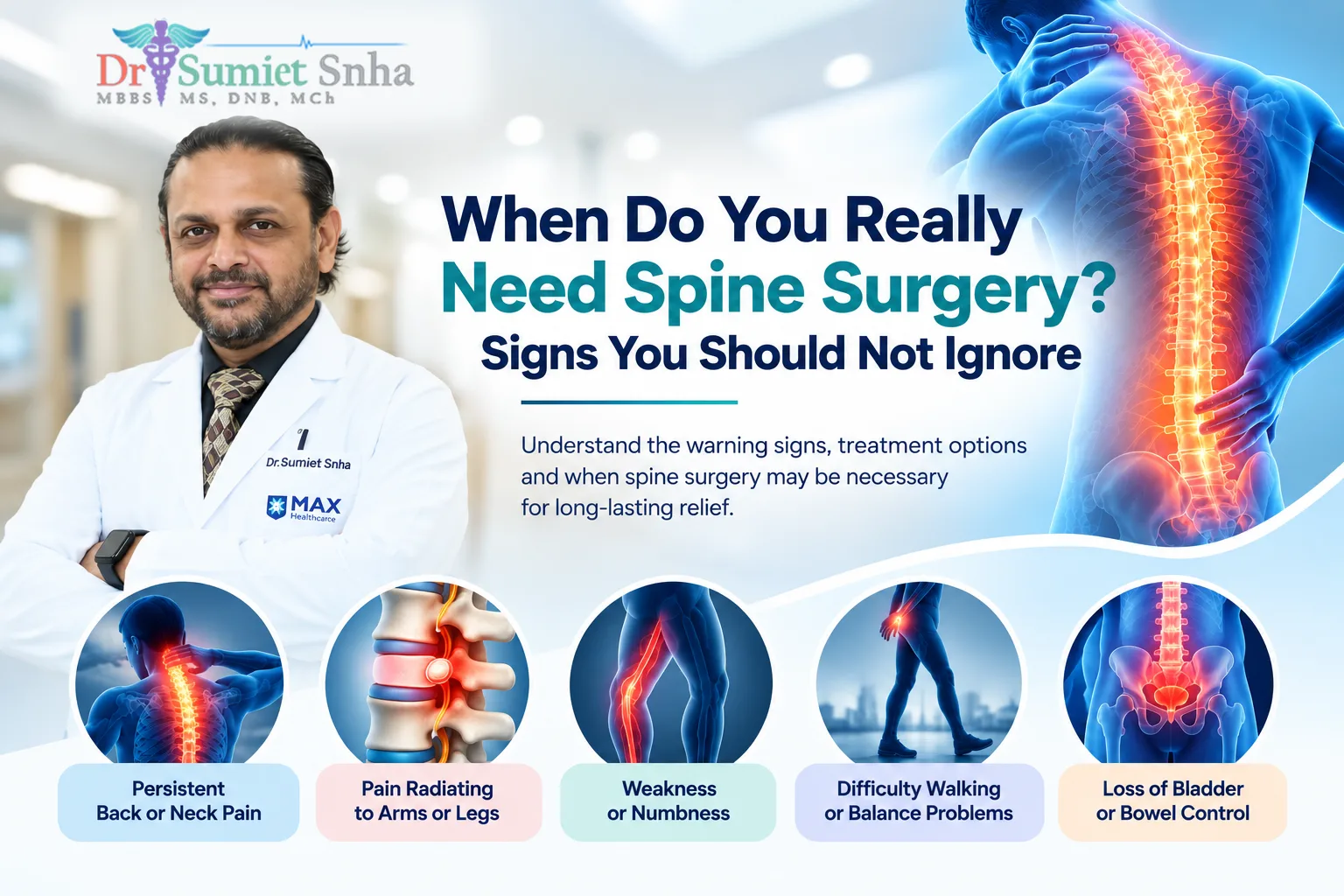
Many people experience occasional back or neck discomfort, but certain symptoms should never be ignored. Persistent pain that lasts for several weeks, recurring numbness, muscle weakness, difficulty walking, or reduced mobility may indicate an underlying spinal condition that requires professional evaluation. More serious warning signs, such as loss of bladder or bowel control, sudden weakness in the arms or legs, or significant loss of sensation, require immediate medical attention because they may signal severe nerve compression or spinal cord involvement.
Symptoms You Should Not Ignore
Spinal disorders often progress gradually, making early symptoms easy to overlook. However, persistent pain, numbness and weakness, difficulty walking, and neurological symptoms can significantly affect daily life and may worsen without appropriate treatment. Seeking timely medical care can help identify the root cause and prevent further complications.
Benefits of Early Medical Evaluation
Early diagnosis allows healthcare providers to develop a personalized treatment plan before the condition becomes more severe. Prompt evaluation can improve treatment outcomes, reduce pain, preserve mobility, and potentially avoid the need for complex surgical procedures. Advanced diagnostic tools can accurately identify spinal problems and guide the most effective treatment approach.
Importance of Consulting the Best Spine Surgeon in Delhi NCR for Advanced Cases
For individuals experiencing severe or persistent spinal symptoms, consulting the Best Spine Surgeon in Delhi NCR is an important step toward receiving specialized care. Dr.(Prof.) Sumiet Snha, Vice Chairman – Neurosciences (Neurology & Spine), MBBS, MS, DNB, MCh (AIIMS, New Delhi), has more than 25 years of experience in the field of neurosurgery. Since 2005, Dr. Sumiet Snha has been dedicated to diagnosing and treating complex spine disorders, helping patients achieve lasting relief, improved mobility, and a better quality of life through advanced and evidence-based spine care.
Frequently Asked Questions (FAQs)
1. What are the most common spine problems?
Some of the most common spine problems include herniated discs, sciatica, spinal stenosis, degenerative disc disease, scoliosis, osteoarthritis of the spine, spondylolisthesis, and cervical radiculopathy. These conditions can cause pain, stiffness, numbness, and mobility issues.
2. Can spine problems heal without surgery?
Yes, many spine problems can be effectively managed without surgery. Physical therapy, medications, lifestyle modifications, and targeted exercises often help reduce symptoms and improve function. Surgery is usually considered only when conservative treatments fail.
3. What causes chronic back pain?
Chronic back pain can result from herniated discs, arthritis, poor posture, spinal degeneration, muscle strain, obesity, injuries, or nerve compression. Identifying the underlying cause is essential for effective treatment.
4. How can I keep my spine healthy?
Maintaining good posture, exercising regularly, maintaining a healthy weight, eating a balanced diet, and avoiding smoking can help support long-term spinal health and reduce the risk of spine problems.
5. What is the best treatment for a herniated disc?
Treatment depends on the severity of symptoms. Most patients benefit from physical therapy, pain management, and activity modification. Severe cases involving nerve compression may require surgery.
6. When should I see a spine specialist?
You should consult a spine specialist if you experience persistent back pain, neck pain, numbness, muscle weakness, difficulty walking, or symptoms that interfere with daily activities.
7. Is spine surgery always necessary?
No. Most spinal conditions can be managed with non-surgical treatments. Surgery is typically recommended only for severe conditions, significant nerve compression, or when conservative therapies do not provide relief.
8. How long does recovery from spine surgery take?
Recovery time varies depending on the procedure and the patient's health. Some patients recover within a few weeks, while others may require several months of rehabilitation.
9. Can poor posture cause spine problems?
Yes. Poor posture places excessive stress on the spine and surrounding muscles, increasing the risk of chronic neck pain, back pain, and spinal misalignment over time.
10. What are the warning signs of a serious spine condition?
Warning signs include severe pain, progressive weakness, numbness, difficulty walking, and loss of bladder or bowel control. These symptoms require immediate medical attention.
11. Does regular exercise help prevent spine problems?
Regular exercise strengthens the muscles supporting the spine, improves flexibility, and helps maintain proper posture, reducing the risk of many common spinal disorders.
12. Can aging affect spinal health?
Yes. Aging naturally causes wear and tear on spinal discs, joints, and ligaments, increasing the risk of degenerative disc disease, spinal stenosis, and osteoarthritis.
Conclusion
The spine plays a vital role in supporting the body, protecting the spinal cord, and enabling movement. However, various spine problems such as herniated discs, sciatica, spinal stenosis, degenerative disc disease, scoliosis, and cervical radiculopathy can affect spinal function and significantly impact quality of life. Understanding these conditions and their symptoms is essential for maintaining long-term spinal health.
Common warning signs such as persistent back pain, neck pain, numbness, tingling sensations, muscle weakness, and mobility difficulties should never be ignored. Many spinal disorders develop gradually, and delaying treatment may increase the risk of complications and prolonged discomfort. Early diagnosis and appropriate treatment can help manage symptoms effectively, improve mobility, and prevent further damage.
Maintaining a healthy lifestyle is one of the most effective ways to protect your spine. Regular exercise, proper posture, weight management, ergonomic work habits, and a nutritious diet all contribute to better spinal health and overall well-being. These preventive measures can reduce the likelihood of developing chronic spinal conditions and support an active lifestyle.
If you experience ongoing spinal symptoms or notice changes in your mobility and daily functioning, seeking professional medical advice is important. A qualified spine specialist can identify the underlying cause of your condition and recommend the most suitable treatment plan. Taking action early can help preserve spinal health, reduce pain, and improve your quality of life for years to come.

0 Comments