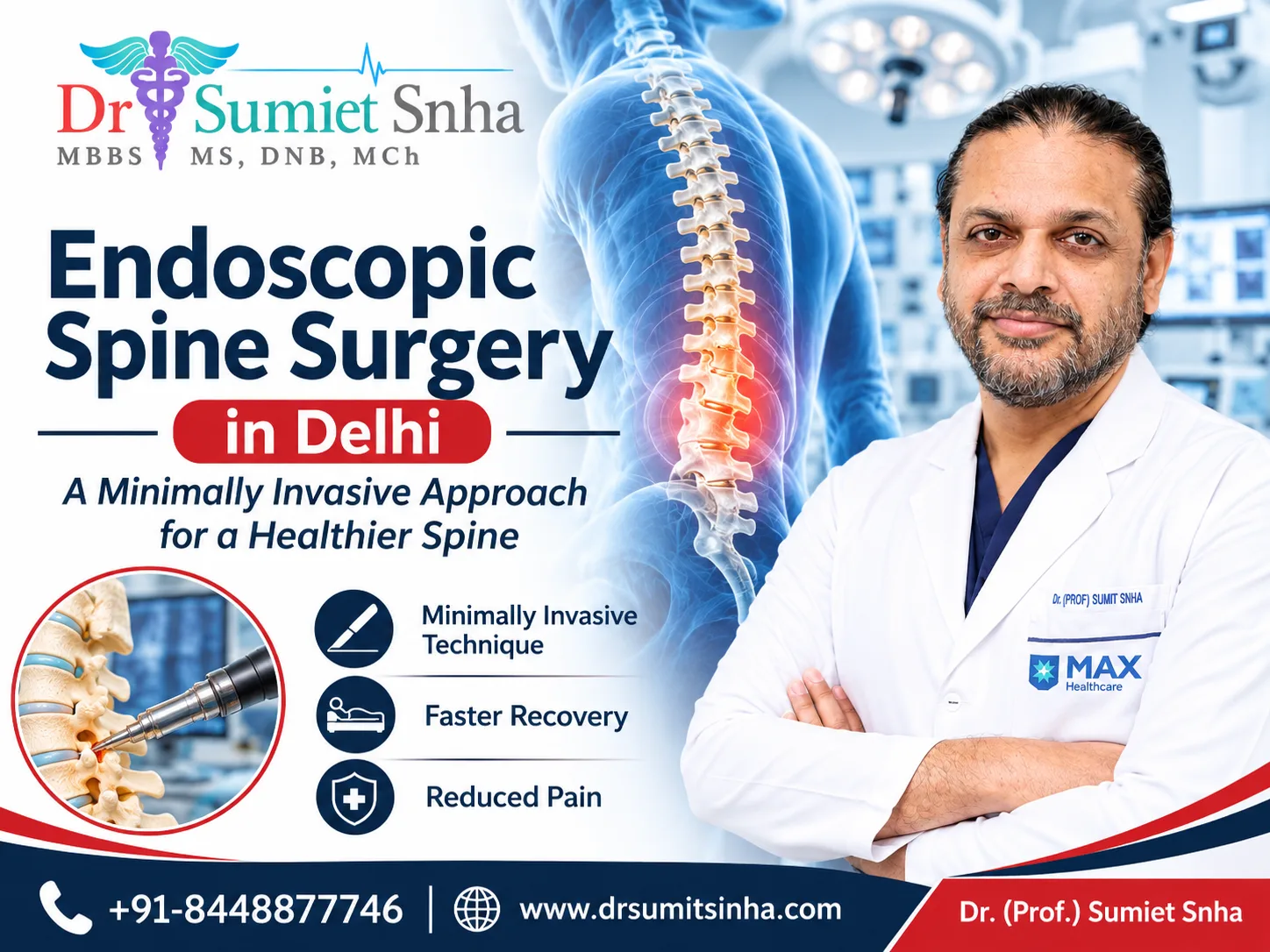
Endoscopic Spine Surgery in Delhi is an advanced minimally invasive approach that may help selected patients with spinal conditions such as herniated discs, sciatica, and certain forms of spinal stenosis. By using a specialised endoscope, a camera, and small surgical instruments, the surgeon can access the affected area through a relatively small incision while aiming to minimise disruption to surrounding muscles and tissues.
Persistent back pain, neck pain, numbness, or pain radiating into the arms or legs can interfere with daily activities, sleep, and mobility. Although many spinal conditions improve with appropriate non-surgical treatment, some patients continue to experience symptoms because of nerve compression or structural problems in the spine.
For suitable patients, Endoscopic Spine Surgery may be considered after a detailed clinical examination and review of diagnostic imaging. The decision depends on the underlying condition, symptom severity, previous treatments, and individual medical needs.
This guide explains how the procedure works, which conditions it may treat, its potential benefits and limitations, and what patients should understand before considering surgery.
What Is Endoscopic Spine Surgery?
Endoscopic Spine Surgery is a minimally invasive surgical technique that uses a thin tubular instrument equipped with a camera and light source to provide a magnified view of the surgical area.
Instead of exposing a large section of the spine through a traditional open incision, the surgeon accesses the targeted area through a small opening and uses specialised instruments to perform the required procedure.
Depending on the diagnosis, the operation may involve removing part of a herniated disc, relieving pressure on a spinal nerve, or addressing selected causes of spinal canal narrowing.
The exact technique varies according to the spinal level, the location of the problem, and the surgeon's assessment.
It is important to understand that minimally invasive does not mean risk-free. Endoscopic techniques require appropriate training, careful planning, and suitable patient selection. Some spinal conditions are better managed using other surgical approaches or non-surgical treatment.
Which Conditions May Be Treated with Endoscopic Spine Surgery?
The suitability of endoscopic treatment depends on the specific spinal abnormality and its relationship to nearby nerves.
1. Herniated or Slipped Disc
A herniated disc develops when material from an intervertebral disc protrudes beyond its usual boundaries. If the protruding material compresses a nearby nerve, it may cause pain, tingling, numbness, or weakness.
Endoscopic surgery may be considered when a herniated disc causes persistent symptoms that have not improved sufficiently with appropriate conservative treatment.
The objective is to relieve pressure on the affected nerve while preserving as much healthy disc tissue and surrounding structure as possible.
2. Sciatica
Sciatica describes pain that travels along the sciatic nerve pathway, often from the lower back into the buttock and leg. It commonly occurs when a spinal nerve root is irritated or compressed.
A herniated lumbar disc is one possible cause, although other spinal conditions can also produce similar symptoms.
Endoscopic Spine Surgery may be an option when investigations identify a surgically treatable cause of nerve compression. However, not everyone with sciatica needs surgery. Many patients can improve with medication, physiotherapy, activity modification, and other appropriate treatments.
3. Lumbar Spinal Stenosis
Spinal stenosis occurs when spaces within the spinal canal or nerve pathways become narrowed. This narrowing may put pressure on the spinal nerves and contribute to pain, numbness, weakness, or difficulty walking.
Selected cases of lumbar spinal stenosis may be suitable for endoscopic decompression. The choice of procedure depends on the location and extent of narrowing, spinal stability, and the patient's overall condition.
More extensive stenosis or associated structural instability may require a different surgical approach.
4. Selected Cervical Spine Conditions
Certain conditions affecting the cervical spine, or neck region, can compress nerve roots and cause pain, tingling, numbness, or weakness in the arms.
Some carefully selected cervical conditions may be treated using endoscopic techniques. However, cervical procedures require particular attention to the spinal cord, nerve roots, and nearby anatomical structures.
The appropriate approach depends on the exact diagnosis and the surgeon's assessment.
Who May Be a Candidate for Endoscopic Spine Surgery in Delhi?
Not every patient with back pain or a disc problem is a suitable candidate for endoscopic surgery.
A specialist generally considers the following factors before recommending an operation:
Persistent symptoms: Pain or neurological symptoms continue despite an appropriate course of non-surgical treatment.
A confirmed diagnosis: Clinical findings and imaging identify a spinal problem that could reasonably explain the symptoms.
Nerve compression: The location and nature of compression suggest that a surgical procedure may provide meaningful relief.
Functional limitations: Symptoms significantly interfere with walking, working, sleeping, or routine activities.
Suitable anatomy: The spinal condition can be accessed safely using an endoscopic approach.
Overall health: Medical conditions, medications, and other factors have been considered during surgical planning.
An MRI scan can help identify disc herniation, nerve compression, or spinal canal narrowing. However, imaging findings must be interpreted alongside the patient's symptoms and neurological examination.
Some people have disc abnormalities on MRI without experiencing related symptoms. Therefore, the scan alone does not determine whether surgery is necessary.
How Is Endoscopic Spine Surgery Performed?
The procedure varies according to the diagnosis, but the general process involves several stages.
Step 1: Clinical Assessment and Surgical Planning
Before surgery, the specialist reviews the patient's symptoms, medical history, neurological examination, and available imaging.
The doctor determines whether the identified spinal abnormality matches the symptoms and whether an endoscopic approach is appropriate.
Patients should discuss alternative treatments, expected outcomes, possible complications, and the limitations of the procedure before making a decision.
Step 2: Anaesthesia and Positioning
The patient is positioned according to the planned procedure. Anaesthesia is selected based on the surgical technique, the patient's health, and the clinical team's assessment.
The surgical area is prepared using standard sterile precautions.
Step 3: Endoscopic Access
The surgeon creates a small incision and introduces the endoscope toward the targeted spinal region.
The camera provides a magnified view of the relevant anatomy on a monitor. Specialised instruments are used to perform the planned procedure while protecting nearby nerves and other structures.
Step 4: Treating the Underlying Problem
Depending on the diagnosis, the surgeon may remove the portion of a herniated disc responsible for nerve compression or perform decompression to create additional space around an affected nerve.
The precise steps depend on the patient's anatomy and the underlying condition.
Step 5: Postoperative Monitoring
After the procedure, the medical team monitors the patient's neurological status, pain, mobility, and recovery from anaesthesia.
Discharge timing depends on the operation, the patient's health, and the treating team's assessment. Some patients may go home relatively soon, while others require a longer period of observation.
Potential Benefits of Endoscopic Spine Surgery
For appropriately selected patients, endoscopic techniques may offer several potential advantages over conventional open procedures.
Smaller Incisions
The endoscope allows the surgeon to access the targeted area through a relatively small incision. This may reduce the amount of tissue exposure required for certain procedures.
Less Disruption to Surrounding Muscles
Some endoscopic approaches can limit disruption to the muscles and soft tissues around the spine. The extent of tissue preservation depends on the technique and the condition being treated.
Potentially Reduced Postoperative Discomfort
Because some procedures involve less tissue disruption, patients may experience less postoperative discomfort than they would after certain more extensive operations.
However, pain levels differ between individuals, and discomfort can still occur after minimally invasive surgery.
Earlier Mobilisation in Selected Cases
Some patients may be able to stand and walk relatively soon after surgery, depending on their condition and the procedure performed.
Early movement is guided by the treating team and should not be interpreted as permission to resume all normal activities immediately.
Smaller Surgical Scar
A smaller incision may result in a smaller visible scar. The final appearance depends on individual healing, the incision location, and other factors.
These potential benefits are not guaranteed, and endoscopic surgery is not automatically superior to every alternative. The most appropriate procedure is the one that safely addresses the patient's specific spinal problem.
Risks and Limitations to Understand
Every surgical procedure has potential risks. Endoscopic spine surgery may involve complications such as:
Infection at the surgical site
Bleeding
Injury or irritation involving a nerve
Persistent or recurrent symptoms
Cerebrospinal fluid leakage in certain circumstances
Incomplete relief of pain or neurological symptoms
Complications related to anaesthesia
The need for additional treatment or surgery
The risks vary according to the spinal condition, the patient's health, and the specific procedure.
Another important consideration is that surgery may relieve nerve compression without eliminating every source of back or neck pain. Symptoms can have multiple causes, including muscle problems, joint changes, and other spinal conditions.
Patients should ask their surgeon which outcomes are realistic in their particular case and what alternatives are available.
Recovery After Endoscopic Spine Surgery
Recovery depends on the procedure performed, the patient's preoperative condition, and the presence of any complications.
First Few Days
Patients may be encouraged to walk and perform light activities according to medical advice. The surgical wound should be kept clean and cared for according to the discharge instructions.
Some discomfort around the incision or temporary changes in symptoms may occur. New or worsening neurological symptoms require prompt medical evaluation.
Returning to Daily Activities
The return to work, driving, exercise, and household activities depends on the operation and the patient's progress.
People with physically demanding jobs may need more time before resuming full duties than those with less physically demanding work.
Patients should avoid assuming that a small incision means the spine has completely healed.
Physiotherapy and Rehabilitation
Some patients benefit from a structured rehabilitation programme to improve mobility, strength, flexibility, and confidence during recovery.
The timing and type of exercises should be guided by the treating doctor or physiotherapist. Exercises that are unsuitable for the underlying condition or stage of recovery should be avoided.
Follow-Up Appointments
Follow-up visits allow the medical team to review wound healing, neurological symptoms, mobility, and the overall response to treatment.
Patients should attend recommended appointments even if they feel better.
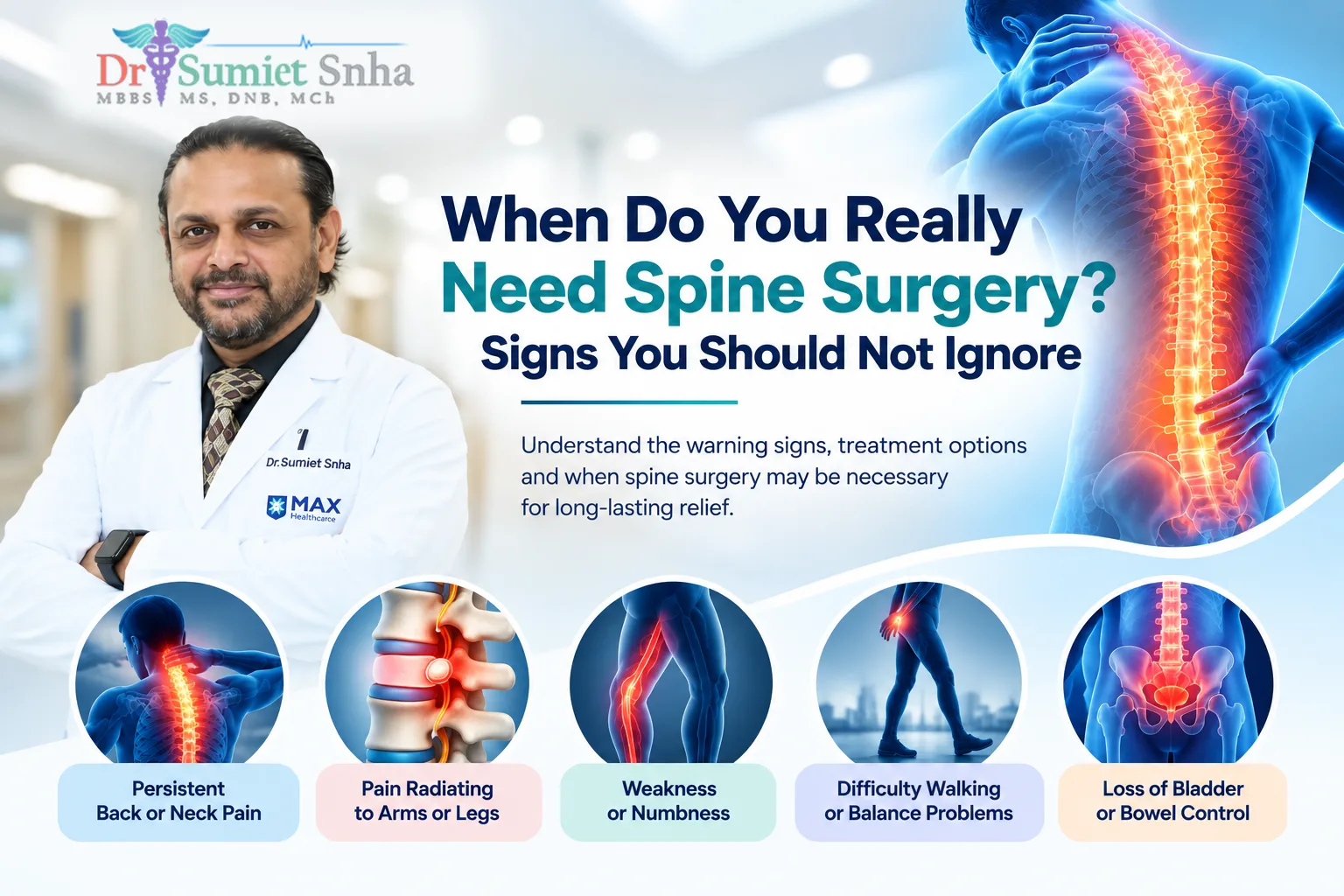
Seek urgent medical attention for new or progressive limb weakness, loss of bladder or bowel control, difficulty passing urine, fever with concerning wound changes, or other severe or rapidly worsening symptoms.
Why Choose an Experienced Spine Specialist?
Selecting a spine specialist involves more than comparing surgical techniques. Patients should understand the doctor's qualifications, experience with the relevant procedure, approach to patient selection, and willingness to discuss alternatives.
Dr. (Prof.) Sumiet Snha has completed neurosurgical training at the All India Institute of Medical Sciences (AIIMS), New Delhi, and has served as a Professor of Neurosurgery at AIIMS. His professional background includes experience in neurosurgery, spine surgery, and minimally invasive surgical techniques.
You can learn more about his qualifications and professional background on the official profile of Dr. (Prof.) Sumiet Snha.
For patients considering Endoscopic Spine Surgery in Delhi, a consultation should include a review of symptoms and MRI findings, discussion of non-surgical alternatives, and an explanation of the expected benefits and risks of the proposed procedure.
A second opinion may also be appropriate when the diagnosis is unclear or the patient wishes to compare treatment options.
Frequently Asked Questions
1. Is endoscopic spine surgery suitable for every slipped disc?
No. Many slipped discs improve without surgery. Endoscopic treatment may be considered when a herniated disc causes persistent symptoms and the clinical examination and imaging identify a suitable target for surgical treatment.
2. Is endoscopic spine surgery better than open surgery?
Neither approach is best for every patient. Endoscopic surgery may offer advantages in selected cases, but the appropriate technique depends on the spinal condition, anatomy, required decompression, and the surgeon's assessment.
3. How long does recovery take?
Recovery varies according to the procedure and the patient's condition. Some patients resume light activities relatively soon, while others require a longer recovery period. The surgeon should provide an individualised recovery plan.
4. Can sciatica be treated with endoscopic spine surgery?
Some cases of sciatica caused by surgically treatable nerve compression may benefit from endoscopic surgery. However, sciatica has several possible causes, and many patients improve with non-surgical treatment.
5. Is endoscopic spine surgery completely risk-free?
No. Although it is minimally invasive, the procedure can still cause complications, including infection, nerve injury, persistent symptoms, or the need for further treatment. Individual risks should be discussed with the treating specialist.
6. How do I know whether I need spine surgery?
A decision about surgery requires a clinical examination, review of relevant imaging, and consideration of previous treatments. Persistent symptoms, significant functional limitations, and certain neurological problems may prompt a surgical evaluation. Emergency neurological symptoms require immediate assessment.
Conclusion
Endoscopic Spine Surgery in Delhi may be an appropriate treatment option for selected patients with conditions such as herniated discs, sciatica caused by nerve compression, and certain forms of spinal stenosis. Its minimally invasive approach can reduce tissue disruption in suitable cases, but the procedure still carries risks and has limitations.
The most important step is obtaining an accurate diagnosis and understanding all available treatment options. Clinical examination, MRI findings, symptom severity, and overall health help determine whether endoscopic surgery is appropriate.
Dr. (Prof.) Sumiet Snha's experience in neurosurgery and spine care provides a basis for discussing individual treatment needs through a specialist consultation. Patients should make decisions after understanding the expected benefits, potential risks, alternatives, and recovery requirements for their specific condition.


0 Comments