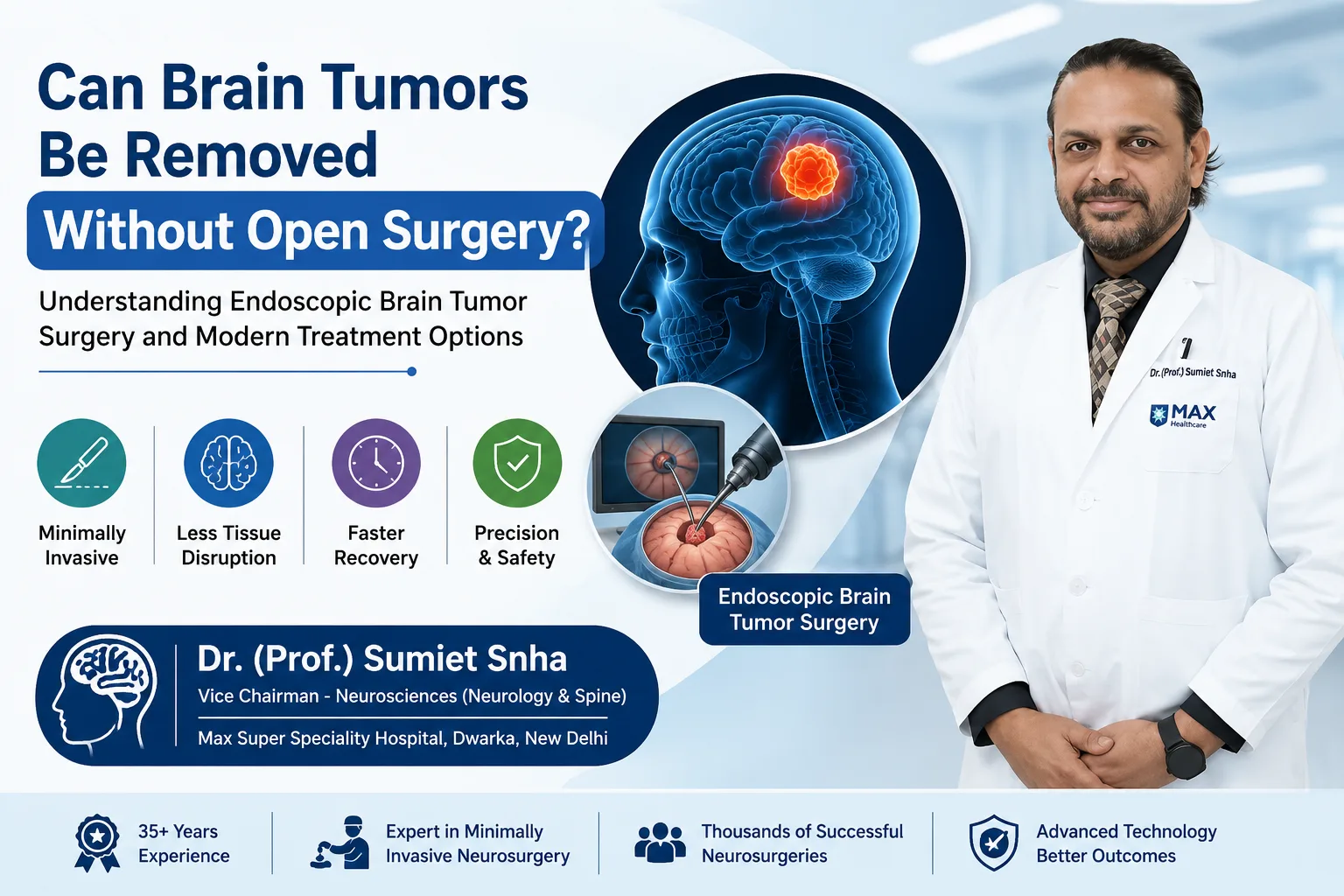
The question of whether a brain tumor can be removed without traditional open surgery is becoming increasingly important as neurosurgical techniques continue to advance. Endoscopic brain tumor surgery is a minimally invasive approach that may allow surgeons to reach and treat certain tumors through carefully planned surgical pathways. However, this technique is not appropriate for every patient or every type of brain tumor. Factors such as the tumor’s size, location, type, growth pattern, and proximity to critical nerves or blood vessels can influence the recommended treatment. In this article, we explain how endoscopic approaches work, which tumors may be suitable, their potential benefits and limitations, and how surgeons choose the safest treatment strategy.
Can Brain Tumors Be Removed Without Open Surgery?
In some carefully selected cases, a brain tumor may be treated without the need for conventional open brain surgery. Brain tumor removal without open surgery generally refers to techniques that use smaller access routes and specialized instruments to reach a tumor while limiting unnecessary exposure of surrounding tissues. One important approach is endoscopic brain tumor surgery, in which a small camera called an endoscope helps the neurosurgeon view the surgical area through a precisely planned pathway.
How Treatment Decisions Are Made
Minimally invasive brain tumor surgery can be beneficial for tumors located in areas that can be safely reached through an endoscopic route. However, minimally invasive does not mean completely risk-free, and it is not suitable for every tumor. Before recommending an endoscopic procedure, neurosurgeons carefully evaluate MRI or CT scans, tumor size and location, tumor characteristics, nearby blood vessels and nerves, and the patient's overall condition. Based on these factors, the surgical team determines whether an endoscopic approach, traditional surgery, biopsy, or another treatment option is most appropriate.
What Is Endoscopic Brain Tumor Surgery?
Endoscopic brain tumor surgery is a specialized minimally invasive technique that uses a thin endoscope with a small camera to help a neurosurgeon see and access selected tumors. Instead of creating a large opening in the skull, the surgeon may use a carefully planned surgical route or a small access opening, depending on the tumor's location and characteristics. Specialized instruments can then be used to examine, biopsy, drain, or remove tumor tissue when medically appropriate.
This approach is mainly considered when the tumor can be reached safely through an established anatomical pathway. Detailed MRI or CT imaging is essential because it helps the surgical team understand the tumor's exact position and its relationship with important nerves, blood vessels, and surrounding brain structures.
How Does Endoscopic Brain Tumor Surgery Work?
The procedure generally involves several carefully planned stages:
- Imaging and planning: MRI or CT scans help determine the safest route to the tumor.
- Creating access: The surgeon establishes an appropriate minimally invasive pathway.
- Endoscopic visualization: A small camera provides a magnified view of the surgical area.
- Tumor treatment: Specialized instruments may be used to biopsy or remove accessible tumor tissue.
- Postoperative monitoring: The patient is monitored after surgery, with follow-up imaging when required.
The exact technique varies according to each patient's diagnosis and surgical needs.
Endoscopic Surgery vs Open Brain Surgery
The choice between endoscopic brain tumor surgery and traditional open brain surgery depends on the tumor's location, size, type, accessibility, and relationship with sensitive brain structures. Endoscopic techniques can provide a less invasive route for selected tumors, while open surgery may be necessary when a wider surgical field is required. Therefore, the goal is not simply to choose the least invasive technique, but to select the approach that provides appropriate access while considering the patient's individual needs.
|
Feature |
Endoscopic Brain Tumor Surgery |
Traditional Open Brain Surgery |
|
Surgical approach |
Uses a carefully planned minimally invasive route |
Uses a larger surgical opening when broader access is needed |
|
Visualization |
Uses an endoscope and camera for visualization |
Provides direct visualization of the operative area |
|
Access |
May involve a small opening or established anatomical pathway |
Generally requires a larger access area |
|
Tissue exposure |
Can limit exposure in appropriately selected procedures |
May involve greater exposure of surrounding tissues |
|
Recovery |
Recovery may be quicker in some suitable cases |
Recovery varies according to the procedure and tumor complexity |
|
Suitability |
Appropriate only for selected tumors and locations |
Suitable for tumors requiring wider or different access |
|
Hospital stay |
Depends on the procedure and individual recovery |
Depends on surgical complexity and postoperative condition |
|
Primary benefit |
Provides a minimally invasive option for suitable cases |
Can provide broader access when extensive tumor exposure is required |
Which Approach Is Right for a Patient?
Neither technique is automatically the best choice for everyone. A neurosurgeon evaluates imaging results, tumor characteristics, neurological symptoms, overall health, and the relationship between the tumor and critical structures before recommending a surgical approach. In some cases, endoscopic brain tumor surgery may be appropriate, while others may require traditional open surgery or a combination of treatment strategies.
Which Brain Tumors May Be Suitable for Endoscopic Surgery?
Not every brain tumor can be treated through an endoscopic approach. Tumor location is one of the most important factors because the surgeon must be able to reach the affected area through a safe and practical surgical pathway. Depending on the tumor's position and characteristics, endoscopic techniques may be considered for certain tumors located near accessible anatomical corridors, including selected tumors in or around the skull base and ventricular regions.
The objective of endoscopic brain tumor surgery may vary from one patient to another. In some situations, the surgeon may be able to remove a significant portion or the entire accessible tumor. In other cases, obtaining a tissue sample for diagnosis, relieving fluid blockage, or performing partial tumor removal may be the safest option.
Before recommending treatment, the neurosurgical team considers:
- Tumor size, type, and exact location
- Relationship with blood vessels, nerves, and other critical structures
- MRI or CT findings
- The patient's symptoms and overall health
- Whether complete removal can be attempted safely
When May Open Surgery Still Be Necessary?
Traditional open surgery may remain the more appropriate option when an endoscopic route cannot provide sufficient access or surgical control. This may occur with:
- Tumors located in difficult-to-reach areas
- Very large or anatomically complex tumors
- Tumors requiring a wider operative field
- Growth involving critical nerves, blood vessels, or brain structures
- Situations where an endoscopic approach would not allow adequate tumor access
Ultimately, the surgical method is selected according to the individual patient's anatomy and treatment requirements rather than simply choosing the least invasive technique.
Benefits of Endoscopic Brain Tumor Surgery
When clinically appropriate, endoscopic brain tumor surgery can offer a minimally invasive option for reaching certain tumors. The potential benefits depend on the tumor's location, surgical route, complexity, and the patient's individual health. Compared with procedures requiring wider exposure, an endoscopic approach may allow the surgical team to work through a more targeted pathway in selected cases.
Potential benefits may include:
- Smaller surgical access: Selected procedures may require a smaller opening or a more focused surgical pathway.
- Less surrounding tissue exposure: A carefully planned endoscopic route may reduce unnecessary exposure of nearby tissues.
- Potentially less postoperative discomfort: Some patients may experience less discomfort after a less invasive procedure, although individual experiences differ.
- Potentially shorter hospital recovery: Patients undergoing suitable endoscopic procedures may sometimes have a shorter hospital stay.
- Earlier return to activities: Depending on the procedure and recovery progress, some patients may resume normal activities sooner.
- Enhanced visualization: The endoscope can provide a magnified view of specific anatomical spaces that may be difficult to visualize through conventional approaches.
It is important to understand that these potential advantages do not mean endoscopic surgery is always safer or more effective than open surgery. Outcomes vary according to tumor type, location, surgical complexity, neurological involvement, and the patient's overall condition. A neurosurgeon must determine whether the expected benefits outweigh the potential risks for each individual case.
Risks and Limitations of Endoscopic Brain Tumor Surgery
Although endoscopic brain tumor surgery is designed to provide a minimally invasive route to selected tumors, it is still a complex neurosurgical procedure and can involve potential risks. The likelihood of complications depends on factors such as the tumor's location, size, type, proximity to important nerves and blood vessels, and the patient's overall health.
Possible risks and limitations may include:
- Bleeding: Blood vessel injury during surgery can cause bleeding and may require additional management.
- Infection: As with other surgical procedures, infection can occur, although preventive measures are used to reduce this risk.
- Brain or surrounding tissue swelling: Postoperative swelling may require observation or medical treatment.
- Cerebrospinal fluid leakage: A CSF leak can occasionally develop when the protective coverings around the brain are affected.
- Neurological complications: Depending on the tumor's location, surgery may affect functions such as movement, vision, speech, balance, or sensation.
- Incomplete tumor removal: Complete removal may not be possible when the tumor is close to critical structures.
- Additional treatment: Some patients may require further surgery, radiation therapy, chemotherapy, or other treatments depending on the tumor diagnosis.
- Tumor recurrence: Certain tumors can return after treatment, with recurrence risk depending largely on the tumor's biological characteristics and extent of removal.
Is Endoscopic Surgery Suitable for Everyone?
No. Endoscopic brain tumor surgery is not appropriate for every patient. Tumor anatomy, accessibility, imaging findings, and the safety of the proposed surgical route must be carefully assessed before treatment. A neurosurgical team can determine whether an endoscopic procedure or another treatment approach is more appropriate for an individual patient.
Recovery After Endoscopic Brain Tumor Surgery
Endoscopic brain tumor surgery recovery can differ significantly between patients because healing depends on the tumor's location, surgical complexity, extent of treatment, and overall health. After the procedure, patients are usually monitored closely by the medical team to assess neurological function, pain, fluid balance, and other signs of recovery.
During the initial recovery period, patients may be advised to increase their physical activity gradually rather than returning immediately to their usual routine. The treating team provides specific instructions about work, exercise, driving, medications, wound care, and follow-up appointments based on the individual's condition.
Follow-Up and Monitoring
Follow-up MRI or other imaging may be recommended to assess the treatment area and monitor for changes. Brain tumor surgery recovery can also involve additional care when required.
If the tumor's diagnosis or remaining tumor tissue calls for further management, treatment may include radiation therapy, chemotherapy, targeted therapy, or another surgical procedure. Minimally invasive brain tumor removal can support recovery in selected cases, but recovery outcomes remain individual and should be discussed with the treating neurosurgical team.
How Do Doctors Decide the Best Surgical Approach?
Choosing the right approach for brain tumor treatment requires detailed evaluation rather than using the same procedure for every patient. Before recommending endoscopic brain tumor surgery or traditional open surgery, the neurosurgical team reviews the tumor and the patient's overall medical condition. The objective is to select an approach that provides appropriate access while protecting important brain structures as much as possible.
Doctors may consider several factors, including:
- Tumor type: The diagnosis can influence the treatment strategy and extent of surgery.
- Tumor size: Larger tumors may require a different surgical route than smaller lesions.
- Tumor location: The exact position determines whether an endoscopic pathway can safely reach the tumor.
- Growth pattern: The way the tumor extends into surrounding areas can affect surgical planning.
- Blood vessels and nerves: Their proximity may influence whether certain surgical routes are appropriate.
- Symptoms: Headaches, seizures, vision changes, weakness, or other neurological symptoms may affect treatment decisions.
- Overall health: Age, medical conditions, and general fitness can influence surgical risk.
- Previous treatment: Earlier surgery, radiation, or other therapies may change the available options.
- MRI or CT findings: Detailed imaging helps the team understand the tumor's anatomy and plan the safest possible approach.
After reviewing these factors, the neurosurgical team can determine whether endoscopic brain tumor surgery, open surgery, biopsy, or another treatment strategy is most appropriate for the individual patient.
About Dr. (Prof.) Sumiet Snha
Dr. (Prof.) Sumiet Snha, Vice Chairman – Neurosciences (Neurology & Spine), is a neurosurgeon with 25+ years of experience in neurosurgery. He completed his neurosurgical training at AIIMS, New Delhi, and has further trained and worked with renowned neurosurgical experts internationally. His clinical interests include complex neurological conditions, brain and spine surgery, minimally invasive procedures, and peripheral nerve surgery. Patients considering endoscopic brain tumor surgery should undergo an individualized assessment to determine the most appropriate treatment approach.
Frequently Asked Questions
1. Can every brain tumor be removed without open surgery?
No. The possibility of removing a brain tumor without traditional open surgery depends on its location, size, type, growth pattern, and relationship with important brain structures. Some tumors may be suitable for an endoscopic approach, while others require open surgery or a different treatment strategy.
2. What is endoscopic brain tumor surgery?
Endoscopic brain tumor surgery is a minimally invasive neurosurgical technique that uses a small endoscope with a camera to provide visualization of selected areas. Specialized instruments may then be used to biopsy, drain, or remove accessible tumor tissue when appropriate.
3. Is endoscopic brain tumor surgery safe?
Endoscopic surgery can be an appropriate option for carefully selected patients, but it is not completely risk-free. Potential complications can include bleeding, infection, swelling, cerebrospinal fluid leakage, neurological problems, or incomplete tumor removal.
4. What are the benefits of endoscopic brain tumor surgery?
When clinically appropriate, potential benefits may include smaller surgical access, less tissue exposure, reduced postoperative discomfort, and potentially quicker recovery. However, the actual outcome depends on the tumor and the patient's individual circumstances.
5. How long does recovery take after endoscopic brain tumor surgery?
Recovery varies considerably between patients. The timeline depends on the tumor's location, procedure complexity, extent of treatment, neurological condition, and overall health. The treating neurosurgical team provides individualized recovery instructions.
6. Is endoscopic surgery better than traditional brain surgery?
Not necessarily. Endoscopic surgery may be advantageous for selected tumors that can be safely reached through a minimally invasive route. Traditional open surgery may be more appropriate when a tumor requires broader access. The safest and most effective approach is determined individually.
7. Which brain tumors may be treated with endoscopic surgery?
Certain tumors in anatomically accessible areas may sometimes be approached using endoscopic techniques. However, suitability depends more on the tumor's exact location, size, characteristics, and relationship with surrounding structures than on the tumor name alone.
8. Can an endoscopic procedure completely remove a brain tumor?
In some selected cases, complete removal may be possible. In other situations, the surgeon may intentionally remove only the accessible portion or obtain a biopsy if complete removal could place critical structures at unnecessary risk.
9. What tests are needed before endoscopic brain tumor surgery?
Doctors commonly use detailed brain imaging, such as MRI or CT scans, to understand the tumor's size, location, and relationship with nearby structures. Additional tests may be recommended based on the patient's symptoms, medical history, and suspected tumor type.
10. What are the risks of minimally invasive brain tumor surgery?
Possible risks include bleeding, infection, swelling, cerebrospinal fluid leakage, neurological complications, incomplete tumor removal, and the need for additional treatment. The specific risks depend on the surgical route and characteristics of the tumor.
11. Can a brain tumor come back after surgery?
Yes. Some brain tumors can recur after treatment. The likelihood depends on factors such as tumor type, biological behavior, extent of removal, and whether additional treatments are required. Regular follow-up imaging may help doctors monitor for changes.
12. How do doctors choose between endoscopic and open brain surgery?
The neurosurgical team considers the tumor's type, size, location, growth pattern, nearby nerves and blood vessels, symptoms, previous treatments, imaging findings, and overall health. These factors help determine whether endoscopic brain tumor surgery, open surgery, biopsy, or another treatment option is most appropriate.
Conclusion
Yes, some brain tumors can be treated or removed through minimally invasive or endoscopic techniques, but these approaches are not suitable for every patient. Endoscopic brain tumor surgery may provide a targeted surgical route for selected tumors when their location and anatomy allow safe access. The decision depends on several factors, including tumor type, size, growth pattern, location, and its relationship with important nerves, blood vessels, and surrounding brain structures.
Rather than choosing a procedure simply because it is minimally invasive, patients should receive an individualized evaluation based on their MRI or CT findings and overall health. Discussing the available treatment options with an experienced neurosurgical team can help patients understand the potential benefits, limitations, risks, and expected recovery associated with each approach.



0 Comments