Choosing the Best Neurosurgeon in Delhi is an important decision when you or a family member is experiencing a brain, spine or nerve-related condition. Neurosurgical problems can range from persistent back pain and slipped discs to brain tumours, head injuries, nerve damage and complex spinal disorders. Finding an experienced specialist who understands the condition and explains suitable treatment options can make the decision-making process easier.
A neurosurgeon evaluates conditions affecting the brain, spinal cord, spine and peripheral nerves. However, choosing a specialist should involve more than looking at a title or hospital name. A patient's diagnosis, the surgeon's qualifications, relevant surgical experience, available treatment approaches and willingness to discuss non-surgical options are all important considerations.
For people living in West Delhi and nearby areas, consulting a Best Neurosurgeon in Dwarka may also offer the convenience of accessing specialist care closer to home.
This guide explains what to consider when selecting a neurosurgeon, which conditions may require specialist attention, what happens during a consultation and how patients can make informed treatment decisions.
What Does a Neurosurgeon Treat?
A neurosurgeon specialises in diagnosing and treating conditions affecting the nervous system. This includes the brain, spinal cord, spine and peripheral nerves.
Depending on the diagnosis, treatment may involve medication, observation, rehabilitation, minimally invasive procedures or surgery.
Some commonly managed conditions include:
1. Brain Tumours
Brain tumours may be benign or malignant and can develop in different parts of the brain. Examples include meningiomas, gliomas, pituitary tumours, acoustic neuromas and skull-base tumours.
Symptoms vary according to the tumour's location and size. Persistent headaches, seizures, weakness, changes in vision and speech difficulties may require medical evaluation.
Treatment may involve monitoring, surgery, radiation therapy or a combination of approaches, depending on the tumour type and individual circumstances.
2. Spine Disorders
Spinal conditions can affect mobility, comfort and nerve function. Common problems include:
Herniated or slipped discs
Sciatica and nerve compression
Cervical and lumbar spinal stenosis
Spinal fractures
Spinal tumours
Spondylolisthesis and spinal instability
Cervical disc disorders
Not every patient with back pain or a slipped disc needs an operation. Many conditions can initially be managed with medication, physiotherapy and other appropriate non-surgical treatments.
3. Head Injuries and Brain Haemorrhage
Head injuries can result from road accidents, falls and other traumatic events. Some injuries cause bleeding inside or around the brain, skull fractures or swelling.
Severe headache, repeated vomiting, seizures, confusion, loss of consciousness or new neurological weakness after a head injury require urgent medical attention.
4. Peripheral Nerve and Brachial Plexus Injuries
Peripheral nerves carry signals between the spinal cord and different parts of the body. Damage can cause numbness, pain, weakness or loss of movement.
Brachial plexus injuries affect the network of nerves supplying the shoulder, arm and hand. Depending on the injury, treatment may include observation, rehabilitation, nerve repair, nerve grafting or nerve transfer surgery.
5. Other Neurological Conditions
Neurosurgeons may also evaluate conditions such as hydrocephalus, trigeminal neuralgia, vascular abnormalities of the brain, selected epilepsy cases and certain disorders affecting the craniovertebral junction.
The treatment approach depends on the diagnosis and should be planned individually.
How to Choose the Best Neurosurgeon in Delhi
There is no single factor that determines whether a surgeon is suitable for every patient. The right choice depends on the medical condition, the specialist's relevant experience and the treatment required.
Here are some important factors to consider.
1. Check Qualifications and Training
Start by reviewing the surgeon's educational qualifications and specialist training.
A neurosurgeon should have appropriate postgraduate training in neurosurgery. Additional fellowships, professional memberships, teaching experience and participation in specialist training programmes may provide further information about their professional background.
Patients should verify qualifications through reliable professional sources rather than relying only on promotional descriptions.
2. Consider Experience Relevant to Your Condition
General experience is important, but experience with the specific condition also matters.
For example, a patient with a brain tumour may need a specialist experienced in tumour and skull-base procedures. Someone with a brachial plexus injury may require expertise in peripheral nerve reconstruction.
Before proceeding, ask the surgeon about experience with the proposed procedure, possible alternatives and the expected treatment goals.
3. Understand the Available Treatment Options
A good consultation should explain more than one possible approach when alternatives are medically appropriate.
Depending on the condition, options may include:
Medication and conservative management
Physiotherapy and rehabilitation
Regular observation and imaging
Minimally invasive or endoscopic procedures
Conventional open surgery
Additional treatments involving other specialists
Patients should understand why a particular treatment is being recommended and what may happen if they choose an alternative.
4. Look for Clear Communication
Medical terminology can be difficult to understand, especially when patients are dealing with a serious diagnosis.
A useful consultation should allow patients and family members to ask questions about the condition, investigations, treatment choices, possible complications and recovery.
The doctor should explain the findings in language that patients can understand and help them develop realistic expectations.
5. Review Hospital Facilities
Neurosurgical treatment may require specialised infrastructure, depending on the procedure.
Relevant facilities can include:
Advanced MRI and CT imaging
Modern operating theatres
Operating microscopes and neuro-endoscopes
Neuro-navigation systems
Intraoperative neuromonitoring
Neuro-intensive care facilities
Physiotherapy and rehabilitation services
The required facilities depend on the patient's condition. Not every patient needs every technology or service.
Why Patients Consider a Best Neurosurgeon in Dwarka
Dwarka is an important residential and healthcare location in South-West Delhi. Patients from nearby areas such as Janakpuri, Palam, Uttam Nagar, Najafgarh and Vikaspuri may find it convenient to consult a specialist in this part of the city.
For patients requiring planned consultations, imaging reviews or follow-up appointments, location can influence travel time and continuity of care.
Max Super Speciality Hospital, Dwarka, is located at Plot No. 1, Sector-10, Dwarka, New Delhi. It provides access to neurosurgical services and supporting hospital facilities.
When searching for a Best Neurosurgeon in Dwarka, patients should still evaluate the specialist's qualifications, experience with their particular condition, communication and treatment recommendations. Location is useful, but it should not be the only deciding factor.
Meet Dr. (Prof.) Sumiet Snha
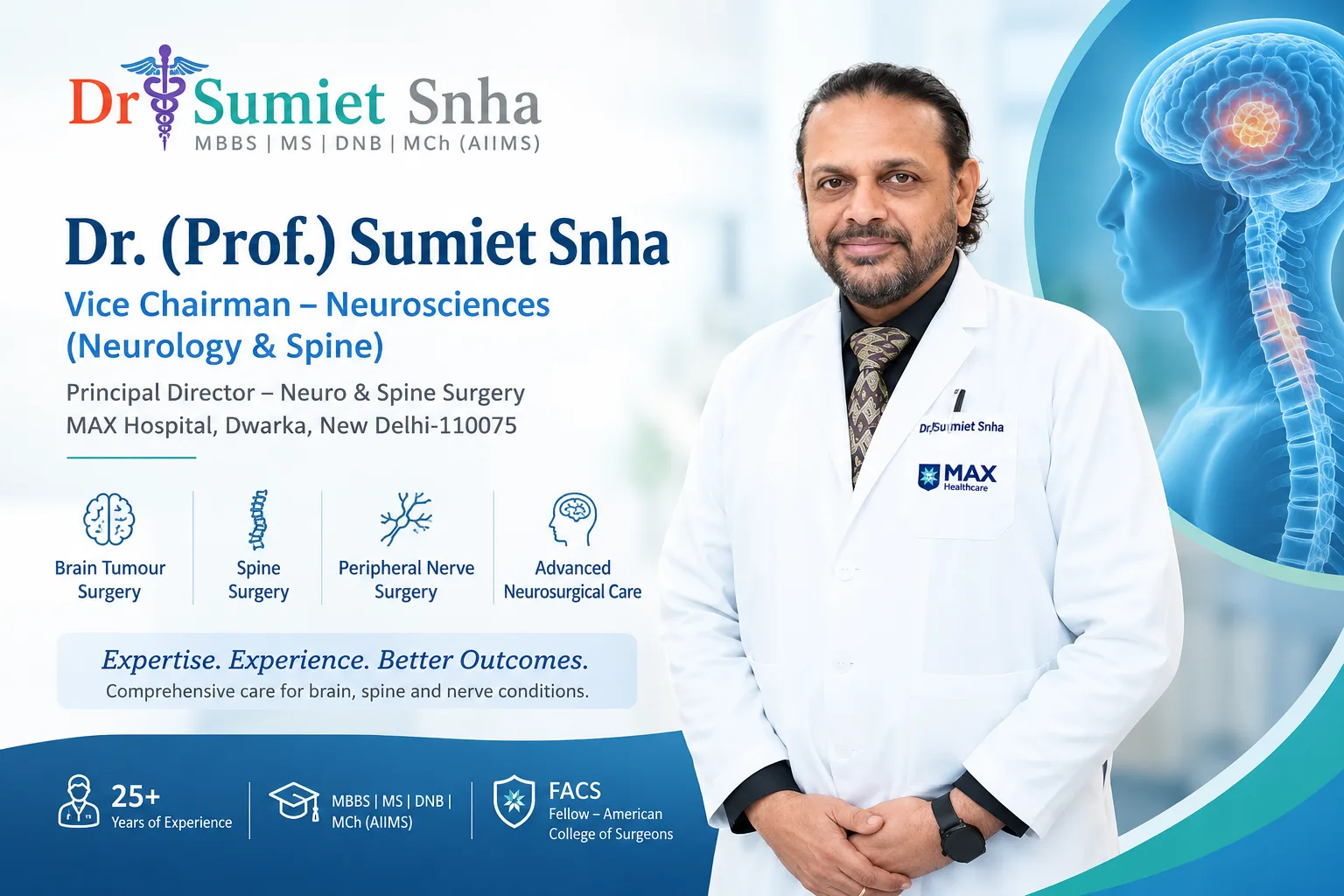
Dr. (Prof.) Sumiet Snha is an AIIMS-trained neurosurgeon with professional experience in brain, spine and peripheral nerve surgery. He completed his neurosurgical training at the All India Institute of Medical Sciences (AIIMS), New Delhi, where he subsequently served as Professor of Neurosurgery.
His qualifications include MBBS, MS, DNB, MCh (AIIMS) and Fellow of the American College of Surgeons (FACS).
He is associated with Max Super Speciality Hospital, Dwarka, where he serves in a senior leadership role in neurosurgery and spine services.
His areas of clinical practice include:
Brain tumour and skull-base surgery
Endoscopic and keyhole neurosurgery
Minimally invasive spine surgery
Treatment of slipped discs and spinal stenosis
Acoustic neuroma and other selected nerve-related tumours
Brachial plexus and peripheral nerve surgery
Hydrocephalus and selected vascular neurosurgical conditions
Head injury and neurotrauma management
You can explore his qualifications, professional background and areas of expertise on the official profile of Dr. (Prof.) Sumiet Snha.
When Should You Consult a Neurosurgeon?
Some neurological symptoms require prompt evaluation because they may indicate pressure on the brain, spinal cord or nerves.
Consider specialist assessment when you experience:
Persistent or Severe Headaches
A new, progressively worsening or unusual headache, particularly when associated with vomiting, seizures, vision changes or neurological symptoms, needs medical assessment.
Weakness or Numbness
Weakness in an arm or leg, persistent numbness, loss of coordination or difficulty walking may indicate a problem affecting the brain, spinal cord or peripheral nerves.
Sudden weakness, facial drooping or speech difficulty can indicate a stroke and requires emergency medical attention.
Persistent Back or Neck Pain
Back or neck pain accompanied by radiating limb pain, progressive weakness, numbness or difficulty walking may require investigation for nerve or spinal cord compression.
Seizures
A first seizure in adulthood or a significant change in an existing seizure pattern should be evaluated promptly.
Head Injury
After a serious accident or head injury, symptoms such as confusion, repeated vomiting, drowsiness, seizures or loss of consciousness require emergency assessment.
Patients should not wait for a routine appointment when emergency symptoms are present.
What Happens During a Neurosurgical Consultation?
A consultation generally involves several steps to understand the patient's condition and determine whether further investigations or treatment are needed.
1. Medical History: The doctor asks about symptoms, their duration, previous treatment, existing medical conditions and relevant family history.
2. Clinical Examination: Neurological assessment may include muscle strength, reflexes, sensation, coordination, balance and other relevant functions.
3. Review of Investigations: MRI scans, CT scans, X-rays, blood tests and nerve studies may be reviewed according to the condition.
4. Diagnosis and Explanation: The specialist explains the likely diagnosis, its severity and the available management options.
5. Treatment Planning: A plan is developed based on the patient's condition, overall health, preferences and expected benefits and risks.
Patients should bring previous medical reports, imaging scans and a list of current medicines to make the consultation more useful.
Minimally Invasive and Endoscopic Neurosurgery
Advances in surgical technology have introduced techniques that allow selected brain and spine conditions to be treated through smaller access routes.
Minimally invasive spine surgery uses specialised instruments and imaging to reach the affected area while limiting disruption to surrounding tissues. Endoscopic procedures use a camera-equipped instrument to provide a magnified view of the surgical site.
Potential advantages in appropriately selected cases may include smaller incisions, reduced tissue disruption and earlier mobilisation.
However, these procedures are not suitable for every condition. Some complex tumours, spinal abnormalities and other disorders may require conventional surgical approaches.
The choice should be based on what is safest and most effective for the patient's specific diagnosis, not simply on whether a procedure is minimally invasive.
Why a Second Opinion Can Be Helpful
Being advised to undergo brain or spine surgery can be overwhelming. Patients may want to understand the diagnosis better, compare treatment options or confirm whether an operation is necessary.
A second opinion can help by providing an independent review of:
The original diagnosis
MRI, CT and other investigation findings
The proposed operation
Non-surgical alternatives
Potential risks and expected outcomes
Recovery and rehabilitation requirements
Surgery is not necessary for every neurological or spinal condition. In selected cases, observation, medication or rehabilitation may be appropriate.
A second opinion should help patients make an informed decision rather than create unnecessary confusion or delay urgent treatment.
Frequently Asked Questions
1. How do I choose the best neurosurgeon in Delhi?
Review the surgeon's qualifications, specialist training, experience with your condition, hospital facilities and approach to explaining treatment options. Consider seeking a second opinion before major planned surgery.
2. Where can I consult a neurosurgeon in Dwarka?
Patients can consult Dr. (Prof.) Sumiet Snha at Max Super Speciality Hospital, Plot No. 1, Sector-10, Dwarka, New Delhi. Appointment details can be confirmed through the hospital or the clinic.
3. Does every slipped disc require surgery?
No. Many slipped discs improve with medication, physiotherapy and other conservative treatments. Surgery may be considered when symptoms remain severe, neurological weakness progresses or specific urgent indications are present.
4. What conditions does Dr. (Prof.) Sumiet Snha treat?
His areas of practice include brain tumours, spine disorders, nerve injuries, brachial plexus conditions, hydrocephalus, selected vascular conditions, head injuries and other neurosurgical problems.
5. Are minimally invasive neurosurgical procedures suitable for everyone?
No. Suitability depends on the diagnosis, anatomy, severity of the condition and the patient's overall health. The surgeon determines whether an endoscopic, minimally invasive or conventional approach is appropriate.
6. Can I get a second opinion before brain or spine surgery?
Yes. Patients can seek another specialist's assessment of their diagnosis, imaging, proposed treatment and available alternatives before making a decision about planned surgery.
Conclusion
Choosing the Best Neurosurgeon in Delhi involves understanding the specialist's qualifications, relevant experience, treatment approach and ability to explain medical decisions clearly. Brain, spine and nerve conditions can vary significantly, so treatment should always be based on an individual assessment rather than a general recommendation.
For patients in West and South-West Delhi, consulting a Best Neurosurgeon in Dwarka may provide convenient access to specialist evaluation and follow-up care. However, the most important considerations remain an accurate diagnosis, appropriate treatment planning and realistic discussion of potential outcomes.
Dr. (Prof.) Sumiet Snha, an AIIMS-trained neurosurgeon and former Professor of Neurosurgery at AIIMS, New Delhi, provides specialist care for selected brain, spine and peripheral nerve conditions at Max Super Speciality Hospital, Dwarka.
Patients should discuss their symptoms, investigation reports and available treatment options with a qualified specialist before making decisions about surgery. An informed approach can help patients and families understand the next steps in their care.
0 Comments