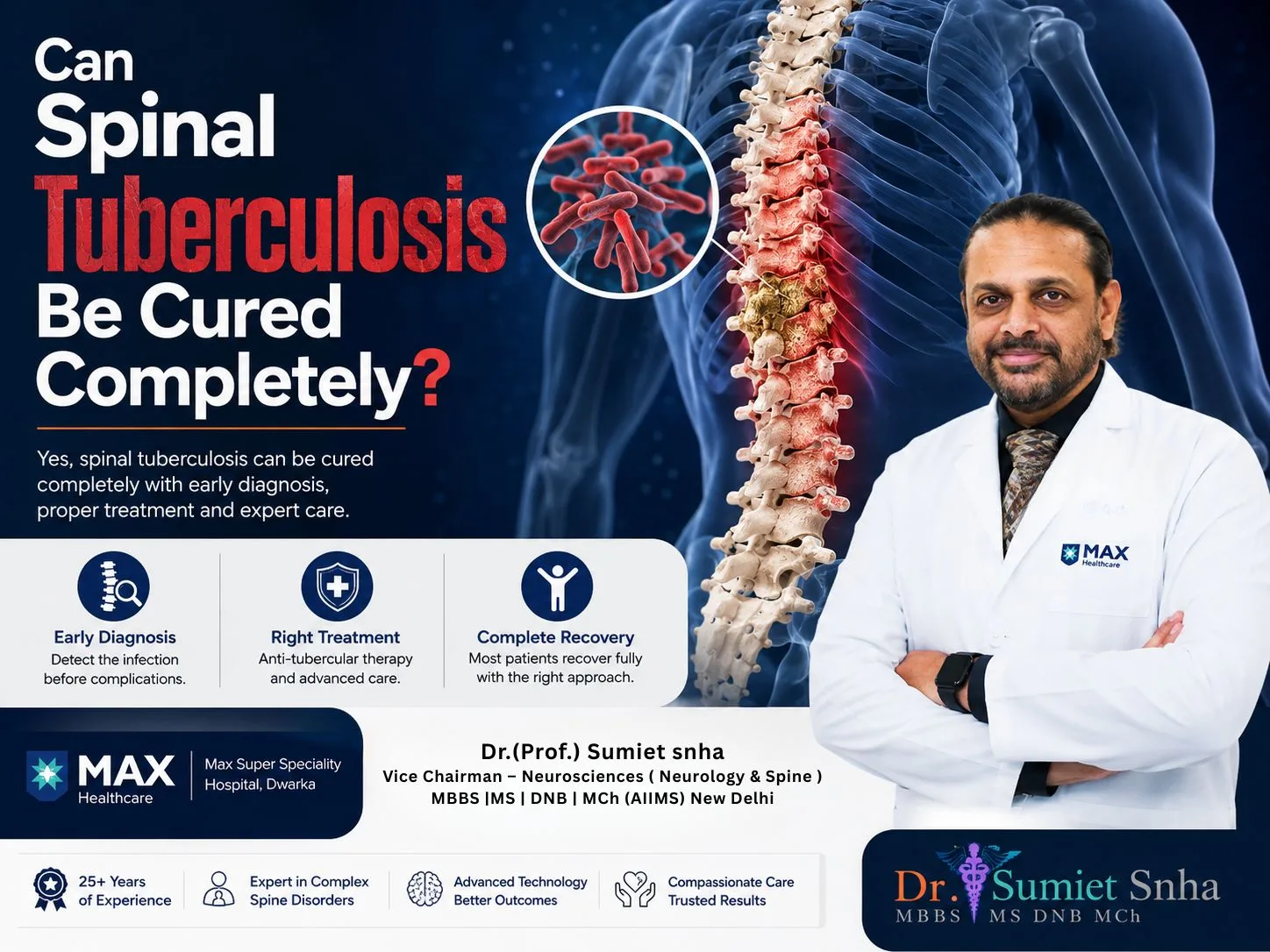
Yes, spinal tuberculosis can often be cured completely when diagnosed early and treated appropriately. Spinal tuberculosis treatment typically involves a prescribed combination of anti-tuberculosis medicines, regular medical monitoring, supportive care, and, in selected cases, surgery. Spinal TB affects the vertebrae and may lead to persistent back pain, weakness, spinal deformity, or neurological problems if it progresses. Recovery is not the same for everyone and depends on factors such as the stage of infection, extent of spinal damage, response to treatment, and presence of complications. Early diagnosis and specialist-guided care can significantly improve treatment outcomes.
What Is Spinal Tuberculosis?
Spinal tuberculosis is a form of tuberculosis in which Mycobacterium tuberculosis affects the vertebrae of the spine. It is also known as tuberculosis of the spine or Pott’s disease. The infection can gradually damage the spinal bones, discs, and nearby soft tissues, potentially causing persistent back pain, stiffness, deformity, or nerve-related symptoms. Spinal tuberculosis causes may be difficult to recognize in the early stages because symptoms can develop slowly. Timely diagnosis and appropriate spinal tuberculosis treatment are important to prevent progressive spinal damage and neurological complications.
Can Spinal Tuberculosis Be Cured Completely?
Yes, spinal tuberculosis can often be cured completely when it is diagnosed early and managed with appropriate medical care. Spinal tuberculosis treatment primarily focuses on controlling the infection with prescribed anti-tuberculosis medicines, while surgery may be considered when complications affect the spine or nerves. However, the extent of recovery can differ from one person to another.
Important factors that can influence spinal TB recovery include:
- Early diagnosis: Starting treatment before significant spinal damage develops can improve outcomes.
- Extent of spinal damage: Severe destruction of vertebrae may require additional treatment or surgical stabilization.
- Abscess formation: Large or problematic spinal abscesses may sometimes require drainage.
- Neurological weakness: Nerve or spinal cord involvement can affect recovery and may require urgent specialist assessment.
- Spinal deformity or instability: Significant structural changes may require surgical intervention.
- Response to medication: Improvement depends partly on how effectively the infection responds to prescribed therapy.
- Treatment adherence: Completing the recommended medication course is essential for successful treatment.
Although the infection can be controlled, existing bone destruction, spinal deformity, or neurological deficits may not always completely reverse. Therefore, individualized evaluation and regular follow-up are important throughout treatment.
What Is the Treatment for Spinal Tuberculosis?
Spinal TB treatment is primarily based on prescribed anti-tuberculosis medicines, with additional care tailored to the patient’s condition. The exact spinal tuberculosis treatment duration depends on factors such as disease severity, treatment response, and medical assessment.
Anti-Tuberculosis Medicines
Doctors generally prescribe a combination of spinal tuberculosis medication to eliminate the infection. Patients should take these medicines exactly as directed and complete the recommended course, even when symptoms begin to improve.
Supportive Treatment
Supportive care may include:
- Rest or activity modification when advised
- Appropriate pain management
- Adequate nutrition
- Physiotherapy and rehabilitation when suitable
- Regular clinical follow-ups
Monitoring During Treatment
Doctors may monitor symptoms, medication tolerance, and treatment response through clinical assessments and, when necessary, follow-up imaging to evaluate spinal healing and detect complications.
When Is Surgery Needed for Spinal Tuberculosis?
Spinal tuberculosis surgery is not required for every patient. Many people can be successfully managed with appropriate anti-tuberculosis medicines and close medical monitoring. However, surgery may be considered when the infection causes serious structural or neurological problems.
Surgery may be recommended in situations such as:
- Significant spinal cord or nerve compression
- Progressive neurological weakness or loss of function
- Severe spinal instability
- Major or worsening spinal deformity
- A large abscess requiring drainage in selected cases
- Failure to respond adequately to appropriate medical treatment
- Severe destruction of the vertebrae or other spinal structures
The need for spinal tuberculosis surgery should be assessed individually by a qualified spine or neurosurgical specialist based on the patient’s symptoms, imaging findings, and overall condition.
Spinal Tuberculosis Treatment: Medicines vs Surgery
The appropriate spinal tuberculosis treatment depends on the severity of infection, spinal damage, neurological symptoms, and overall health. Medication is the foundation of treatment for most patients, while supportive therapies can assist recovery. Spinal tuberculosis surgery may be considered when complications such as nerve compression, instability, severe deformity, or significant structural damage develop.
|
Treatment Approach |
Main Purpose |
When It May Be Used |
Key Consideration |
|
Anti-TB medicines |
Control and eliminate the TB infection |
Most confirmed cases |
Complete the prescribed course and attend follow-ups |
|
Supportive care |
Manage pain and support recovery |
Depends on individual symptoms and needs |
|
|
Physiotherapy |
Improve mobility and strength |
During recovery when appropriate |
Should be guided by a qualified professional |
|
Surgery |
Decompress nerves, stabilize the spine, or correct deformity |
Selected complicated cases |
Not necessary for every patient |
Note: Treatment plans vary from person to person and should be based on medical evaluation, imaging findings, treatment response, and the presence of complications.
How Long Does Spinal Tuberculosis Treatment Take?
The spinal tuberculosis treatment duration varies from patient to patient and is determined by the treating doctor. Because spinal TB can involve the vertebrae and surrounding tissues, treatment may require prolonged anti-tuberculosis therapy. The duration can depend on disease severity, response to spinal TB treatment, drug susceptibility, and applicable clinical guidelines. Patients should take their prescribed medicines consistently and attend follow-up appointments. Even if pain or other symptoms improve, treatment should not be stopped early unless advised by the treating doctor, as incomplete therapy can increase the risk of treatment failure or recurrence.
What Is the Recovery Process Like?
Spinal TB recovery is usually gradual, and improvement in pain and general symptoms may occur before the affected bones fully heal. Recovery time varies according to the extent of infection, spinal damage, and overall health. Some patients may need physiotherapy or rehabilitation to regain strength and mobility. Neurological recovery depends on the severity and duration of nerve or spinal cord involvement. Regular follow-up appointments are important for monitoring healing, treatment response, and possible spinal tuberculosis complications.
About Dr.(Prof.) Sumiet Snha
Dr.(Prof.) Sumiet Snha, Vice Chairman – Neurosciences (Neurology & Spine), is an experienced neurosurgeon with 25+ years of experience. He completed his advanced neurosurgical training at AIIMS, New Delhi, and has received international training from renowned neurosurgical experts in Japan, Brazil, and Germany. He is trained in spinal injuries and is a certified teaching faculty for AO Spine. His expertise includes minimally invasive spine surgery, peripheral nerve surgery, and complex nerve injuries. He has also contributed extensively to neurosurgical teaching, research, and training in India and abroad.
12 Frequently Asked Questions About Spinal Tuberculosis
FAQ 1: Can spinal tuberculosis be cured completely?
Yes, spinal tuberculosis can often be cured with appropriate treatment. Early diagnosis, completing prescribed medicines, regular monitoring, and timely management of complications can significantly improve the chances of recovery.
FAQ 2: What is the best treatment for spinal tuberculosis?
Anti-tuberculosis medicines are the foundation of treatment for most patients. Surgery may be recommended when there is severe spinal damage, instability, neurological compression, deformity, or other complications.
FAQ 3: How long does spinal tuberculosis treatment take?
The spinal tuberculosis treatment duration varies depending on disease severity, treatment response, drug susceptibility, and clinical recommendations. Patients should follow their doctor’s prescribed treatment schedule.
FAQ 4: Can spinal TB be treated without surgery?
Yes, many patients can be treated without surgery using appropriate anti-tuberculosis medicines and monitoring. Surgery is generally considered when neurological problems, instability, deformity, or significant structural complications occur.
FAQ 5: What are the symptoms of spinal tuberculosis?
Common symptoms may include persistent back pain, stiffness, weakness, fever, unexplained weight loss, fatigue, and neurological symptoms such as numbness or weakness when nerves are affected.
FAQ 6: Is spinal tuberculosis dangerous?
Untreated spinal TB can become serious because it may damage vertebrae, cause spinal deformity or abscesses, and potentially affect the spinal cord or nerves. Early medical evaluation is important.
FAQ 7: Can spinal tuberculosis cause paralysis?
Severe spinal TB can cause neurological deficits, including paralysis, particularly when infection or structural damage compresses the spinal cord or nerves. Prompt specialist assessment is important when weakness develops.
FAQ 8: Is spinal tuberculosis contagious?
Spinal TB is not typically spread through casual contact. The risk of transmission mainly depends on whether a person also has infectious TB affecting the lungs or airways.
FAQ 9: Can spinal TB come back after treatment?
Recurrence is possible, although completing the prescribed treatment and attending follow-up appointments can help reduce the risk. New or returning symptoms should be evaluated by a healthcare professional.
FAQ 10: Can spinal TB cause permanent damage?
Yes, advanced or delayed spinal TB can sometimes cause permanent bone destruction, deformity, or neurological problems. Early diagnosis and appropriate treatment may help prevent or limit these complications.
FAQ 11: Can physiotherapy help after spinal TB?
Physiotherapy may help improve mobility, strength, flexibility, and functional recovery after spinal TB when medically appropriate. Rehabilitation should be started and progressed according to the patient’s clinical condition.
FAQ 12: When should someone see a doctor for suspected spinal TB?
Medical evaluation is advisable for persistent back pain accompanied by fever, unexplained weight loss, weakness, neurological symptoms, or relevant TB exposure, particularly when symptoms continue or worsen.
Key Takeaway: Can Spinal Tuberculosis Be Cured Completely?
Spinal tuberculosis treatment can successfully control and cure the infection in many patients when diagnosed and treated appropriately. Early diagnosis, medication adherence, specialist monitoring, and surgery when medically indicated can support better outcomes. Because recovery varies, anyone with suspected spinal TB should seek professional evaluation rather than attempting self-treatment.




0 Comments