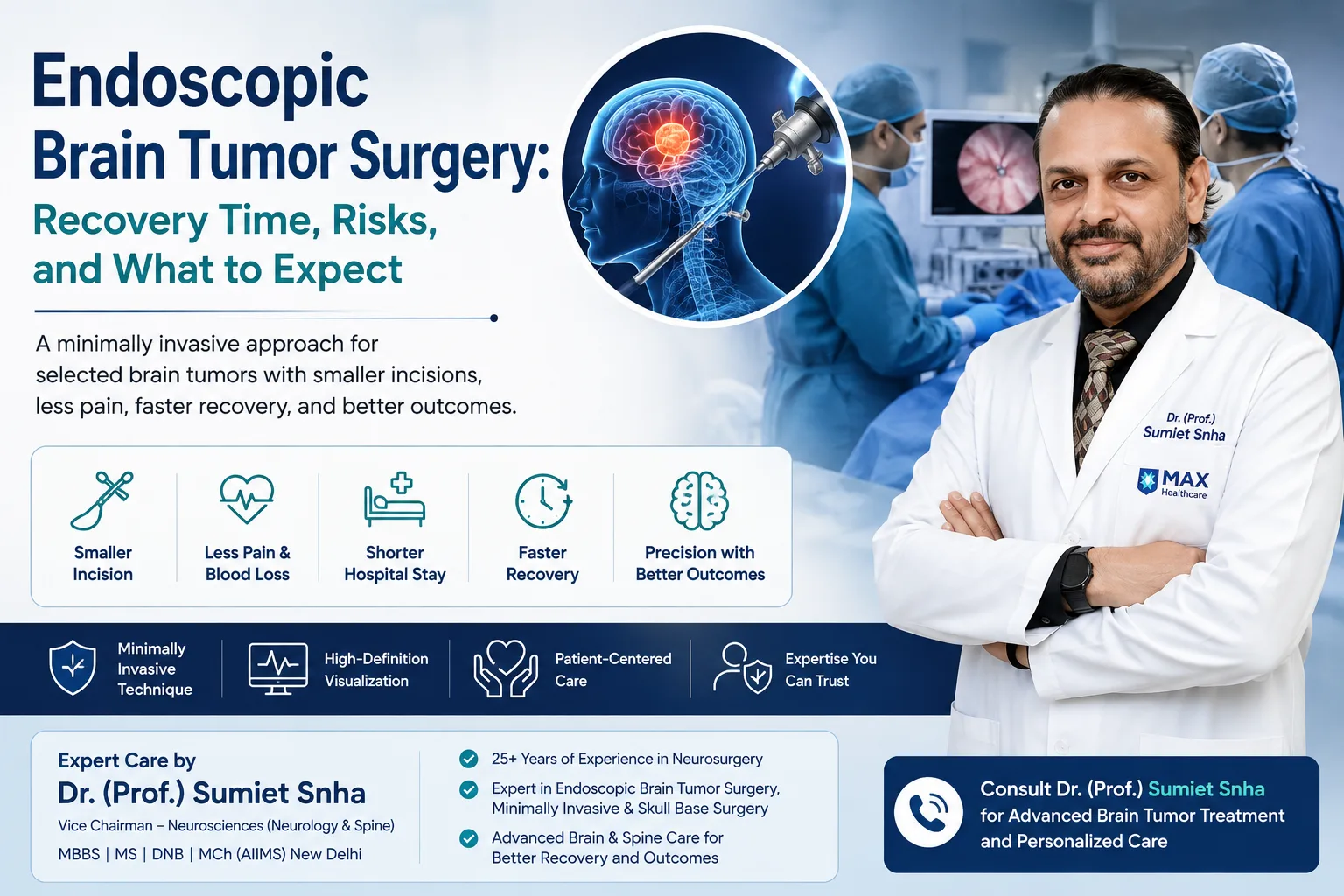
A brain tumor diagnosis can feel overwhelming, but advances in modern neurosurgery have made treatment safer and more precise than ever before. Endoscopic brain tumor surgery is a minimally invasive surgical technique that allows neurosurgeons to remove selected brain tumors through smaller incisions or natural pathways, reducing trauma to healthy brain tissue. Compared with traditional open brain surgery, this advanced approach often results in less pain, shorter hospital stays, and faster brain tumor surgery recovery for eligible patients. However, understanding the procedure, possible brain tumor surgery risks, recovery timeline, and expected long-term outcomes is essential before making treatment decisions. This guide explains how endoscopic brain surgery works, who may benefit from it, what to expect during recovery, and when to consult an experienced neurosurgeon for the best possible care.
What Is Endoscopic Brain Tumor Surgery?
Understanding the Procedure
Endoscopic brain tumor surgery is an advanced minimally invasive brain tumor surgery technique used to remove or biopsy selected brain tumors with greater precision and less disruption to surrounding healthy tissue. During the procedure, a neurosurgeon inserts a thin endoscope equipped with a high-definition camera and specialized surgical instruments through a small incision or a natural opening, depending on the tumor's location. The camera provides a magnified, real-time view of the surgical area, allowing accurate tumor removal while protecting critical brain structures.
Key Advantages Over Traditional Surgery
Unlike a traditional craniotomy, which often requires a larger skull opening, endoscopic brain surgery generally involves smaller incisions, reduced blood loss, less post-operative discomfort, and a quicker recovery for suitable patients. However, the choice of surgical approach depends on the tumor's size, type, location, and the patient's overall health after a thorough neurological evaluation.
Who Is a Candidate for Endoscopic Brain Tumor Surgery?
Conditions Treated
Not every patient with a brain tumor is a suitable candidate for endoscopic brain tumor removal. This advanced surgical approach is most effective for carefully selected cases, including pituitary tumors, skull base tumor surgery, ventricular tumors, and certain benign or malignant brain tumors that can be safely reached using endoscopic techniques. A neurosurgeon determines eligibility after evaluating several important factors, such as the tumor's size, exact location, growth pattern, and its proximity to critical brain structures. The patient's age, overall health, neurological condition, and findings from MRI or CT scans also play a vital role in treatment planning. A comprehensive assessment helps ensure that endoscopic surgery provides the safest and most effective outcome while preserving healthy brain tissue whenever possible.
How Is Endoscopic Brain Tumor Surgery Performed?
Step-by-Step Surgical Process
Endoscopic neurosurgery follows a carefully planned process to ensure safe and precise brain tumor treatment while minimizing damage to healthy brain tissue. Before surgery, the neurosurgical team conducts detailed evaluations to determine the most appropriate surgical approach.
The procedure typically includes the following steps:
- Pre-operative evaluation: A complete neurological examination, medical history review, and laboratory tests are performed.
- MRI and CT planning: High-resolution imaging helps identify the tumor's exact size, location, and relationship to surrounding brain structures.
- General anesthesia: The patient is placed under general anesthesia to ensure comfort and safety throughout the procedure.
- Small incision or nasal approach: Depending on the tumor's location, the surgeon creates a small opening or accesses the tumor through the nasal passages.
- Tumor visualization: A high-definition endoscope provides a magnified view, allowing precise navigation inside the brain.
- Tumor removal: Specialized microsurgical instruments are used to remove as much of the tumor as safely possible.
- Bleeding control: Advanced surgical techniques help control bleeding and protect nearby tissues.
- Closure and ICU monitoring: After completing the procedure, the incision is closed, and the patient is closely monitored in the intensive care unit (ICU). Advanced navigation systems further enhance surgical accuracy and patient safety.
Recovery After Endoscopic Brain Tumor Surgery
Hospital Stay and Healing Timeline
Brain tumor surgery recovery is different for every patient and depends on the type of tumor, the complexity of the procedure, age, overall health, and the extent of surgery. While many patients experience a faster recovery after brain tumor surgery with an endoscopic approach than with traditional open surgery, following the recommended recovery plan is essential for the best outcome.
Typical recovery timeline includes:
First 24 Hours
- Close observation in the Intensive Care Unit (ICU).
- Continuous neurological monitoring to assess brain function.
- Pain control, vital sign monitoring, and early detection of complications.
First Week
- Gradual pain management and medication support.
- Assisted walking and light physical activity to improve circulation.
- Regular wound care and monitoring for signs of infection.
2–6 Weeks
- Gradual return to normal daily activities or work, depending on medical advice.
- Follow-up MRI scans to evaluate healing and confirm successful tumor removal.
- Medication adjustments based on recovery progress.
2–3 Months
- Many patients achieve significant or complete brain tumor surgery recovery time during this period.
- Physical, occupational, or speech rehabilitation may be recommended if neurological symptoms persist.
Regular follow-up appointments with your neurosurgeon help monitor healing, manage any concerns, and support a safe, long-term recovery.
Risks and Possible Complications of Endoscopic Brain Tumor Surgery
Understanding the Potential Risks
Although endoscopic brain tumor surgery is considered a safer and less invasive option for many patients, it still carries certain brain tumor surgery risks that should be discussed before treatment. Most complications are uncommon, and many can be reduced through careful surgical planning and advanced technology.
Possible risks include:
- Bleeding during or after surgery
- Infection at the surgical site
- Cerebrospinal fluid (CSF) leak, especially in skull base procedures
- Temporary vision changes due to pressure or manipulation near optic structures
- Hormonal imbalance, particularly after pituitary or skull base surgery
- Brain swelling that may require additional treatment
- Seizures in some patients
- Stroke (rare) caused by injury to nearby blood vessels
- Tumor recurrence if microscopic tumor cells remain
Experienced neurosurgeons, high-definition endoscopes, advanced navigation systems, and continuous monitoring significantly help minimize complications and improve overall surgical safety and long-term outcomes.
Benefits of Endoscopic Brain Tumor Surgery
Why Many Patients Choose This Approach
Endoscopic brain tumor surgery has become a preferred option for many eligible patients because it combines advanced technology with a minimally invasive brain tumor surgery approach. Compared with conventional open brain surgery, it is designed to reduce surgical trauma while supporting a smoother recovery and improved patient comfort. Although individual results vary based on the tumor and overall health, this technique offers several important advantages.
Key benefits include:
- Smaller incision that minimizes damage to surrounding healthy tissue.
- Less pain after surgery, often reducing the need for strong pain medication.
- Reduced blood loss during the procedure due to precise surgical techniques.
- Lower infection risk because of the minimally invasive approach.
- Faster recovery, allowing many patients to resume normal activities sooner.
- Better cosmetic outcome with minimal visible scarring.
- Shorter hospital stay compared with many traditional brain surgeries.
- Quicker return to daily activities, work, and routine life when medically appropriate.
- High-definition visualization, enabling neurosurgeons to view delicate brain structures with exceptional clarity for greater surgical precision.
Tips for a Smooth Recovery
Recovery Care After Surgery
Proper recovery after brain tumor surgery requires following your neurosurgeon's instructions and maintaining healthy daily habits. These simple steps can support healing, reduce complications, and improve your overall recovery experience.
Follow these recovery tips:
- Take all prescribed medications exactly as directed.
- Attend every follow-up appointment to monitor healing and recovery.
- Eat a balanced diet rich in protein, fruits, vegetables, and whole grains.
- Stay well hydrated by drinking enough fluids unless advised otherwise.
- Avoid heavy lifting, strenuous exercise, and activities that increase pressure on the brain.
- Perform rehabilitation exercises, including physical, occupational, or speech therapy, if recommended.
- Get adequate sleep and allow your body enough time to heal.
- Seek immediate medical attention if you develop warning signs such as fever, severe headache, increasing weakness, seizures, confusion, or cerebrospinal fluid (CSF) leakage from the nose or surgical wound.
When Should You Contact Your Neurosurgeon?
Although most patients recover without major complications, certain symptoms require immediate medical evaluation. Contact your neurosurgeon for brain tumor or seek emergency care if you experience persistent vomiting, a high fever, a severe or worsening headache, confusion, seizures, sudden weakness or numbness, vision loss, or clear fluid leaking from the nose or surgical wound, which may indicate a cerebrospinal fluid (CSF) leak. Prompt medical attention can help identify complications early, prevent further health risks, and support a safer recovery after endoscopic brain tumor surgery
About Dr. (Prof.) Sumiet Snha
Dr. (Prof.) Sumiet Snha is a highly experienced neurosurgeon and Vice Chairman – Neurosciences (Neurology & Spine) with over 25 years of expertise in advanced brain and spine surgery. Trained at the prestigious All India Institute of Medical Sciences (AIIMS), New Delhi, he specializes in endoscopic brain tumor surgery, minimally invasive neurosurgery, skull base surgery, complex brain tumor treatment, and spinal disorders. Currently associated with Max Hospital, Gurugram, Dr. Snha combines modern surgical technologies with personalized treatment planning to deliver safe and effective patient care. His extensive international training, academic leadership, and commitment to comprehensive post-operative rehabilitation enable patients to achieve the best possible recovery and long-term neurological outcomes.
Frequently Asked Questions
1. What is endoscopic brain tumor surgery?
Endoscopic brain tumor surgery is a minimally invasive procedure that uses a thin, high-definition endoscope and specialized instruments to remove selected brain tumors through small incisions or natural pathways. It helps reduce damage to surrounding healthy tissue and may support faster recovery.
2. How long does recovery take after endoscopic brain tumor surgery?
Recovery varies depending on the patient's overall health, tumor type, and the complexity of the surgery. Many patients return to normal daily activities within a few weeks, while complete recovery may take two to three months or longer.
3. Is endoscopic brain tumor surgery safer than traditional brain surgery?
For carefully selected patients, endoscopic surgery can offer advantages such as smaller incisions, reduced blood loss, and shorter hospital stays. However, the safest surgical approach depends on the tumor's size, location, and individual medical condition.
4. What are the risks of endoscopic brain tumor surgery?
Potential risks include bleeding, infection, cerebrospinal fluid (CSF) leakage, temporary vision changes, hormonal imbalance, seizures, brain swelling, stroke (rare), and tumor recurrence. Your neurosurgeon will discuss these risks before surgery.
5. Can all brain tumors be removed using endoscopic surgery?
No. Endoscopic surgery is suitable only for selected brain tumors. The decision depends on the tumor's size, location, type, and accessibility, as well as the patient's overall health and imaging findings.
6. How many days do patients stay in the hospital after surgery?
Most patients remain in the hospital for approximately 3 to 7 days, although the duration may vary depending on the type of surgery, recovery progress, and whether any complications occur.
7. Will I need rehabilitation after brain tumor surgery?
Some patients recover without rehabilitation, while others may benefit from physical, occupational, or speech therapy to improve strength, balance, coordination, or communication, depending on their neurological condition.
8. How successful is endoscopic brain tumor removal?
The success of endoscopic brain tumor removal depends on the tumor's type, size, location, and the surgeon's expertise. In appropriate cases, it offers excellent surgical outcomes while preserving healthy brain tissue.
9. Can brain tumors return after surgery?
Yes. Some brain tumors can recur even after successful surgery. Regular follow-up appointments and periodic MRI scans help detect recurrence early and guide further treatment if necessary.
10. When can I return to work after endoscopic brain surgery?
Many patients can resume light work within 2 to 6 weeks, but the exact timeline depends on recovery progress, the nature of the job, and the neurosurgeon's recommendations.
11. Is endoscopic pituitary surgery different from traditional brain surgery?
Yes. Endoscopic pituitary surgery is usually performed through the nasal passages without a large skull opening, making it less invasive than many traditional brain surgery techniques and often resulting in a quicker recovery.
12. How do I choose the best neurosurgeon for endoscopic brain tumor surgery?
Choose a neurosurgeon with extensive experience in minimally invasive brain surgery, advanced surgical technology, specialized training, strong clinical outcomes, and a patient-centered approach to diagnosis, treatment, and post-operative care.
Conclusion
Endoscopic brain tumor surgery is an advanced minimally invasive treatment option for selected brain tumors, offering benefits such as smaller incisions, less tissue disruption, shorter hospital stays, and faster recovery than many traditional surgical approaches. However, brain tumor surgery recovery time varies depending on the tumor type, surgical complexity, patient age, and overall health. Understanding the procedure, its potential risks, and the expected recovery process helps patients make informed treatment decisions. Consulting an experienced neurosurgeon ensures an accurate diagnosis, personalized treatment plan, and comprehensive follow-up care to achieve the best possible long-term outcomes.



0 Comments