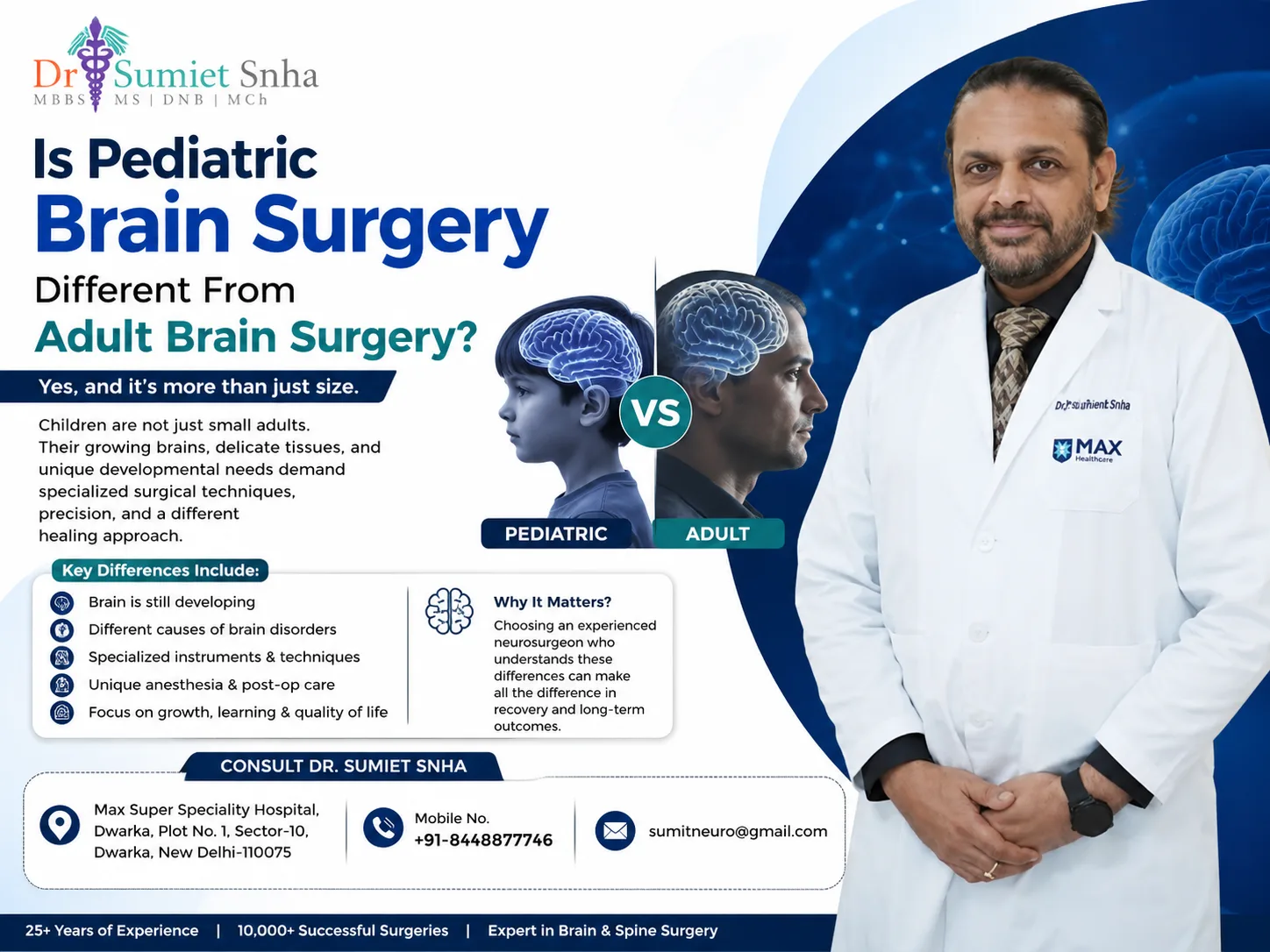
Brain surgery is a highly specialized form of treatment, but operating on a child’s brain is not simply the same procedure performed on a smaller body. A child’s brain and nervous system are still developing, which means doctors must carefully consider growth, brain function, age, anatomy, anesthesia, and long-term development when planning treatment. Pediatric neurosurgery in Delhi focuses on providing age-appropriate evaluation and surgical care for children with conditions that affect the brain, spine, or nervous system. From choosing the right diagnostic tests to planning surgery and supporting recovery, every step may require a different approach than adult care. This article explains the key differences between pediatric and adult brain surgery and why specialized care can be important for children.
What Is Pediatric Brain Surgery?
Pediatric brain surgery refers to surgical procedures performed to diagnose or treat conditions affecting a child’s brain, nervous system, skull, or related structures. It may be considered when a child has a brain tumor, hydrocephalus, congenital brain abnormality, epilepsy that does not respond adequately to other treatments, or certain vascular conditions. Some children may also require neurosurgical treatment for specific spinal or cranial disorders. Unlike adult procedures, pediatric brain surgery must take the child’s age, brain development, physical growth, and neurological function into account. The goal is not only to address the immediate medical problem but also to protect healthy brain function and support the child’s development and quality of life.
Why Is Pediatric Brain Surgery Different From Adult Brain Surgery?
Pediatric brain surgery differs from adult surgery because a child’s brain, skull, and nervous system are still developing. Brain surgery for children therefore requires careful planning that considers both the immediate condition and the child’s future neurological development.
Developing Brain
A child’s brain continues to mature, so surgeons must aim to treat the problem while protecting healthy brain tissue and important neurological functions.
Smaller and Developing Anatomy
Children have smaller and developing anatomical structures. Surgical techniques, instruments, and approaches may need to be carefully selected according to the child’s age, size, and condition.
Anesthesia Considerations
Anesthesia requires age-appropriate planning because children can respond differently to medications and surgical stress. Pediatric anesthesia expertise may be an important part of the treatment team.
Communication and Emotional Needs
Young children may struggle to explain symptoms or understand medical procedures. Fear and anxiety can also affect their experience. A pediatric neurosurgeon in Delhi and the wider care team can help create an age-appropriate approach that supports both the child and family.
Pediatric vs Adult Brain Surgery: Key Differences
Although the basic principles of neurosurgery are similar for children and adults, the way treatment is planned and delivered can be quite different. Pediatric neurosurgery takes into account the child's ongoing brain development, physical growth, communication abilities, and emotional needs. The treatment plan may also need to consider how surgery could affect the child's development and daily life in the future.
|
Factor |
Pediatric Brain Surgery |
Adult Brain Surgery |
|
Brain development |
The brain and nervous system are still developing. |
The brain is generally fully developed. |
|
Anatomy |
Structures may be smaller and still developing. |
Anatomical structures are generally mature. |
|
Surgical planning |
Planning considers age, growth, development, and long-term neurological function. |
Planning primarily considers the current condition and neurological function. |
|
Communication |
Younger children may have difficulty describing symptoms. |
Adults can generally communicate symptoms and concerns more clearly. |
|
Anesthesia |
Requires careful age- and size-appropriate anesthesia planning. |
Adult anesthesia protocols are generally followed. |
|
Emotional support |
Child-friendly explanations and emotional support may be important. |
Communication and support are generally tailored to an adult patient. |
|
Recovery |
Developmental milestones and learning may be considered during recovery. |
Recovery is generally assessed according to functional and neurological improvement. |
|
Family involvement |
Parents or caregivers are closely involved in decisions and care. |
Adults generally participate directly in their own treatment decisions. |
Overall, children's brain surgery requires an approach tailored to the child's individual stage of development. Good pediatric neurosurgical care is not limited to the operation itself; it also involves appropriate preparation, monitoring, rehabilitation, and follow-up to support the child's health and development.
Conditions That May Require Pediatric Brain Surgery
Not every neurological condition in a child requires an operation. Surgery is considered only when it is appropriate for the child’s specific diagnosis, symptoms, test results, age, overall health, and expected benefits. Some pediatric neurological disorders that may sometimes require neurosurgical treatment include:
- Pediatric brain tumors: Some tumors may require pediatric brain tumor surgery to remove as much of the abnormal tissue as safely possible, depending on the tumor's type, size, location, and behavior.
- Hydrocephalus: When excess cerebrospinal fluid builds up around the brain, a procedure such as a shunt or endoscopic treatment may sometimes be recommended.
- Epilepsy: Children with severe epilepsy that remains uncontrolled despite appropriate medical treatment may be evaluated for epilepsy surgery in selected cases.
- Congenital brain abnormalities: Certain conditions present from birth may require surgery when they interfere with brain function or development.
- Craniosynostosis: Early fusion of skull bones can sometimes require surgery to support healthy skull and brain development.
- Brain and vascular malformations: Conditions such as selected arteriovenous malformations may require specialized neurosurgical or endovascular treatment.
- Certain traumatic brain injuries: Severe head injuries may occasionally require emergency surgery to relieve pressure or treat bleeding.
The recommended approach is always individualized, with the medical team weighing the potential benefits and risks before deciding whether surgery is necessary.
How Do Surgeons Plan Brain Surgery for Children?
Planning brain surgery for a child involves much more than deciding where and how to operate. Doctors first build a complete picture of the child's condition and overall development before recommending treatment.
- Medical history: The team reviews symptoms, previous treatments, medical history, and relevant family history.
- Neurological examination: The child's movement, speech, vision, coordination, reflexes, and other neurological functions may be assessed.
- Imaging: MRI, CT, or other appropriate scans help doctors understand the location and characteristics of the condition.
- Brain-function assessment: Additional tests may be recommended when the affected area is close to important functional regions.
- Age and development: The child's age, physical growth, and developmental stage are considered when planning treatment.
- Risk assessment: Potential benefits, complications, and alternatives are carefully evaluated.
- Family discussion: Parents or caregivers are given an opportunity to understand the diagnosis, treatment options, and expected recovery.
- Recovery planning: Follow-up care and rehabilitation are planned according to the child's individual needs.
A pediatric neurosurgery specialist may work with neurologists, radiologists, pediatric anesthesiologists, intensivists, therapists, and other professionals. This multidisciplinary pediatric neurosurgical care can help ensure that treatment addresses both the immediate condition and the child's longer-term needs.
Is Pediatric Brain Surgery More Risky Than Adult Brain Surgery?
Pediatric brain surgery is not automatically more risky than brain surgery in adults. The level of risk depends on several factors, including the child’s age, overall health, underlying condition, location of the problem, and type of procedure. Possible pediatric brain surgery risks can include infection, bleeding, seizures, temporary or permanent neurological changes, and complications related to anesthesia. In some conditions, there may also be a risk of recurrence or the need for additional treatment. Before surgery, the medical team carefully evaluates these factors and discusses the expected benefits, possible complications, and available alternatives with the parents or caregivers. This individualized assessment helps guide the safest and most appropriate treatment plan for each child.
Recovery After Pediatric Brain Surgery
Recovery after pediatric brain surgery can vary considerably depending on the child's diagnosis, procedure, age, and overall health. After surgery, the child is usually monitored closely in the hospital so the medical team can watch for changes and manage pain, nausea, or other symptoms. Neurological observations may be performed regularly, and follow-up MRI, CT, or other imaging may be recommended when clinically necessary.
- Hospital monitoring: Close observation during the early recovery period.
- Symptom management: Appropriate care for pain and other postoperative symptoms.
- Rehabilitation: Physiotherapy, occupational therapy, speech therapy, or other support may be recommended when needed.
- Return to activities: School, sports, and normal activities should resume according to the treating team's advice.
- Long-term follow-up: Some children need ongoing monitoring of neurological function, learning, and development as they grow.
Pediatric Brain Surgery vs Adult Brain Surgery: Recovery Comparison
Recovery after brain surgery depends on the individual patient and the underlying condition. However, children may need additional attention to their neurological development, learning, and age-related needs as they recover. Adults, meanwhile, often focus on regaining established physical, cognitive, or functional abilities. The following comparison highlights some general differences:
|
Recovery Aspect |
Children |
Adults |
|
Monitoring |
May include neurological recovery as well as developmental progress. |
Usually focuses on neurological and functional recovery. |
|
Rehabilitation |
May involve developmental, physical, speech, or occupational support when needed. |
Often focuses on restoring or improving existing abilities. |
|
School/Work |
Returning to school may require gradual planning based on recovery and medical advice. |
Returning to work and daily activities is planned according to recovery. |
|
Family role |
Parents or caregivers often play an important role throughout recovery. |
The patient generally takes a more direct role in managing recovery. |
|
Long-term follow-up |
Growth, learning, and development may require ongoing assessment. |
Follow-up depends mainly on the diagnosis, treatment, and recovery progress. |
These are general differences, and an individual child's recovery plan should always be based on their specific medical needs and treating team's recommendations.
Why Choosing the Right Pediatric Neurosurgical Team Matters
Choosing a suitable pediatric neurosurgical team can make an important difference in how a child’s condition is evaluated, treated, and followed over time.
Experience and Hospital Support
Families may consider the team’s experience in pediatric neurosurgery, the hospital’s infrastructure, and access to pediatric anesthesia and critical-care support. Advanced imaging and appropriate surgical technology can also support careful diagnosis and treatment planning.
Multidisciplinary Care and Communication
A multidisciplinary team with rehabilitation services can be valuable when a child needs additional support during recovery. Families considering pediatric neurosurgeons in Delhi should also look for professionals who explain the diagnosis, treatment options, potential risks, and recovery process clearly and encourage parents to ask questions before making decisions.
About the Writer
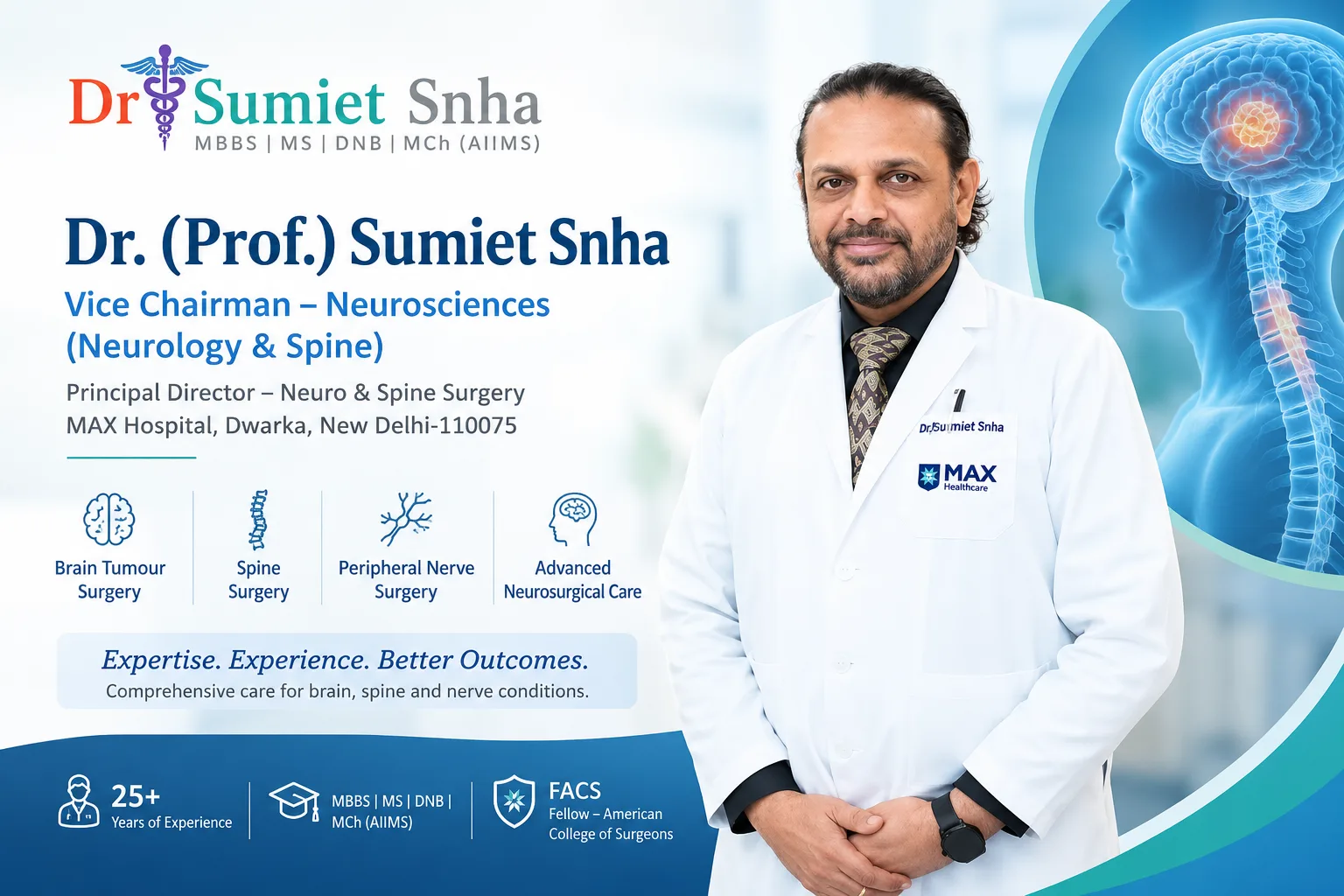
Dr.(Prof.) Sumiet Snha is a neurosurgical professional specializing in brain and spine surgery. He serves as Vice Chairman – Neurosciences (Neurology & Spine) and Principal Director – Neurosurgery & Spine Surgery, MAX Hospital, Dwarka, New Delhi. With 25+ years of experience in neurosurgery, he brings extensive clinical and academic experience to the field. He has been involved in neurosurgical practice and academic work since 2005, with a focus on complex neurological and spinal conditions.
Frequently Asked Questions
1. Is pediatric brain surgery different from adult brain surgery?
Yes. While the basic principles of neurosurgery are similar, treatment in children requires special consideration of their developing brain, smaller anatomy, age, anesthesia needs, communication abilities, and long-term development.
2. Why do children need specialized brain surgery?
Children are still growing and developing, so surgery must be planned with both the immediate medical problem and future neurological development in mind. Age-appropriate surgical, anesthesia, and recovery planning can be important.
3. What conditions can require brain surgery in children?
Depending on the individual case, surgery may be considered for brain tumors, hydrocephalus, certain forms of epilepsy, congenital brain abnormalities, craniosynostosis, vascular malformations, and selected traumatic brain injuries.
4. Is pediatric brain surgery safe?
Brain surgery always carries potential risks, but it is not possible to describe one procedure as equally safe for every child. Risk depends on factors such as the diagnosis, surgical location, procedure, age, and overall health. The treating team should explain the individual risks and expected benefits.
5. How long does a child take to recover after brain surgery?
Recovery varies widely. Some children may return to normal activities relatively quickly, while others may need a longer period of hospital care and rehabilitation. Recovery depends on the type of surgery, underlying condition, age, and the child's neurological status.
6. When should parents consult a pediatric neurosurgeon?
Parents may need specialist evaluation when a child has persistent neurological symptoms, recurrent seizures, concerning brain imaging, developmental concerns associated with a neurological condition, or a diagnosis that may require neurosurgical treatment.
7. Can minimally invasive techniques be used in pediatric brain surgery?
In selected cases, minimally invasive or endoscopic techniques may be appropriate. Whether such an approach is suitable depends on the child's condition, anatomy, location of the problem, and the goals of treatment. It is not appropriate for every case.
8. How can parents prepare their child for brain surgery?
Parents should follow the hospital's preoperative instructions and discuss the procedure with the medical team. Explaining what will happen in simple, age-appropriate language can also help a child feel more prepared and supported.
9. Will brain surgery affect a child's development?
The potential effect on development depends on the underlying condition and the area of the brain involved, as well as the treatment performed. Doctors consider these factors when planning surgery and may recommend developmental or rehabilitation follow-up afterward.
10. Does every child with a brain tumor need surgery?
No. Treatment depends on the tumor's type, size, location, growth pattern, symptoms, and other clinical factors. Some tumors may be monitored or treated with other approaches, while surgery may be recommended in selected cases.
11. What happens after a child is discharged from the hospital?
The child may need follow-up appointments, medication, activity restrictions, wound care, imaging, or rehabilitation depending on the procedure. Parents should follow the treating team's instructions and report any concerning changes promptly.
12. How is pediatric neurosurgery different from general neurosurgery?
Pediatric neurosurgery specifically addresses neurological conditions in infants, children, and adolescents. It requires consideration of age-related anatomy, brain development, communication, anesthesia, emotional needs, and long-term growth. Families exploring pediatric neurosurgery Delhi should seek an appropriately qualified team for their child's specific condition.
Conclusion
Pediatric and adult brain surgery follow many of the same fundamental neurosurgical principles, but children require additional consideration because their brains and bodies are still developing. From diagnosis and surgical planning to anesthesia, recovery, rehabilitation, and long-term follow-up, care should be tailored to the individual child. Families considering pediatric neurosurgery Delhi should focus on appropriate specialist evaluation, hospital support, and clear communication about the available treatment options and potential risks. Most importantly, every child's condition is different, so treatment decisions should be based on professional assessment rather than general information found online.

0 Comments