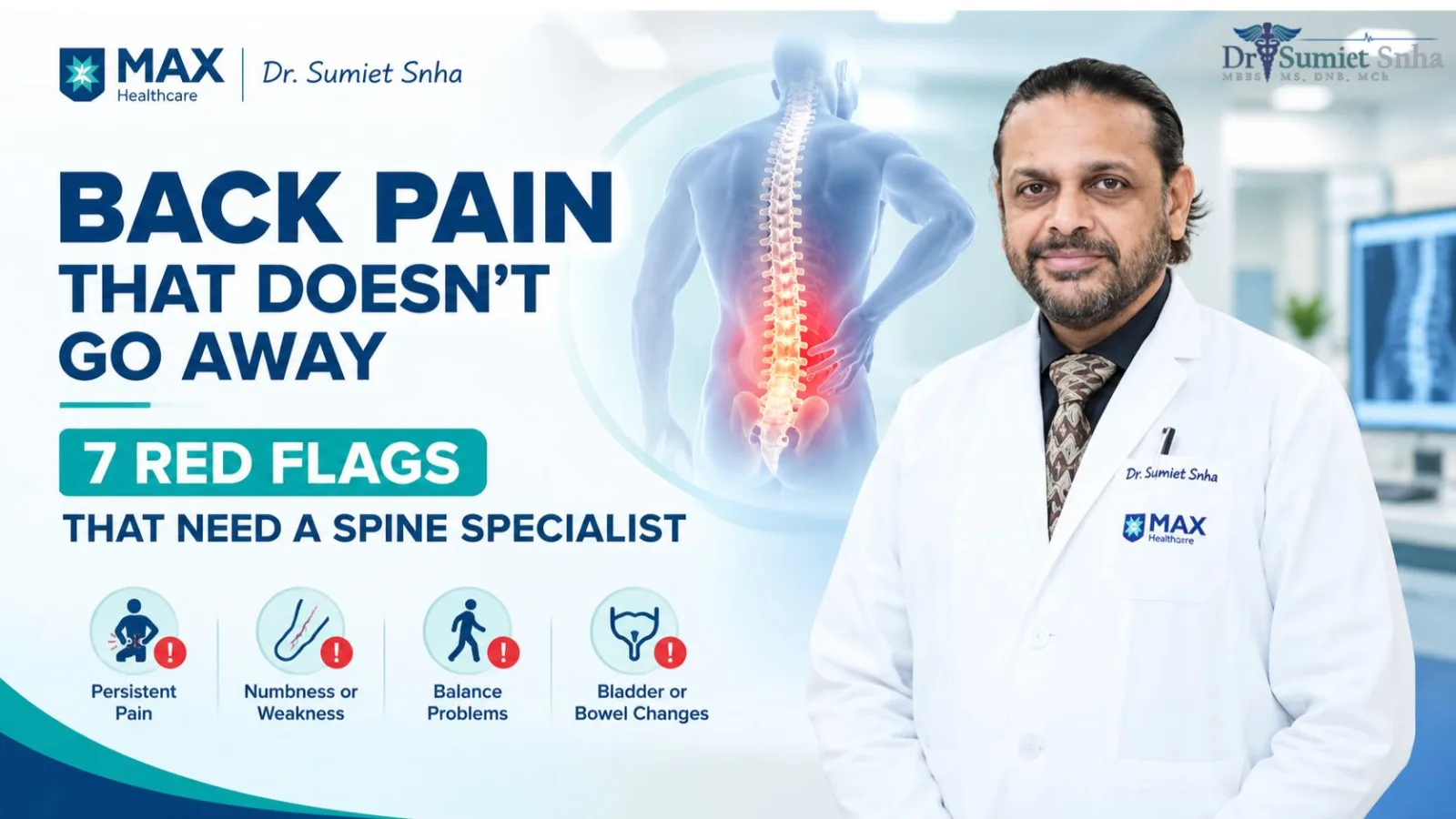
Back pain that persists for weeks can interfere with sleep, work, movement, and life. Although many cases improve with appropriate care, ongoing pain sometimes signals a problem that needs assessment. Understanding the chronic back pain causes and recognising back pain red flags can help you decide when to seek specialist advice. This guide explains seven warning signs, what may cause persistent lower back pain, and how lower back pain treatment is selected. If symptoms are severe, worsening, or accompanied by weakness or bladder changes, seek urgent care rather than waiting for an appointment with a spine specialist in Delhi.
What Causes Chronic Back Pain?
Understanding the chronic back pain causes is the first step towards choosing appropriate treatment. Back pain that continues for more than 12 weeks is generally considered chronic, although the cause and duration can vary.
Common causes include:
Slipped or herniated disc: A spinal disc may bulge or herniate and irritate nearby nerves.
Muscle or ligament strain: Repeated lifting, sudden movements, or poor lifting technique can contribute to pain.
Spinal stenosis: Narrowing of the spinal canal can put pressure on nerves and sometimes cause leg pain or difficulty walking.
Degenerative disc changes: Age-related changes in spinal discs and joints may contribute to stiffness and discomfort.
Sciatica: Irritation or compression of the sciatic nerve can cause pain travelling from the lower back into the buttock and leg.
Postural and activity-related factors: Prolonged sitting, limited physical activity, and repeated strain may aggravate symptoms.
Other medical conditions: Fractures, infections, inflammatory disorders, and, less commonly, cancer can cause back pain.
The same symptom can have different causes in different people. A clinical examination helps determine whether imaging or further investigations are necessary.
7 Back Pain Red Flags You Should Never Ignore
Most back pain is not caused by a life-threatening condition. However, certain back pain red flags require urgent medical assessment because they may indicate nerve compression, infection, fracture, or another serious problem.
1. Back Pain With Bladder or Bowel Changes
New difficulty passing urine, inability to empty the bladder, loss of bladder or bowel control, or numbness around the groin and inner thighs can indicate severe nerve compression, including cauda equina syndrome.
What to do: Seek emergency medical care immediately. Do not wait for a routine appointment or assume the symptoms will resolve on their own.
2. Weakness in the Legs or Difficulty Walking
Back pain accompanied by new or progressive leg weakness, frequent stumbling, or difficulty standing and walking may indicate nerve compression or another neurological problem.
What to do: Seek prompt medical assessment. Sudden or rapidly worsening weakness needs emergency evaluation.
3. Pain That Persists or Progressively Worsens
Pain that does not improve over several weeks, repeatedly returns, or becomes progressively worse deserves assessment, particularly when it interferes with sleep, work, or daily activities.
Persistent pain does not automatically mean surgery is needed. A doctor can assess possible chronic back pain causes and recommend an appropriate treatment plan.
4. Back Pain With Fever or Chills
Back pain accompanied by fever, chills, or feeling seriously unwell may indicate an infection or another condition requiring urgent evaluation. The concern may be greater in people with weakened immunity, recent infections, or recent spinal procedures.
What to do: Seek prompt medical care, especially if the pain is severe or you feel unwell.
5. Unexplained Weight Loss or a History of Cancer
Back pain accompanied by unexplained weight loss, reduced appetite, or a personal history of cancer should not be ignored. These symptoms can have many explanations, but a doctor may need to investigate less common causes, including cancer involving the spine.
What to do: Arrange a medical assessment promptly and share your medical history.
6. Back Pain Following a Fall or Accident
Severe pain after a road accident, significant fall, or other injury may indicate a spinal fracture or another injury. Even a relatively minor fall can cause a fracture in someone with osteoporosis or fragile bones.
What to do: Seek urgent assessment after significant trauma, particularly if you have severe pain, numbness, or weakness. Avoid unnecessary movement if a spinal injury is suspected.
7. Severe Night Pain or Pain at Rest
Pain that repeatedly wakes you at night, occurs at rest, or steadily worsens without a clear explanation deserves medical review. These symptoms do not necessarily indicate a serious disease, but they should be considered alongside your age, medical history, examination, and other symptoms.
What to do: Arrange an assessment, particularly if the pain is new, persistent, worsening, or accompanied by other warning signs.
When Should You Visit a Spine Specialist in Delhi?
You may benefit from consulting a spine specialist in Delhi if your back pain persists despite initial care, repeatedly returns, spreads into your legs, or affects walking and everyday activities.
A specialist assessment may also be appropriate when scans show a spinal problem, a doctor suspects significant nerve compression, or symptoms are getting worse.
Depending on your condition, a spine specialist may recommend conservative treatment, rehabilitation, medication, further tests, or surgery. Seeing a specialist does not automatically mean an operation will be required.
If you have emergency warning signs such as new bladder dysfunction, numbness around the groin, or rapidly progressing weakness, go to an emergency department instead of waiting for a scheduled consultation.
Lower Back Pain Treatment: What Are the Options?
The right lower back pain treatment depends on the cause, severity, duration, and effect of symptoms on your daily life.
1. Activity Modification and Physiotherapy
For many patients, staying gently active within comfortable limits and following an individualised physiotherapy programme can help improve movement and function. Prolonged bed rest is generally not recommended for uncomplicated back pain.
2. Medication
A clinician may recommend medication to manage pain or inflammation, depending on your medical history and the likely cause. Medicines are not suitable for everyone, so discuss possible side effects and interactions before using them.
3. Further Investigations
MRI or other imaging may be considered when there are red flags, neurological findings, persistent symptoms despite appropriate care, or when imaging would help guide a treatment decision. Scans are not routinely necessary for every episode of back pain.
4. Minimally Invasive Spine Surgery
When a structural problem causes significant symptoms and non-surgical care has not helped sufficiently, surgery may be considered. Selected patients may be suitable for minimally invasive spine surgery, including endoscopic techniques.
The appropriate procedure depends on the diagnosis. Minimally invasive techniques are not suitable for every condition and do not guarantee pain-free results or faster recovery for every patient.
How Can You Reduce the Risk of Recurrent Back Pain?
Although not every cause of back pain can be prevented, certain habits may help support spinal health:
Take regular movement breaks during long periods of sitting.
Build strength and flexibility gradually through suitable exercise.
Use safe lifting techniques and avoid sudden, excessive loads.
Maintain a comfortable workstation and change positions regularly.
Follow professional advice if pain repeatedly returns.
Avoid ignoring new weakness, numbness, or other warning signs.
If an activity consistently aggravates your symptoms, modify it and seek professional guidance rather than pushing through severe pain.
About Dr. (Prof.) Sumiet Snha
Dr. (Prof.) Sumiet Snha is a neurosurgeon and spine surgeon whose practice website describes experience in complex brain, spine, and peripheral nerve procedures, including minimally invasive and endoscopic techniques. His profile also describes neurosurgical training at the All India Institute of Medical Sciences (AIIMS), New Delhi, and previous academic work in neurosurgery.
According to the practice website, Dr. (Prof.) Sumiet Snha has 30+ years of experience and currently works at Max Hospital, Dwarka, New Delhi. Patients considering a consultation should confirm his current qualifications, professional registration, hospital affiliation, and appointment availability directly.
A spine consultation can help assess persistent back pain, possible nerve compression, slipped discs, spinal stenosis, and other spinal conditions. Treatment recommendations should be based on an individual examination and the patient's symptoms, medical history, and investigation results.
Frequently Asked Questions
1. When is back pain considered chronic?
Back pain lasting more than 12 weeks is generally described as chronic. Pain that continues or repeatedly returns may need assessment to identify its cause and suitable treatment.
2. What are the most common chronic back pain causes?
Common causes include disc problems, muscle strain, degenerative spinal changes, spinal stenosis, and nerve irritation. A clinical assessment can help identify the likely cause.
3. Which back pain red flags require emergency care?
New bladder or bowel dysfunction, numbness around the groin, and rapidly worsening leg weakness require emergency evaluation. Severe pain after major trauma may also need urgent assessment.
4. Can a slipped disc heal without surgery?
Many slipped discs improve with time and non-surgical care. Surgery may be considered when symptoms remain disabling or significant nerve compression is present.
5. When should I seek lower back pain treatment?
Seek medical advice if pain persists, worsens, repeatedly returns, affects everyday activities, or spreads into a leg. Seek urgent care if warning signs develop.
6. Does every case of back pain need an MRI?
No. Imaging is usually guided by symptoms, examination findings, warning signs, and whether the results would change treatment.
7. Can sciatica cause leg numbness?
Yes. Sciatica can cause pain, tingling, or numbness travelling from the lower back or buttock into the leg. New or progressive weakness requires prompt assessment.
8. Is walking helpful for lower back pain?
Gentle walking may help some people stay active and maintain mobility. Adjust activity to your symptoms and seek medical advice if walking causes severe pain or new neurological symptoms.
9. When is spine surgery recommended?
Surgery may be considered when a diagnosed structural problem causes significant symptoms, when non-surgical treatment has not provided sufficient relief, or when urgent nerve compression requires intervention.
10. Is minimally invasive spine surgery suitable for everyone?
No. Suitability depends on the diagnosis, spinal anatomy, overall health, and treatment goals. Your surgeon should explain the benefits, limitations, and alternatives.
11. How do I choose a spine specialist in Delhi?
Look for relevant qualifications, experience with your condition, access to appropriate diagnostic facilities, and clear explanations of treatment options and risks. Verify current credentials and hospital affiliation.
12. When should I consult Dr. (Prof.) Sumiet Snha?
You can enquire about a consultation if you have persistent back pain or a diagnosed spinal condition requiring specialist assessment. Confirm current availability and whether your symptoms require urgent medical attention first.
Conclusion
Back pain that does not go away deserves attention, especially when it affects daily life or occurs alongside neurological symptoms. Recognising back pain red flags can help you understand when to seek routine assessment and when emergency care is necessary.
Identifying the chronic back pain causes is important for choosing appropriate lower back pain treatment. If your symptoms persist, worsen, or interfere with movement, consider an assessment with a qualified spine specialist in Delhi. Early evaluation can help clarify the diagnosis and guide treatment based on your individual needs.


0 Comments