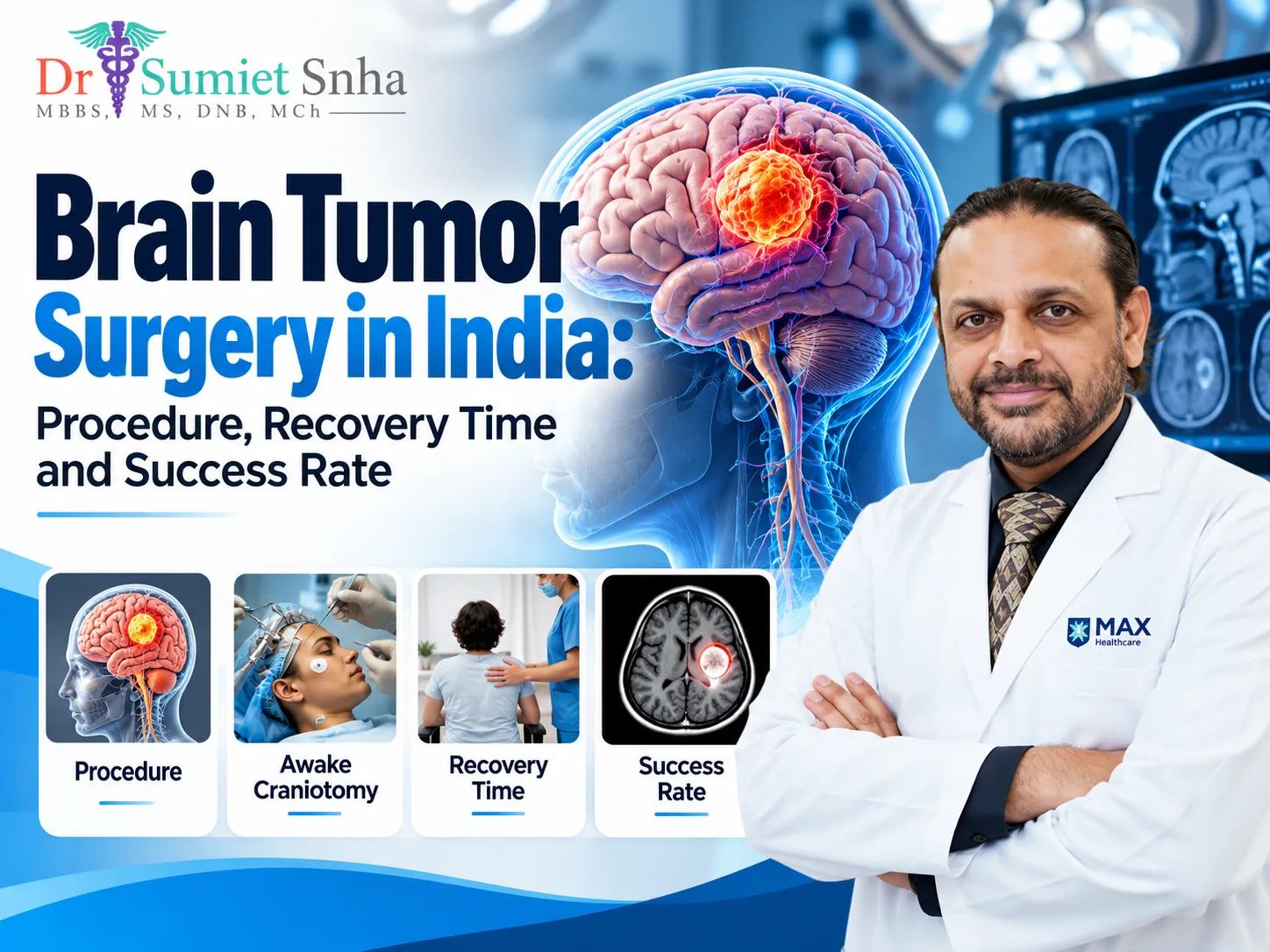
Being advised to undergo brain surgery can naturally raise many questions: What exactly happens during the operation? How long will recovery take? Is the tumor completely removable? What are the risks? And what does the success rate actually mean?
Brain tumor surgery in India may be recommended for both benign and malignant brain tumors, depending on the tumor’s type, size, location, symptoms and relationship with important areas of the brain. Surgery may be performed to remove the entire tumor, remove as much of it as safely possible, obtain tissue for diagnosis, or relieve pressure caused by the tumor.
Modern neurosurgery uses detailed imaging, neuronavigation, brain mapping and, in selected cases, awake craniotomy to help surgeons operate more precisely while protecting important neurological functions. The treatment plan, however, needs to be individualized because no two brain tumors behave in exactly the same way.
Why Is Brain Tumor Surgery Performed?
The purpose of brain tumor surgery is not always simply to “remove the tumor.” The surgical goal depends on what type of tumor is present and where it is located.
When safely possible, the neurosurgeon may aim for maximum tumor removal while protecting normal brain tissue. Surgery may also provide a tissue sample that allows a pathologist to determine the exact tumor type and grade. This information can guide further treatment.
Brain tumor surgery may therefore be performed to:
Remove the tumor completely when safely possible
Reduce the size of a tumor that cannot be completely removed
Obtain tissue for biopsy and diagnosis
Relieve pressure on the brain
Reduce symptoms caused by the tumor
Help plan further radiotherapy, chemotherapy or other treatment when required
The safest extent of removal is important. If a tumor involves an area responsible for speech, movement, vision or another essential function, attempting aggressive removal may create unnecessary neurological risk. Modern brain tumor surgery therefore focuses on maximum safe resection, rather than removal at any cost.
How Is Brain Tumor Surgery Performed?
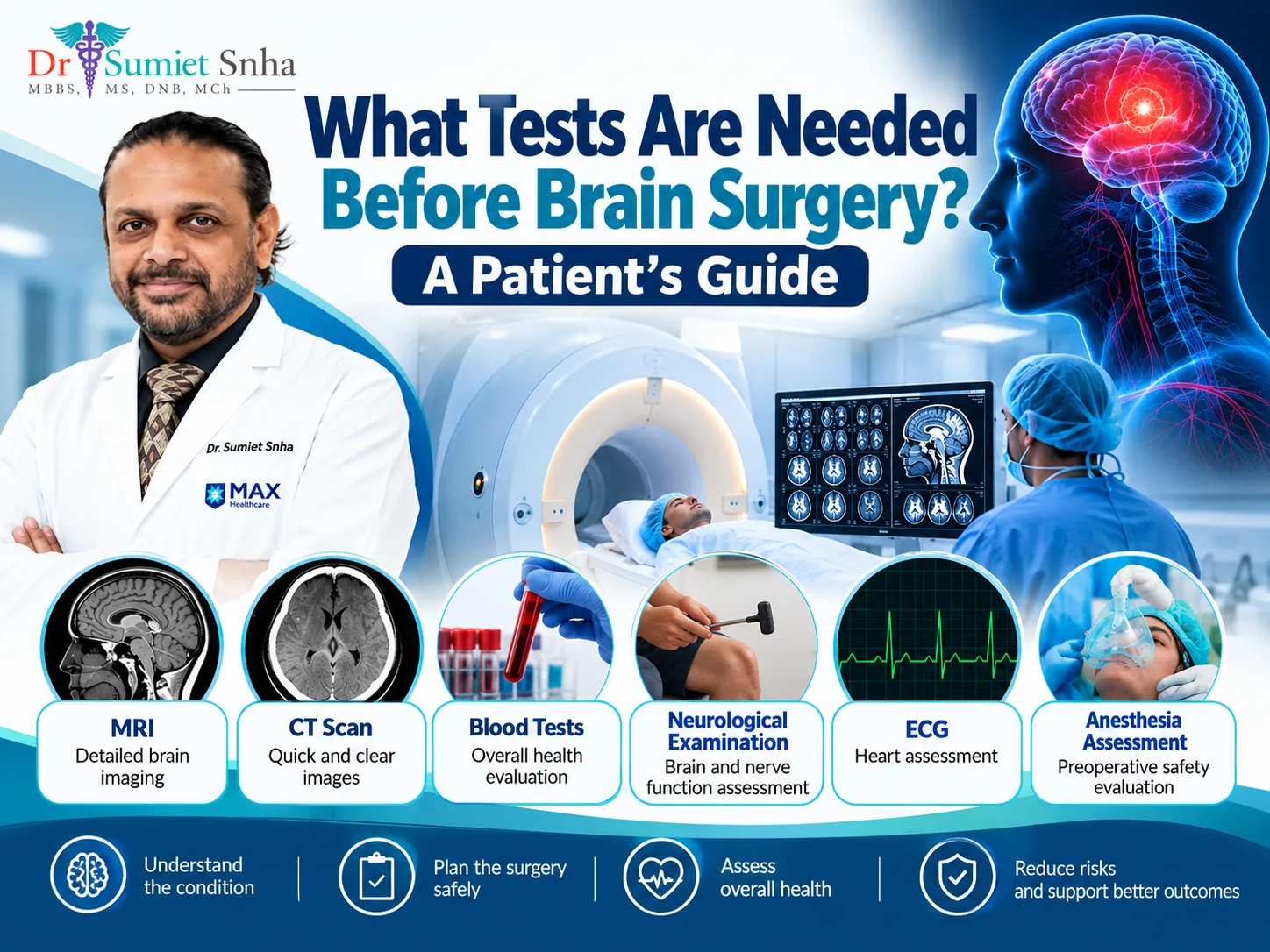
Before surgery, the patient usually undergoes detailed neurological assessment and imaging, commonly including MRI. These investigations help the neurosurgical team understand the tumor’s size, location and relationship with surrounding brain structures.
Before the Operation
Preoperative planning can include blood investigations, imaging studies, anesthesia assessment and evaluation of existing neurological functions.
Depending on the case, advanced imaging or computer-assisted navigation may also be used to create a more precise surgical plan.
During the Surgery
A craniotomy is one of the commonly used procedures for removing a brain tumor. During a craniotomy, the surgeon temporarily removes a section of skull to access the brain.
Once the tumor is reached, microsurgical instruments and other technologies may be used to separate tumor tissue from surrounding healthy structures. The neurosurgeon removes as much tumor as considered safely possible.
After the required procedure has been completed, the bone flap is generally placed back and secured.
After the Operation
Immediately after surgery, the patient is monitored closely for neurological function, blood pressure, breathing and other vital signs.
A postoperative CT or MRI may be performed to evaluate the surgical area and determine the extent of tumor removal. Further treatment is decided after considering the surgical findings and final pathology report.
Common Types of Brain Tumor Surgery
The technique is selected according to the individual case rather than simply choosing the least invasive option.
What Is an Awake Craniotomy?
An awake craniotomy is a specialized form of brain surgery in which the patient is awake and responsive during a particular part of the operation.
It may sound uncomfortable, but the scalp is numbed and medicines are used to maintain comfort. The brain tissue itself does not perceive pain in the same way as the skin and other tissues.
The technique can be especially useful when a tumor lies close to areas controlling speech, movement, vision or other important neurological functions.
During brain mapping, the patient may be asked to name objects, speak, count or move a hand or leg. The surgical team observes these responses while mapping important functional areas.
This real-time feedback can help the neurosurgeon identify areas that should be protected while removing as much tumor as safely possible.
Brain Tumor Surgery Recovery Time
The brain tumor surgery recovery time is different for every patient. It depends on the type of surgery, tumor location, pre-existing symptoms, age, general health and whether neurological rehabilitation is required.
After a conventional craniotomy, hospital recovery may commonly take several days. Mayo Clinic notes that hospitalization after craniotomy may be approximately 2–4 days, although individual stays can be shorter or longer. Complete healing can take considerably longer.
Typical Recovery Journey
Patients may temporarily experience fatigue, headache, weakness or other symptoms after surgery. Recovery should therefore be guided by the treating neurosurgical team rather than by a fixed timeline.
What Is the Success Rate of Brain Tumor Surgery?
There is no single medically meaningful success rate for all brain tumor operations.
A benign tumor that can be completely separated from surrounding structures is very different from an aggressive tumor growing into areas responsible for speech or movement.
The outcome can depend on:
Tumor type and pathological grade
Tumor size and location
Whether the tumor is well-defined or infiltrative
Amount of tumor that can safely be removed
Patient’s age and overall health
Neurological condition before surgery
Tumor biology and molecular characteristics
Need for radiotherapy, chemotherapy or other treatment
For this reason, patients should be cautious about hospitals, websites or advertisements presenting one universal percentage as the “success rate” for brain tumor surgery.
For some patients, success means complete removal. For others, the best result may be reducing tumor volume, obtaining an accurate diagnosis, relieving pressure and preserving neurological function.
Brain Tumor Operation Cost in India: What Determines It?
The brain tumor operation cost cannot be accurately estimated from the diagnosis alone. Two people with brain tumors may require very different procedures and levels of hospital care.
The overall cost may be influenced by the complexity and duration of surgery, hospital category, room selection, investigations, ICU requirement, surgical technology, anesthesia, pathology and length of hospitalization.
Advanced techniques such as neuronavigation, intraoperative monitoring or an awake procedure may also affect the overall treatment plan and expense.
Patients should ideally obtain a case-specific estimate after their MRI and medical records have been reviewed rather than relying on a generic online price.
Possible Risks of Brain Tumor Surgery
Brain tumor surgery is a major neurological procedure, and complications are possible even with careful planning.
Depending on tumor location and the operation performed, potential risks can include bleeding, infection, brain swelling, seizures, weakness, speech difficulties, vision changes, balance problems or other neurological changes. The specific risk profile varies significantly between patients.
A neurosurgeon should explain the expected benefits, possible complications and alternative treatment approaches before surgery.
How Modern Technology Helps During Brain Tumor Surgery
Advances in neurosurgery have made surgical planning increasingly precise. Depending on the case, surgeons may use:
Neuronavigation for computer-guided localization
High-resolution MRI and CT imaging
Intraoperative imaging in selected centres
Functional mapping
Neurophysiological monitoring
Surgical microscopes
Awake craniotomy and cortical mapping
Computer-guided techniques can help the surgical team understand the location of the tumor and plan an appropriate route to it.
Technology, however, supports rather than replaces surgical judgment. The experience of the treating team and individualized planning remain essential.
About Dr.(Prof.) Sumiet Snha
Dr.(Prof.) Sumiet Snha is a neurosurgeon with extensive experience in the management of brain and spine disorders. His qualifications include MBBS, MS, DNB and MCh (AIIMS New Delhi), and his professional background includes neurosurgical training at AIIMS New Delhi.
With 25+ years of experience in neurosurgery, his work includes the assessment and surgical management of complex neurological and spinal conditions. His professional exposure has also included work with internationally recognised specialists including Prof. Hiroshi Sano (Japan), Prof. Louise Vialle (Brazil) and Prof. B. Meyer (Germany).
He serves as Vice Chairman – Neurosciences (Neurology & Spine) and is associated with Max Hospital, Gurgaon.
For patients considering brain tumor surgery, consultation with an experienced neurosurgeon allows the MRI, neurological condition, tumor characteristics and treatment options to be assessed individually before deciding whether surgery is appropriate.
Frequently Asked Questions About Brain Tumor Surgery
1. Is brain tumor surgery always necessary?
No. Treatment depends on the tumor type, size, location, growth pattern, symptoms and overall health of the patient. Some tumors may initially be monitored, while others require surgery, radiotherapy, medicines or a combination of treatments.
2. Can a brain tumor be completely removed?
Some tumors can be removed completely, particularly when they have clear boundaries and are safely accessible. Others may be closely attached to or infiltrate important brain structures, making partial removal safer.
3. How long does brain tumor surgery take?
The duration varies considerably. Tumor location, size, surgical approach and complexity all influence operating time. Complex procedures and brain mapping may require several hours.
4. What is the usual brain tumor surgery recovery time?
Early hospital recovery commonly takes several days, but full recovery may take weeks or months. The timeline depends on the operation and the patient's neurological and general health.
5. What is an awake craniotomy?
An awake craniotomy is a procedure in which the patient remains responsive during a selected portion of surgery so the team can monitor functions such as speech and movement while operating near critical brain areas.
6. Is the patient in pain during awake brain surgery?
The scalp is numbed and medicines are provided for comfort. Patients may experience pressure or other sensations, but the surgical and anesthesia teams closely monitor comfort throughout the procedure.
7. What determines the brain tumor operation cost?
The brain tumor operation cost depends on surgical complexity, hospital stay, ICU requirement, investigations, surgical technology, medicines, pathology and other individual treatment requirements.
8. Is every brain tumor cancerous?
No. Brain tumors can be benign or malignant. However, even a noncancerous tumor may require treatment if its location or size affects important brain functions.
9. Will chemotherapy or radiation be required after surgery?
Not always. The need for additional treatment depends primarily on the final pathology, tumor grade, extent of removal and other tumor characteristics.
10. Can a brain tumor return after surgery?
Yes, some tumors can recur even after surgery. The likelihood depends heavily on tumor biology, grade, location and extent of removal. Follow-up imaging is therefore an important part of ongoing care.
11. When can a patient return to normal activities?
Return to work, driving, exercise and other activities vary between patients. These activities should only be resumed according to the treating neurosurgeon’s advice because neurological recovery can continue for weeks or months.
12. How should I choose a surgeon for brain tumor surgery in India?
Consider the neurosurgeon’s training, experience with the specific tumor or surgical approach, hospital infrastructure, multidisciplinary support and how clearly the team explains the diagnosis, risks, alternatives and expected outcomes. A treatment recommendation should be based on the individual patient rather than general success claims.
Conclusion
Brain tumor surgery in India has evolved considerably with improvements in neuroimaging, neuronavigation, microsurgical techniques, functional mapping and procedures such as awake craniotomy. These technologies can help neurosurgical teams plan surgery more precisely and protect important neurological functions.
However, treatment decisions should never be based only on a general success-rate figure, the estimated brain tumor operation cost, or another patient's experience. Tumor type, grade, location, neurological function and overall health can substantially change both the surgical approach and expected outcome.
Similarly, brain tumor surgery recovery time is individual. Some patients progress quickly after surgery, while others require a longer period of neurological recovery or rehabilitation.
A detailed evaluation by an experienced neurosurgeon, supported by appropriate imaging and pathology, is the best way to understand whether surgery is required, how much tumor can safely be removed and what recovery and further treatment may involve.

0 Comments