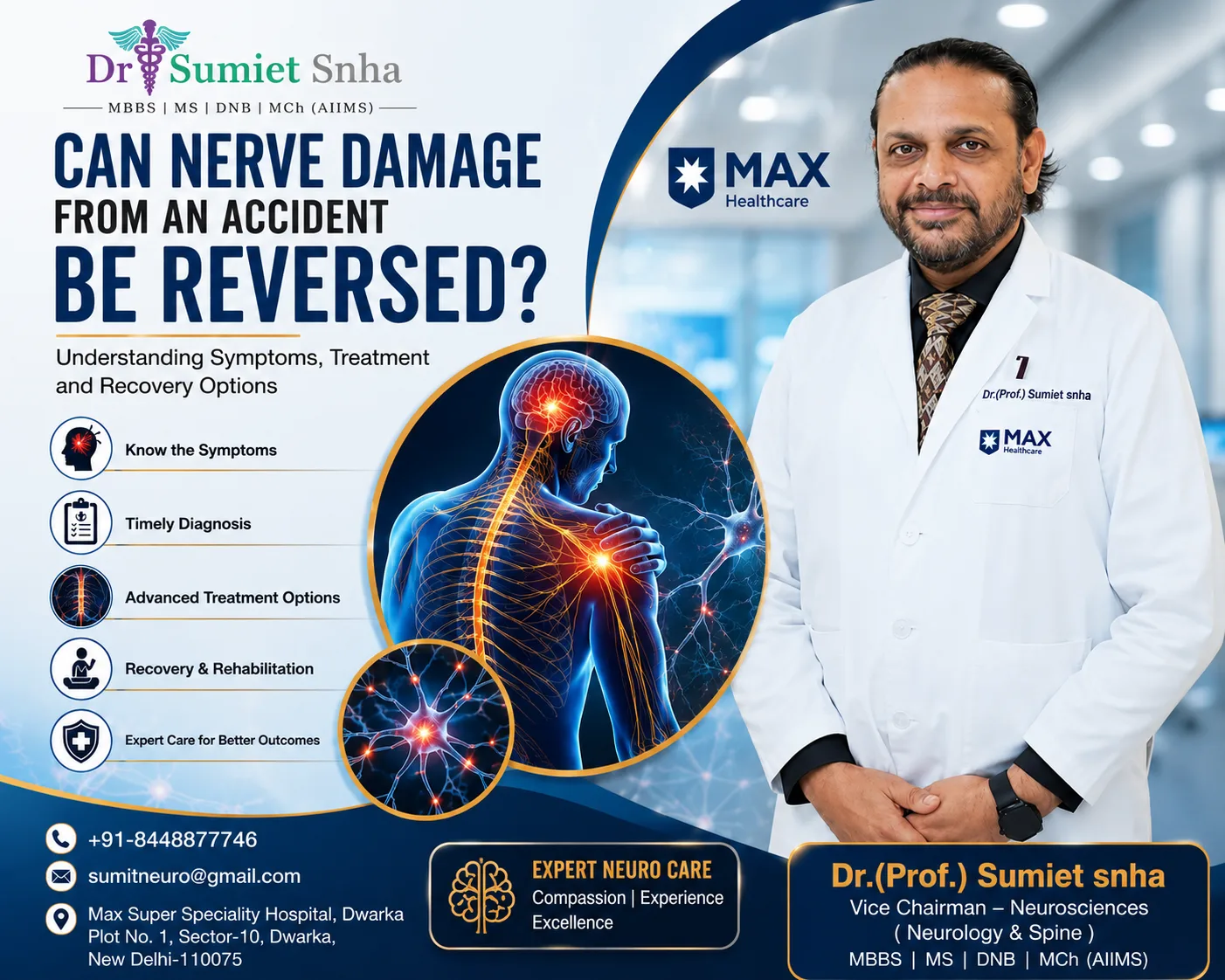
Accidents can damage nerves through crushing, stretching, compression, or direct trauma, causing symptoms such as numbness, tingling, pain, or weakness. Whether an injured nerve can recover depends largely on the type, severity, and location of the nerve injury, as well as how quickly it is assessed. Some mild injuries improve with time and rehabilitation, while severe damage may require specialized care or surgery. Understanding the cause of nerve damage is essential before choosing treatment. Nerve injury treatment may include observation, medicines, physiotherapy, or surgical repair, depending on the individual diagnosis.
What Happens to Nerves After an Accident?
An accident can affect a nerve when sudden force compresses, stretches, bruises, or tears the nerve tissue. The resulting nerve damage after an accident can interfere with sensation, movement, or muscle control. The extent of recovery depends on how severely the nerve has been affected and where the injury occurred.
Types of Nerve Injuries
- Nerve compression: Pressure on a nerve may cause pain, tingling, or numbness and can improve after the pressure is relieved.
- Stretching injuries: A nerve may be pulled or stretched during trauma, sometimes affecting its function temporarily.
- Partial nerve damage: Part of the nerve remains intact, allowing potential recovery.
- Complete nerve disruption: The nerve is fully torn and may require specialist assessment and nerve injury treatment, including possible surgery.
A traumatic nerve injury or peripheral nerve injury should be evaluated promptly to determine the most appropriate treatment.
Can Nerve Damage From an Accident Be Reversed?
Whether nerve damage from an accident can be reversed depends on the nature and extent of the injury. Some nerve injuries can improve significantly or even recover completely, particularly when the nerve remains structurally intact. More extensive damage, such as a severely torn nerve, may cause lasting weakness, numbness, or loss of function if appropriate treatment is not possible.
Factors That Influence Nerve Injury Recovery
Several factors influence nerve injury recovery, including the severity of damage, whether the nerve remains connected, and its location in the body. The time between injury and medical assessment can also matter. Nerve regeneration occurs slowly, so nerve damage recovery time may range from weeks or months to considerably longer, depending on the injury. Overall health, rehabilitation, and whether surgery is needed can also affect the outcome. A specialist evaluation is essential to understand the realistic recovery potential for an individual injury.
Symptoms of Nerve Damage After an Accident
The symptoms of nerve damage can vary depending on which nerve has been affected and how severely it was injured. Some people notice symptoms immediately after an accident, while others may develop problems as swelling or tissue damage progresses.
Common Symptoms
Typical nerve injury symptoms may include:
- Numbness or reduced sensation in the affected area
- Tingling or pins-and-needles sensations
- Burning, electric, or shooting pain
- Muscle weakness or reduced strength
- Difficulty moving an arm, leg, hand, or foot normally
- Loss of sensation to touch, temperature, or pressure
- Reduced coordination or difficulty controlling movements
Persistent or worsening symptoms following nerve damage after an accident should be evaluated by a qualified medical professional to determine the cause and appropriate treatment.
How Is Nerve Damage Diagnosed?
Accurate diagnosis is important because nerve injuries can differ considerably in location, severity, and underlying cause. A doctor first reviews the accident, symptoms, and changes in movement or sensation before deciding which tests are appropriate. This evaluation helps identify where the nerve is damaged and how severe the injury may be, which is essential when planning treatment.
Tests Doctors May Recommend
- Neurological examination: Checks reflexes, sensation, coordination, and nerve function.
- Muscle strength and sensation assessment: Identifies weakness or areas with reduced feeling.
- Nerve conduction studies: Evaluate how effectively electrical signals travel through nerves.
- Electromyography (EMG): Assesses electrical activity in muscles and may help identify nerve dysfunction.
- MRI or other imaging: May be recommended to examine nerves, surrounding tissues, or associated injuries when clinically appropriate.
The results are interpreted alongside the clinical examination to guide individualized care.
Nerve Injury Treatment Options
depends on the type, location, and severity of the injury, along with findings from the clinical examination and diagnostic tests. Some injuries can be managed without surgery, while significant nerve damage may require an operation followed by structured rehabilitation. Treatment should therefore be individualized rather than based on symptoms alone.
Conservative Treatment
For selected injuries, doctors may recommend non-surgical care, which can include:
- Pain management: Medicines or other strategies may help control nerve-related discomfort.
- Physical therapy: Exercises can help maintain mobility, strength, and function.
- Occupational therapy: May support the safe use of an affected hand, arm, leg, or other body part.
- Activity modification: Avoiding movements that worsen symptoms may protect the injured area.
- Rehabilitation: A structured program can support recovery from nerve injury and functional improvement.
Surgical Treatment
More severe peripheral nerve injury may require procedures such as nerve repair surgery, particularly when a nerve has been significantly disrupted. Depending on the injury, a specialist may consider nerve grafting, nerve transfer, or surgery to relieve persistent nerve compression. The choice of treatment for nerve damage is based on the individual diagnosis, injury pattern, and expected benefits and risks.
How Long Does Nerve Damage Take to Heal?
Nerve damage recovery time can vary significantly from one person to another. Mild nerve injuries may begin improving within weeks or months, particularly when the nerve remains intact and the underlying cause is addressed. More serious injuries can take many months or longer to recover and may not regain full function. Nerves regenerate slowly, so progress can be gradual rather than immediate. After nerve repair surgery, rehabilitation may continue for an extended period to support movement, strength, and daily function. The expected recovery depends on the injury’s severity, location, treatment, and individual healing response, so a specialist should provide personalized guidance.
What Can Affect Nerve Injury Recovery?
Several factors can influence nerve injury recovery, and the expected outcome can differ significantly between patients. The severity and type of injury, including whether the nerve is compressed, stretched, partially damaged, or completely disrupted, are important considerations. The location of the damaged nerve can also affect function and healing. Early diagnosis and appropriate treatment may help guide timely management, while rehabilitation can support strength, movement, and daily activities. Individual health factors, age, healing capacity, and adherence to the recommended treatment plan may also influence recovery from nerve injury.
When Should You See a Specialist?
Persistent or worsening symptoms after an accident should be medically evaluated, particularly when there is new or increasing weakness, persistent numbness, severe nerve pain, loss of movement, or reduced sensation. Symptoms that fail to improve should not be ignored, as they may indicate an underlying nerve injury requiring further assessment. A specialist can evaluate the affected nerves, review diagnostic findings, and determine whether observation, rehabilitation, or another form of nerve injury treatment is appropriate. Early professional assessment can help establish a suitable management plan based on the individual injury.
About Dr.(Prof.) Sumiet Snha
Vice Chairman – Neurosciences ( Neurology & Spine )
Dr.(Prof.) Sumiet Snha is a neurosurgeon with more than 25 years of experience in neurosurgery. He completed his neurosurgical training at AIIMS, New Delhi, and has undertaken advanced training and professional exposure with neurosurgical specialists internationally. His areas of expertise include spinal injuries, brachial plexus injuries, and peripheral nerve surgery. He is trained in spinal injury management and is a certified AO Spine teaching faculty member. He is also a trained and certified ATLS faculty member and has participated in teaching and research activities in India and abroad. His professional experience includes managing complex nerve injuries and supporting patients through individualized evaluation and treatment.
Frequently Asked Questions
1. Can nerve damage from an accident heal on its own?
Some nerve injuries may improve naturally, particularly when the nerve is bruised, compressed, or mildly stretched without major structural disruption. Recovery depends on the severity and location of the injury, so persistent symptoms should be assessed by a medical professional.
2. What are the first signs of nerve damage after an accident?
Common signs include numbness, tingling, burning or shooting pain, muscle weakness, reduced sensation, and difficulty moving the affected body part. Symptoms can vary depending on which nerve has been injured.
3. How long does it take for an injured nerve to recover?
There is no single recovery timeline. Mild injuries may improve over weeks or months, while significant nerve injuries can require many months or longer. Nerves regenerate slowly, and recovery can vary substantially between individuals.
4. Can a completely severed nerve heal without surgery?
A completely disrupted nerve generally requires specialist assessment because the two ends may no longer be connected. Depending on the injury, procedures such as nerve repair, nerve grafting, or nerve transfer may be considered.
5. What is the best treatment for nerve damage after an accident?
The appropriate nerve injury treatment depends on the type and severity of damage. Management may include observation, pain control, physiotherapy, occupational therapy, rehabilitation, or surgery when there is significant structural nerve damage.
6. Can physical therapy help with nerve injury recovery?
Yes, rehabilitation may help maintain joint movement, muscle strength, coordination, and functional ability. The exercises should be selected according to the injury and recovery stage and performed under appropriate professional guidance.
7. Can nerve damage cause permanent weakness?
Severe nerve injuries can sometimes result in long-term or permanent weakness, numbness, or loss of function. However, the outcome varies according to the nerve involved, degree of damage, treatment, and individual recovery response.
8. Does early treatment improve recovery from nerve damage?
Early evaluation can help identify the injury, establish its severity, and determine whether observation, rehabilitation, or surgical management is appropriate. Some injuries may require timely intervention to avoid complications or prolonged functional problems.
9. What tests are used to diagnose traumatic nerve injuries?
Doctors may use a neurological examination, muscle and sensory assessment, nerve conduction studies, electromyography (EMG), and imaging such as MRI when clinically appropriate. These tests help determine the location and extent of nerve dysfunction.
10. Can nerve damage after an accident cause chronic pain?
Yes. Nerve injury can sometimes produce persistent burning, electric, shooting, or hypersensitive pain. The cause of ongoing pain should be evaluated because treatment depends on the specific nerve problem and associated injuries.
11. When should I see a nerve specialist after an accident?
Seek medical evaluation if you develop persistent numbness, worsening weakness, significant nerve pain, loss of sensation, difficulty moving a limb, or symptoms that are not improving. Prompt assessment can help determine the next appropriate step.
12. Is surgery always necessary for accident-related nerve damage?
No. Surgery is not required for every nerve injury. Some injuries can be monitored or managed with rehabilitation and other non-surgical measures. Surgery may be considered when there is substantial nerve disruption, persistent compression, or another structural problem that requires correction.
Conclusion
Accident-related nerve damage can improve, and some injuries may recover substantially with appropriate care. However, outcomes depend on the type, severity, and location of the nerve injury, along with individual healing factors. Mild injuries may improve without surgery, while significant nerve damage may require surgical repair followed by rehabilitation. Early diagnosis and appropriate nerve injury treatment can help guide timely management and support the best achievable functional recovery. A specialist evaluation is important for understanding the expected recovery pathway.




0 Comments