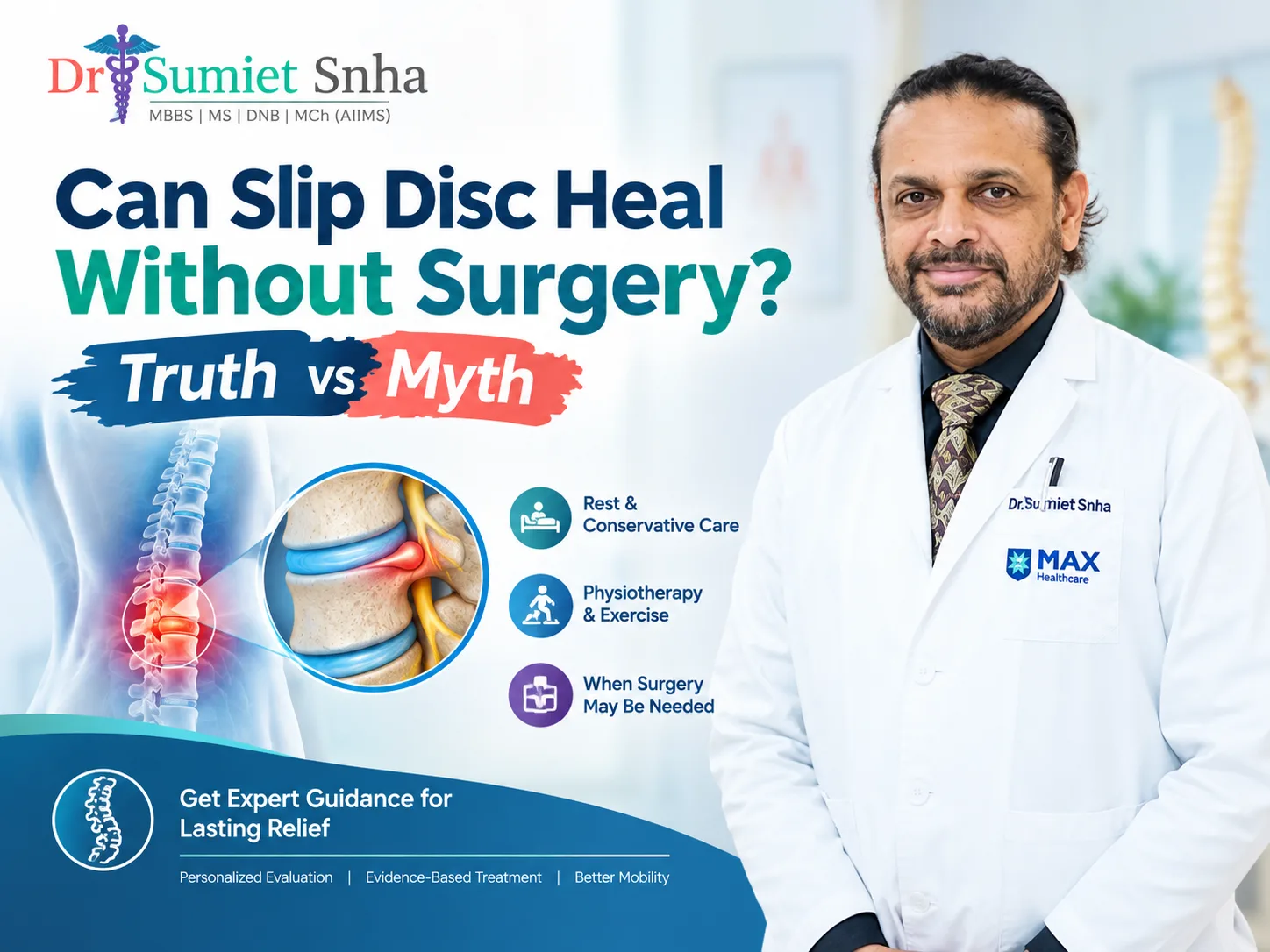
A diagnosis of a slipped disc can immediately make people worry about surgery. However, having a slipped disc does not automatically mean that an operation is necessary. In many cases, symptoms can improve with appropriate non-surgical care, depending on the severity of the disc problem and whether a nerve is being affected.
So, can a slip disc heal without surgery? In many people, symptoms improve over time with measures such as appropriate medicines, physical therapy, activity modification and gradual return to normal movement. However, treatment needs to be individualized, particularly when there is significant weakness, persistent symptoms or other neurological problems.
Let's separate some of the common myths from the medical facts.
What Is a Slip Disc?
The spine contains small, flexible discs between its vertebrae. These discs act as cushions and help the spine absorb movement and stress. Each disc has a softer inner portion surrounded by a stronger outer layer.
A slipped disc, also called a herniated or prolapsed disc, occurs when part of the inner disc material pushes through a weakened or damaged outer layer. If the displaced material irritates or presses on a nearby nerve, it can cause symptoms.
Common Slip Disc Symptoms
Depending on the location of the disc problem, symptoms may include:
- Lower back or neck pain
- Pain travelling into the buttock, leg, shoulder or arm
- Tingling or numbness
- Muscle weakness
- Difficulty with certain movements
- Sciatica when a lower-back disc affects a nerve supplying the leg
Interestingly, not every person with a disc herniation has symptoms. Some disc changes are discovered incidentally during imaging.
Can a Slip Disc Heal Without Surgery?
Yes, a slipped disc can improve without surgery in many cases. This does not necessarily mean that the disc instantly returns to its original shape. Rather, pain and other symptoms may decrease as inflammation settles and the affected nerve becomes less irritated.
For many patients, slip disc treatment without surgery may include appropriate pain management, physiotherapy, activity modification and gradual rehabilitation.
The NHS notes that a slipped disc usually improves gradually and recommends remaining active, gentle exercise and appropriate pain relief. Mayo Clinic also states that most people with a herniated disc do not need surgery.
Why Can Symptoms Improve?
A herniated disc can irritate a nerve through both mechanical pressure and inflammation. As the inflammatory response decreases and the body changes the displaced disc material over time, symptoms may become less intense.
This is why an MRI showing a disc herniation should not be viewed in isolation. The scan needs to be interpreted alongside symptoms, physical examination and neurological findings.
Key takeaway: A slipped disc seen on an MRI does not automatically mean that surgery is required.
Truth vs Myth About Slip Disc Treatment
|
Common Myth |
Medical Reality |
|
Every slipped disc needs surgery. |
Many people can initially be treated without surgery. |
|
Complete bed rest is the best treatment. |
Prolonged inactivity can cause stiffness and weakness and may delay recovery. |
|
Exercise always makes a slipped disc worse. |
Appropriate, guided movement and exercise may support recovery. |
|
An MRI alone decides treatment. |
Symptoms and physical and neurological examination also matter. |
|
Surgery is the only permanent solution. |
Treatment depends on the individual's symptoms and clinical condition. |
|
Pain means the disc is permanently damaged. |
Symptoms can improve as nerve irritation and inflammation settle. |
These distinctions are important because the goal of treatment is not simply to treat an MRI image. It is to treat the person and their symptoms.
How Is Slip Disc Treated Without Surgery?
When there is no urgent neurological problem, doctors may consider a range of conservative options. The exact treatment depends on the individual's symptoms, examination and medical history.
Medicines for Pain
Pain-relieving medicines may be recommended for short-term symptom control. Depending on the situation, a doctor may also consider other medicines or treatments.
Medication should not be started or continued without appropriate medical advice, particularly if a person has other medical conditions or takes other medicines.
Physiotherapy for Slip Disc
A structured physiotherapy programme may help improve movement, strength and function. Exercises can be selected according to the person's symptoms and physical condition.
The aim is generally not to force the spine through painful movements but to gradually restore comfortable movement and physical capacity.
Activity Modification
Some people instinctively stop moving because they are afraid that movement will worsen their disc problem. However, prolonged bed rest is generally not recommended.
Instead, activity may need to be modified temporarily. Gentle movement and gradual return to normal activities can be more appropriate when tolerated.
Lifestyle and Daily Habits
Once symptoms allow, maintaining regular physical activity can help support general spinal health. Safe lifting techniques, appropriate posture and maintaining a healthy weight may also reduce stress on the back.
The right approach should be individualized rather than based on a single exercise or online routine.
How Long Does Slip Disc Recovery Take?
There is no single recovery timeline that applies to everyone.
Some people experience noticeable improvement over weeks, while others may have symptoms for longer. Recovery can depend on factors such as:
- The location and size of the disc herniation
- Degree of nerve irritation or compression
- Severity and duration of symptoms
- Presence of numbness or weakness
- General health and activity level
- Response to treatment
For this reason, it is better to monitor progress and function rather than expect every patient to recover within an identical number of days.
When Is Slip Disc Surgery Needed?
Surgery is not usually the first treatment for an uncomplicated slipped disc, but it can become appropriate in selected situations.
A specialist may discuss slipped disc surgery when:
- Pain remains severe despite appropriate non-surgical treatment.
- Symptoms significantly interfere with daily activities.
- There is persistent or progressive muscle weakness.
- There is significant nerve dysfunction.
- Symptoms do not improve with conservative treatment.
- There are emergency neurological symptoms.
Mayo Clinic notes that surgery may be recommended when symptoms do not improve or when significant pain, numbness, weakness, difficulty walking or bladder/bowel problems are present.
The decision should be based on the patient's overall clinical picture rather than an MRI report alone.
Warning Signs That Need Urgent Medical Attention
Most slipped discs are not emergencies, but certain symptoms require prompt medical assessment.
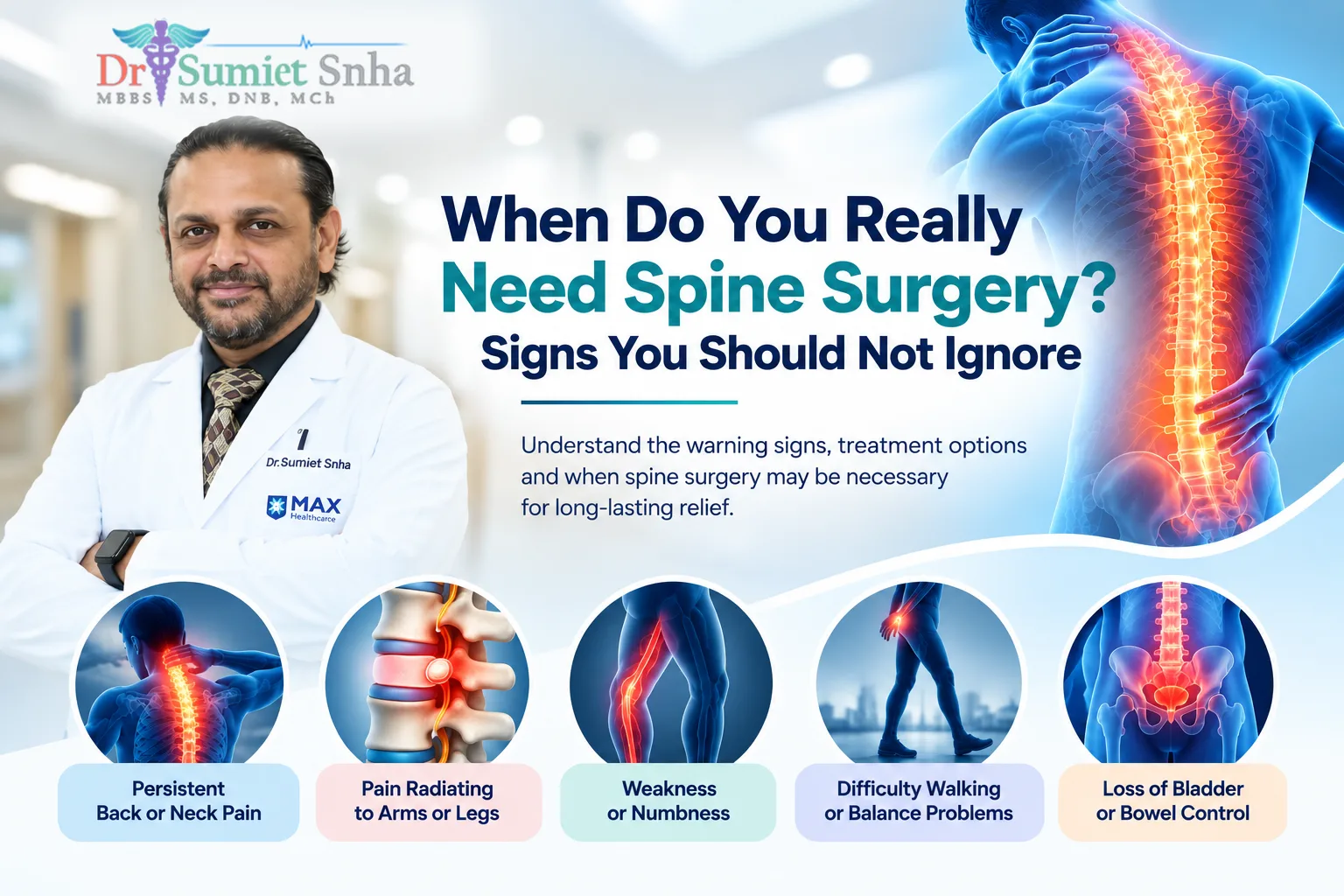
Seek urgent medical attention if you develop:
- New or worsening weakness in a leg
- Significant difficulty walking
- Loss of bladder or bowel control
- Difficulty passing urine
- Numbness around the inner thighs, buttocks or genital region
- Rapidly worsening neurological symptoms
These symptoms can indicate serious nerve compression, including the rare but urgent condition known as cauda equina syndrome. Rapid treatment may be necessary to reduce the risk of permanent neurological problems.
Does Everyone With a Slip Disc Need an MRI?
No. An MRI is not automatically necessary for every person with back pain.
A healthcare professional may first assess the symptoms and perform a physical and neurological examination. Imaging may be recommended when the clinical situation requires it, particularly when symptoms persist, there are neurological findings or another underlying condition needs to be investigated.
MRI can show a herniated disc and its relationship to nearby structures, but the findings need to match the patient's symptoms. Some people have disc abnormalities without experiencing significant pain.
How Can a Spine Specialist Help?
A spine specialist in Delhi NCR can evaluate the complete clinical picture rather than focusing only on an imaging report.
The assessment may include:
- Reviewing the patient's symptoms and medical history
- Checking strength, sensation and reflexes
- Assessing movement and functional limitations
- Deciding whether imaging or additional tests are appropriate
- Recommending conservative treatment when suitable
- Monitoring recovery
- Discussing surgical options when clinically indicated
The objective is to select the least invasive appropriate treatment while recognizing when more advanced intervention may be necessary.
About Dr.(Prof.) Sumiet Snha
Dr.(Prof.) Sumiet Snha is Vice Chairman – Neurosciences (Neurology & Spine), with extensive experience in neurosurgery and spine-related care. He completed his neurosurgical training at All India Institute of Medical Sciences (AIIMS), New Delhi, and has more than 25 years of experience in the field. His professional areas include spine surgery, minimally invasive spine procedures and the management of spinal conditions. His current professional role includes Principal Director – Neuro & Spine Surgery, MAX Hospital, Dwarka, New Delhi.
Frequently Asked Questions
1. Can a slip disc heal without surgery?
Yes. Many people with a herniated disc improve with conservative treatment. The appropriate approach depends on symptoms, nerve involvement and overall health. Surgery may be considered when symptoms remain severe, conservative treatment does not help sufficiently, or significant neurological problems develop.
2. How long does it take for a slip disc to heal?
Recovery varies. Some people improve over several weeks, while others may need longer. The severity of symptoms, nerve involvement and response to treatment can influence recovery.
3. Can a slipped disc heal naturally?
Symptoms can improve naturally over time in many patients. However, improvement should not be confused with ignoring persistent or worsening symptoms. Medical evaluation is important when pain, numbness or weakness continues.
4. What is the best treatment for a slipped disc?
There is no single treatment that is best for everyone. Depending on the condition, treatment may include pain management, physiotherapy, activity modification and, in selected cases, injections or surgery.
5. Can physiotherapy help a slip disc?
Physiotherapy may help improve movement, strength and function. Exercises should be selected according to the individual's symptoms and should not be used to push through severe or worsening pain.
6. Can exercise make a slipped disc worse?
Certain movements may aggravate symptoms, but that does not mean all exercise is harmful. A suitable exercise programme can often be introduced gradually under professional guidance.
7. When is surgery required for a slip disc?
Surgery may be considered when symptoms remain severe despite appropriate treatment, when significant or progressive weakness develops, or when serious nerve compression is present. Emergency symptoms require urgent evaluation.
8. Can a slip disc cause leg pain?
Yes. A lower-back disc herniation can irritate a nerve and cause pain that travels from the lower back or buttock into the leg. This is commonly associated with sciatica.
9. Can a slipped disc cause numbness or weakness?
Yes. Nerve irritation or compression can cause tingling, numbness or weakness in the area supplied by the affected nerve. New or worsening weakness should be medically assessed.
10. Is bed rest good for a slipped disc?
Prolonged bed rest is generally not recommended. Short periods of rest may provide comfort, but gradual movement and activity as tolerated can be more helpful for recovery.
11. Does every slipped disc need an MRI?
No. The need for an MRI depends on symptoms, examination findings and clinical circumstances. Imaging is particularly useful when persistent symptoms or neurological findings require further assessment.
12. Can a slipped disc come back after treatment?
Yes. Previous treatment does not make future disc problems impossible. Maintaining appropriate physical activity, using safe lifting techniques and addressing relevant risk factors may help support spinal health.
Conclusion: Does a Slip Disc Always Need Surgery?
A slipped disc does not automatically mean that surgery is necessary. Many patients can improve with appropriate non-surgical care, including symptom management, physiotherapy, activity modification and gradual rehabilitation.
At the same time, persistent severe pain, progressive weakness, significant neurological symptoms or bladder and bowel changes should not be ignored. In these situations, specialist assessment is important.
The most appropriate slip disc treatment without surgery or with surgery depends on the individual's symptoms, examination, imaging findings and overall health. The goal should always be to choose an evidence-informed treatment approach that is appropriate for the patient rather than assuming that either surgery or non-surgical care is right for everyone.

0 Comments