Mon - Sat : 9:00 AM - 6:00 PM
- +91-8448877746
- sumitneuro@gmail.com
 26 Sep
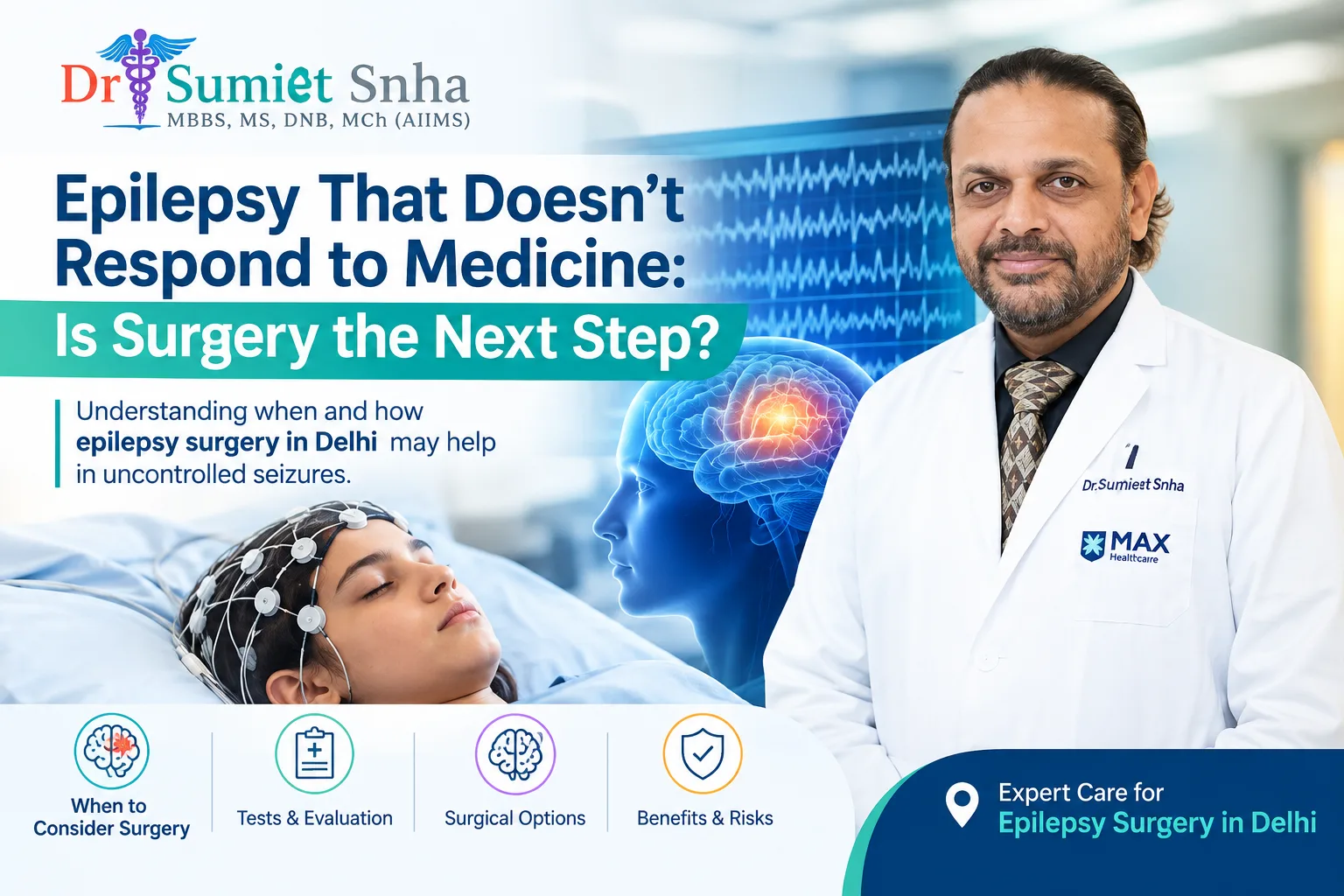
Epilepsy That Doesn't Respond to Medicine: Is Surgery the Next Step?
When seizures continue even after appropriate epilepsy medicines, it can be frustrating and worrying for both the patient and…
Read More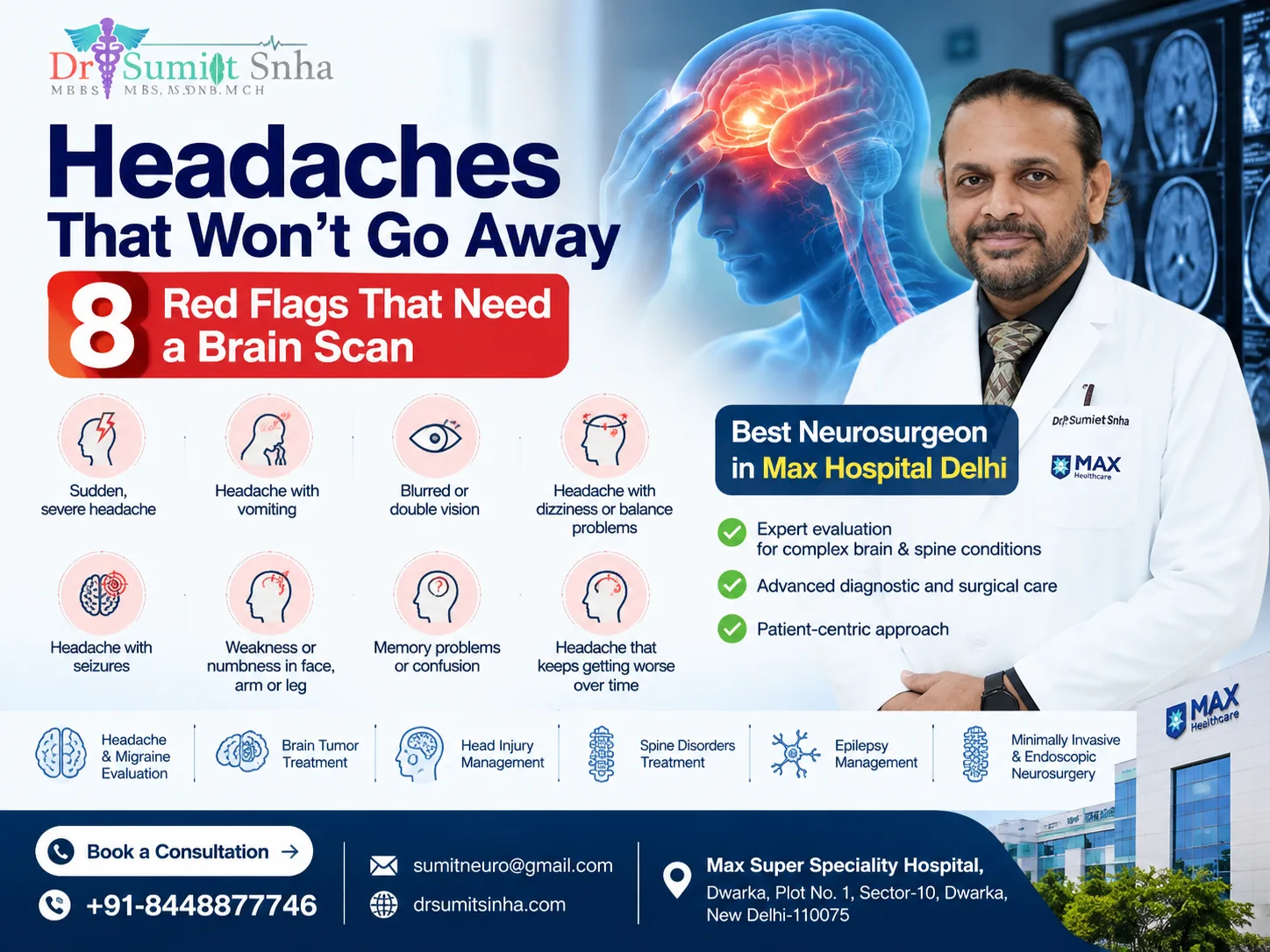 25 Sep
Headaches That Won't Go Away: 8 Red Flags That Need a Brain Scan
A headache once in a while is usually not a reason for concern. Stress, lack of sleep, dehydration, eye strain, migraine, and…
Read More 12 Sep
Brain Matters — Because Your Brain is Everything
Your brain is the most important part of your body. It controls your thoughts, memories, emotions , and every movement you make.…
Read More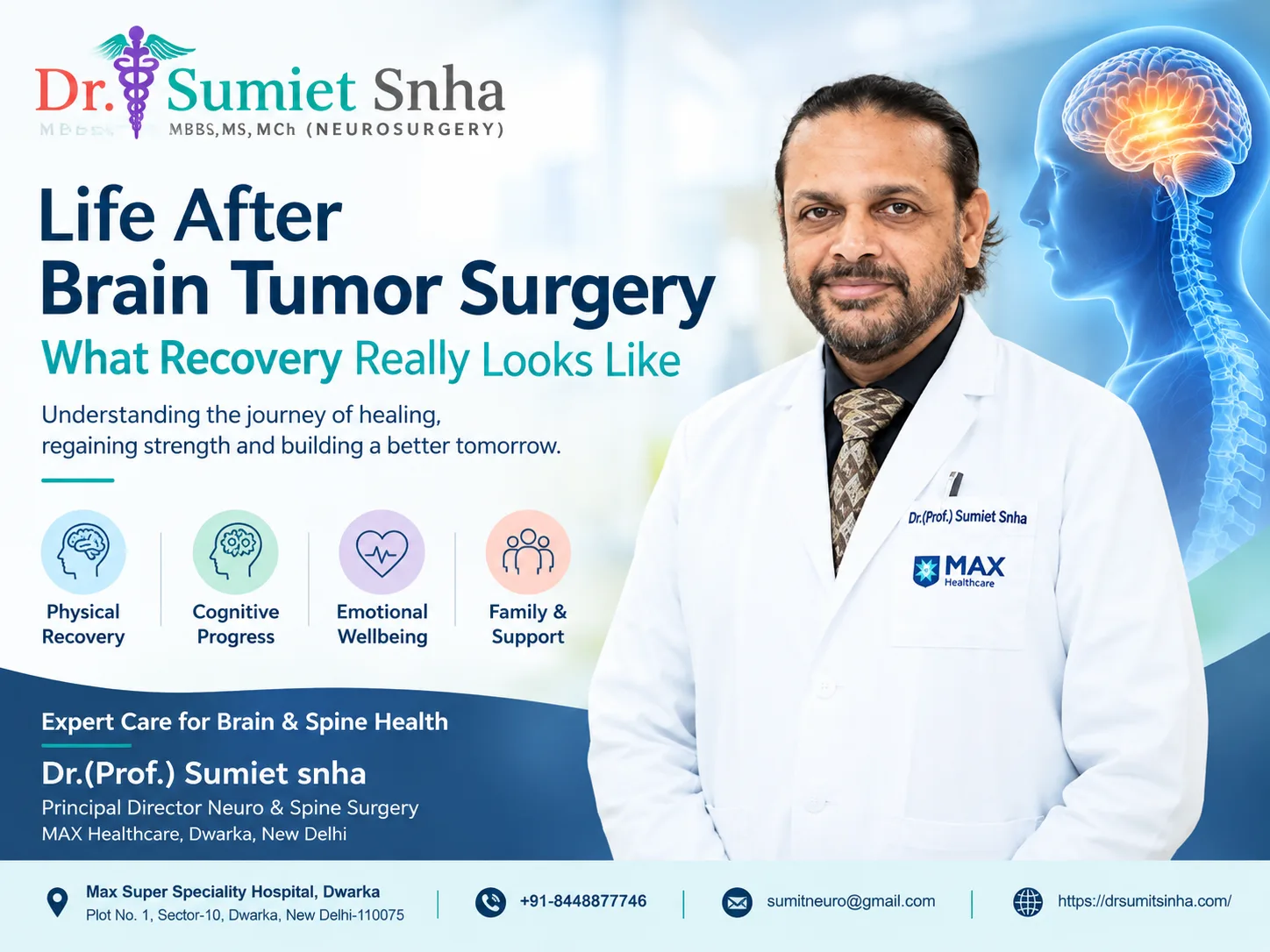 07 Sep
Life After Brain Tumor Surgery: What Recovery Looks Like
Finishing brain tumor surgery can bring relief, but the journey does not end when the operation is over. Brain tumor surgery…
Read More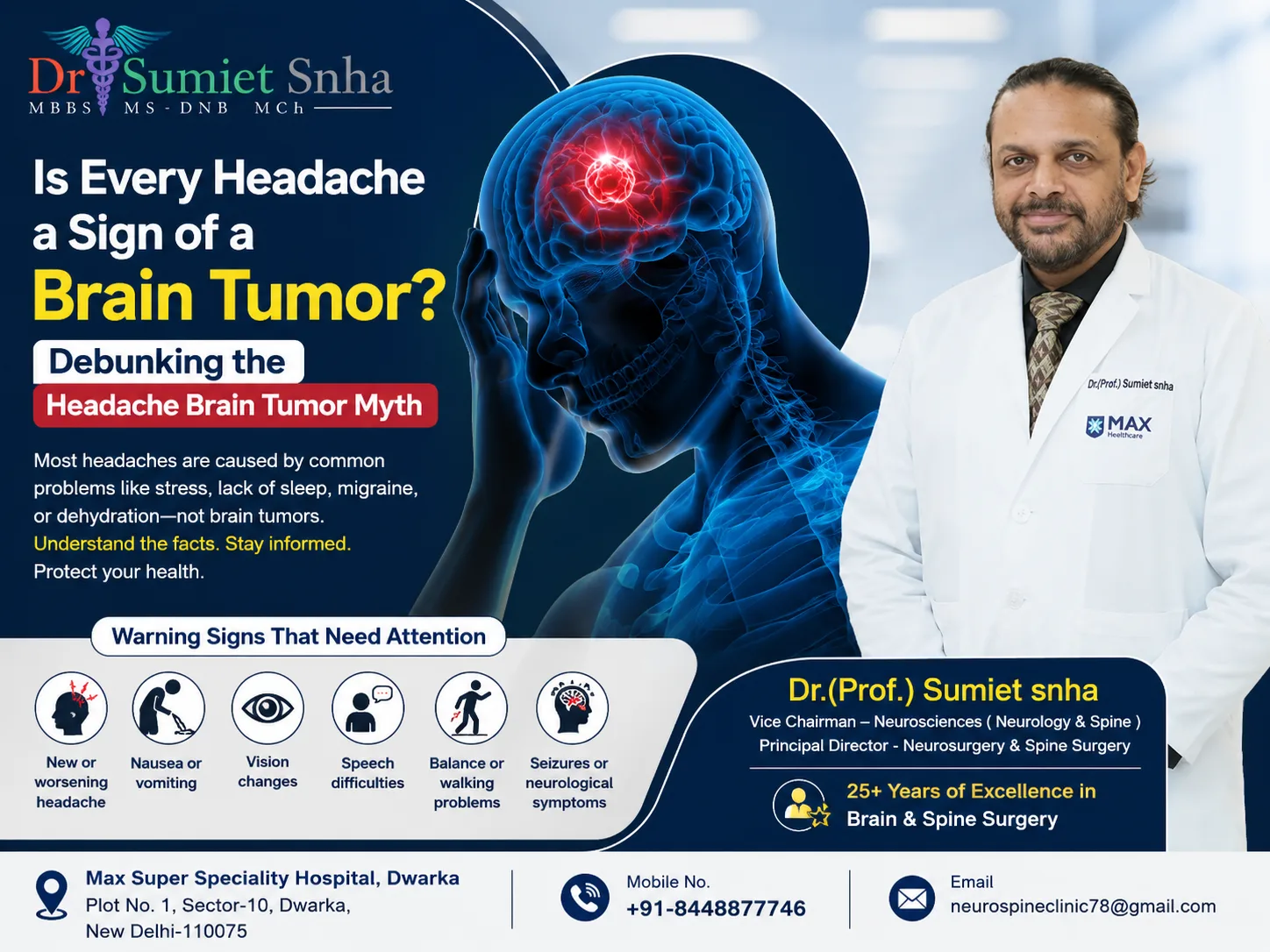 04 Sep
Headache Brain Tumor Myth: Is Every Headache a Brain Tumor?
If you often get headaches, you may have wondered, “Could this be a brain tumor?” It is a common worry, but the headache brain…
Read More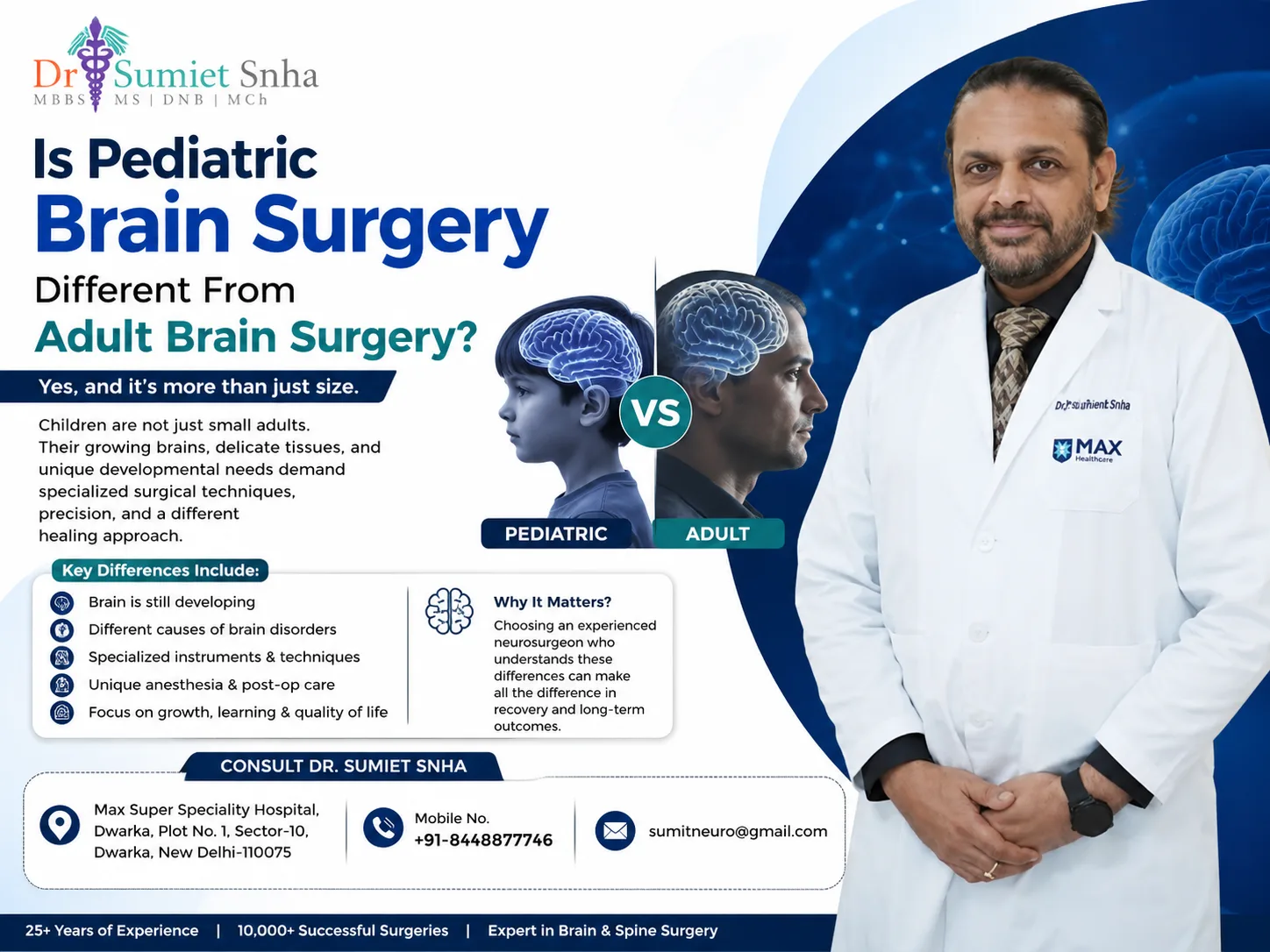 01 Sep
Pediatric vs Adult Brain Surgery: Key Differences
Brain surgery is a highly specialized form of treatment, but operating on a child’s brain is not simply the same procedure…
Read More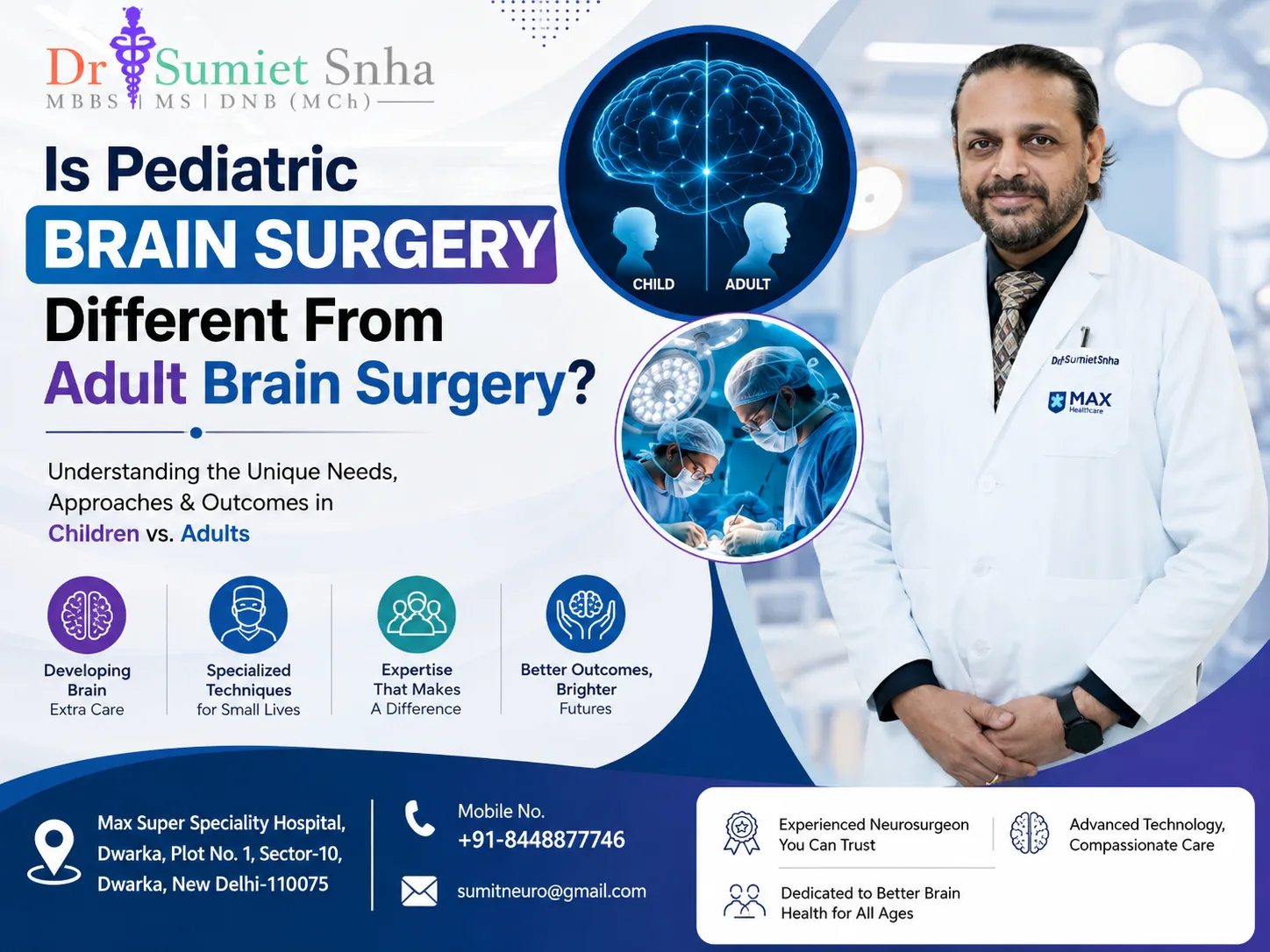 31 Aug
Is Pediatric Brain Surgery Different From Adult Brain Surgery?
Yes, pediatric brain surgery is different from adult brain surgery because children’s brains and bodies are still growing and…
Read More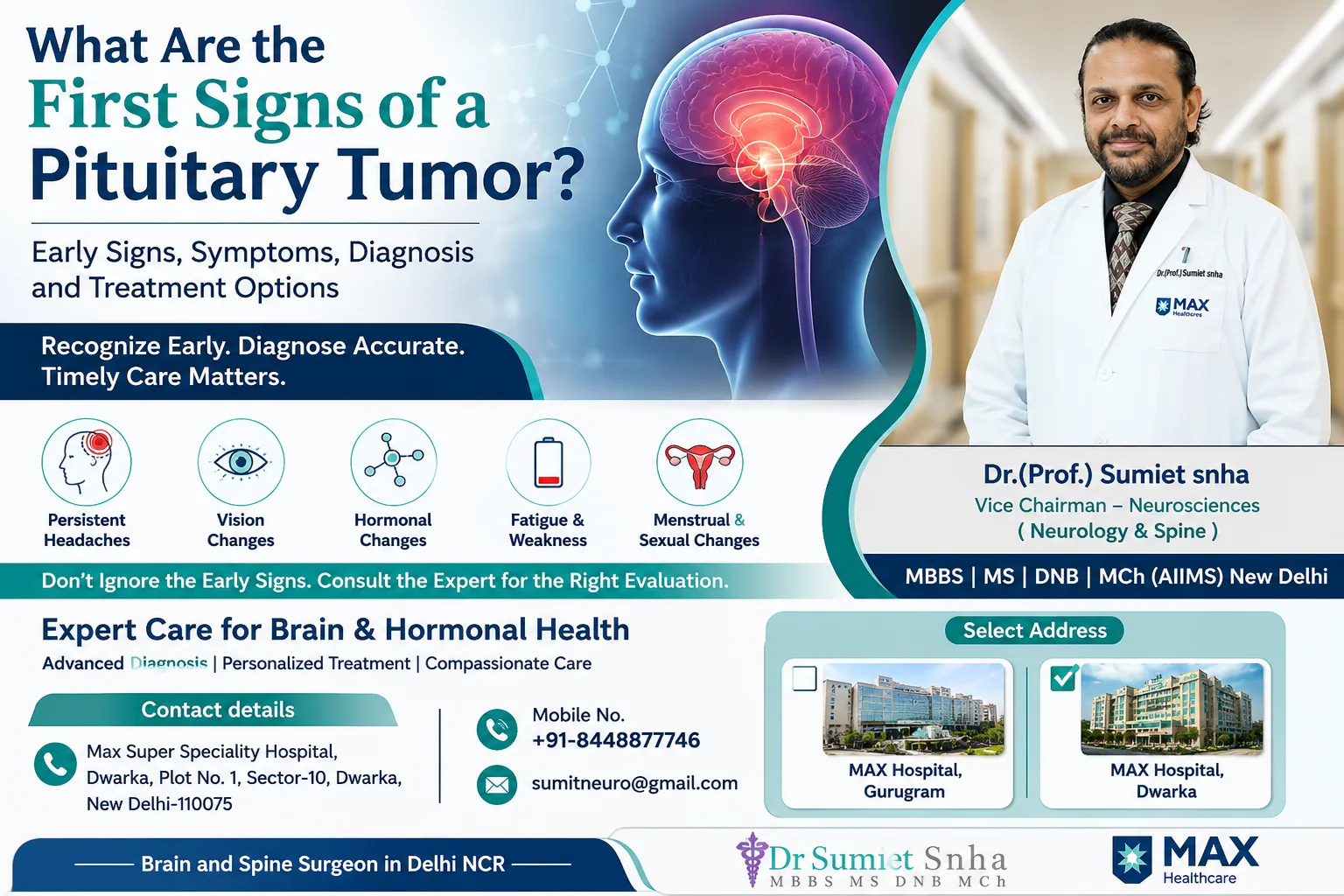 27 Aug
What Are the First Signs of a Pituitary Tumor?
A pituitary tumor develops in or around the pituitary gland, a small but important gland located at the base of the brain that…
Read More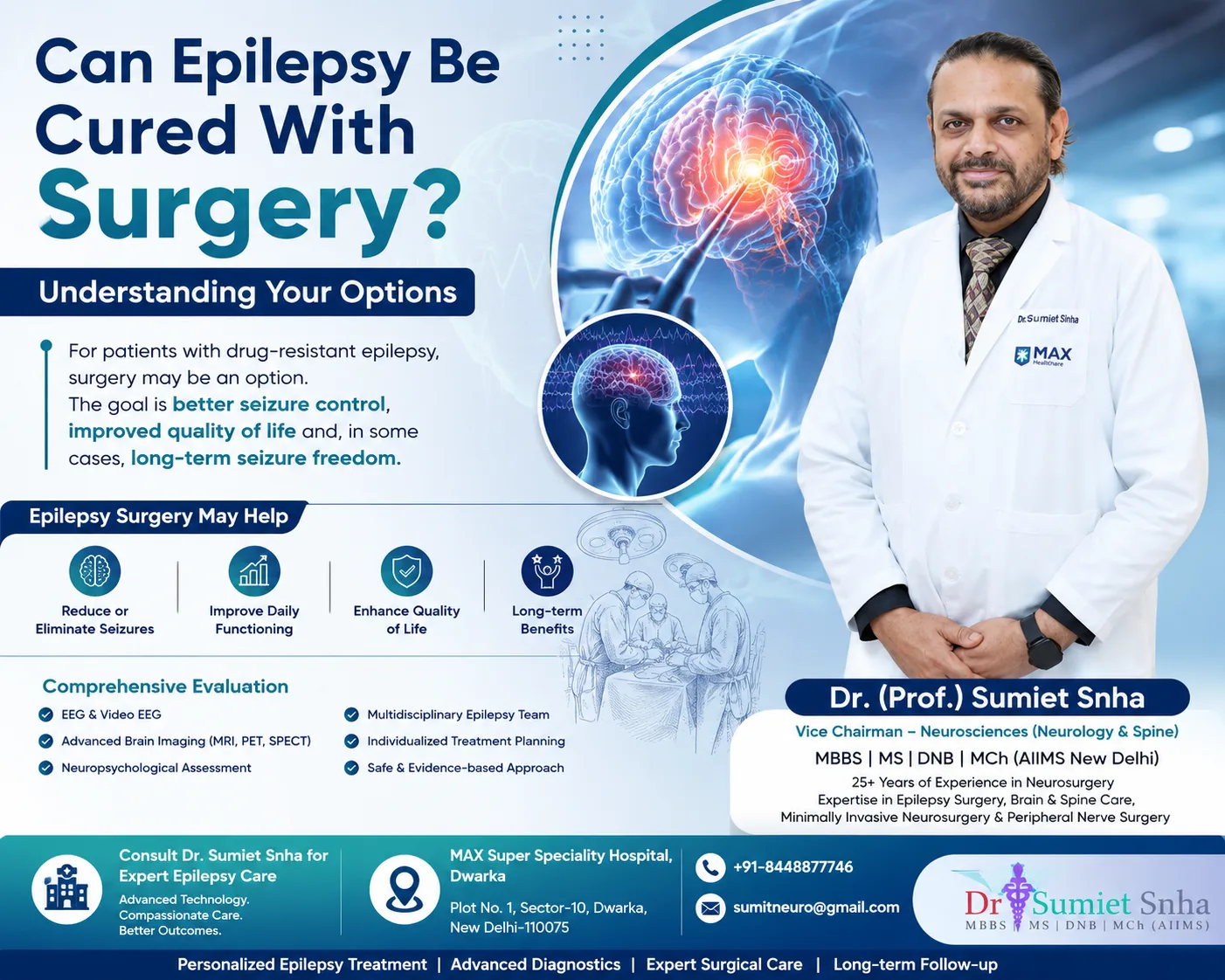 24 Aug
Can Epilepsy Be Cured With Surgery and Treatment Options
Epilepsy is a neurological disorder in which abnormal electrical activity in the brain can cause recurrent seizures. While…
Read MoreFrequently Asked Questions
Quick answers to common questions patients ask before consulting Dr. (Prof.) Sumiet Snha.
View All FAQsDr. (Prof.) Sumiet Snha (also known as Dr. Sumit Sinha) is an AIIMS-trained Neurosurgeon and Spine Surgeon with 25+ years of experience. He is the Principal Director - Neurosurgery & Spine Surgery at Max Hospital, Dwarka, New Delhi, and an ex-Professor of Neurosurgery at AIIMS, New Delhi.
Dr. Snha consults at Max Super Speciality Hospital, Plot No. 1, Sector-10, Dwarka, New Delhi-110075, from Monday to Saturday, 9:00 AM to 6:00 PM. Video consultation is also available on request.
You can book an appointment by calling +91-8448877746, sending a WhatsApp message, or filling the online appointment form on this website. Our team will call you back to confirm the slot.
In minimally invasive (keyhole) or endoscopic spine surgery, the surgeon treats the problem through a very small incision using an endoscope and special instruments. It usually means less pain, less blood loss, a shorter hospital stay and a faster return to routine activities compared with open surgery.
No. Most patients with slip disc or back pain improve with medicines, physiotherapy and lifestyle changes. Surgery is advised only when there is severe or persistent pain, weakness, numbness or loss of bladder/bowel control, or when conservative treatment fails.
Brain tumors, pituitary tumors, acoustic neuroma, aneurysms and AVMs, epilepsy, hydrocephalus, paediatric neurosurgical problems, slip disc, spinal stenosis, spinal fractures, spinal tumors, spine tuberculosis, atlanto-axial dislocation, brachial plexus and peripheral nerve injuries, nerve tumors, trigeminal neuralgia and spasticity.
Suffering from back pain, a brain or nerve problem?
Get an expert opinion from Dr. (Prof.) Sumiet Snha — AIIMS-trained Neurosurgeon & Spine Surgeon with 25+ years of experience.