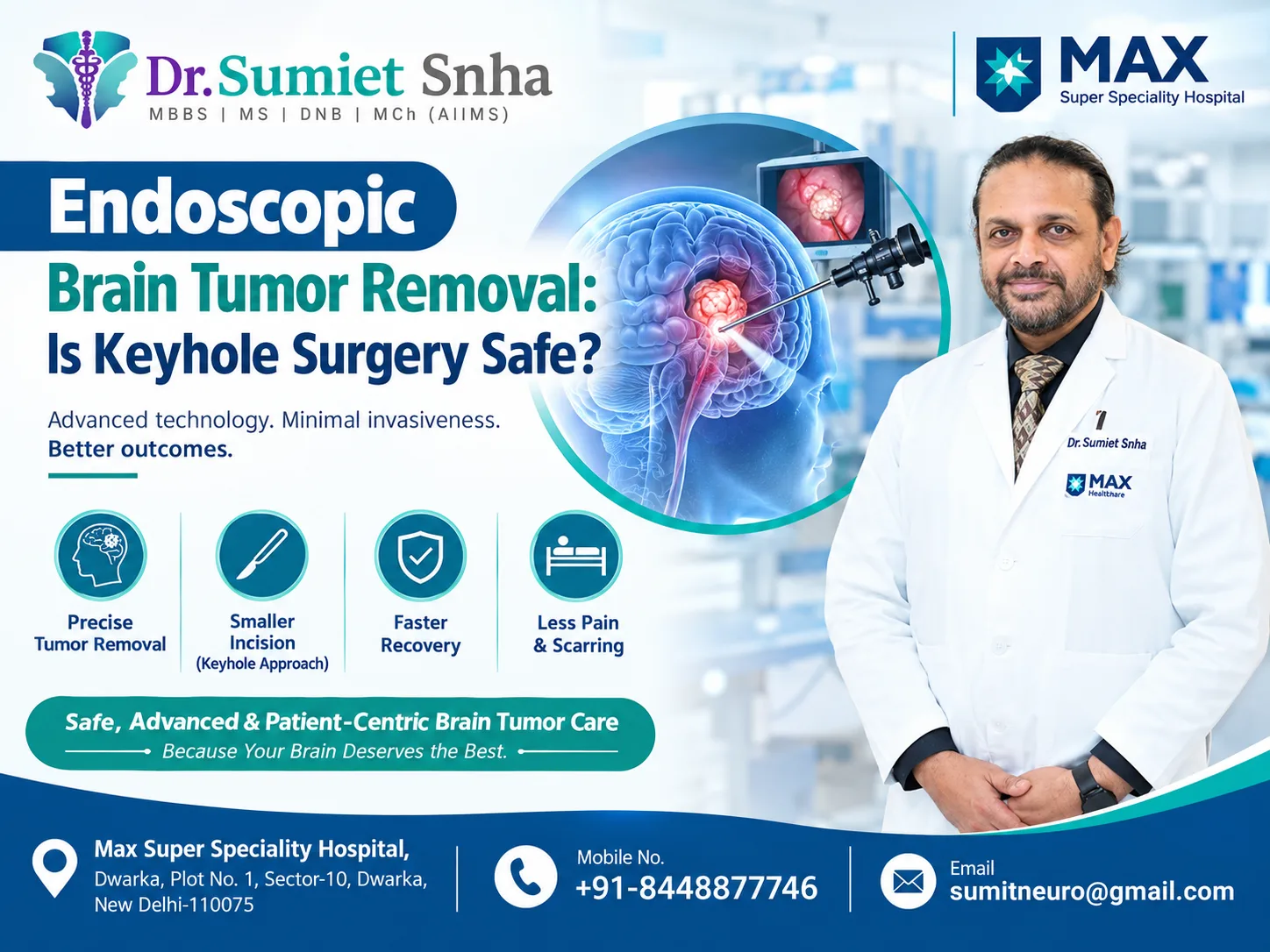
Yes, endoscopic brain tumor surgery can be a safe and effective option for carefully selected patients, but it is not suitable for every brain tumor. The safety of keyhole surgery depends on factors such as the tumor’s size and location, its relationship with important nerves and blood vessels, the patient’s health, imaging findings, and the surgical approach chosen by the neurosurgical team. For patients exploring endoscopic brain tumor surgery Delhi, understanding these factors is important before deciding on any treatment. A minimally invasive approach may reduce the size of the surgical access, but “keyhole” does not mean risk-free.
What Is Endoscopic Brain Tumor Removal?
Endoscopic brain tumor removal is a minimally invasive surgical technique that uses an endoscope, a thin instrument equipped with a camera and light, to provide a clear view of the surgical area.
Depending on the tumor and its location, the surgeon may use a small surgical opening or, for selected skull-base tumors, access the affected area through a natural pathway such as the nose.
Why Is It Called Keyhole Surgery?
The term “keyhole brain surgery” generally refers to reaching a target through a relatively small or carefully planned surgical corridor rather than creating a larger opening than necessary.
The important point is that a smaller opening does not make the operation simple. Brain surgery requires detailed planning because critical structures, including blood vessels and nerves, may be close to the tumor.
Endoscopic techniques are particularly useful in selected pituitary and skull-base conditions, although other tumors may require a different surgical approach.
How Does Keyhole Brain Tumor Surgery Work?
Before surgery, the neurosurgical team reviews the patient's symptoms, neurological examination and imaging studies such as MRI or CT scans. These investigations help determine where the tumor is located and how it relates to surrounding structures.
Typical Steps During Surgery
The procedure may involve:
- Detailed preoperative imaging and surgical planning.
- Selection of an appropriate and safe route to the tumor.
- Creation of a small opening or use of a suitable natural pathway.
- Introduction of the endoscope for visualization.
- Removal of as much of the tumor as safely possible, or biopsy when appropriate.
- Careful protection of nearby brain tissue, nerves and blood vessels.
- Closure followed by close postoperative monitoring.
The exact technique differs from one patient to another. The goal is not simply to make the opening smaller, but to choose an approach that provides appropriate access while protecting important neurological structures.
Which Brain Tumors Can Be Treated With Endoscopic Surgery?
Endoscopic surgery is not a universal treatment for all brain tumors. Whether it is appropriate depends heavily on the tumor’s location, size, anatomy and accessibility.
Examples of Selected Tumors
Endoscopic approaches may be considered for certain:
- Pituitary tumors
- Skull-base tumors
- Selected meningiomas
- Cystic lesions
- Some ventricular lesions
- Other tumors that can be safely reached through an appropriate endoscopic route
For example, pituitary tumor surgery may sometimes be performed through an endoscopic endonasal approach. Similarly, certain skull-base tumors can be approached using minimally invasive techniques.
The important question is not simply whether a tumor is a “brain tumor,” but whether its individual anatomy makes an endoscopic approach appropriate.
What Are the Benefits of Minimally Invasive Brain Tumor Surgery?
One of the main reasons surgeons consider minimally invasive approaches is that they can provide access to selected areas while limiting the size of the surgical opening.
Potential Advantages
Depending on the procedure and individual patient, potential benefits may include:
- Smaller surgical access
- Less disruption of surrounding tissues in appropriately selected cases
- Potentially less postoperative discomfort
- A smaller visible incision with some approaches
- Potentially faster recovery in selected patients
- Direct visualization of the surgical area through the endoscope
However, these benefits should not be viewed as guarantees. The most appropriate operation depends on the tumor and the patient. A conventional approach may sometimes provide better or safer access than a minimally invasive technique.
Therefore, minimally invasive brain tumor surgery should be considered as one of several surgical strategies rather than automatically being considered superior.
Is Endoscopic Brain Tumor Surgery Really Safe?
For appropriately selected patients, endoscopic brain tumor surgery can be a safe treatment option when performed by an experienced neurosurgical team. However, no brain surgery is completely risk-free.
What Are the Possible Risks?
Depending on the tumor, location and surgical approach, potential complications may include:
- Bleeding
- Infection
- Brain swelling
- Cerebrospinal fluid leakage
- Seizures
- Neurological weakness or other deficits
- Vision or hearing problems
- Injury to nearby nerves or blood vessels
- Complications related to anesthesia
The actual risk is different for every patient. A tumor located close to a major blood vessel or an important nerve may present different surgical challenges from a tumor in another area.
Why Individual Assessment Matters
This is why patients should not decide on surgery based only on the words “keyhole” or “minimally invasive.” The safest approach is the one that provides appropriate access to the tumor while considering the surrounding anatomy and the patient's overall condition.
A detailed consultation, neurological assessment and review of imaging are essential before recommending surgery.
Who May Be a Candidate for Keyhole Brain Surgery?
A patient may be considered for keyhole surgery when the tumor can be reached safely through an appropriate minimally invasive route.
The assessment may consider:
- MRI or CT findings
- Tumor size and exact location
- Relationship with important nerves and blood vessels
- Symptoms and neurological examination
- General health
- Previous surgery or treatment
- Expected benefits and potential risks
When Another Treatment May Be Better
Depending on the diagnosis, a neurosurgeon may recommend conventional craniotomy, endoscopic surgery, biopsy, radiation-based treatment, observation or another treatment strategy.
The final decision should be individualized rather than based on the desire for the smallest possible incision.
Endoscopic vs Traditional Brain Tumor Surgery
There is no single surgical approach that is best for every brain tumor.
|
Factor |
Endoscopic/Keyhole Approach |
Conventional Surgery |
|
Surgical access |
Smaller or targeted route |
May involve a larger opening |
|
Visualization |
Endoscope/camera |
Microscope and/or direct visualization |
|
Suitability |
Selected tumors |
Suitable for a wider range of situations |
|
Recovery |
May be shorter in selected cases |
Depends on the specific procedure |
|
Surgical decision |
Based on tumor anatomy and accessibility |
Based on tumor anatomy and surgical requirements |
The comparison should always be individualized. In some cases, traditional surgery may offer the surgeon safer or more effective access to the tumor.
Recovery After Endoscopic Brain Tumor Removal
Recovery after brain tumor removal surgery varies considerably. It depends on the type and location of the tumor, the extent of surgery, the patient's neurological condition and whether additional treatment is required.
What Happens After Surgery?
Patients may undergo hospital monitoring, neurological observation, pain management and follow-up imaging. The pathology report can also help determine the exact tumor type and whether further treatment is needed.
Some people may gradually return to normal activities after recovery, while others may require additional medical care, rehabilitation or longer follow-up.
For this reason, brain tumor surgery recovery should not be measured using one fixed timeline for everyone.
Why Surgical Planning Matters in Delhi NCR
Patients looking for brain tumor treatment in Delhi NCR should consider more than the surgical technique itself. The experience of the neurosurgical team and the hospital's ability to provide appropriate diagnostic, surgical and postoperative support are also important.
What Should Patients Consider?
Before choosing endoscopic brain tumor surgery Delhi, patients may want to understand:
- The neurosurgeon’s qualifications and relevant experience
- Experience with the specific type and location of tumor
- Availability of appropriate neuroimaging
- Neuro-anesthesia and intensive care support
- Multidisciplinary treatment when required
- Follow-up and rehabilitation facilities
A treatment decision should be based on the individual's medical needs rather than on marketing claims or the name of a particular surgical technique.
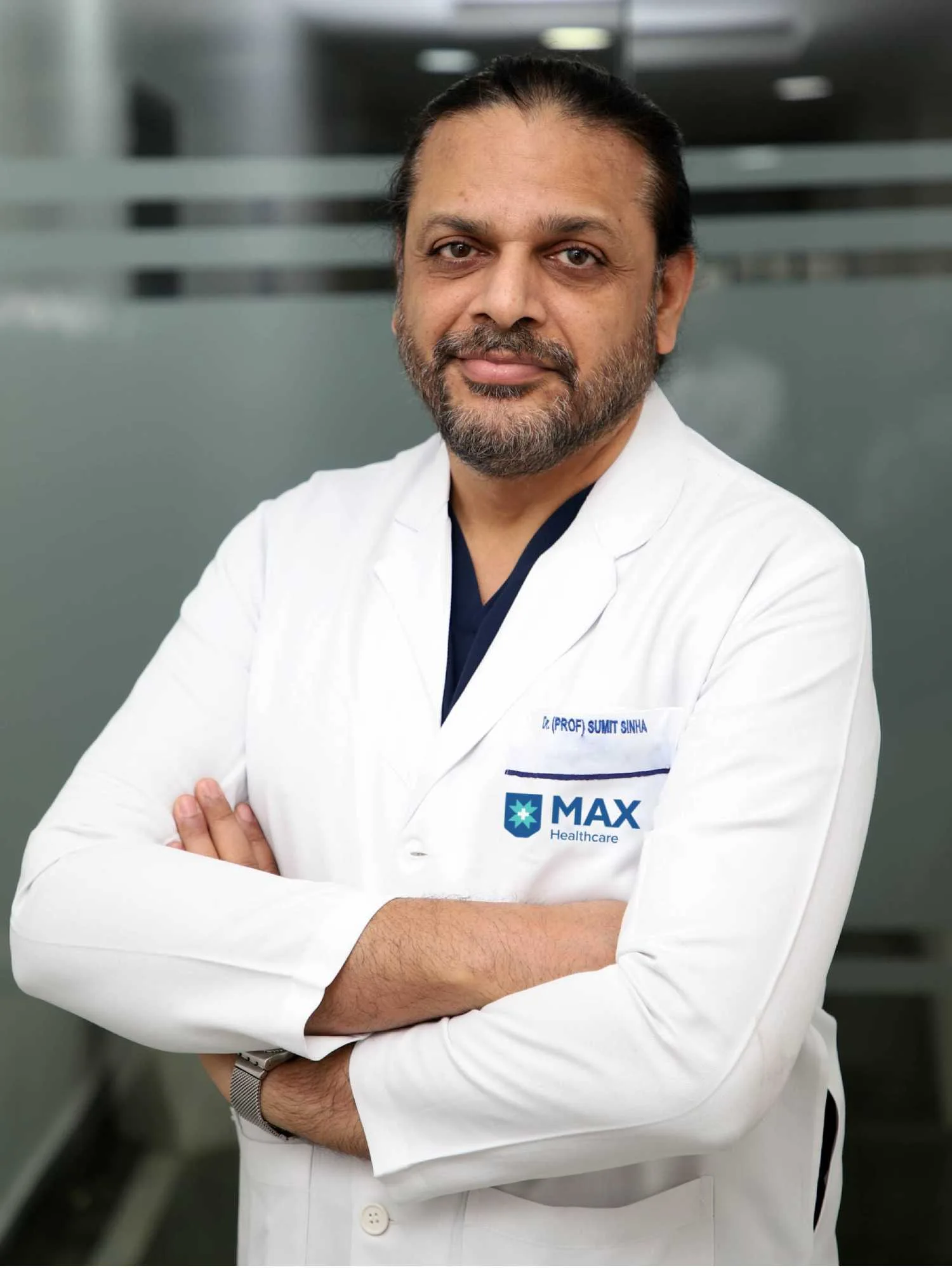
About Dr. (Prof.) Sumiet Snha
Dr. (Prof.) Sumiet Snha is Vice Chairman – Neurosciences (Neurology & Spine) and Principal Director – Neuro & Spine Surgery at MAX Hospital, Dwarka, New Delhi. He has more than 25 years of experience in neurosurgery and completed his neurosurgical training at AIIMS, New Delhi.
He holds MBBS, MS, DNB and MCh (AIIMS), New Delhi, and has received international training exposure. His professional interests include complex brain and spine conditions, minimally invasive spine surgery, neurotrauma, brachial plexus and peripheral nerve surgery, along with teaching and research activities.
Frequently Asked Questions
1. Is endoscopic brain tumor surgery safe?
It can be safe for appropriately selected patients, but every brain surgery has potential risks. Safety depends on the tumor and individual patient factors.
2. Is every brain tumor suitable for keyhole surgery?
No. Suitability depends on the tumor’s location, size, anatomy, accessibility and relationship with important brain structures.
3. What are the risks of endoscopic brain surgery?
Possible risks include bleeding, infection, CSF leakage, seizures, neurological deficits and injury to nearby nerves or blood vessels.
4. How long does recovery take after endoscopic brain tumor removal?
Recovery varies according to the tumor, surgical approach, extent of treatment and the patient’s overall neurological condition.
5. Is keyhole surgery better than traditional brain surgery?
Not necessarily. The appropriate approach depends on the individual tumor and which surgical route provides the safest and most effective access.
6. How is endoscopic brain tumor surgery planned in Delhi?
Planning generally involves consultation, neurological assessment, imaging such as MRI or CT, and an individualized evaluation of the surgical options.
Conclusion
Endoscopic brain tumor removal can provide a minimally invasive treatment option for carefully selected patients. However, keyhole surgery is not automatically safer or appropriate for every tumor. The decision should follow a detailed assessment of symptoms, neurological findings, imaging, tumor characteristics and surrounding anatomy. Patients considering brain tumor treatment in Delhi NCR should discuss the potential benefits, limitations and risks of each available treatment approach with a qualified neurosurgical team.

0 Comments