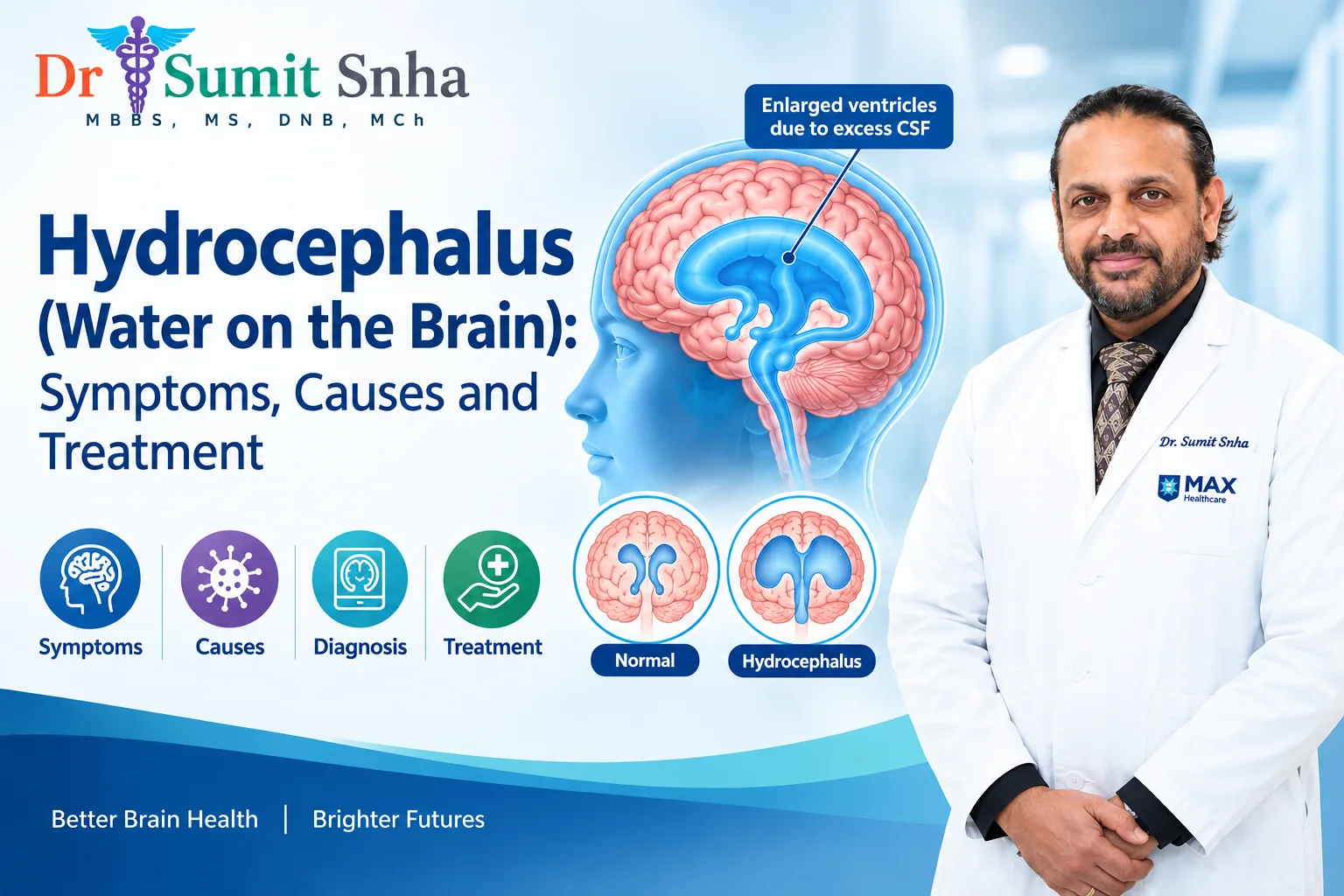
Hydrocephalus, commonly known as water on the brain, is a neurological condition in which excess cerebrospinal fluid (CSF) accumulates in the brain's fluid-filled cavities, called ventricles. This buildup can enlarge the ventricles and put pressure on surrounding brain tissue, potentially affecting movement, vision, development, memory, and other neurological functions.
Hydrocephalus can affect babies, children, adults, and older people. Although it can be a serious condition, timely diagnosis and appropriate treatment can help manage the buildup of fluid and reduce the risk of complications.
Understanding hydrocephalus symptoms, causes, diagnosis, and treatment options is an important first step for patients and caregivers seeking medical guidance.
In this article, we explain how hydrocephalus develops, which warning signs to recognise, how doctors diagnose it, and when treatments such as VP shunt surgery or Endoscopic Third Ventriculostomy (ETV) may be considered.
What Is Hydrocephalus?
Hydrocephalus is a condition caused by an abnormal accumulation of cerebrospinal fluid within the brain's ventricles. CSF is a clear fluid that surrounds the brain and spinal cord, cushions them against injury, helps maintain a stable environment, and supports the removal of waste products.
Under normal circumstances, the brain continuously produces CSF. The fluid circulates through the ventricles and around the brain and spinal cord before being absorbed into the bloodstream.
Hydrocephalus can develop when this process is disrupted because:
The normal flow of CSF is blocked.
The body cannot absorb CSF adequately.
In some cases, fluid production and absorption become imbalanced.
As fluid accumulates, the ventricles may enlarge and pressure may develop within the skull. If left untreated when intervention is needed, hydrocephalus can cause serious and potentially permanent brain damage.
The term “water on the brain” is commonly used, but the fluid involved is cerebrospinal fluid, not ordinary water.
What Are the Symptoms of Hydrocephalus?
The symptoms of hydrocephalus vary according to a person's age, the cause of the condition, and how quickly fluid accumulates. Symptoms may develop rapidly or gradually over time.
Hydrocephalus Symptoms in Babies
In infants, the skull bones have not fully fused, so fluid accumulation may cause the head to grow unusually quickly.
Common hydrocephalus symptoms in babies include:
An unusually large head or rapidly increasing head circumference
A bulging or tense soft spot on the head
Vomiting or feeding difficulties
Irritability or persistent crying
Excessive sleepiness or reduced alertness
Downward-looking eyes
Seizures in some cases
Parents and caregivers should seek prompt medical evaluation if they notice these signs, particularly a rapidly growing head or a bulging soft spot.
Hydrocephalus Symptoms in Older Children
Children with hydrocephalus may experience:
Persistent or worsening headaches
Nausea and vomiting
Blurred or double vision
Difficulty with balance or walking
Unusual sleepiness
Changes in behaviour, attention, or school performance
Developmental difficulties in some children
Symptoms may be mistaken for other childhood illnesses. A medical assessment is important when symptoms persist, worsen, or occur together.
Hydrocephalus Symptoms in Adults
In adults, hydrocephalus symptoms may include:
Persistent or progressive headaches
Nausea and vomiting
Blurred or double vision
Difficulty walking or maintaining balance
Changes in concentration or memory
Confusion or reduced alertness
Urinary urgency or loss of bladder control in certain types
Not everyone experiences the same symptoms. New or worsening neurological symptoms should be assessed by a qualified healthcare professional.
Symptoms of Normal Pressure Hydrocephalus in Older Adults
Normal pressure hydrocephalus (NPH) is a form of hydrocephalus that typically affects older adults. Its symptoms often develop gradually and may resemble those of other neurological conditions.
The characteristic symptoms include:
Walking difficulties: Short, shuffling steps, difficulty starting to walk, or unsteadiness
Cognitive changes: Slower thinking, reduced attention, or memory difficulties
Bladder symptoms: Urinary urgency, increased frequency, or incontinence
These symptoms can have several causes. Proper assessment is necessary to determine whether NPH or another condition is responsible.
Hydrocephalus Symptoms by Age: Quick Comparison
Seek emergency medical care for sudden severe headache, seizures, reduced consciousness, or rapidly worsening neurological symptoms.
What Causes Hydrocephalus?
The causes of hydrocephalus differ depending on whether the condition is present at birth or develops later in life.
1. Congenital Hydrocephalus
Congenital hydrocephalus is present at birth or develops before birth. Possible contributing factors include:
Abnormal development of the brain or CSF pathways
Certain genetic conditions
Neural tube defects, including spina bifida
Some infections during pregnancy
In some cases, the exact cause is not identified.
2. Acquired Hydrocephalus
Acquired hydrocephalus develops after birth and can occur at any age. Potential causes include:
Bleeding within or around the brain
Head injury
Infections affecting the brain or its surrounding tissues, such as meningitis
Brain tumours that obstruct CSF circulation
Other conditions that interfere with the normal movement or absorption of CSF
Identifying the underlying cause helps doctors determine the most appropriate management approach.
3. Normal Pressure Hydrocephalus
Normal pressure hydrocephalus usually affects older adults. It may occur in association with previous brain bleeding, head injury, infection, or brain surgery, although a clear cause is often not found.
Because its symptoms overlap with other conditions that affect walking, memory, and bladder control, a careful diagnostic evaluation is essential.
What Are the Different Types of Hydrocephalus?
Hydrocephalus can be classified according to when it develops, how CSF circulation is affected, and the clinical pattern.
These categories are not all mutually exclusive. A neurosurgeon determines the specific type using the patient's history, examination, and imaging results.
How Is Hydrocephalus Diagnosed?
The diagnosis of hydrocephalus involves evaluating symptoms, medical history, neurological function, and imaging findings.
Depending on the patient's age and circumstances, the assessment may include:
1. Clinical and Neurological Examination
The doctor may assess alertness, eye movements, muscle strength, coordination, walking, memory, and other neurological functions.
In babies, the assessment may include measuring head circumference and monitoring head growth over time.
2. MRI Scan of the Brain
Magnetic resonance imaging (MRI) provides detailed images of the brain. It can help identify enlarged ventricles, possible CSF flow obstruction, and underlying abnormalities.
3. CT Scan of the Brain
A computed tomography (CT) scan can help identify enlarged ventricles and other urgent abnormalities. It may be used when rapid imaging is required or when MRI is not immediately suitable.
4. Additional Tests for Normal Pressure Hydrocephalus
When NPH is suspected, doctors may assess walking, cognitive function, and bladder symptoms. In selected patients, a lumbar puncture or CSF drainage test may help evaluate whether symptoms improve after fluid removal.
No single test is appropriate for every patient. The investigations depend on the suspected type and the individual's clinical condition.
What Are the Treatment Options for Hydrocephalus?
The goal of hydrocephalus treatment is to manage excess CSF, reduce harmful pressure when present, and prevent further neurological damage.
Treatment depends on the cause, age, symptoms, anatomy, and overall health of the patient. Surgery is commonly required, although the specific procedure varies.
1. Ventriculoperitoneal (VP) Shunt Surgery
VP shunt surgery is a commonly used treatment for hydrocephalus.
During this procedure, a thin, flexible tube called a shunt is placed to drain CSF from the brain's ventricles to another part of the body, usually the abdominal cavity, where the fluid can be absorbed.
A shunt system generally includes a valve that helps regulate the flow of fluid.
Potential benefits:
Diverts excess CSF away from the brain's ventricles
Can provide ongoing fluid drainage
Can be used for several forms of hydrocephalus when clinically appropriate
Potential risks:
Shunt blockage or malfunction
Infection
Excessive drainage of CSF
Leakage or disconnection of the tubing
The need for additional surgery
Patients with a shunt require appropriate follow-up because complications can occur even after an initially successful procedure.
2. Endoscopic Third Ventriculostomy (ETV)
Endoscopic Third Ventriculostomy (ETV) is an operation in which a neurosurgeon uses an endoscope to create a small opening in the floor of the third ventricle. This provides an alternative route for CSF to flow around certain obstructions.
ETV may be considered in selected patients, particularly those with specific forms of obstructive hydrocephalus.
Potential benefits:
May avoid the need for a permanent shunt
Creates an alternative pathway for CSF circulation
Can be suitable for selected patients based on the cause and anatomy
Potential risks:
The opening may close over time
The procedure may not adequately control hydrocephalus
Bleeding, infection, or other surgical complications
The possible need for further treatment, including shunt placement
ETV is not suitable for every patient. Careful selection and long-term clinical awareness are important.
3. Treatment of the Underlying Cause
When hydrocephalus is associated with an underlying condition, treatment may also be required for that problem. For example, a tumour causing CSF obstruction may need specific management.
Treating the underlying cause does not always eliminate the need for CSF diversion, so the treatment plan must be individualised.
4. Monitoring and Follow-Up
Some patients may require monitoring as part of a specialist-directed management plan. However, monitoring alone is not appropriate for every case, especially when excess fluid is causing harmful pressure or progressive symptoms.
The treating team will determine the urgency of treatment and the need for follow-up imaging or further procedures.
VP Shunt Surgery vs ETV: What Is the Difference?
Both procedures can treat selected forms of hydrocephalus, but they work differently.
Neither procedure is universally better. The choice should be made by a neurosurgeon after reviewing the patient's condition, imaging, potential benefits, and risks.
Hydrocephalus Treatment in Babies vs Adults
Although the underlying problem is excess CSF, treatment planning can differ by age.
Treatment is individualised at every age. Families should follow the treating specialist's advice and attend recommended follow-up appointments.
What Are the Possible Complications of Hydrocephalus?
Complications depend on the cause, severity, duration, and treatment of the condition.
Untreated or inadequately controlled hydrocephalus may lead to:
Damage to brain tissue
Developmental difficulties in children
Persistent problems with walking, vision, or coordination
Cognitive changes or memory difficulties
Reduced independence in daily activities
Severe neurological deterioration in advanced cases
Treatment also carries risks. After shunt surgery or ETV, patients should be aware of symptoms that may indicate a complication.
Warning Signs After Hydrocephalus Surgery
Contact the treating medical team urgently if a patient develops:
A new or worsening headache
Repeated vomiting
Fever or signs of infection
Redness, swelling, or tenderness along the shunt pathway
Increasing sleepiness or confusion
A return or worsening of the symptoms present before surgery
Severe or rapidly worsening symptoms require emergency medical evaluation. Do not wait for a routine follow-up appointment if a shunt problem or another serious complication is suspected.
Recovery After Hydrocephalus Surgery
Recovery varies according to the procedure, the patient's age, the underlying cause, and their general health.
After surgery, the medical team monitors the patient's neurological condition, wound healing, and response to treatment. The length of hospital stay and return to normal activities depend on the individual case.
Follow-up care may include:
Attending scheduled clinical appointments
Monitoring symptoms and changes in daily functioning
Following wound-care instructions
Taking prescribed medicines as directed
Seeking prompt assessment if warning signs appear
Completing recommended imaging or other investigations
A shunt or ETV can manage CSF circulation, but neither procedure guarantees that every symptom will resolve. Some patients may need rehabilitation or additional care for existing neurological difficulties.
When Should You Consult a Neurosurgeon?
Seek medical evaluation if you or your child develops symptoms that may indicate hydrocephalus, such as progressive headaches, repeated vomiting, vision changes, unexplained walking difficulties, or changes in alertness.
In older adults, a gradual combination of walking difficulties, cognitive changes, and bladder symptoms also warrants medical assessment.
Seek emergency medical care for a sudden severe headache, seizures, rapidly worsening drowsiness, reduced consciousness, or other severe neurological symptoms.
Early assessment can help identify the cause and determine whether treatment is needed.
Consult Dr. (Prof.) Sumiet Snha for Neurosurgical Evaluation
Hydrocephalus requires an individualised assessment to determine the cause, severity, and most appropriate treatment. A neurosurgeon can review the patient's symptoms and imaging, explain the available options, and discuss the potential benefits and risks of treatment.
Dr. (Prof.) Sumiet Snha is an AIIMS-trained neurosurgeon with qualifications listed on his official profile as MBBS, MS, DNB, MCh (AIIMS, New Delhi), and FACS. His official website lists 30+ years of experience, previous service as a Professor of Neurosurgery at AIIMS, and his current role as Principal Director – Neurosurgery & Spine Surgery at Max Hospital, Dwarka, New Delhi.
Frequently Asked Questions About Hydrocephalus
1. What is hydrocephalus?
Hydrocephalus is a condition in which excess cerebrospinal fluid accumulates in the brain's ventricles. This can enlarge the ventricles and put pressure on brain tissue.
2. Is hydrocephalus the same as water on the brain?
Yes. “Water on the brain” is the commonly used name for hydrocephalus. The fluid is actually cerebrospinal fluid (CSF), which normally cushions and protects the brain and spinal cord.
3. What are the early symptoms of hydrocephalus?
Early symptoms vary with age. Babies may have rapid head growth, a bulging soft spot, irritability, or feeding difficulties. Older children and adults may develop headaches, vomiting, vision changes, or balance problems.
4. Can hydrocephalus be treated?
Yes. Hydrocephalus can often be managed with surgery to divert CSF or create an alternative pathway for its flow. The most appropriate treatment depends on the type, cause, and individual clinical findings.
5. What is VP shunt surgery?
VP shunt surgery involves placing a tube to drain excess CSF from the brain's ventricles into the abdominal cavity, where it can be absorbed. The shunt requires follow-up because blockage, infection, or other complications may occur.
6. What is the difference between VP shunt surgery and ETV?
A VP shunt uses a tube to redirect CSF to another part of the body. ETV creates an alternative pathway for CSF flow within the brain. The suitability of either procedure depends on the patient's condition and anatomy.
7. Can hydrocephalus occur in adults?
Yes. Hydrocephalus can develop at any age. In adults, it may be associated with bleeding, head injury, infection, a tumour, or other problems affecting CSF circulation. Normal pressure hydrocephalus is another form that typically affects older adults.
8. Is normal pressure hydrocephalus reversible?
Some symptoms of NPH may improve with appropriate treatment, but outcomes vary. A specialist evaluation is necessary to establish the diagnosis and assess whether treatment is likely to help.
9. Can hydrocephalus return after surgery?
Symptoms can recur if a shunt becomes blocked or infected, or if an ETV opening closes or does not provide adequate drainage. New or worsening symptoms require prompt medical assessment.
10. When should I seek urgent medical attention?
Seek emergency care for a sudden severe headache, seizures, reduced consciousness, or rapidly worsening neurological symptoms. If a patient with a shunt develops fever, vomiting, worsening headache, unusual sleepiness, or redness along the shunt pathway, contact the treating team urgently.




0 Comments