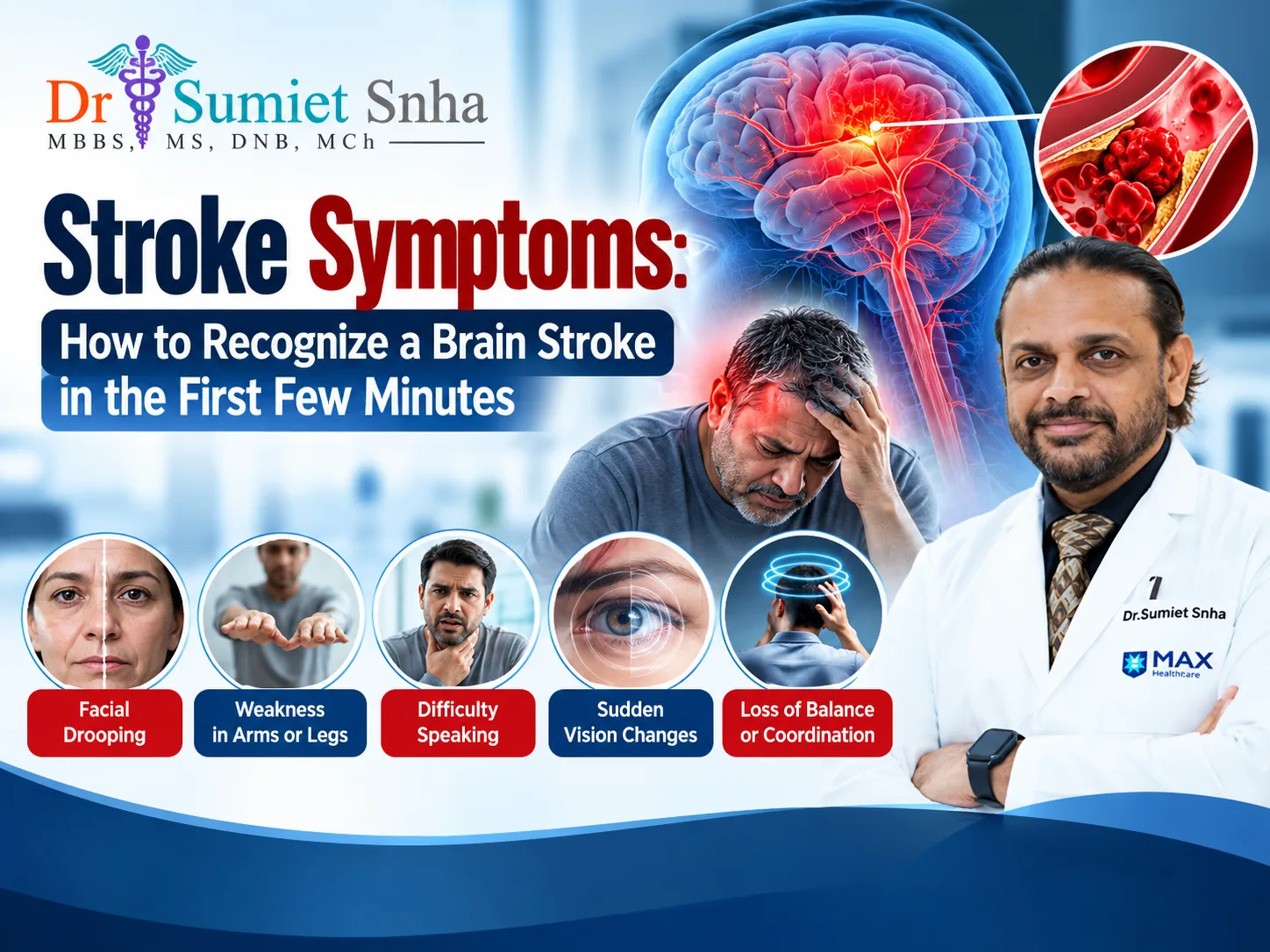
A person suddenly drops a cup of tea, struggles to speak, or notices that one side of their face feels different. These changes may appear harmless at first, particularly when the person is still conscious and able to walk. However, they could be the earliest stroke symptoms, and recognising them immediately can make a significant difference.
A brain stroke happens when blood flow to part of the brain is interrupted or when a blood vessel inside the brain ruptures. Brain cells depend on a continuous oxygen supply, making stroke a medical emergency.
Knowing the signs of brain stroke helps families act quickly instead of waiting for symptoms to disappear.
What Happens Inside the Brain During a Stroke?
The brain controls movement, speech, vision, memory, and several essential body functions. When a stroke interrupts normal blood circulation, the affected brain tissue can rapidly become damaged.
There are two major types of stroke.
Ischemic Stroke
An ischemic stroke occurs when a blood clot blocks an artery supplying the brain. It is the most common type of stroke. The resulting reduction in blood flow can affect movement, communication, or other neurological functions.
Hemorrhagic Stroke
A hemorrhagic stroke develops when a blood vessel ruptures, causing bleeding within or around the brain. Depending on the location and severity, bleeding can increase pressure on surrounding brain tissue.
Ischemic Stroke vs Hemorrhagic Stroke
Symptoms alone cannot reliably distinguish these stroke types. Urgent brain imaging is essential before choosing treatment.
Early Stroke Symptoms You Should Recognize Immediately
Stroke often begins suddenly. A person may appear completely normal moments before developing neurological difficulties.
Sudden Weakness or Numbness on One Side
One arm may become difficult to lift, or one leg may suddenly feel heavy. Sometimes the person notices reduced sensation rather than complete weakness.
Weakness affecting only one side of the body is an important warning sign, especially when it appears without an obvious injury.
Facial Drooping
Ask the person to smile. One corner of the mouth may remain lower than the other, or facial movement may appear uneven.
Facial weakness can be subtle, so compare both sides carefully.
Difficulty Speaking or Understanding
A person experiencing a stroke may know what they want to say but struggle to form words. Others may speak unclearly or have difficulty understanding simple questions.
These changes should never be dismissed as tiredness or confusion.
Sudden Vision Problems
A stroke may cause blurred vision, double vision, or sudden loss of vision in one or both eyes. Some people lose part of their visual field without immediately recognising the problem.
Loss of Balance or Coordination
Unexpected dizziness, difficulty walking, severe imbalance, or poor coordination can indicate a stroke, particularly when symptoms develop abruptly.
Strokes affecting the back of the brain may cause these symptoms even without obvious facial drooping.
How to Identify a Stroke Using the BE FAST Method
The BE FAST approach is a practical way to recognise common stroke warning signs.
Not every stroke produces all these symptoms. Even one sudden warning sign requires an emergency medical assessment.
Brain Hemorrhage Symptoms That Need Emergency Attention
Some hemorrhagic strokes cause a sudden, extremely severe headache, sometimes described as the worst headache a person has experienced.
Other possible brain hemorrhage symptoms include:
Sudden severe headache, particularly when reaching maximum intensity within seconds.
Repeated vomiting accompanied by neurological changes.
Loss of consciousness or unusual drowsiness.
Seizures, weakness, or sudden speech difficulties.
Neck stiffness, particularly with bleeding around the brain.
These symptoms are not exclusive to brain hemorrhage, and not every brain bleed causes a severe headache.
A sudden thunderclap headache requires emergency evaluation even when weakness or facial drooping is absent.
What Should You Do During the First Few Minutes?
When a stroke is suspected, the priority is reaching emergency medical care without delay.
Call an ambulance immediately. In India, 112 is the national emergency number; ambulance services may also be reached through 108 in many areas.
While waiting for medical assistance:
Note the exact time symptoms started or when the person was last known to be well.
Keep the person safe and comfortable.
Do not offer food, water, or oral medicines because swallowing may be impaired.
Do not give aspirin unless instructed by medical professionals, as bleeding has not yet been ruled out.
If the person becomes unresponsive, follow emergency-dispatcher instructions for breathing assessment and CPR if necessary.
Do not wait for symptoms to improve or attempt to drive yourself when ambulance assistance is available.
How Is Stroke Treatment Decided?
Effective stroke treatment begins with rapid examination, brain imaging, and identification of the stroke type.
For eligible patients with ischemic stroke, doctors may consider clot-dissolving medication within a limited treatment window. Selected patients with a major artery blockage may benefit from mechanical thrombectomy, sometimes within an extended window based on imaging findings.
Hemorrhagic stroke management is different. Treatment may involve controlling blood pressure, reversing certain blood-thinning medicines, managing intracranial pressure, or performing a neurosurgical procedure when indicated.
The appropriate treatment depends on the patient's symptoms, scan findings, medical history, and time since onset.
Can Stroke Symptoms Disappear on Their Own?
Yes. Temporary weakness, speech difficulty, or vision loss may occur during a transient ischemic attack (TIA), sometimes called a mini-stroke.
Although symptoms can resolve completely, a TIA may indicate a significant risk of a future stroke.
A person whose symptoms disappear still needs urgent medical evaluation. Improvement should never be treated as proof that the danger has passed.
About Dr.(Prof.) Sumiet Snha
Dr.(Prof.) Sumiet Snha is a neurosurgeon with over 25 years of experience in neurosurgical practice. His qualifications include MBBS, MS, DNB, and MCh, with neurosurgical training at AIIMS, New Delhi.
He serves as Vice Chairman – Neurosciences (Neurology & Spine) and is associated with Max Super Speciality Hospital, Dwarka, New Delhi.
His professional experience includes the evaluation and management of complex neurological and neurosurgical conditions. Patients requiring specialist assessment for conditions involving the brain and spine may consult him for an individualised clinical evaluation.
Frequently Asked Questions About Stroke Symptoms
1. What are the first symptoms of a brain stroke?
Sudden facial weakness, arm weakness, speech difficulty, vision changes, and loss of balance are common early warning signs.
2. Can a stroke happen without a headache?
Yes. Many ischemic strokes occur without headache. The absence of pain does not rule out stroke.
3. How quickly do stroke symptoms develop?
They often begin suddenly, sometimes within seconds or minutes. Some symptoms may progress or fluctuate.
4. Can younger adults experience a stroke?
Yes. Stroke can affect younger adults, although the risk generally increases with age.
5. Is sudden dizziness always a stroke?
No. Dizziness has many possible causes, but sudden severe imbalance, particularly with other neurological symptoms, needs emergency assessment.
6. What is the difference between stroke and brain hemorrhage?
A stroke may result from blocked blood flow or bleeding. Brain hemorrhage is a form of bleeding that can cause hemorrhagic stroke.
7. Can a person walk during a stroke?
Yes. Some people remain able to walk, particularly when symptoms are mild or affect functions other than leg movement.
8. Is stroke treatment possible after several hours?
Sometimes. Selected patients may qualify for treatment beyond the earliest hours, depending on imaging and clinical findings. Emergency evaluation remains essential.
9. Can stroke symptoms appear during sleep?
Yes. Some people wake up with symptoms. Doctors use the last-known-well time and imaging to guide treatment decisions.
10. Does high blood pressure increase stroke risk?
Yes. Uncontrolled high blood pressure is an important risk factor for both ischemic and hemorrhagic stroke.
11. Should aspirin be given immediately during a suspected stroke?
No. Aspirin should not be given before medical assessment because a hemorrhagic stroke may be present.
12. When should someone consult a neurosurgeon after a stroke?
Neurosurgical consultation may be necessary when bleeding, swelling, hydrocephalus, or another complication requires specialist assessment. Not every stroke requires surgery.
Conclusion
Recognising stroke symptoms early is not about making a diagnosis at home. It is about identifying sudden neurological changes and seeking emergency care before valuable treatment opportunities are lost.
Facial drooping, arm weakness, speech difficulties, unexpected vision changes, and sudden imbalance should all be treated seriously. Remembering BE FAST, noting the symptom-onset time, and contacting emergency services immediately can help patients reach appropriate medical care sooner.
When a stroke is suspected, every minute matters. Do not wait for symptoms to disappear.

0 Comments